Utilities & Water RPL
RPL Qualifications in Utilities & Water
Explore 28 RPL qualifications in Utilities & Water. Turn your utilities & water experience into nationally recognised credentials through Recognition of Prior Learning.
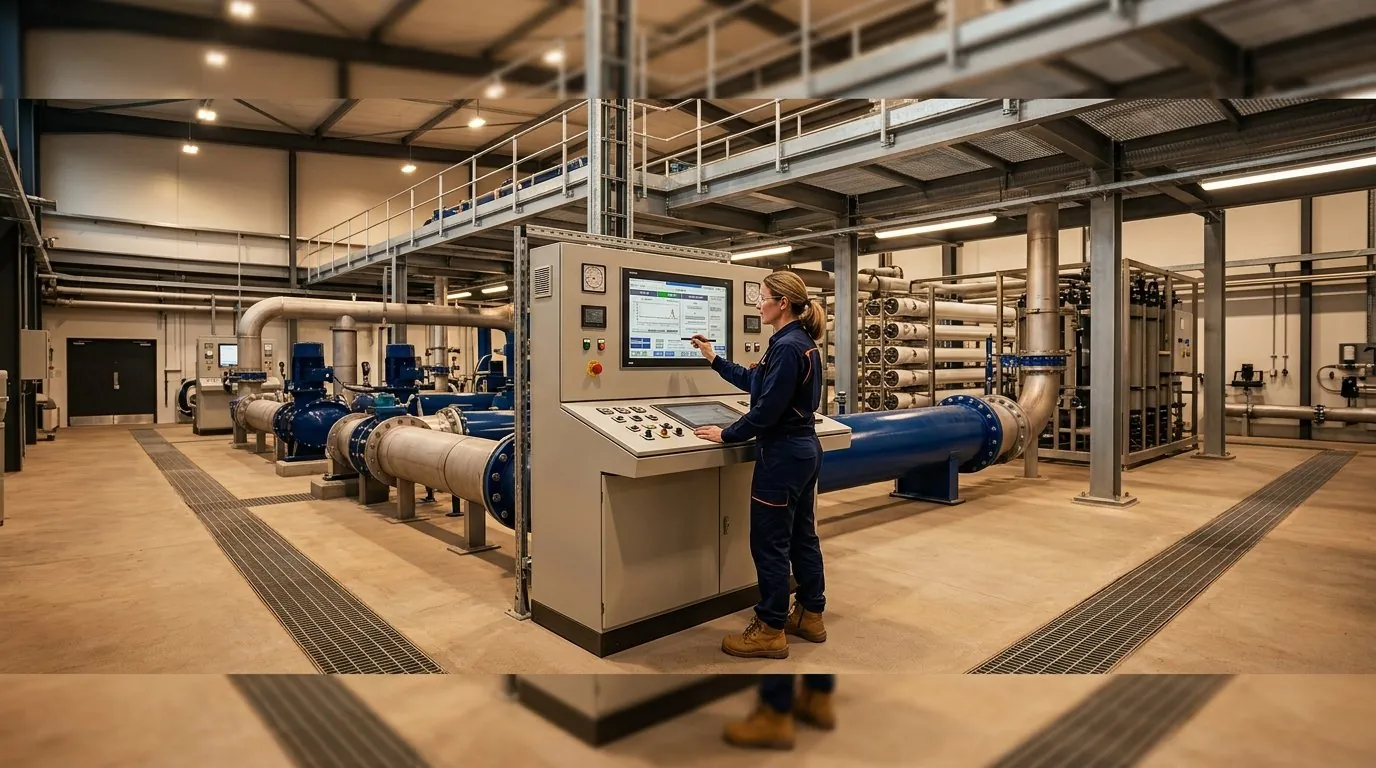
Qualifications in Utilities & Water
Browse every qualification in this industry, or filter by availability.
- Advanced DiplomaUET60222
Advanced Diploma of ESI - Power Systems
RegisterRegister interestDiploma of ESI Generation
RegisterRegister interestDiploma of Gas Supply Industry Operations
RegisterRegister interestDiploma of Water Industry Operations
RegisterRegister interestCertificate IV in ESI - Network Systems
RegisterRegister interestCertificate IV in ESI - Substations
RegisterRegister interestCertificate IV in ESI Generation
RegisterRegister interestCertificate IV in ESI Generation Maintenance - Electrical Electronics
RegisterRegister interestCertificate IV in ESI Generation Maintenance (Fabrication)
RegisterRegister interestQualification levels explained
Every nationally recognised qualification sits at a level on the Australian Qualifications Framework. Here is what each level means.
Why there are no AQF 7, 9 or 10 qualifications here
Levels 7, 9 and 10 are higher education qualifications: the bachelor degree, masters degree and doctoral degree, awarded by universities and other higher education providers. In higher education, recognition of prior learning is called advanced standing, and it is commonly capped at around 50% of a degree, as determined by the institution. It can never give you the whole qualification, so there is no RPL qualification at levels 7, 9 or 10.
However, a vocational qualification can often earn you credit towards part of a university degree, because the vocational and higher education systems are designed to work together. See how university credit pathways work.
RPL for Utilities & Water workers
Turn your experience in electricity, gas, or water utilities into nationally recognised Australian qualifications. RPL it helps you get formally qualified through our trusted RTO partners.
Your Utilities & Water experience has real value
You have spent years maintaining the critical infrastructure that powers and sustains our communities. Whether you operate within electricity generation, gas supply, or water treatment, your technical expertise is the foundation of the utilities sector. Recognition of Prior Learning acknowledges that the skills you have developed on-site are comparable to those taught in formal settings.
Your experience is not just time spent on the job; it is evidence of your capability. In the utilities and water industries, expertise is built through rigorous safety protocols and technical mastery. Your work in power systems, network substations, or wastewater monitoring provides a wealth of evidence for formal assessment.
We guide you in compiling this evidence—such as work logs, safety permits, technical reports, and supervisor verifications—to demonstrate your competency against national standards. This process respects your prior investment in your career, ensuring you do not have to repeat learning for skills you already possess. Qualifications are available from Certificate II through to Advanced Diploma levels, covering diverse roles from asset inspection and powerline vegetation control to water industry operations and ESI generation maintenance.
For those in senior technical or leadership positions, a Diploma of ESI Generation or an Advanced Diploma of ESI - Power Systems may reflect the complexity of your current responsibilities. If you have worked as a cable jointer, dam safety specialist, or network operator, there is likely a qualification that aligns with your professional history. Many qualifications within this sector, particularly in electricity transmission and distribution, carry licensing context.
While a nationally recognised qualification is a vital component of the licensing process in many jurisdictions, the final determination of a licence to practice rests with the relevant state or territory regulator. Our role is to help you present your experience clearly to the delivering RTO's qualified assessor. If the assessor identifies any specific gaps in your evidence, targeted training can be provided by the RTO at no additional cost where applicable.
Training packages on this page
- NWP National Water Training Package
- UEG Gas Industry Training Package
- UEP Electricity Supply Industry - Generation Sector Training Package
- UET Transmission, Distribution and Rail Sector
Roles we often see
- Systems Operation Technician (Electricity Supply Industry)
- Remote Community Utilities Worker
- Electrical/Electronic Maintenance Technician (Electricity Supply Industry)
- Water Treatment Technologist
- Recycling Coordinator (Water Industry)
- Essential Utilities Worker
- Power Systems Technical Officer
- Section Coordinator (irrigation)
- Operations Technical Officer (Electricity Supply Industry)
- Power Plant Operator
Evidence that supports your application
- Asset & Risk Management
- Certifications & Training
- Compliance & Leadership
- Cylinder & Gas Handling
- Design & Drafting
- Diagnosis & Testing
- Electrical Safety & Compliance
- Equipment & Load Shifting
- Equipment & Technology
- Equipment & Tools
RPL it Australia guides you through the process. The RTO tells you exactly what evidence it needs, assesses it and issues the qualification.
Frequently asked questions
Recognition of Prior Learning, your experience, and your next step.
Got more questions?What evidence do I need for a qualification in the utilities sector?
Evidence typically includes work logs, incident reports, safety permits, site inductions, and photographs of your work. For technical roles like powerline tradespersons or water treatment operators, we also look for supervisor reports and third-party verifications that confirm your ability to perform tasks safely and to industry standards.
Will an RPL qualification grant me an electrical or high-voltage licence?
A qualification such as a Certificate III in ESI - Distribution Overhead is a core requirement for many licences, but the qualification itself is not a licence. Once the RTO issues your nationally recognised qualification, you must apply to the relevant state or territory regulator, who will determine your eligibility for a licence to practice.
I work in a remote area; can I still complete the RPL process?
Yes. The RPL process is designed to be accessible regardless of location. We guide you in gathering digital evidence, and the RTO's assessor may use video technology, phone interviews, or workplace documents to verify your competency without requiring you to travel to a campus.
What happens if my experience only covers part of a qualification?
During the initial review, we will be honest about whether your experience aligns with the full qualification. If the RTO assessor finds that your evidence does not cover every unit, they will identify specific gaps. The RTO can then provide targeted gap training to help you meet the full requirements at no additional cost where applicable.
How long does the RPL process take?
Most candidates who submit a complete evidence portfolio receive their qualification within 4 to 6 weeks from RTO assessment. The total timeline depends on evidence readiness. Strong documentation can help the process move quickly, while evidence gaps or gap training may take longer.
Is an RPL qualification the same as one from TAFE?
Yes. An RPL qualification is issued under the Australian Qualifications Framework, the same framework that governs qualifications from TAFE colleges and all other Registered Training Organisations. It carries the same national recognition. Licensing requirements vary, so check with the relevant authority.
How much does RPL cost?
RPL costs vary by qualification level, complexity, and number of units. Because RPL assesses what you already know rather than teaching new content, it is typically less expensive than full enrolment. Contact our team for a tailored quote. Payment plans are interest-free with no establishment fee, and the instalment schedule and any extension fee that could apply are set out in your quote.
What evidence do I need for RPL?
Evidence can include your resume, reference letters from employers, photos or videos of your work, previous qualifications and certificates, job descriptions, and any other documentation that demonstrates your skills and knowledge. The RTO tells you exactly what evidence it needs for your specific qualification, and your RPL it consultant helps you put it together.