Start My Skills Review
Register interest

Certificate III in ESI - Very Remote Community Utilities

This qualification provides the skill and knowledge to work on very remote community utility systems as a remote community utilities worker in the electricity supply industry (ESI). The qualification covers the skills and knowledge to operate, monitor and maintain generation power systems, distribution electrical network circuits and apparatus, and specialisations in power and water systems. Combined Specialist – Power and Water Systems This combined specialisation covers the skills and knowledge required to work on very remote community utility power and water systems. Specialist – Power Systems This specialisation covers the skills and knowledge required to install, operate, monitor and maintain distribution overhead and underground networks and customer connections. It also includes the skills and knowledge required to monitor and maintain renewable energy systems. Specialist – Water Systems This specialisation covers the skills and knowledge required to install, operate, monitor and maintain water systems. All work on power systems will be undertaken on isolated assets other than for testing purposes. The use of support plant and equipment to perform these tasks and environmental requirements also play a part in this qualification. Please note: RTO to insert on the testamur, the specialisation selected from the specialist elective unit group below. Very Remote Communities: means a community with restricted access and very little accessibility of goods, services and opportunities for social interaction. Supporting information on the classification of a very remote community can be defined using the latest version of Accessibility/Remoteness Index of Australia (ARIA) (excluding mine sites). Isolated: Means disconnected from all possible sources of electricity supply by means that prevent unintentional energisation of the apparatus and that are assessed as a suitable step in the process of making safe for access purposes. That is for high voltage (HV) (short-circuited and earthed) and for low voltage (LV) (short-circuited to the neutral). The application of the skills and knowledge described within the units in this qualification may require a licence/registration to practice in the workplace. Other conditions may also apply under state and territory legislative and regulatory licensing requirements which must be confirmed prior to commencing this qualification.

Register your interest and we will email you if this qualification opens through a delivering RTO.

Important:RPL it Australia is a student support service. All assessment and qualification issuance is conducted by the delivering Registered Training Organisation. RPL it does not deliver training, conduct assessments, or issue qualifications.

Qualification overview
UET30921
LevelAQF 3Certificate III
Units
PackageUETTransmission, Distribution and Rail Sector
AvailabilityNot yet available through RPL it. No delivering RTO, fee or timeline is confirmed yet. Registering interest is not an enrolment and does not guarantee future availability.
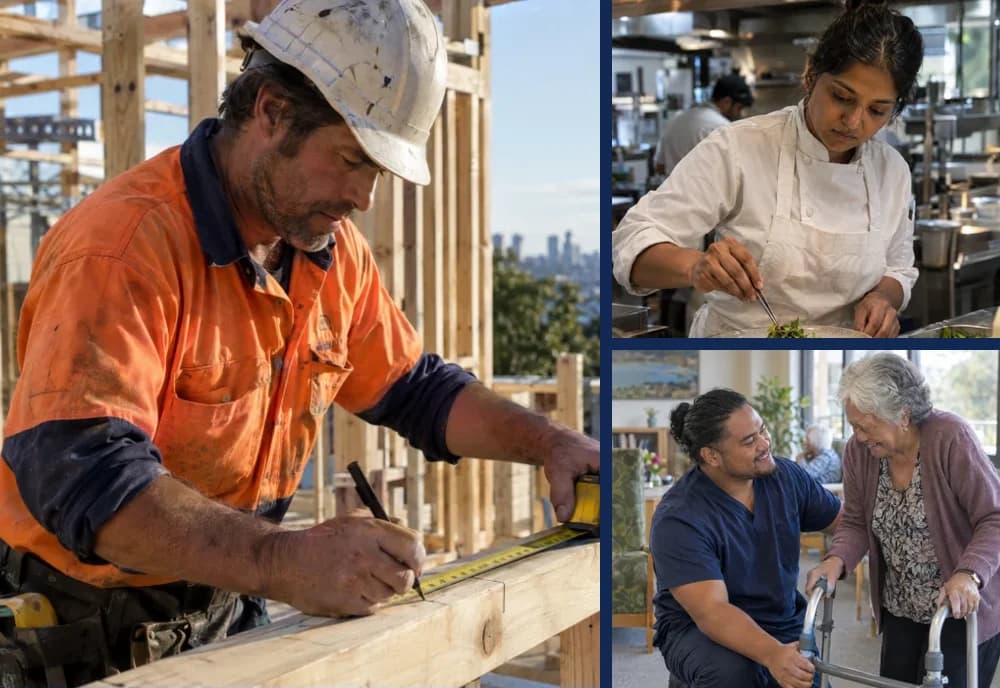
A carpenter marking timber framing on a building site, a chef plating a dish in a commercial kitchen, and an aged care worker helping a resident with her walking frame
Recognition of Prior Learning

What is an RPL qualification?

Recognition of Prior Learning assesses skills you already have against a nationally recognised qualification. Demonstrate competency, and you receive the same nationally recognised qualification, issued by a registered training organisation (RTO), as someone who completed the full course.

Who is eligible for RPL?

  • You have years of experience in your field
  • You learned the work on the job, through mentoring or on your own
  • You need the qualification for licensing, promotion or migration
  • You hold overseas qualifications you want recognised in Australia
An RPL it team member sorting an electrician's job photos and reference letter into his evidence folder at a ute tailgate on a building site

If This Qualification Opens Through an RTO

  1. Register interest

    Tell us you are interested in UET30921. There is no commitment or obligation.

  2. Availability confirmed

    We contact you when a suitable delivering RTO and current servicing details are confirmed.

  3. Evidence planning

    If you choose to proceed, we help you understand the workplace evidence an RTO may need to review.

  4. RTO assessment

    Formal assessment and any qualification outcome are handled only by the delivering Registered Training Organisation.

Career Outcomes

Explore Roles Associated with this Qualification

If your current or past work looks like one of these roles, this qualification may suit you.

  • 01

    Remote Community Utilities Worker

    Inspecting and maintaining public utilities within very remote communities to ensure essential service continuity.

  • 02

    Power Systems Specialist

    Operating and maintaining distribution overhead and underground networks specifically for isolated community power systems.

  • 03

    Water Systems Specialist

    Installing and monitoring water infrastructure within remote community settings to meet health and safety standards.

Evidence Checklist

What Suitable Evidence Can Support Your Evidence Portfolio?

Your consultant can help you identify relevant workplace records. The delivering RTO decides whether the evidence is sufficient and current.

Work History & Roles
  • Detailed CV or work history outlining remote utility experience
  • Position descriptions for remote community utilities roles
  • Employer references or statutory declarations from supervisors

Power Generation & RAPS
  • Maintenance logs for remote area power supply (RAPS) systems
  • Operational records for renewable energy and generator sets
  • Evidence of monitoring and maintaining isolated power plant

Utility Systems & Maintenance
  • Work orders for distribution electrical network circuits
  • Records of water system installation or maintenance tasks
  • Photos or videos of utility component fabrication and assembly

Safety & Technical Control
  • Safe Work Method Statements (SWMS) for isolated assets
  • Records of low voltage electricity network switching
  • Evidence of working safely in the vicinity of live apparatus

Technical Documentation
  • Use of drawings, diagrams, and standards in remote settings
  • Problem-solving reports for electrical network apparatus
  • Compliance documentation for environmental requirements

Qualfication comparison

RPL and Traditional Study

Two routes to the same qualification, assessed against the same RTO competency standards.

RPL PathwaySupported by RPL it, assessed by the RTO
Traditional StudyDelivered and assessed by the RTO
Starting point
Your existing, current workplace skills and evidence
A planned course of learning and assessment
How competency is shown
Workplace evidence mapped to the qualification requirements
Learning activities, assignments, practical work, and assessment
Assessment decision
Made by a qualified assessor from the delivering RTO
If gaps are identified
Additional evidence or targeted gap training may be required
Learning and assessment continue through the course structure
Qualification outcome
Issued only when the RTO determines all requirements are met

RPL it Australia reviews

What our clients say

Selected Google reviews. Individual experiences vary. Every applicant is assessed against the same requirements, and some require gap training or additional evidence.

Frequently asked questions

Recognition of Prior Learning, your experience, and your next step.

Got more questions?
Can I apply for this qualification now?

Not yet. The Diploma of Conservation and Ecosystem Management is not currently available through RPL it Australia, and no delivering RTO, fee or timeline is confirmed. Registering interest is not an enrolment and does not guarantee future availability.

What happens after I register my interest?

We keep your details and email you if this qualification opens through a delivering RTO. At that point we explain which RTO would assess you, the fee and the evidence it needs, and you decide whether to go ahead. Registering interest is free and there is no obligation.

Can I start preparing evidence now?

You can start keeping records of your work, such as position descriptions, references and examples of projects you have worked on. The evidence checklist on this page gives examples. The delivering RTO decides what evidence it needs and whether it is sufficient, so what you gather now may not cover everything.

Is there a qualification I can apply for now?

Possibly. The related qualifications on this page are open for applications. You can also start a free skills review and we will tell you whether any qualification that is open now suits your experience.