The administrative hurdle stopping skilled migrants from working in Australian healthcare
Overseas-trained healthcare workers face a common compliance barrier. Here is the regulatory reason why, and the pathway to avoid starting over.

The wall has a name, and it is not about your skills
You have years of practical experience in patient care, clinical support, and ward routines. This is knowledge gained through work, not just study. Yet in Australia, you are told your qualifications do not count.
That is not entirely accurate. What is happening is highly specific, and understanding the system makes the path forward much clearer.
The barrier is not a judgment of your ability. It is a compliance rule in the Australian healthcare regulatory system. Employers and facilities usually require workers in health services assistance roles to hold a nationally recognised Australian qualification, specifically the Certificate III in Health Services Assistance (HLT33115). This requirement applies regardless of your overseas training, your years of experience, or how highly regarded your home qualification is.
The barrier is real, but it is not about your skills. It is about compliance, and regulatory compliance follows a logical process you can work with.
Why Australian healthcare has a mandatory certification layer
Australia uses a standardised system called the Australian Qualifications Framework (AQF). Under this framework, qualifications are structured around specific units of competency, which are defined, assessable skills and knowledge areas. A qualification is only nationally recognised when it is assessed and issued by a Registered Training Organisation (RTO) registered with the Australian Skills Quality Authority (ASQA).
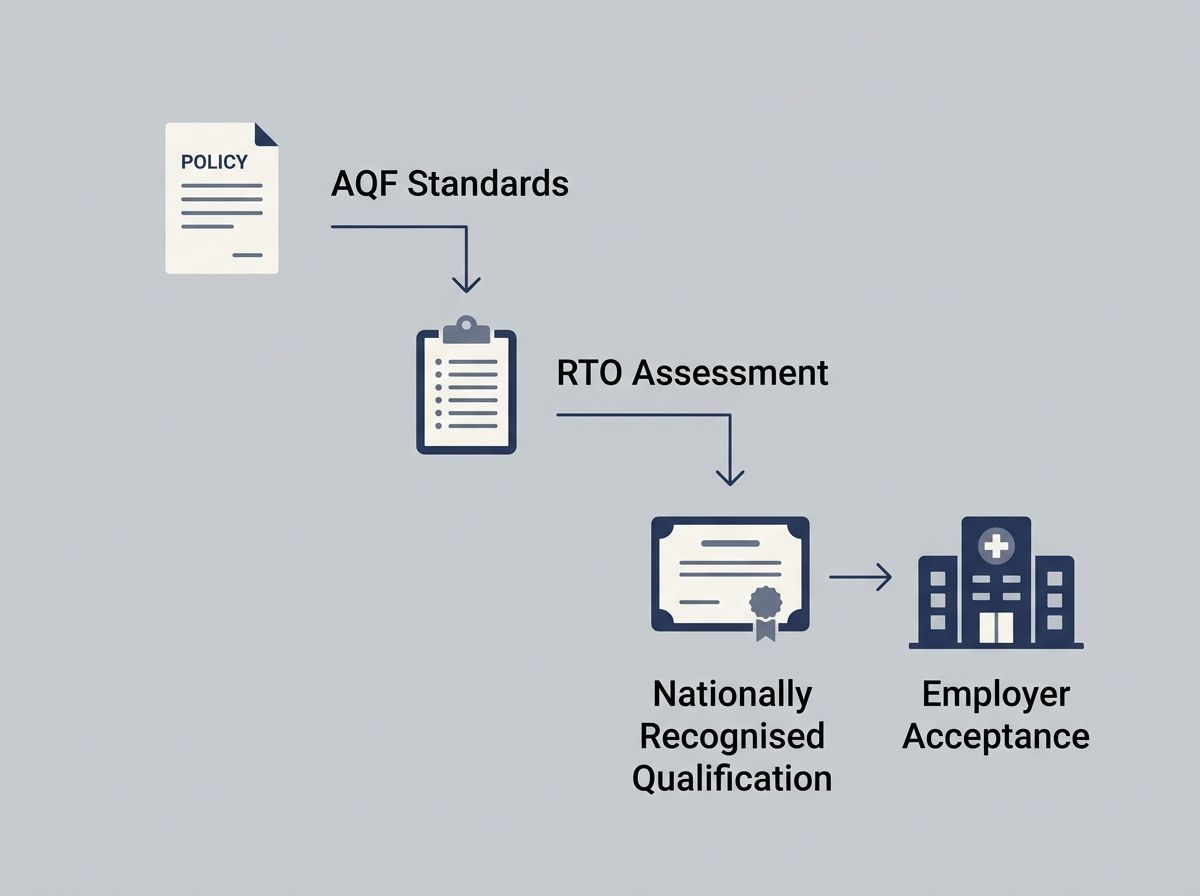
This system exists for a clear reason. Healthcare requires strict standards. Standardised assessments set a reliable baseline across the workforce, ensuring that everyone holding a Certificate III in Health Services Assistance has been evaluated against the same units, by a regulated body, to the same national standard. The goal is patient safety and workforce accountability, rather than simple administrative gatekeeping.
The result for overseas-trained workers is a significant hurdle. An overseas qualification, even a high-quality one from a reputable institution, was not assessed by an Australian RTO against Australian competency units. Because it sits outside this compliance framework, Australian employers and facilities cannot verify it against the national standard and cannot accept it instead of the local qualification.
The specific gap overseas-trained workers fall into
Here is the key distinction: the Australian system does not compare your raw skills to Australian standards. It compares your credential structure to Australian credential structures. These are two different things.
A healthcare assistant trained in the Philippines, a nursing aide from India, or a medical support worker from the United Kingdom may have practical skills equivalent or superior to someone trained in Australia. However, their credentials do not map to the specific units of competency within HLT33115. The gap is administrative, not practical.
Mutual recognition agreements, where one country accepts another's qualifications, are limited in Australian healthcare. When they do exist, they generally apply to registered professionals like doctors and nurses rather than healthcare support staff. For most overseas-trained assistants and support workers, no direct recognition pathway exists. The credential does not translate through the regulatory system.
This is an administrative gap, not a skills gap. This distinction matters because the pathway for resolving an administrative issue is different from the path to fix a skills shortage.
Why starting over is not the only answer
Recognition of Prior Learning (RPL) is a formal assessment pathway within the Australian Qualifications Framework. It is not a shortcut or a loophole. It is the official mechanism the AQF provides for professionals who have already built the skills and knowledge required for a qualification through practical experience instead of local classroom study.
For the Certificate III in Health Services Assistance (HLT33115), RPL involves an assessor from a registered RTO evaluating your existing skills against the specific competency units of the qualification. If you can demonstrate competency through practical evidence of your experience, you do not need to repeat training you have already completed.
Recognition instead of repetition is the core principle of the RPL process.
RPL is a rigorous assessment process, not a rubber stamp. If gaps are identified between your existing skills and Australian competency standards, targeted training is typically used to address them. The goal is a genuine evaluation of your skills, which is why the resulting qualification is nationally recognised and accepted by employers.
What the RPL assessment for the Certificate III in Health Care actually evaluates
The assessment does not focus on where you trained or the specific name of your overseas certificate. It evaluates what you can demonstrate against the specific competency units of HLT33115.
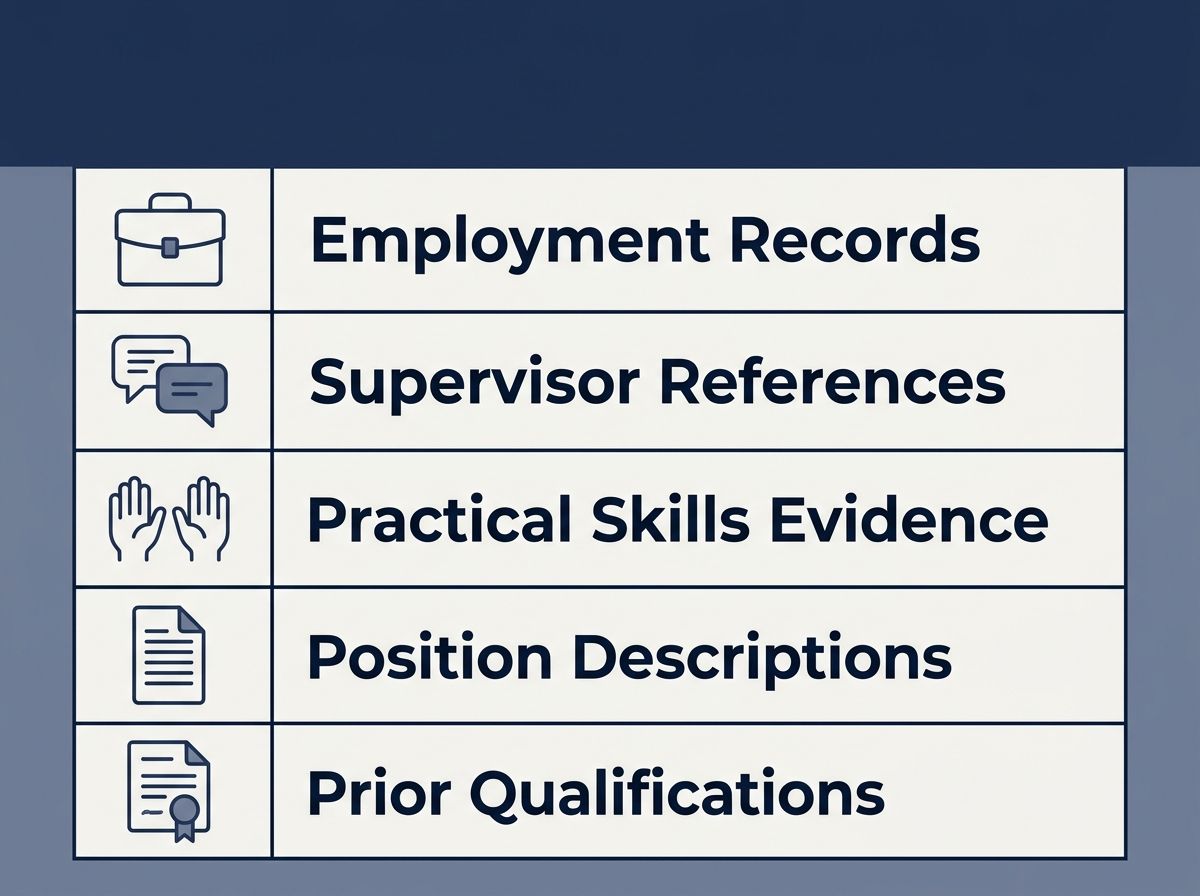
The Certificate III in Health Services Assistance covers areas like patient and client support, infection prevention, workplace communication, and safe work practices in clinical environments. An RPL assessment evaluates whether you can demonstrate capability in these areas using evidence from your actual work history.
Standard evidence types used in RPL assessments for HLT33115 typically include:
- Employment records and payslips showing your role and how long you have worked in healthcare settings
- References or reports from supervisors or senior colleagues who can verify your practical skills
- Documentation of tasks performed, such as patient handling, infection control, and clinical support activities
- Skills demonstrations or professional discussions with an assessor about how you handle clinical scenarios
- Overseas qualifications and academic transcripts, which act as supporting evidence of your training background
Timeframes for an RPL assessment vary depending on the RTO and how complete your evidence is. The process is not instant, as a genuine competency evaluation requires careful review. Your RTO will guide you on what is needed and how long the process will take based on your circumstances.
If gaps are identified during the evaluation, gap training is provided to cover them. This is a normal part of the RPL process, not a failure. It simply means the assessment has found specific areas where more evidence or practice is required before the qualification can be issued.
Is RPL the right pathway for you?
RPL for HLT33115 is best suited to individuals with genuine, documented healthcare experience. This includes those who have worked in healthcare support roles, can provide proof of their work, and have supervisors or colleagues who can confirm their clinical skills.
It is not a suitable pathway if you have limited practical exposure to healthcare settings. The assessment is thorough, and the qualification is nationally recognised because the standards are strictly maintained. Enrolling without enough experience is not in your interest or the industry's.
The most practical first step is a suitability check rather than an enrolment. Understanding how your experience fits Australian competency requirements before committing to a program is the logical way forward. It respects your time and gives you clear direction.
If your experience is genuine and documented, the pathway is open. The administrative gap is real, but you can navigate it. Your skills are valid, and the main task is presenting the evidence in a format the Australian system recognizes.
Ready to Get Recognised?
Start with a free skills review to find out if RPL is right for you.