What a WHS audit actually checks for, and why experience alone is not enough
WHS auditors check for documented evidence, not just daily competency. Learn why formal qualifications matter for experienced safety staff during an audit.
By RPL it Australia7 min read
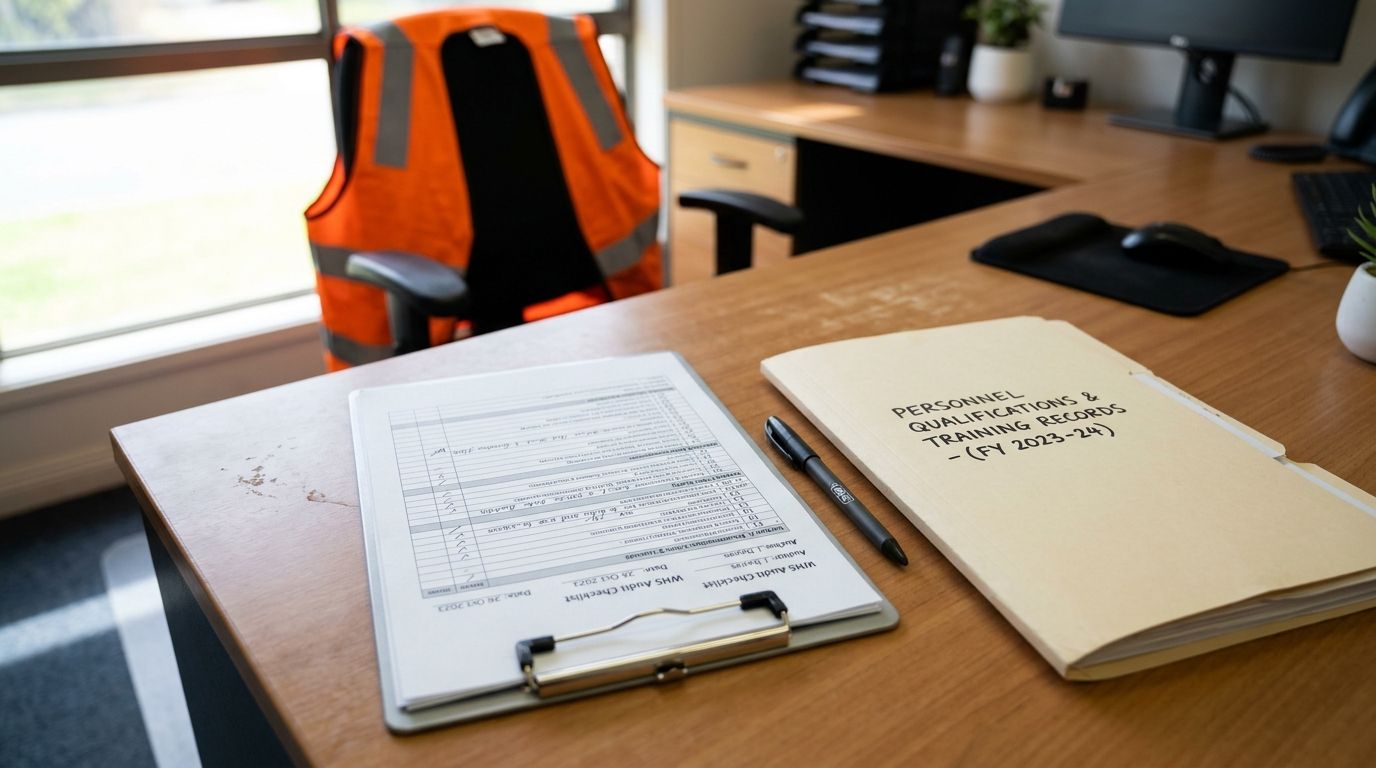
What most people assume a WHS audit checks
The assumption is understandable. Most people believe a WHS audit evaluates whether a workplace is safe by looking at documented procedures, hazard management, and incident response. This assumption is only partially correct. It overlooks the specific layer that often catches experienced safety teams unprepared.
A WHS audit checks whether the people responsible for safety hold the required formal credentials. The audit does not assess their practical capability; it verifies that they are documented as qualified. These are two distinct concepts, and the distinction is important when an auditor works through a compliance checklist.
Most audit preparation focuses on workplace systems. However, the personnel credentials layer is where experienced but uncredentialed safety staff can create compliance exposure. Managing this risk requires a clear understanding of how audits operate in practice.
The two areas a WHS audit evaluates
A WHS audit operates on two parallel tracks.
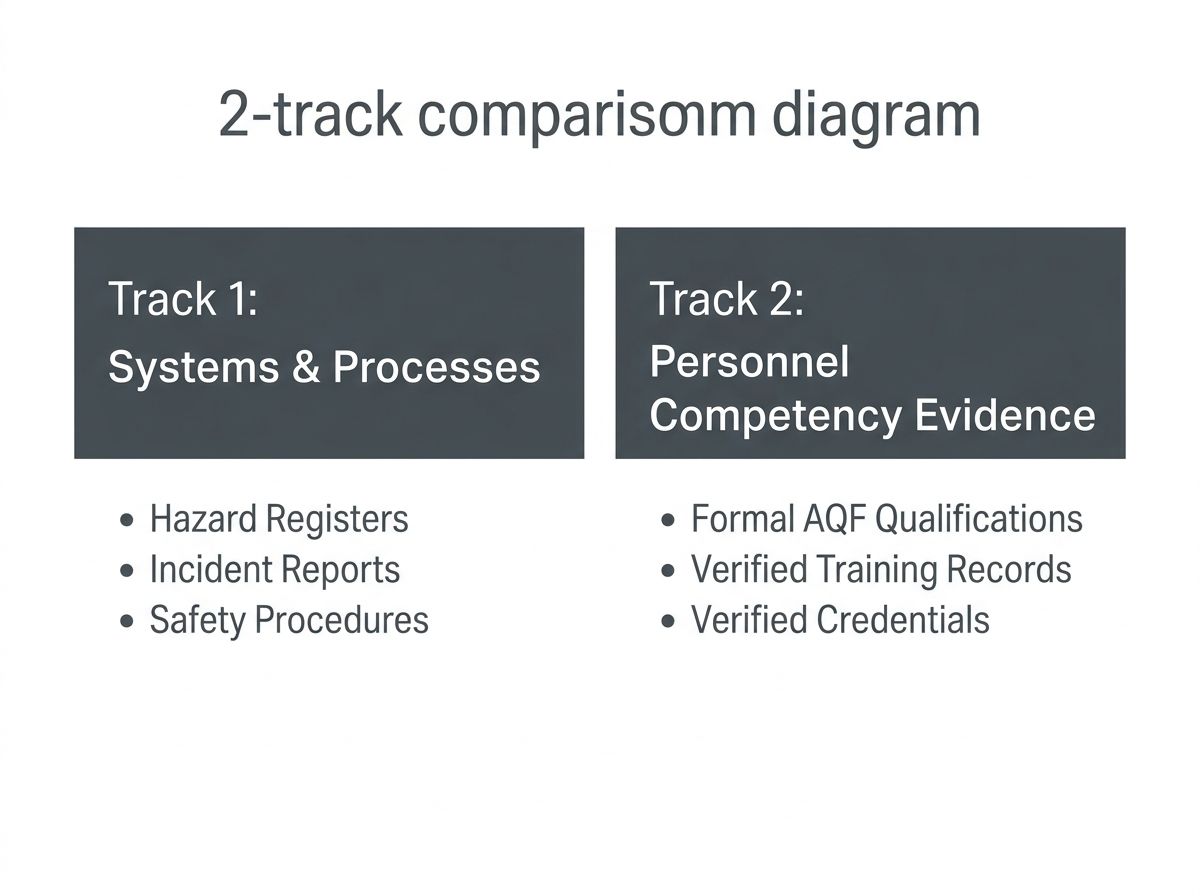
The first track covers systems and processes. It asks whether the correct procedures are established, documented, and followed. It looks for evidence of hazard identification, risk assessment, incident investigation, and consultation. Most audit preparation focuses here, as these activities form the operational core of WHS compliance.
The second track is personnel competency evidence. It checks whether the individuals responsible for safety hold documented proof of their qualifications. While less visible in daily operations, this is a standard component of formal WHS audit frameworks. Auditors working under recognised standards, including internal compliance reviews, third-party certification audits, and regulatory assessments, must verify that safety personnel are qualified for their roles. In a formal audit, competency is verified through documentation.
This is the requirement that experienced safety staff often discover too late. Their practical skills are real, but their formal documentation of those skills is often missing.
Why 'years of experience' is not audit-passable evidence
This distinction is the core point that many guides overlook.
Auditors do not assess actual hands-on performance during an audit. They do not watch a WHS officer manage a hazard identification process in real time, nor do they evaluate an incident investigation as it unfolds. Instead, they examine existing records, registers, certificates, and files.
A worker who has managed safety systems for a decade, conducted incident investigations, and trained staff has genuine capability. That capability is not in question. However, when an auditor asks for evidence of qualification, a statement like 'ten years of experience' is not a document they can record and file as a conformance.
A Certificate IV in Work Health and Safety is a document that can be sighted and recorded. It satisfies the compliance requirement in a way that undocumented experience cannot.
This requirement is a standard feature of formal assessment, not a flaw in the audit system. Auditors cannot evaluate practical competency from scratch during a short site visit. Their role is to verify that documented evidence of competency is already on file. This means the compliance gap is not a reflection of the worker's actual capability, but rather the format in which that capability is recorded.
While experience demonstrates practical competency, a formal qualification provides the documented evidence that audits require.
What the Certificate IV in Work Health and Safety covers and why it acts as audit evidence
The Certificate IV in Work Health and Safety (BSB41419) is a nationally recognised qualification under the Australian Qualifications Framework. It covers the core competencies required to implement and manage safety systems in Australian workplaces, including hazard identification, risk assessment, incident investigation, compliance, consultation, and WHS management systems.
When an auditor sees BSB41419 on a personnel file, it provides clear and recognisable evidence of competency. As an AQF qualification issued by a Registered Training Organisation following formal assessment, it satisfies the personnel competency requirement directly without requiring further verification.
This explains why the qualification is valuable even for staff who already perform their safety duties effectively. The issue is not their skill level, but the fact that unrecorded experience cannot be processed as a conformance. The BSB41419 qualification translates their practical capability into a format that auditors can verify.
Scenarios where the qualification gap becomes visible
The gap between practical WHS competency and formal credentials typically surfaces in three specific situations.
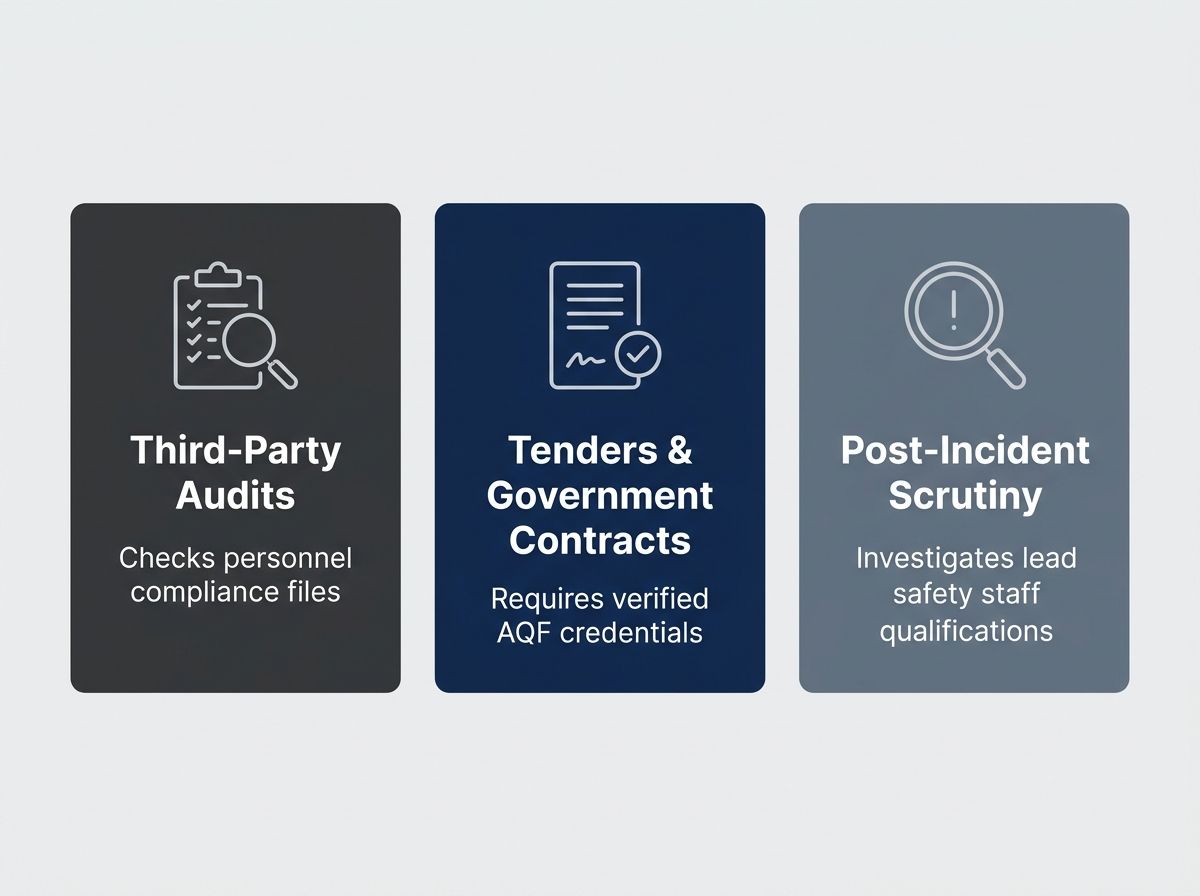
The first situation is a third-party certification audit. Organisations seeking or maintaining certification against WHS management standards must demonstrate personnel competency. Auditors conducting these reviews verify that safety staff are qualified to perform their roles, and they do this by examining records. An experienced safety officer who lacks a formal qualification leaves a gap in the personnel files that the auditor is required to document.
The second is government contract and tender compliance. Many public sector procurement frameworks in Australia require safety personnel to hold specific qualification levels. When a business tenders for work or undergoes a contract compliance review, these qualifications are often mandatory criteria. Work experience cannot substitute for a formal qualification certificate in these processes.
The third situation involves post-incident regulatory scrutiny. If a serious safety incident occurs, regulators and investigators look closely at both your safety systems and the people who manage them. This investigation often includes reviewing the formal qualifications of your safety officers. An experienced safety manager without a formal credential may face heightened scrutiny during this process.
In all of these situations, the focus is not on the officer's day-to-day capability, but on the documented evidence of their qualification. Practical experience addresses capability, while a BSB41419 certificate provides the necessary documentation.
Why experienced WHS staff are well suited for RPL
Recognition of Prior Learning (RPL) is an established assessment pathway that translates practical competency into a formal qualification. For experienced safety professionals, this is a standard and appropriate assessment method rather than a shortcut.
The evidence required for an RPL assessment already exists in the daily work of experienced safety staff. This documentation includes safety management plans, incident investigation reports, training records, hazard registers, and supervisor references. The RPL process evaluates whether these existing materials demonstrate the competencies required for the BSB41419 qualification. For practitioners who have spent years managing safety systems and risk assessments, this evidence base is usually already complete.
These professionals have often already met the requirements through their daily work; they simply need their skills formally assessed and certified.
The RPL process is a rigorous assessment conducted by a qualified assessor from a Registered Training Organisation. Rather than a simple administrative tick, it requires a genuine review of evidence. If the assessor identifies any knowledge gaps, targeted training is provided to address them. This rigor ensures the qualification is recognised and accepted during audits.
The RPL process for safety practitioners
The RPL pathway for the BSB41419 qualification consists of four main stages.
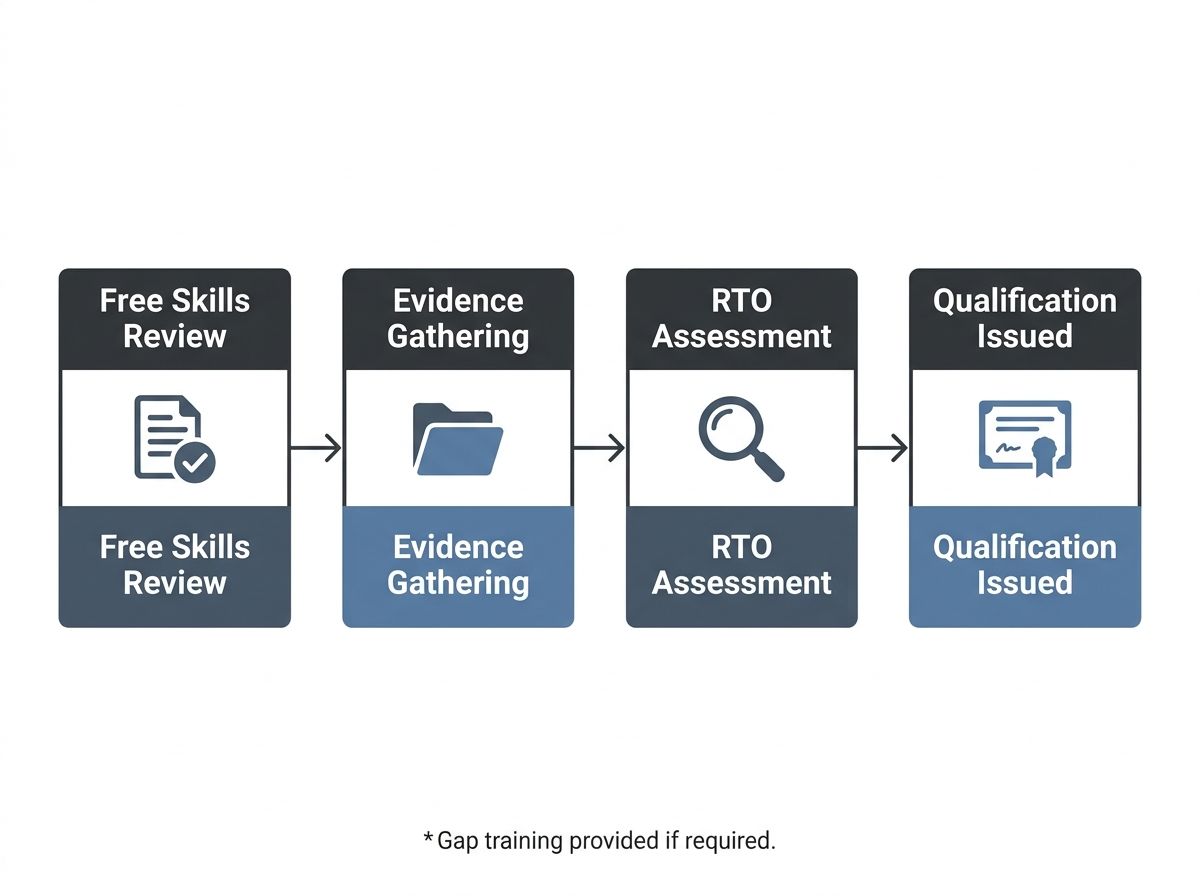
- A Free Skills Review to evaluate whether your safety experience aligns with the qualification requirements. This initial step provides a clear assessment of suitability before you make any commitment.
- Evidence gathering, which involves collecting workplace records, safety plans, training files, and professional references that demonstrate capability. RPL it guides you through this process to help organize the documentation you already have.
- Formal assessment by a qualified assessor from a Registered Training Organisation. The assessor reviews your documented evidence against the national training standards to verify your skills.
- Qualification issuance by the RTO once competency is verified. The Registered Training Organisation, rather than RPL it, performs the final assessment and issues the certificate. If the assessor identifies any gaps, further training is provided to complete the qualification.
The timeframe for completing the RPL assessment depends on how quickly you gather your evidence and the RTO's processing schedule. Because assessment is completed by the partner RTO, RPL it does not set or guarantee specific turnaround times.
This process is rigorous to ensure the integrity of the qualification. A BSB41419 certificate issued via RPL carries the same national recognition as one earned through classroom study, as both pathways assess candidates against the same standards. This equal standing ensures the certificate is fully accepted when an auditor requests personnel records.
Addressing the qualification gap before the audit begins
The ideal time to address a qualification gap is before an auditor identifies it. Once an auditor records a non-conformance against your personnel files, you are forced to manage an active finding rather than preventing a compliance issue.
A Free Skills Review with RPL it clarifies whether your existing safety experience meets the BSB41419 requirements. The review is completely free and carries no obligation to proceed. It provides a straightforward assessment of whether RPL is a viable option for your team, which is valuable information to have before scheduling an audit.
For businesses preparing for an audit, confirming the qualification status of your staff is a practical first step. Once you have this clear picture, you can make an informed decision on how to proceed.
General information only, current at the date shown. Licensing rules change, so check the current requirements with the relevant regulator before you rely on them. RPL it Australia is a student support service, not a Registered Training Organisation; qualifications are assessed and issued by our partner RTOs.