The hidden barrier: why thousands of skilled migrants are working below their capacity
Thousands of skilled migrants in Australia work below their qualifications. Learn why, and how RPL pathways can help close the recognition gap.
By RPL it Australia6 min read

You have the experience. A decade of it, perhaps more. Back home, you were respected: a specialist, a manager, a practitioner with a track record. Here in Australia, the formal systems governing employment, licensing, and professional registration often cannot see any of it. Not because your expertise is missing, but because it exists in the wrong form.
This is not an isolated frustration. It is a pattern that repeats across thousands of skilled professionals who arrive in Australia each year. It has a name: brain waste, the systematic underutilisation of qualified talent because overseas credentials do not automatically translate into Australian recognition.
A problem bigger than any individual
When a skilled migrant takes a job below their qualification level, it is easy to see that as a personal setback: a temporary compromise while they find their footing. But research consistently points to a structural issue. Skilled migrants across healthcare, engineering, information technology, trades, and business management routinely find that their overseas qualifications are not recognised by Australian employers, licensing bodies, or professional associations. This is not because their skills are missing, but because the credential framework is different.
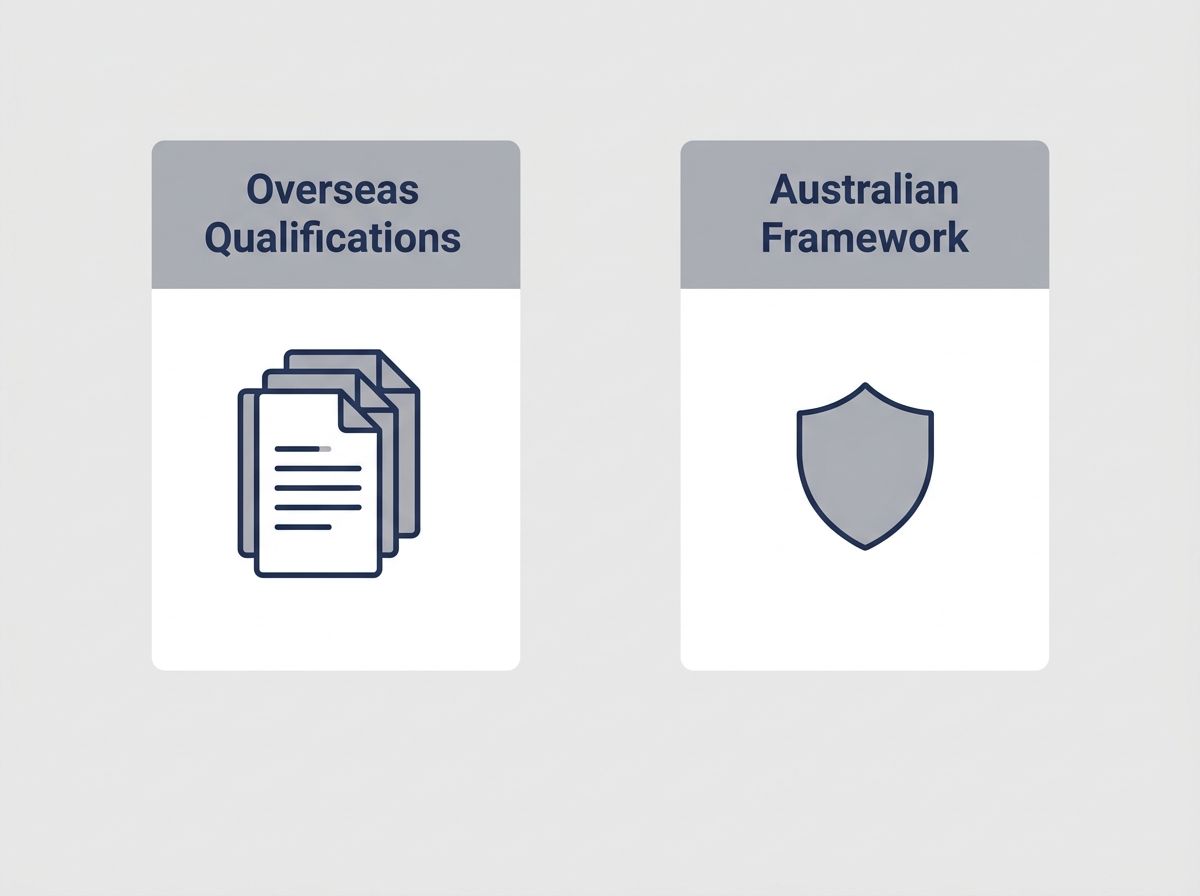
The gap is systemic. Australian qualification standards are built around the Australian Qualifications Framework (AQF). Overseas credentials, even from highly regarded institutions, are assessed against a different reference point. The result is that demonstrated competence, built over years of real-world practice, becomes invisible the moment it crosses a border.
This is the hidden barrier. Rather than a gap in skills, it is a gap in recognition.
Why the system cannot see your credentials
The Australian recognition system was not designed to be hostile to overseas-trained professionals. It was designed for a different starting point, one where qualifications are issued within a known framework, assessed against known standards by known institutions. When a credential arrives from outside that framework, the system has no reliable mechanism to evaluate it without a formal assessment process.
This creates a structural mismatch. A nurse trained in the Philippines, an engineer qualified in India, or an IT professional certified in South Africa all carry genuine expertise. But the Australian licensing or registration body responsible for their profession must assess competence against Australian standards. Without a formal bridge, the credential remains unrecognized.
The professions most commonly affected include healthcare, engineering, construction, trades, information technology, and business management. These are precisely the sectors where Australia faces documented skills shortages. The people most needed are often already here, simply working below their capacity because the formal recognition pathway has not been navigated.
What this looks like in practice
The experience tends to follow a recognisable sequence. A skilled professional arrives in Australia and discovers their overseas qualification is not automatically recognised. They are directed toward a skills assessment body such as VETASSESS, the Trades Recognition Authority, Engineers Australia, AHPRA, or another relevant authority depending on their profession. The assessment finds gaps, not in practical capability, but in the formal documentation of that capability against Australian standards. They are advised to undertake further study, which covers material they have already mastered.
This is the loop. It is not a personal failure, but the structural outcome of a recognition system built around local credentials rather than international ones.
The cost of leaving this unresolved
When skilled professionals work below their qualification level, the cost is personal and economic. Australia faces documented shortages in healthcare, construction, engineering, and technology. Qualified professionals in those fields, who are already living and working in Australia, are underutilised because their credentials have not been formally recognised. The skills shortage and the recognition gap exist at the same time in the same labour market.
For the individual, the cost is measured in salary, career progression, and professional identity. For the broader economy, it is measured in lost productivity: the gap between what a workforce could contribute and what it actually does.
Recognition is not a bureaucratic nicety. It is the mechanism that connects demonstrated capability to formal opportunity. Without it, experience remains invisible, and invisible experience cannot be deployed where it is most needed.
Why starting over is not the only answer
Recognition of Prior Learning (RPL) is a nationally recognised assessment pathway under the Australian Qualifications Framework. It does not teach you what you already know. Instead, it assesses whether you can demonstrate that knowledge against the specific competency standards of an Australian qualification.
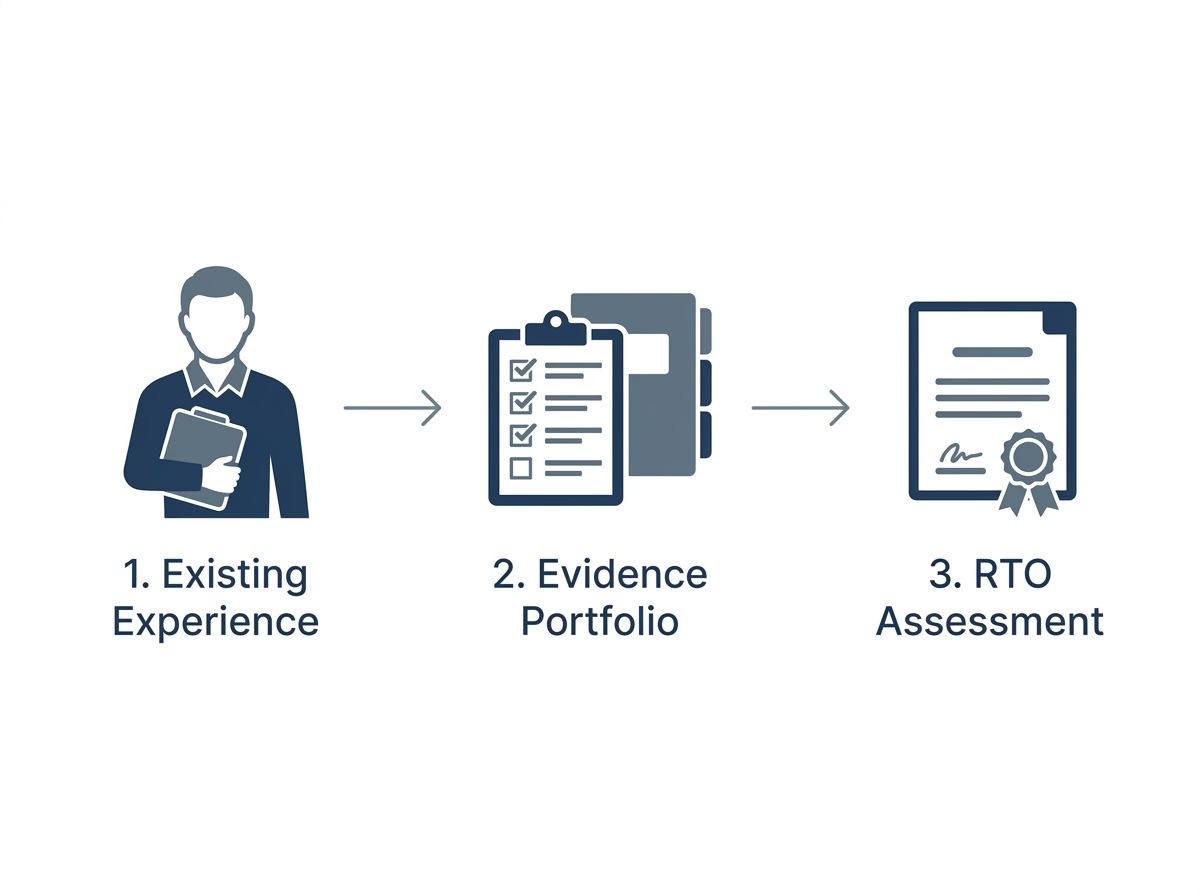
This distinction matters. RPL is neither a shortcut nor a workaround. It is a rigorous assessment process, conducted by a registered training organisation (RTO), that evaluates your existing skills and knowledge against the units of competency making up a formal Australian qualification. If the assessment identifies gaps, those are addressed. If it confirms competency, the qualification is issued because the skills are genuine.
For skilled migrants, RPL offers an alternative to the standard study pathway: a process that starts from what you already know, rather than assuming you know nothing. Your overseas experience, including your years of practice, your professional record, and your achievements, becomes evidence. Guided documentation is the process of presenting this evidence in a format the assessor can evaluate.
Which qualifications can be assessed through RPL in Australia
The range of qualifications assessable through RPL in Australia is broader than most skilled migrants realise. Pathways exist across various AQF levels, including Certificate III, Certificate IV, Diplomas, and Advanced Diplomas. These pathways span industries such as healthcare, community services, construction, engineering, information technology, business, hospitality, and trades.
The specific qualifications available depend on the RTO conducting the assessment. RPL it works with registered training organisations to guide candidates through the assessment process, including the initial suitability review, evidence gathering, and formal assessment.
To explore the RPL qualifications available in Australia across different industries and levels, the RPL Qualifications page is a practical starting point.
RPL pathways also extend beyond the vocational education and training (VET) sector. For skilled migrants with graduate-level overseas qualifications, higher-level recognition pathways exist, including the Diploma of Business and graduate-level qualifications.
The first step is finding out whether you qualify
RPL is not the right pathway for everyone. The clear answer to whether this applies to you depends on your specific profession, your qualification level, the documentation you can provide, and the regulatory requirements of your target role in Australia. These questions deserve a genuine answer rather than a sales pitch.
A Free Skills Review is where that answer begins. It costs nothing, carries no obligation, and gives you a clear picture of whether RPL is a viable pathway for your situation before you commit to anything.
You have the experience. The question is whether it can be formally recognised, and that question deserves a straightforward answer.
General information only, current at the date shown. Licensing rules change, so check the current requirements with the relevant regulator before you rely on them. RPL it Australia is a student support service, not a Registered Training Organisation; qualifications are assessed and issued by our partner RTOs.