What most RPL provider reviews don't tell you about the visa process
Comparing RPL providers? Most reviews miss the one factor that matters for visa applicants: alignment with the skills assessment your visa pathway requires.

The review you read isn't the review you need
You have done the research. You have read the star ratings, scrolled through the comments, and compared turnaround times. The problem is not that you have been careless; it is simply that the research you are currently doing does not cover the specific information you need to support your migration pathway.
RPL provider reviews, as they appear on Google and other major review platforms, measure real factors. They track responsiveness, whether the provider answered emails on time, whether the qualification arrived when promised, and whether the price matched the quote. These are legitimate indicators of service quality. But for a skilled migrant whose visa pathway depends on a positive skills assessment, they are the wrong signals entirely.
In the reviews sampled from ProductReview.com.au for a major RPL provider, the common themes are communication, cost, delivery time, and whether the promised qualification was actually issued. None of the sampled reviews mention the Department of Home Affairs, approved assessing bodies, or visa points. That gap is not an accident; it reflects what review platforms are designed to measure.
What RPL reviews actually measure
Recognition of Prior Learning is an assessment-only process. It allows experienced workers with substantial existing skills and practical knowledge to demonstrate their competence without having to undergo unnecessary training first. This process leads to a nationally recognised qualification, which is a formal credential issued by a registered training organisation in Australia.
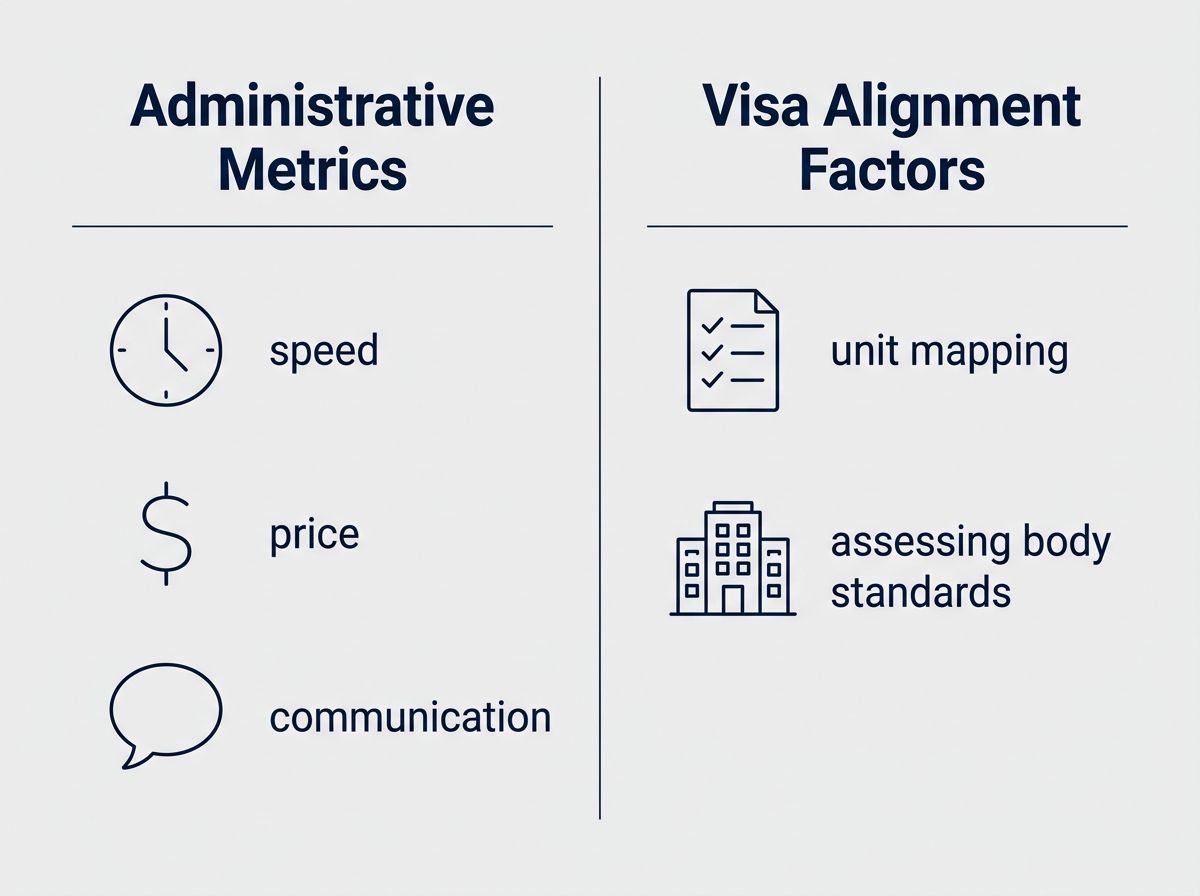
Reviews of RPL providers naturally reflect the administrative experience of getting that qualification. Was the process explained clearly? Did the assessor respond promptly? Was the evidence checklist manageable? Was the final certificate delivered as promised? These are useful questions to answer. A provider who loses your evidence or disappears after payment is certainly a provider worth avoiding.
But reviews rarely highlight this critical distinction: a provider can deliver a qualification efficiently and still produce an assessment that does not fit your visa pathway. A fast provider who maps your evidence to the wrong units simply gets you to the wrong destination more quickly.
The factor that determines visa outcomes, and why reviews don't cover it
For skilled migrants pursuing points-tested visas, the pathway to recognition involves two distinct steps. First, a skills assessment conducted by an approved assessing authority to evaluate whether your qualifications and experience meet Australian occupational standards. Second, a separate visa application that relies on that positive assessment.
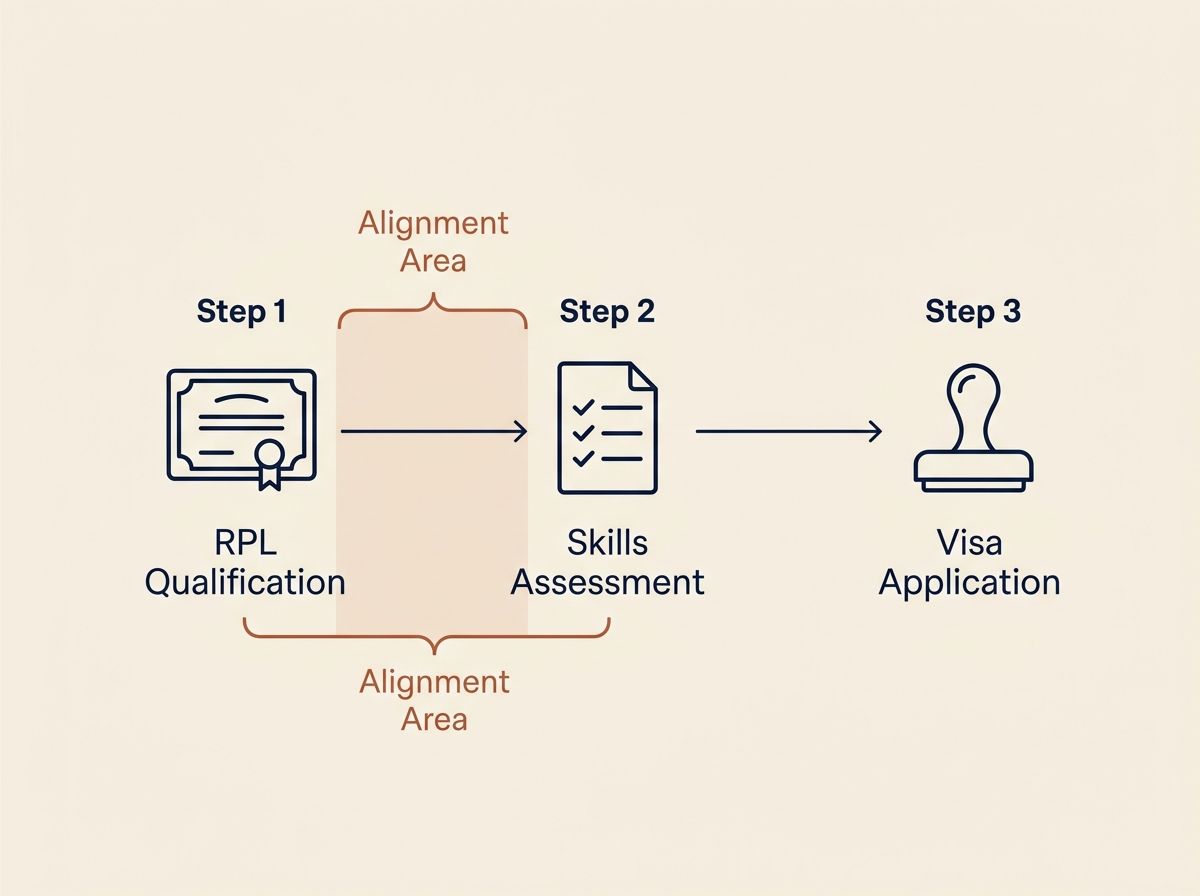
Skills assessments are not conducted by RPL providers. Instead, they are managed by approved assessing authorities like Trades Recognition Australia, VETASSESS, and Engineers Australia, which each cover specific occupational groups. A parliamentary committee report on skilled migration noted that the Department of Home Affairs lists numerous approved skills assessing authorities, each with its own specific procedures, timeframes, and evidence requirements.
For many skilled visa pathways, a positive skills assessment is a prerequisite. Applicants who do not obtain one cannot proceed with their visa application in most cases.
This is where the real risk lies. An RPL qualification is not a skills assessment. Whether an assessing authority accepts an RPL-awarded qualification depends on the authority, the occupation, and the specific units of competency selected during your RPL assessment. A qualification that maps your experience to the wrong units, or to units that do not satisfy the assessing body's current requirements, may not support a positive outcome, regardless of how professionally the RPL process was conducted.
This factor does not show up in online reviews. It is invisible in star ratings and absent from comments about turnaround times. Yet, it is the single most important detail when your visa depends on the result of your application.
The question every visa applicant should ask before choosing a provider
Shifting your evaluation from "who has the best reviews" to "who maps my evidence to the right units for my assessing body" changes how you compare your options.
The key question to ask any RPL provider before committing is: "Which specific units of competency will my assessment map to, and are these units accepted as evidence by the assessing authority for my occupation?"
A provider who can answer this clearly by naming the units, identifying the assessing body, and explaining how your evidence will be structured shows genuine alignment with your visa pathway. A provider who responds with general reassurances about their success rate or speed is answering a different question.
Remember that paid immigration assistance in Australia must be provided by a registered migration agent or an Australian legal practitioner. An RPL provider is not a migration agent. The qualification you obtain is simply one piece of evidence in a larger process, and the final visa decision rests with the Department of Home Affairs, not with the provider.
The Department of Home Affairs is clear that visa applicants are responsible for checking the conditions of their visa, even if an agent or another party completes or submits the application.
Why honest suitability guidance matters more than a fast turnaround
RPL is a rigorous, legitimate assessment pathway. It is not suitable for every occupation, and it does not replace every type of skills assessment. Some visa pathways involve assessing authorities with requirements that go beyond what an RPL qualification can satisfy on its own. Certain professional paths require clinical assessments, supervised practice periods, or registration processes that sit entirely outside the RPL framework.
A parliamentary committee inquiry into professional skills recognition found that some health profession skills assessments include clinical components that cannot be completed offshore, meaning the assessment pathway may be effectively unavailable to applicants who are not already in Australia.
A provider who tells you that RPL will not work for your specific situation is the one worth trusting. That honest guidance, delivered before enrolment, payment, or commitment, is far more valuable than a fast turnaround on an assessment that does not support your pathway.
Honest suitability advice is not a limitation. It is the foundation of a process that actually works. For experienced workers, an RPL assessment that is rigorous, well-documented, and mapped to the correct units carries real weight with assessing authorities. A superficial process that produces a qualification without that rigour rarely does.
How to test alignment before you commit
The right time to test whether your experience maps to the correct units for your visa pathway is before you choose a provider, not after you have paid and enrolled.
You have the experience. The question is whether that experience aligns with what your visa pathway actually requires. That is a critical question worth answering before you commit.
The Free Skills Review is designed for this step. It is a free, no-obligation way to find out whether your experience maps to the right units before you make any commitment. It is not a sales call or a pitch, but a genuine assessment of fit so you can make an informed decision about your pathway.
Ready to Get Recognised?
Start with a free skills review to find out if RPL is right for you.