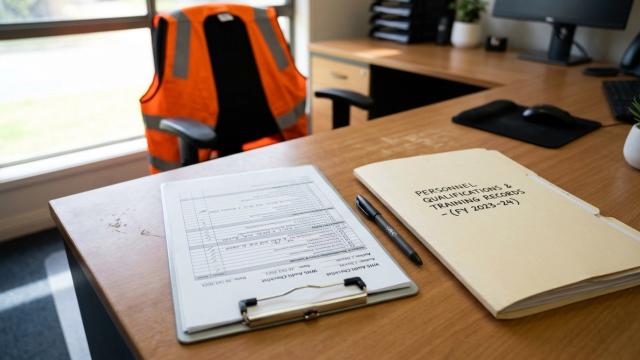
Your Senior Safety Staff Are Operating at Diploma Level — Their File Says Otherwise
Senior WHS staff running risk systems and audits at diploma level without the BSB51319 creates real compliance exposure. Here's the pattern — and how RPL…
By RPL it Australia8 min read
The pattern nobody puts in the risk register
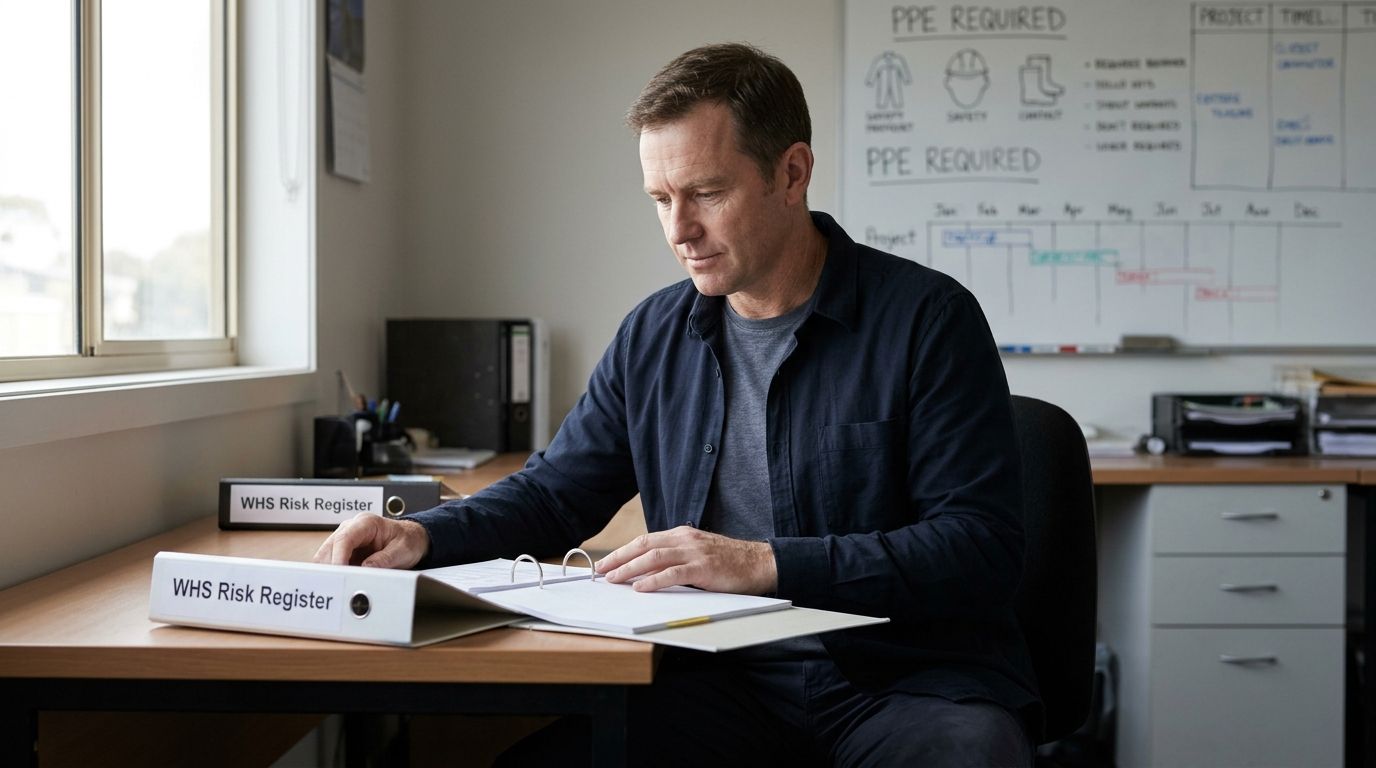
There is a specific, recurring pattern in Australian workplaces. The most experienced WHS staff — the ones running the risk register, facilitating internal audits, and managing the safety management system — often hold a Certificate IV or no formal WHS qualification at all. Meanwhile, the work they are doing maps directly to Diploma-level competencies.
This pattern is invisible until something makes it visible. A tender requirement. A regulatory inquiry. An internal review triggered by an incident. At that point, the gap between what the person does and what their file says becomes a compliance problem — and it was already there, quietly accumulating risk.
This is not a story about incompetent staff. It is a story about a system that has not caught up with how WHS careers actually develop in Australia. The capability is real. The credential is absent. That gap is a documentation problem, not a competence problem.
Stage 1: The capability exists — it just exists in the wrong form
Senior WHS staff in most Australian organisations are genuinely performing diploma-level work. They are not learning WHS — they are leading it. Consider what a typical senior WHS officer or WHS manager actually does day to day.
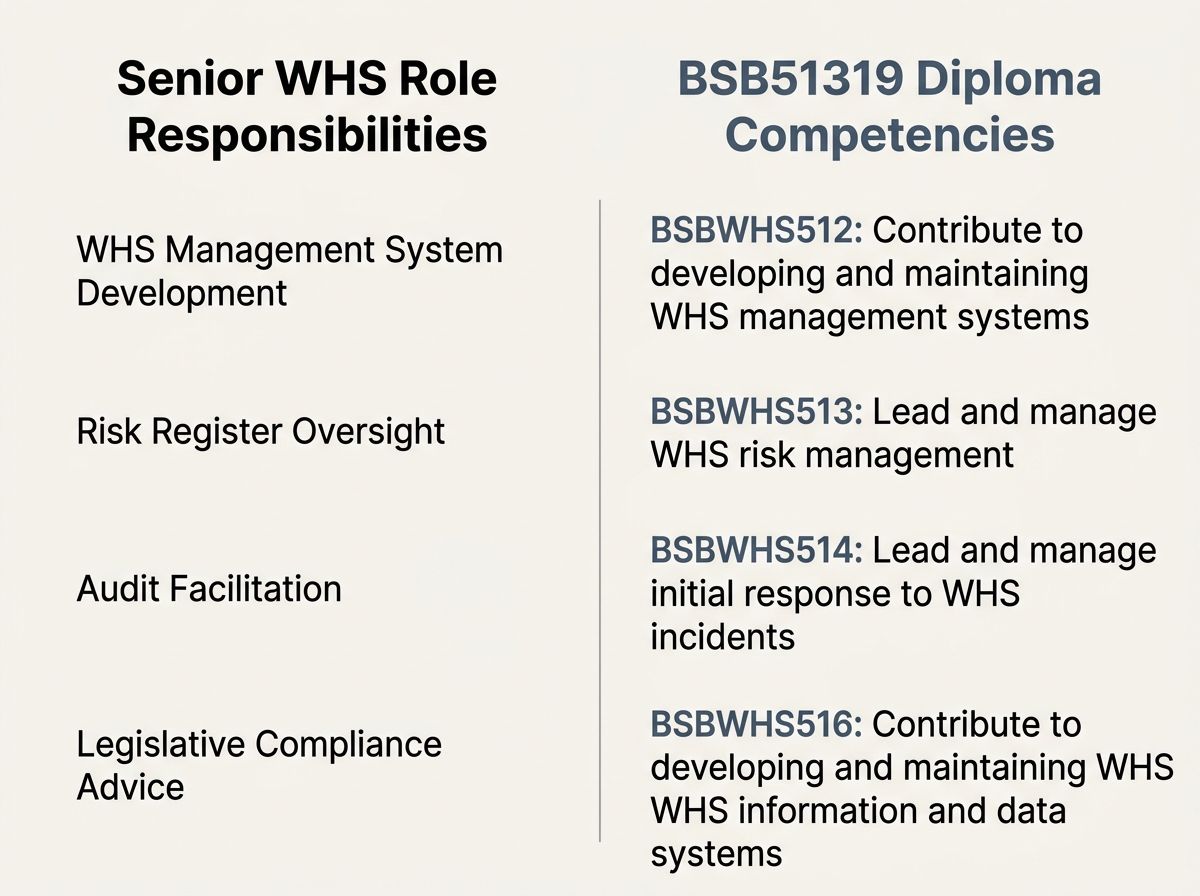
- Develops and maintains the organisation's WHS management system
- Conducts and oversees risk assessments across operational areas
- Facilitates internal audits and prepares for external audits
- Interprets legislative obligations and advises management on compliance strategy
- Investigates incidents and implements corrective actions
- Manages contractor WHS requirements and monitors compliance
- Provides WHS training and coaches supervisors on safety obligations
These are not Certificate IV tasks. A Certificate IV in Work Health and Safety (BSB41419) covers foundational WHS practice — contributing to WHS processes, identifying hazards, supporting compliance. The Diploma of Work Health and Safety (BSB51319) covers the management of WHS systems, the facilitation of audits, the development of risk management frameworks, and the integration of WHS into organisational strategy.
The senior WHS officer who has been doing this work for five or ten years is already operating at Diploma level. The qualification has not followed the capability. That is the pattern.
Stage 2: The work gets done — the credential doesn't follow
In most organisations, WHS capability is built through experience, mentorship, and on-the-job progression. The senior WHS officer who now manages the safety management system probably started as a safety coordinator, then moved into a WHS advisor role, then stepped up into a senior position — all without anyone pausing to ask whether their formal qualification matched their actual responsibilities.
This is not negligence. It is how WHS careers develop in Australia. The work gets done because the person is capable. The credential gap widens gradually, invisibly, because there is no automatic mechanism that flags the mismatch between role scope and formal qualification level.
The result is a workforce where the most experienced WHS practitioners — the ones the organisation depends on most — are often the ones with the largest credential gap relative to their actual responsibilities.
Understanding what WHS auditors actually check for helps clarify why this gap matters — and why experience alone, however genuine, does not satisfy formal qualification requirements.
Stage 3: The exposure becomes visible
The credential gap in senior WHS roles typically becomes visible in one of three ways.
The first is a tender or contract requirement. Major infrastructure projects, government contracts, and large commercial engagements increasingly specify qualification requirements for nominated safety officers. When a tender document asks for a Diploma of Work Health and Safety — or equivalent — for the person responsible for the project's safety management system, the gap becomes immediately operational. The organisation either cannot nominate its most experienced person, or it nominates them and hopes the qualification requirement is not scrutinised.
The second is a regulatory or audit inquiry. WorkSafe inspectors and external auditors may ask for evidence of practitioner qualifications when reviewing the competency of the person responsible for the safety management system. The organisation's WHS documentation may itself nominate qualification requirements for the WHS role — requirements that the current incumbent does not meet on paper.
The third is an internal review. Often triggered by an incident, a change in leadership, or a compliance audit preparation process, internal reviews sometimes surface the mismatch between what the WHS role requires and what the person holding it formally holds. This is the moment the gap becomes a governance issue.
Each of these triggers creates real operational exposure. The organisation has been relying on a highly capable person to manage its WHS obligations — and that person's capability is not in question. What is in question is whether the formal record matches the formal responsibility.
Stage 4: The gap closes — but only if someone acts
The credential gap between what senior WHS staff do and what their file says they hold is not permanent. It is a documentation problem, not a competence problem. And there is a formal pathway designed precisely for this situation.
Recognition of Prior Learning — RPL — is the mechanism through which demonstrated WHS experience is assessed against the BSB51319 competency units. The staff member does not re-learn what they already know. They present evidence of what they have already done. The assessment is conducted by a qualified assessor from a registered training organisation. Where competency is demonstrated against the unit requirements, the unit is credited. Where gaps exist, targeted training is provided. The outcome, when competency is demonstrated, is a nationally recognised Diploma of Work Health and Safety.
This is not a shortcut. It is a rigorous, evidence-based assessment process. The rigour is precisely what makes the resulting qualification nationally recognised and credible to the regulators, auditors, and tender panels that will eventually ask to see it.
What the Diploma of Work Health and Safety actually covers
BSB51319 is not a general safety awareness qualification. It is a practitioner-level credential covering the management of WHS systems at a strategic and operational level. The distinction between the Certificate IV (BSB41419) and the Diploma (BSB51319) is meaningful: the Certificate IV covers contributing to and supporting WHS processes; the Diploma covers managing, developing, and integrating those processes across an organisation.
The core competency areas covered by the Diploma of Work Health and Safety include the development and implementation of WHS management systems, the management of risk within a WHS framework, the facilitation of WHS risk management processes, the management of WHS compliance obligations, the coordination of incident investigations, and the integration of WHS into broader organisational management. Elective units allow practitioners to tailor the qualification to their specific industry context — construction, mining, manufacturing, and government contracting each have relevant elective pathways.
Senior WHS practitioners who have been managing safety systems, facilitating audits, and advising on legislative compliance will recognise their own work in these competency areas. The qualification does not ask them to learn new skills. It asks them to demonstrate the skills they already have — through evidence, assessed by a qualified assessor.
The Diploma of Work Health and Safety (BSB51319) product page has more detail on the qualification scope and the RPL pathway available through RPL it.
How RPL works for senior WHS practitioners
RPL for the Diploma of Work Health and Safety is an evidence-based assessment process. It begins with evidence gathering — the practitioner collects documentation of their existing WHS practice. For a senior WHS officer, this typically includes risk assessments and risk registers they have developed or maintained, internal audit reports they have facilitated or contributed to, safety management system documentation they have authored or managed, incident investigation reports, training records and competency assessments they have conducted, and professional references from managers or colleagues who can attest to the scope of their WHS responsibilities.
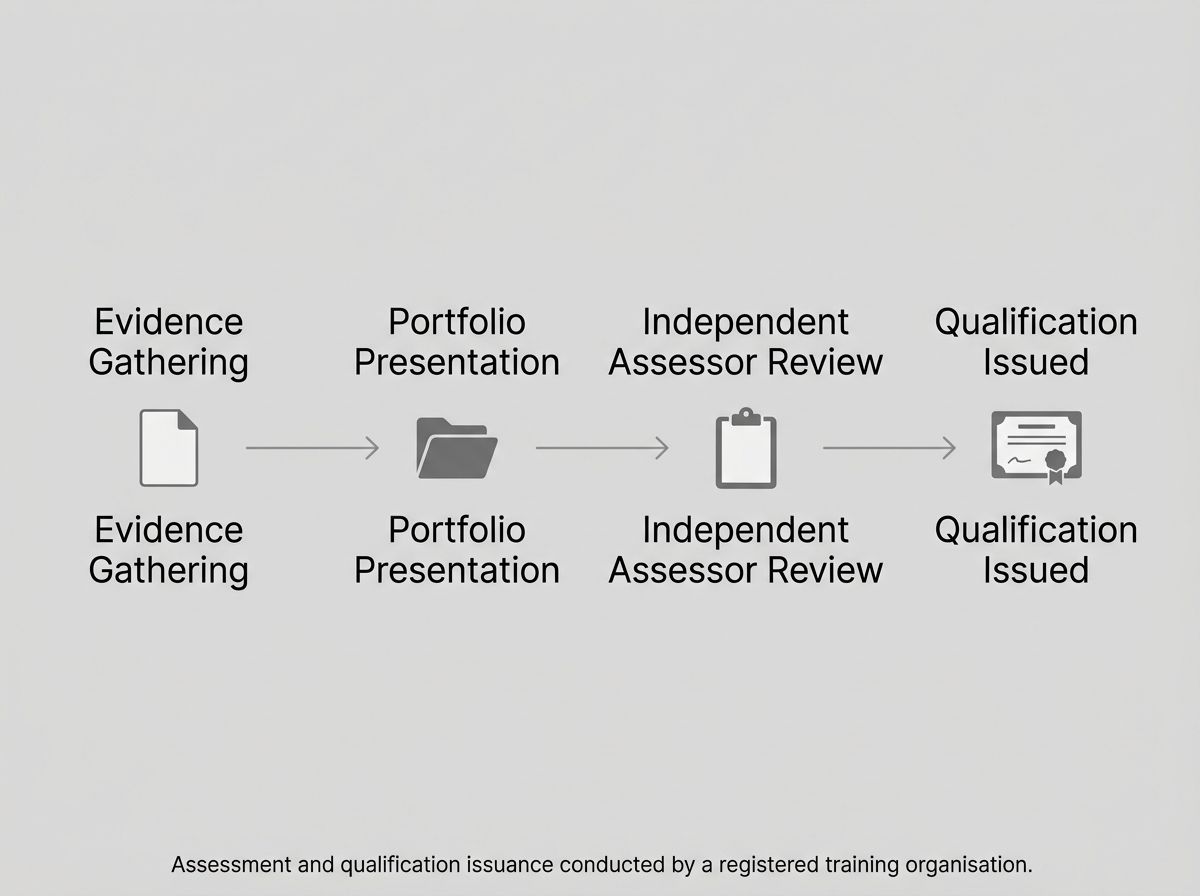
That evidence is compiled into a portfolio and presented to a qualified assessor from a registered training organisation. The assessor reviews the evidence against the BSB51319 competency units. Where the evidence demonstrates competency, the unit is credited. Where gaps are identified — areas where the practitioner's documented experience does not fully satisfy a unit's requirements — targeted gap training is provided as part of the process.
The timeframe for RPL assessment varies depending on the completeness of the evidence available and the scheduling of the assessing RTO. It is not possible to provide a guaranteed timeframe — the assessment is genuine, and the outcome depends on what the evidence demonstrates.
One important clarification: RPL it guides practitioners through the evidence gathering and portfolio presentation process. The assessment itself is conducted by a qualified assessor from a registered training organisation. The qualification, when awarded, is issued by that RTO. Gap training, where required, is provided as part of the process at no additional cost.
Is your senior WHS staff member a candidate for RPL?
Not every WHS practitioner is a strong candidate for RPL toward BSB51319. The pathway is designed for practitioners who have been performing senior WHS functions — managing safety management systems, facilitating audits, conducting risk assessments, advising on legislative compliance — for a sustained period, and who have documentation of that work available as evidence.
Strong RPL candidates for the Diploma of Work Health and Safety typically have several years of experience in a senior WHS role, a track record of managing WHS systems rather than simply contributing to them, and access to documentation — risk registers, audit reports, investigation records, system documentation — that demonstrates the scope and depth of their practice.
Practitioners who are newer to WHS, or whose experience has been primarily operational rather than systems-focused, may find that a different pathway — or a combination of RPL and targeted study — is more appropriate. The honest starting point is a suitability assessment, not an enrolment.
The Free Skills Review is that starting point. It is free. It carries no obligation. It is designed to give you an honest picture of whether RPL is the right pathway for your senior WHS staff member — before any commitment is made. The decision about what comes next is yours.
General information only, current at the date shown. Licensing rules change, so check the current requirements with the relevant regulator before you rely on them. RPL it Australia is a student support service, not a Registered Training Organisation; qualifications are assessed and issued by our partner RTOs.