Your Senior Operations Staff Are Running the Business at Advanced Diploma Level Already
Your senior ops staff are already doing Advanced Diploma-level work. Here's the pattern most business owners miss — and why it matters for succession and…
By RPL it Australia7 min read

The pattern most business owners don't notice until it's too late
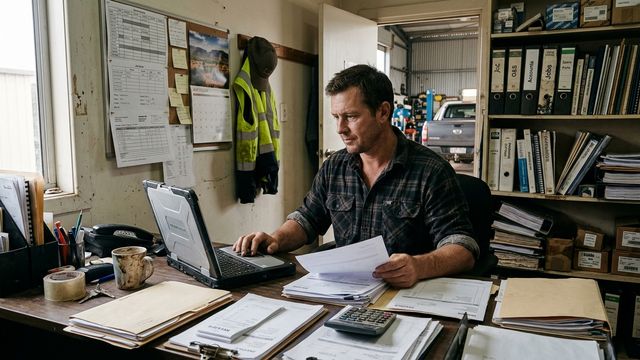
There is a person in your business who runs the operations. They manage the budget cycles, lead the team through restructures, develop the business plan, and hold the relationships that keep the whole thing moving. They have been doing this for years. They are, by any reasonable measure, the person the business depends on.
Their file says Certificate IV.
This is not a skills gap. It is a recognition gap. The work is Advanced Diploma of Business level. The credential is not. And most business owners only notice the difference when a compliance audit, a tender requirement, or a succession event forces the issue into the open.
This is more common than most people realise. Senior operations managers, business development leads, and general managers across Australian businesses routinely perform work that sits squarely within the competency framework of the Advanced Diploma of Business — without holding that qualification. They learned the job by doing it. The formal system was not designed to keep pace with how expertise is actually built in the workplace.
That mismatch is the recognition gap. It is worth understanding before it becomes a problem you are managing reactively.
What Advanced Diploma of Business work actually looks like in practice
The Advanced Diploma of Business (BSB60120) is not an abstract academic credential. Its competency framework maps directly to the work experienced senior staff perform every day. When you look at what the qualification actually covers, the connection to real operations roles becomes clear.
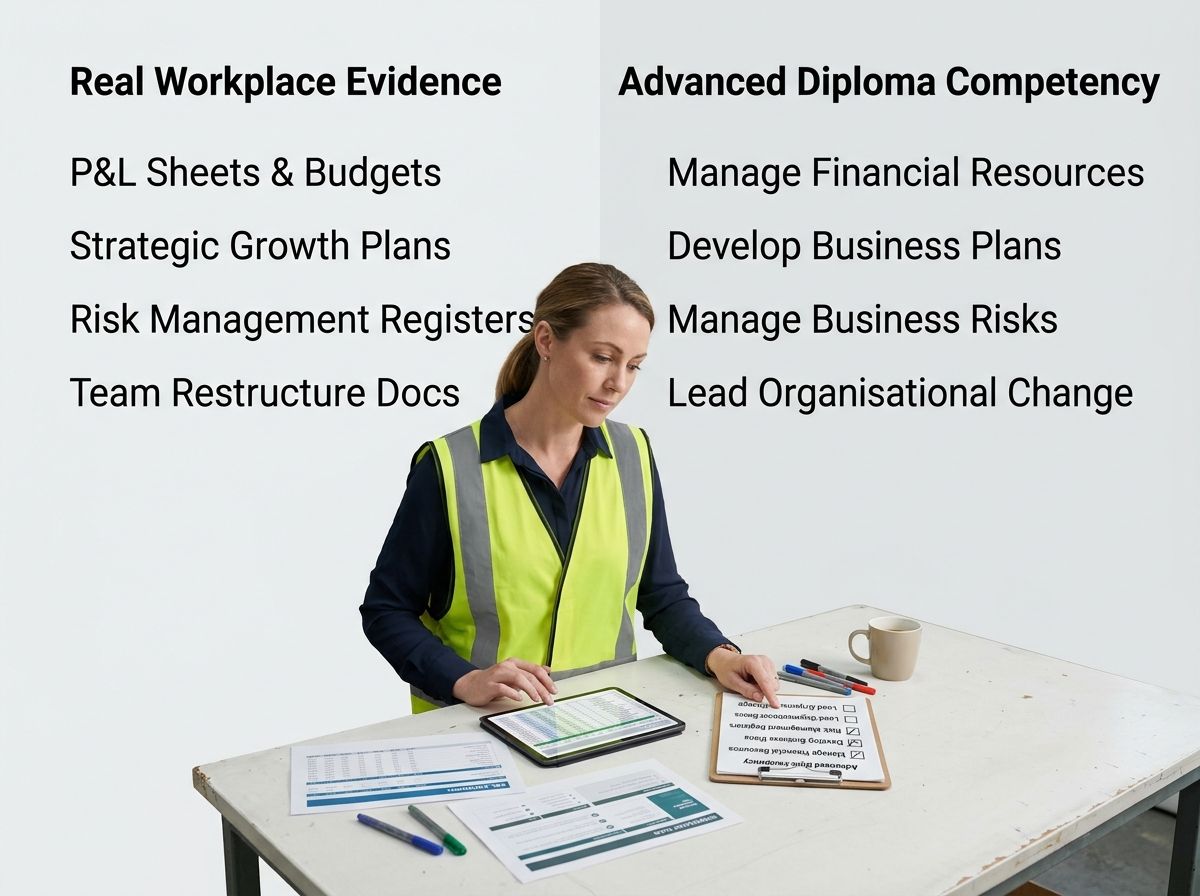
Senior operations and business development staff are typically performing work across areas like these:
- Strategic planning and business development — developing and implementing plans that align the business with its market position and growth objectives
- Financial oversight — managing budgets, interpreting financial reports, and making resource allocation decisions that affect organisational performance
- Leading and managing change — guiding teams through restructures, system changes, or shifts in business direction
- Risk management — identifying, assessing, and responding to operational and strategic risks
- People leadership — building team capability, managing performance, and developing the people who deliver the work
- Stakeholder and relationship management — maintaining the supplier, client, and partner relationships the business depends on
If your senior operations manager is doing most of this, they are working at Advanced Diploma level. The qualification exists to formally recognise exactly this kind of capability. The question is whether their file reflects what they actually do.
The three moments when the gap becomes a problem
The credential gap between what senior staff do and what their formal record shows is invisible — until a specific business event makes it visible. There are three moments where this tends to surface.
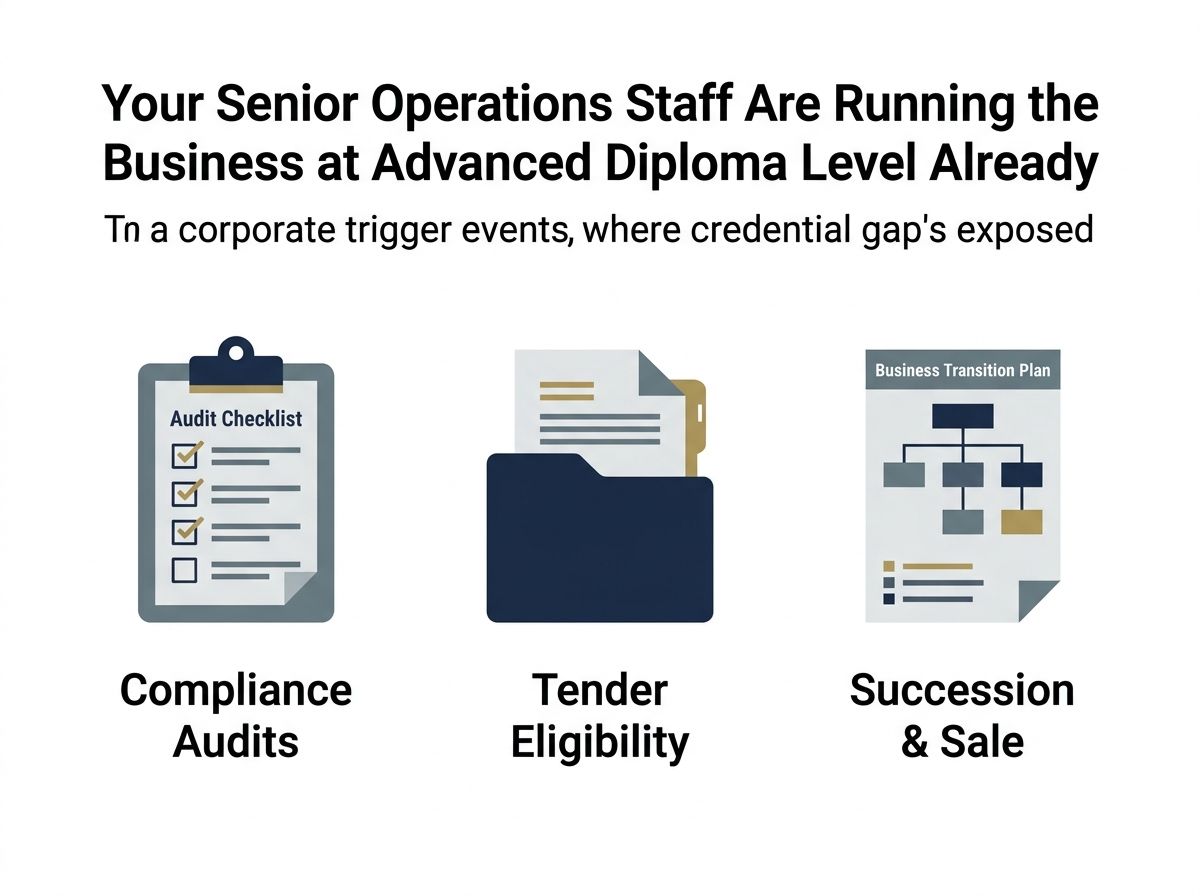
The first is a compliance audit or regulatory review. In regulated industries — government contracting, utilities, mining, financial services — auditors and contract managers increasingly check the formal qualifications of key personnel, not just their years of experience. When the audit asks for evidence of management-level qualifications and the answer is a Certificate IV from a decade ago, the conversation becomes difficult.
The second is a tender or procurement requirement. Government and enterprise procurement processes routinely ask tenderers to list the qualifications of the management team that will deliver the contract. A senior operations lead who holds no formal qualification above Certificate IV can become a liability in a competitive tender, regardless of how capable they actually are. The formal record is what the evaluation panel sees.
The third is a succession or sale event. When a business owner prepares to exit, bring in a partner, or sell the business, the management team's formal credentials become part of the due diligence picture. A senior manager who has run the business for a decade but holds no formal qualification above Certificate IV is a risk flag in that process — not because of their capability, but because the formal record does not reflect it.
The same pattern plays out across industries. If you have read about how this works in safety management, the structure is familiar.
The credential gap between demonstrated competency and formal qualification is not unique to business operations — the same pattern plays out in WHS.
In construction management, the stakes around tender eligibility are equally concrete.
Construction management faces the same credential gap when tender requirements ask for formal qualifications that experienced project managers simply do not hold.
Why this pattern is so common — and why it is not the employee's fault
Senior operations staff in Australian businesses typically build their capability through years of on-the-job learning, mentorship, and real-world problem-solving. They were promoted because they were good at the work, not because they held the right piece of paper. The formal qualification system was not designed to keep pace with how expertise is actually acquired in the workplace.
The result is a structural mismatch. The work is Advanced Diploma level. The credential pathway assumed a classroom starting point. Someone who has spent a decade managing operations, developing business strategy, and leading teams has accumulated the competency — but the formal system has no automatic mechanism to recognise it.
This is not a failure of the individual. It is a failure of the system to recognise what already exists. The recognition gap is real, it is common, and it is entirely addressable.
What RPL does — and what it doesn't
Recognition of Prior Learning (RPL) is the formal process through which a Registered Training Organisation (RTO) assesses whether an individual's existing skills and experience meet the competency requirements of a qualification.
For senior operations staff who already perform at Advanced Diploma of Business level, RPL is not a shortcut. It is the appropriate pathway. The assessment is rigorous. The qualification that results is nationally recognised. The difference is that the evidence comes from the work already done, not from coursework yet to be completed.
An RPL assessment for the Advanced Diploma of Business involves the candidate demonstrating their competency against the qualification's units — through documented work examples, employer references, project records, and structured professional conversations with a qualified assessor. If the experience is genuinely there, the evidence can be gathered and assessed. If gaps exist, they can be identified and addressed before the formal assessment concludes.
It is worth being clear about how this works in practice. RPL it guides candidates through the process — helping them understand what evidence is needed, how to document their experience, and what to expect at each stage. The assessment itself is conducted by a qualified assessor from the delivering RTO. The RTO issues the qualification. RPL it is the guide; the RTO is the assessor and the awarding body. That distinction matters, and it is the foundation of why the qualification carries genuine weight.
The succession planning angle most business owners miss
Beyond compliance and tender eligibility, the credential gap in senior operations staff creates a specific succession planning risk that is easy to overlook until it is too late to address it cleanly.
When a business owner prepares to exit, sell, or bring in a new partner or investor, the management team's formal qualifications become part of the due diligence picture. A senior operations manager who has run the business for a decade but holds no formal qualification above Certificate IV is a risk flag in that process. Not because of their capability — their capability is not in question. But because the formal record does not reflect it, and due diligence works from formal records.
Closing that gap before a succession event is significantly easier than trying to close it during one. RPL is the mechanism that aligns the formal record with the demonstrated reality — before the conversation with a buyer, investor, or incoming partner makes the gap visible at the worst possible moment.
How to find out if your senior staff are already there
The first step is not enrolment. It is a suitability assessment — a structured review of whether the individual's existing experience genuinely maps to the Advanced Diploma of Business competencies. This is the honest starting point before any formal RPL process begins.
If the experience is there, the pathway is clear. If gaps exist, they can be identified and addressed before the formal assessment begins. Either way, the business owner and the staff member both have a clearer picture than they did before.
The pattern this article describes — capable people doing Advanced Diploma-level work every day, with no credential to show for it — is a recognition gap, not a skills gap. The work is real. The experience is real. The formal system has simply not caught up with what already exists.
The Advanced Diploma of Business (BSB60120) exists to formally recognise exactly the kind of capability your senior operations staff have already built. The question is whether their file reflects what they actually do — and whether you want to find out before the next audit, tender, or succession event answers that question for you.
General information only, current at the date shown. Licensing rules change, so check the current requirements with the relevant regulator before you rely on them. RPL it Australia is a student support service, not a Registered Training Organisation; qualifications are assessed and issued by our partner RTOs.