How to Turn Your Small Business Experience into a Formal Diploma
Run a business for years? The Diploma of Business RPL pathway can recognise your experience as formal evidence without returning to study.
By RPL it Australia7 min read
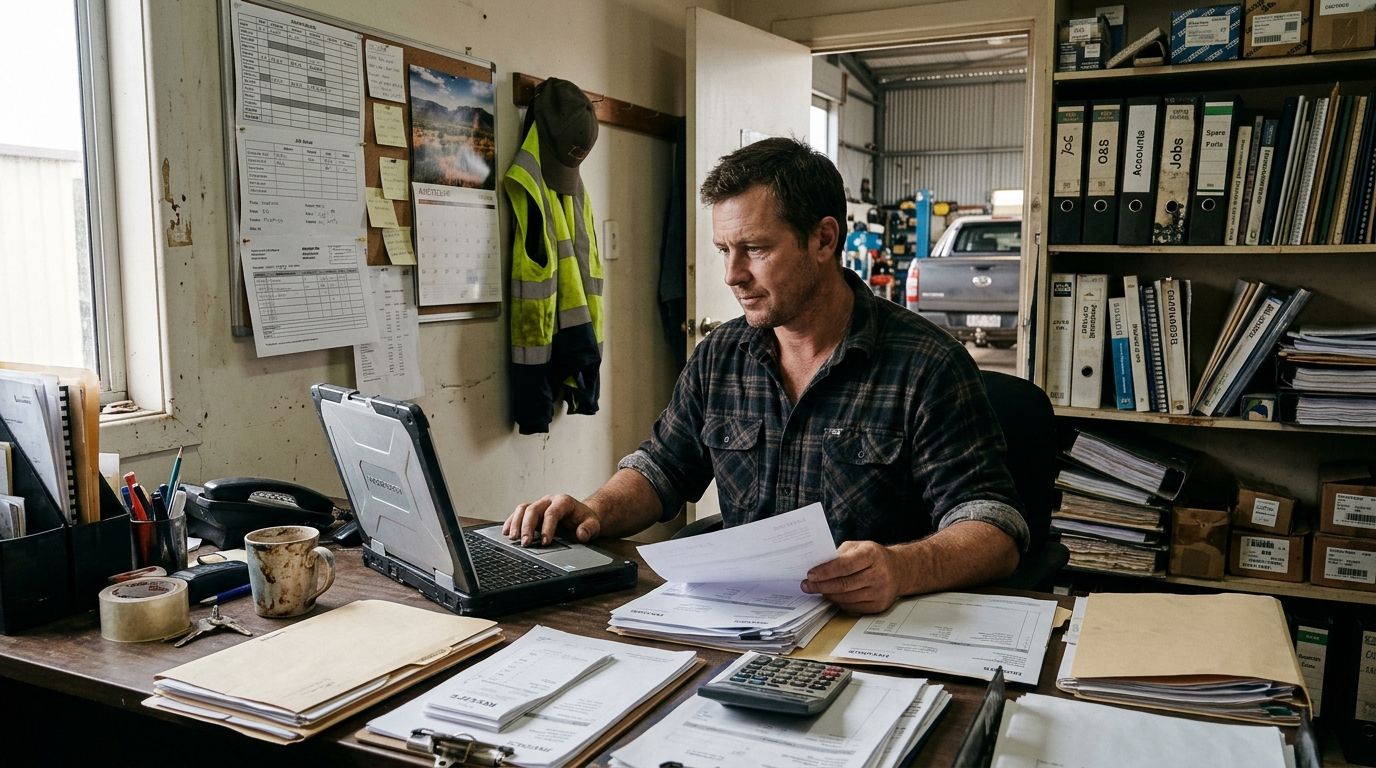
The qualification you have been earning without knowing it
You possess direct practical experience. Running your own business means you are already performing the daily tasks that the Diploma of Business evaluates. This includes cash flow management, supplier negotiations, staff performance reviews, and operational planning. It also involves resolving customer issues before they escalate, and making difficult risk-based decisions with incomplete information and direct, real-world consequences.
However, formal recruitment systems do not easily recognise this background. They see an empty space where a formal qualification is expected. If you are planning to transition into corporate employment, apply for a corporate management role, or secure a consulting arrangement, that empty space can become a significant structural barrier.
This is a common challenge for experienced business owners who need to translate their practical track record into terms that corporate hiring managers understand. While your competence is genuine and the evidence of your capability exists, it lacks formal validation. In standard credential-driven hiring processes, this lack of formal recognition remains a distinct disadvantage.
What the Diploma of Business covers and why it sounds familiar
The Diploma of Business, bearing the national code BSB50120, is a recognised qualification structured to assess competence across core operational management areas. The qualification addresses key responsibilities. These include managing physical and financial resources, executing operational plans, budgeting, leading staff, applying systematic critical thinking to resolve complex organizational problems, and managing stakeholder relationships.
When you look at this curriculum through the lens of your own company, the direct alignment becomes clear. Managing resources corresponds to every capital allocation decision you make. Financial management covers cash flow monitoring, maintaining margins, tax obligations, and payroll. Leading people encompasses every hire, performance conversation, and team structure you have established. Critical thinking represents every business pivot and operational problem you resolved without a manual.
The Diploma of Business is not designed to teach these core concepts to novices. Instead, it serves to verify that a candidate can demonstrate current competence in them. This is an important distinction. For small business owners, the actual learning happened years ago through day-to-day operations. The only missing element is a formal, recognized record of those skills.
The career pivot problem: why formal systems do not see what you have built
You have likely overseen budgets larger than those managed by typical corporate supervisors. You have hired personnel, managed redundancies, negotiated commercial contracts, addressed compliance demands, and made major strategic decisions with your own capital at risk. You have performed these complex tasks for years, or even decades.
When you look at job descriptions for operations managers, business unit leaders, or corporate roles that match your capabilities, you will often find specific criteria. Somewhere in the qualifications section, it will state that a Diploma of Business is either highly preferred or strictly required.
This situation highlights a clear structural issue in recruitment. Formal recruitment systems rely heavily on credentials as proof of competence. This approach has practical utility, as qualifications provide a standardised benchmark in a highly variable labor market. For small business owners, however, this formal signal is absent even when their practical skills are advanced. Standard hiring systems cannot easily interpret tax returns, payroll histories, supplier agreements, or commercial records as evidence of qualification.
This creates a clear translation problem. While your capabilities are genuine and your operational experience is extensive, it is expressed in the vocabulary of day-to-day business management rather than formal education. The corporate sectors or new industries you wish to enter typically require the latter format.
What changes when your experience becomes evidence
This is where formal recognition can make a practical difference. It does not alter your capabilities, as you already possess them. Instead, it changes how corporate recruitment systems and hiring managers assess your background.

Holding a Diploma of Business provides opportunities that uncredentialed experience cannot easily access. Roles specifying the qualification become viable options, and automated screening processes will no longer filter out your applications. This credential opens pathways to public sector positions, satisfies corporate mandates for franchise operations managers, and fulfills the formal verification requirements often demanded in professional consulting agreements.
There is also a practical shift in how you position yourself professionally. Presenting your background as a qualified Diploma of Business holder, rather than simply as a former independent owner, alters the dynamic of professional discussions and recruitment interviews. It does not change your knowledge base, but it makes your expertise legible to formal systems.
Gaining formal recognition does not alter your actual capabilities. It simply ensures that the exact same skills you have used for years are presented in a format that corporate and administrative systems can verify.
The question to ask before you assume you need to study
Before you enrol in a new course of study, it is practical to ask a different question. Rather than asking how you can obtain this qualification through coursework, consider whether your existing commercial experience already provides the required evidence to satisfy the requirements.
Recognition of Prior Learning (RPL) is an established assessment pathway that determines if your current skills meet the national standards of a specific qualification. This is not an automated shortcut, but a formal evaluation managed by a registered training organisation. For individuals whose hands-on experience aligns with the curriculum, RPL provides a way to secure the credential without classroom attendance.
The outcome is not always an automatic qualification. Some candidates may have skill gaps that require targeted support or bridge training to meet the full standard. However, the process is worth exploring, and finding out requires a structured, candid review of your actual business history.
What running a business actually prepares you for
Consider how the core competencies of the Diploma of Business align with the actual requirements of running your own commercial enterprise.
- Financial management and budgeting: If you have managed daily cash flow, reviewed profit statements, monitored operating margins, and allocated capital under commercial pressure, you have performed this work. The qualification evaluates your capacity to manage budgets and financial plans, which matches your practical routine.
- Operational planning and resource management: Operating a business requires scheduling personnel, allocating budgets, and purchasing equipment to meet key performance goals. If you have drafted business plans, managed staff schedules, or determined capital investments, you have met the requirements of this competency area.
- People management and performance: Recruitment, staff appraisals, managing underperformance, and structuring team roles provide clear evidence of leadership. This unit measures your capability to lead staff and manage workplace performance, which is a daily responsibility for any business owner with employees.
- Stakeholder and customer relations: Negotiating with suppliers, resolving escalated customer issues, and managing commercial partnerships are direct, practical applications of the units covering stakeholder engagement and customer service management.
- Critical thinking and problem solving: Managing an independent business requires addressing unexpected operational issues using limited information under tight timelines. While the qualification assesses this capability within a structured academic framework, it is a skill you have likely refined through necessity.
- Risk and compliance: Identifying commercial risks, satisfying regulatory demands, managing business insurance, and adhering to employment laws are central to this qualification. Business owners routinely handle these responsibilities as part of their standard risk mitigation strategies.
This comparison is not an automatic guarantee of qualification. Instead, it acts as a guide to show where your daily duties align with national standards. Confirming whether your documentary evidence satisfies these criteria is the purpose of a formal RPL assessment.
RPL is not automatic, which is why it has value
RPL is a thorough assessment process. It is conducted by a qualified assessor from a registered training organisation, rather than by RPL it, which assists candidates in preparing their portfolios. The assessor makes an independent professional judgement on whether your evidence satisfies national standards.
Some applicants may require gap training to meet specific competency areas. Where these gaps are identified, the necessary training is provided at no extra cost. This is not a drawback of the process; it is what maintains the integrity of the credential. A qualification that requires real evidence carries genuine professional weight.
RPL offers a clear method for presenting your work history as valid evidence, benchmarked against standard requirements. For business owners whose background matches the Diploma of Business units, this pathway is a practical option to explore.
The decision is yours to make. The Free Skills Review provides the necessary information to help you decide, without any upfront commitment.
General information only, current at the date shown. Licensing rules change, so check the current requirements with the relevant regulator before you rely on them. RPL it Australia is a student support service, not a Registered Training Organisation; qualifications are assessed and issued by our partner RTOs.