What salons won't tell you about hiring without a beauty qualification
Salons rely on experienced unqualified staff every day but can't promote them without credentials. Here is the industry contradiction.
By RPL it Australia9 min read
The unspoken rule running every busy salon
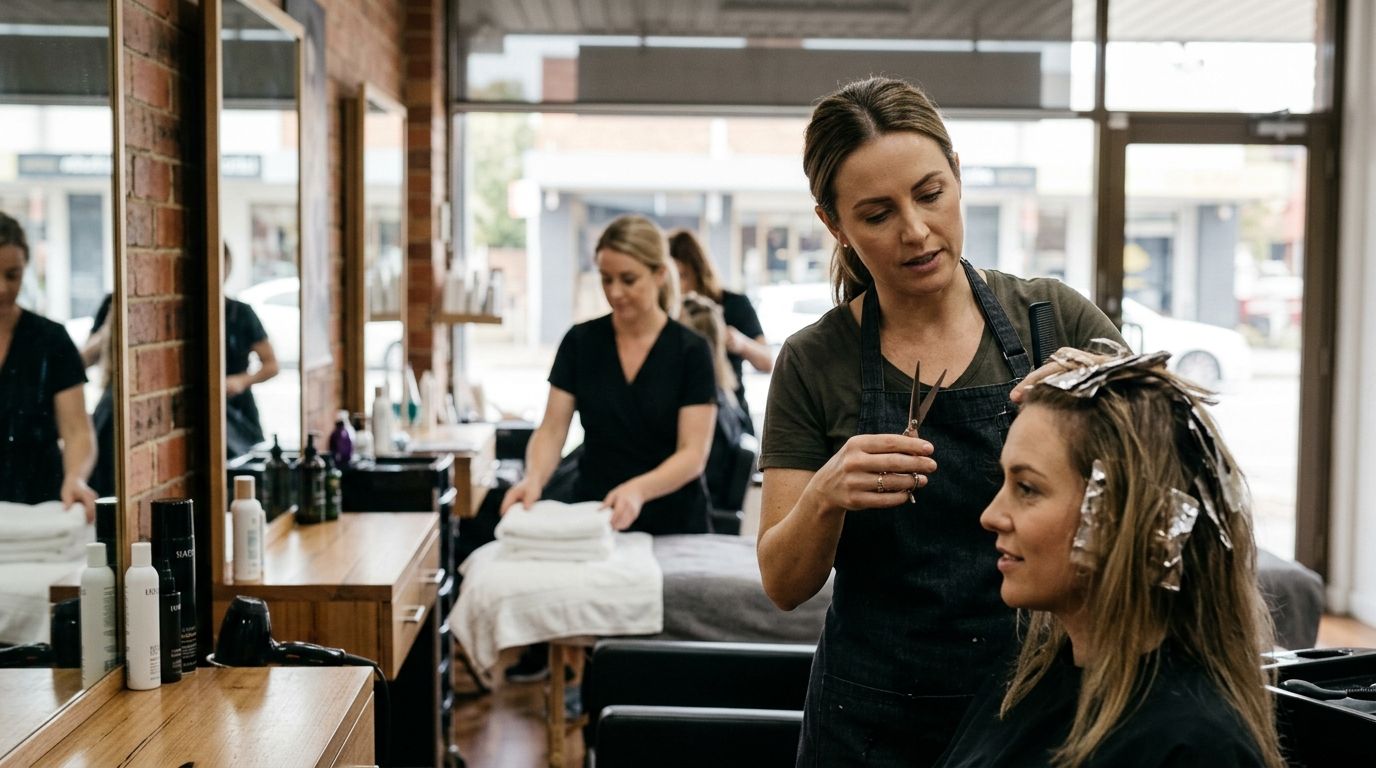
Walk into most busy salons in Australia and you will find the same situation: experienced staff doing skilled work, clients who trust them, and a quiet understanding between employer and employee that the paperwork has never caught up with the reality on the floor. This is not a scandal. It is not a secret. It is simply how the industry operates under commercial pressure, and it has been this way for a long time.
If you have spent years behind the chair or at the treatment table without holding a formal beauty qualification, you already know this. You have trained junior staff, managed client relationships, and performed treatments that require genuine skill and knowledge. You have done all of it without the certificate that the industry says you should have. The gap between what you do and what the paper says you can do is not a reflection of your competence. It is a structural feature of how the beauty industry works.
This article explains that structure plainly because understanding it is the first step to changing your position.
What the industry says it requires
The beauty industry has a clear formal position on qualifications. Job advertisements for salon roles routinely list credentials like the Certificate III in Beauty Services or the Diploma of Beauty Therapy as requirements or strong preferences. Industry bodies representing the hair and beauty sector promote credentials as a standard for professional practice. Registered training organisations offer nationally recognised qualifications designed for the sector.
These are not arbitrary requirements. The qualifications that exist for the hair and beauty sector, including the Certificate III in Beauty Services (SHB30121), the Certificate III in Hairdressing (SHB30416), and the Diploma of Beauty Therapy (SHB50121), cover specific competencies. These cover skin analysis, treatment planning, hygiene and infection control, client consultation, and technical skills for different treatments. They exist because the work involves real risk to clients and real professional responsibility for practitioners.
The formal position is legitimate. Qualifications in this sector are not bureaucratic box-ticking. They represent a genuine standard. The contradiction is not that the standard is wrong; it is that the industry routinely operates outside it, and has done so for years, without anyone talking about it openly.
What salons actually do
The daily reality of most Australian salons diverges from the stated requirement in ways that are well understood within the industry, even if they are rarely discussed openly. Experienced workers without formal beauty qualifications perform treatments, train junior staff, manage client relationships, handle complaints, and manage the floor during peak hours. Salon owners know this. They hire for demonstrated skill, reliability, and client rapport, rather than paper.
This is not a criticism of salon owners. It is a description of how businesses operate under commercial pressure. When a trusted senior therapist does not hold a formal qualification, the choice facing a salon owner is complex. Replacing that person with a newly qualified graduate who has the certificate but no practical experience is rarely the best business decision. So the informal arrangement continues, and experienced workers remain in a professional limbo.
If this describes your situation, you are not alone. This pattern is widespread across the sector. It is important to understand why this creates specific, concrete problems, because the informal arrangement only works until it does not.
Three areas where the gap becomes a barrier
The informal arrangement of having a skilled worker without a formal beauty qualification who is trusted by the employer functions quietly until specific problems arise. These are the moments when the absence of a credential stops being invisible and becomes a clear barrier.
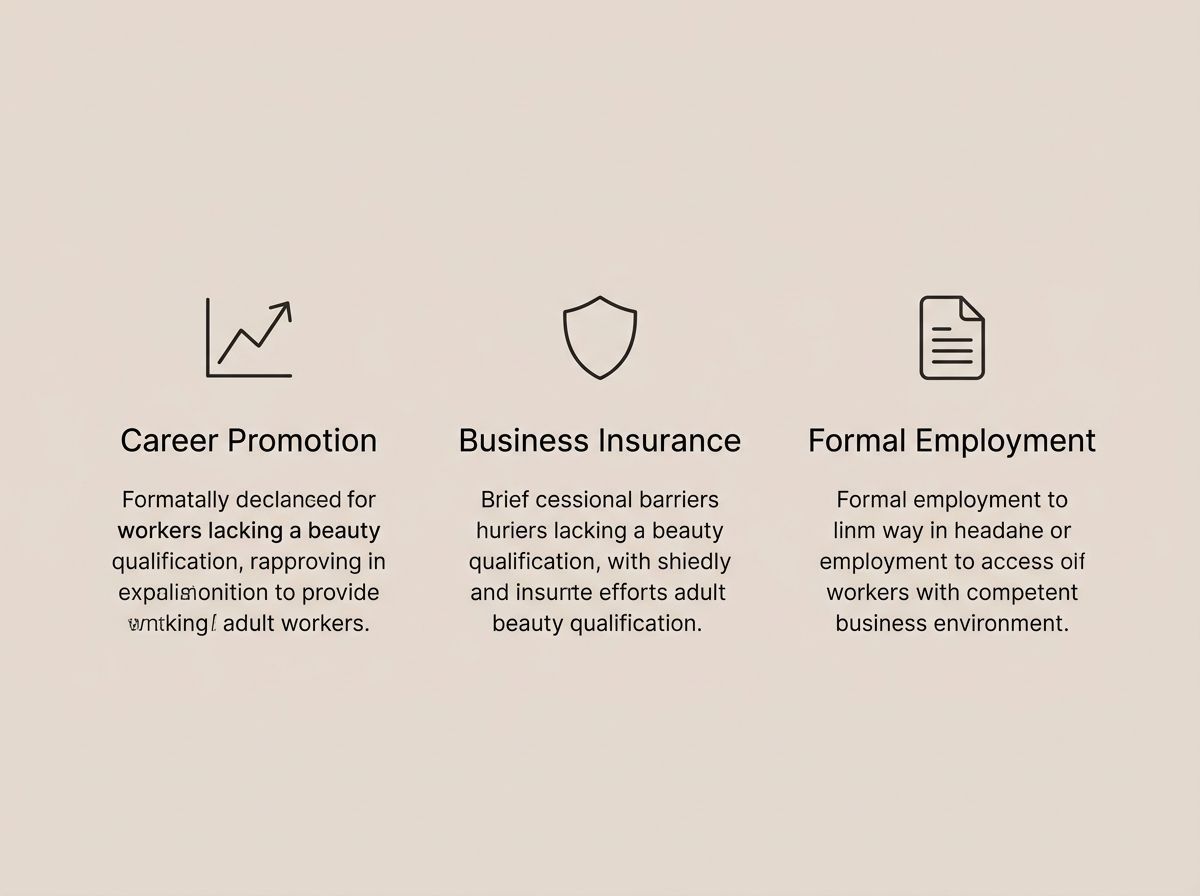
Career promotion
When a senior role opens up, such as salon manager, head therapist, or training coordinator, the conversation about qualifications becomes unavoidable. Employers who have happily relied on an experienced worker's skill for years may find themselves unable to formally appoint that person to a role that carries additional responsibility, client-facing authority, or supervisory accountability. The informal trust that sustained the working relationship does not translate into a formal appointment without the credential to support it. Often, the worker who has been doing the job gets passed over for someone with the paper.
Business insurance
Insurance coverage for beauty treatments is a practical requirement for every salon. Public liability and professional indemnity policies underpin the business's ability to operate. The relationship between staff qualifications and insurance coverage varies by policy and insurer, but the general principle is consistent: coverage for specific treatments may depend on the qualification status of the person performing them. An experienced worker performing a treatment outside the scope that their qualification, or lack of qualification, supports is operating in a territory that creates risk for the business and for themselves. This is not a theoretical concern. It is a practical issue that salon owners navigate quietly every day.
Formal employment structures
As salons grow, join franchise networks, or seek to work with corporate clients, the informal arrangements that sustained smaller operations come under scrutiny. Franchise agreements, corporate contracts, and formal employment frameworks increasingly reference staff qualifications as a condition of engagement. The experienced worker who has been an asset to a small independent salon may find that the same skills do not transfer cleanly into a more formally structured environment. This is not because the skills are absent, but because the credential that would make them visible is missing.
Why salons cannot resolve this internally
What often goes unsaid is that this contradiction is not something individual salons can resolve on their own. A salon owner cannot simply decide to formally recognise an experienced worker's competency and issue them a qualification. That is not how the Australian qualifications system works.
In Australia, nationally recognised qualifications can only be issued by Registered Training Organisations (RTOs) that are registered with the Australian Skills Quality Authority (ASQA). The qualification belongs to the national framework, which is the Australian Qualifications Framework (AQF), not to the employer. No matter how much a salon owner values and trusts an experienced worker, they do not have the authority to formally recognise that experience as equivalent to a qualification. The mechanism for doing that sits outside the salon entirely.
This is why the gap persists. It is not a failure of individual employers. It is a structural feature of how formal recognition works. The experienced worker's competency is real. The salon's trust in that competency is real. However, the formal recognition system requires a different kind of process, which exists specifically to bridge this gap.
How recognition of prior learning works
Recognition of Prior Learning (RPL) is the formal mechanism within the Australian qualifications system that allows existing skills, knowledge, and experience to be assessed against the requirements of a qualification. It does not require you to study content you already know. It requires you to demonstrate, through evidence, that you already meet the standard.
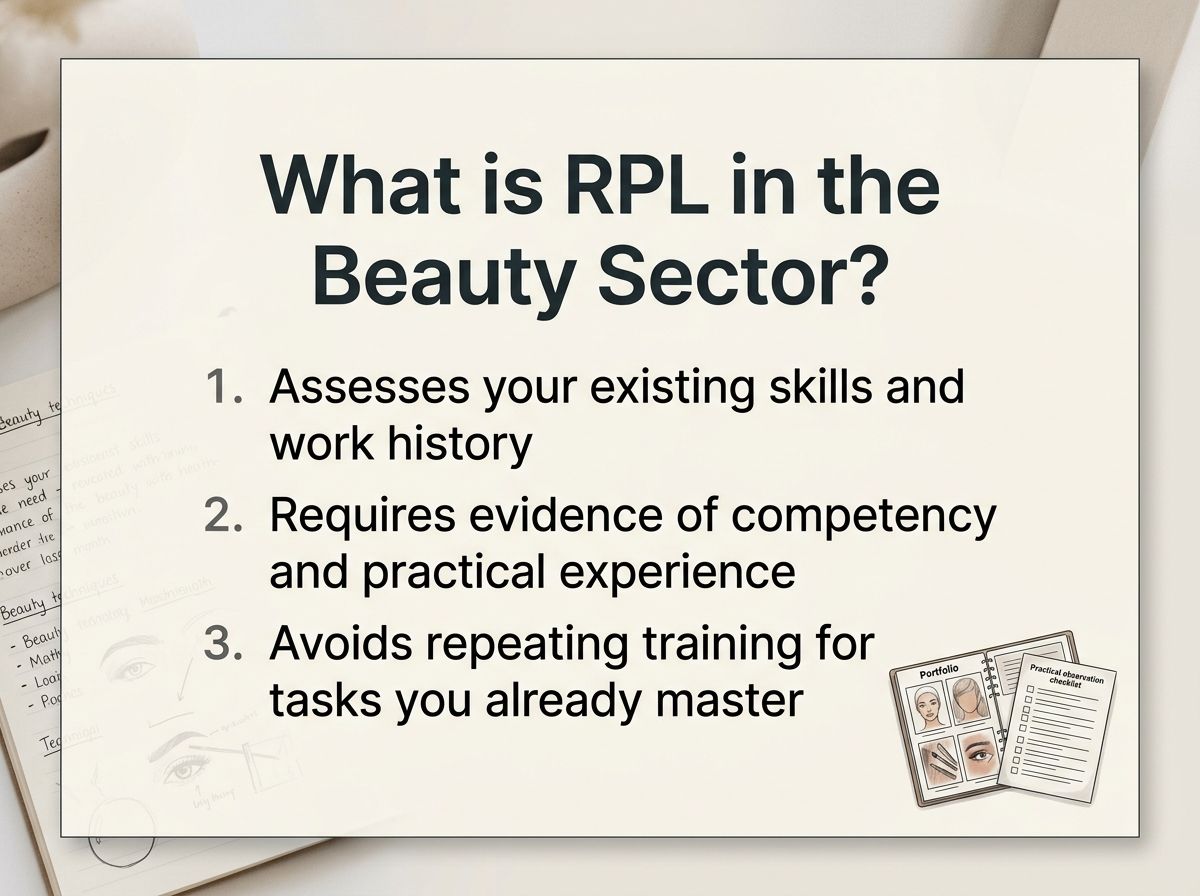
For an experienced beauty professional, this distinction is important. RPL is an evidence and documentation pathway rather than a course of study. The competency already exists. The process involves presenting that competency in a form that a qualified assessor from a registered RTO can formally evaluate. Evidence might include records of treatments performed, references from employers or clients, photographs of work, logbooks, or records of professional development. The assessor determines whether this evidence demonstrates competency against the specific units of the qualification.
We should be direct about what RPL is not. It is not a shortcut. It is not a guarantee of a qualification. It is a rigorous assessment process that takes existing experience seriously rather than dismissing it. If gaps are identified during assessment, gap training may be required. The outcome is determined by the assessor, not by the applicant or the partner RTO.
RPL gives experienced workers a legitimate pathway to formal recognition that does not require them to repeat training for skills they already possess. For someone who has spent years performing treatments, training staff, and managing client relationships, that is a significant distinction.
Determining if your experience qualifies
Not every worker's experience maps directly to every qualification. The units within a Certificate III in Beauty Services cover specific competencies. Whether your experience aligns with those units depends on what you have actually done, for how long, and in what context. The practical starting point is not enrolment; it is a suitability assessment.
A suitability assessment, often called a skills review, is a conversation about your experience and how it relates to the qualification you are considering. It is not a commitment to proceed. It is a diagnostic step that gives you an honest picture of whether RPL is a viable pathway for your situation before you invest time or money.
What changes after your skills are recognised
A formally recognised beauty qualification changes the barriers mentioned earlier by removing them from your career path rather than trying to change the whole industry.
Promotion conversations are different when you hold the credential that the role requires. The informal trust your employer has in your skills can be formally reflected in your job title, your responsibilities, and your pay. The gap between what you do and what the paperwork says you can do closes.
Insurance considerations shift when your qualification status aligns with the treatments you perform. The risk that sat quietly in the background of your working arrangement becomes manageable.
Formal employment pathways that were previously closed in larger salon groups, franchise networks, or corporate environments become accessible. The skills you have always used become visible to employers who require formal credentials.
None of these changes happen automatically, and they are not guaranteed by the RPL process itself. What changes is the opportunity. The credential makes career conversations possible in a way they were not before.
Your experience is real, but the recognition has not caught up
The contradiction at the heart of this issue is not your fault. Salons hire for skill because skill is what serves clients and keeps businesses running. The formal recognition system requires a different kind of proof, not because your experience is insufficient, but because the system was not designed to observe it directly.
RPL exists because experience can serve as evidence. The pathway is real, it is rigorous, and it is designed for this exact situation: skilled workers whose competency exists in practice but not yet on paper. Whether it is the right pathway for your situation depends on your experience, the qualification you are considering, and what an assessment reveals.
The decision is yours, but it begins with knowing whether this option is genuinely available to you.
General information only, current at the date shown. Licensing rules change, so check the current requirements with the relevant regulator before you rely on them. RPL it Australia is a student support service, not a Registered Training Organisation; qualifications are assessed and issued by our partner RTOs.