Decades behind the chair, nothing to show for it on paper
Spent decades behind the chair but lack a formal qualification? Here is how experienced hairdressers and beauty therapists get certified through RPL.
By RPL it Australia8 min read
You know the work. The system doesn't know you.
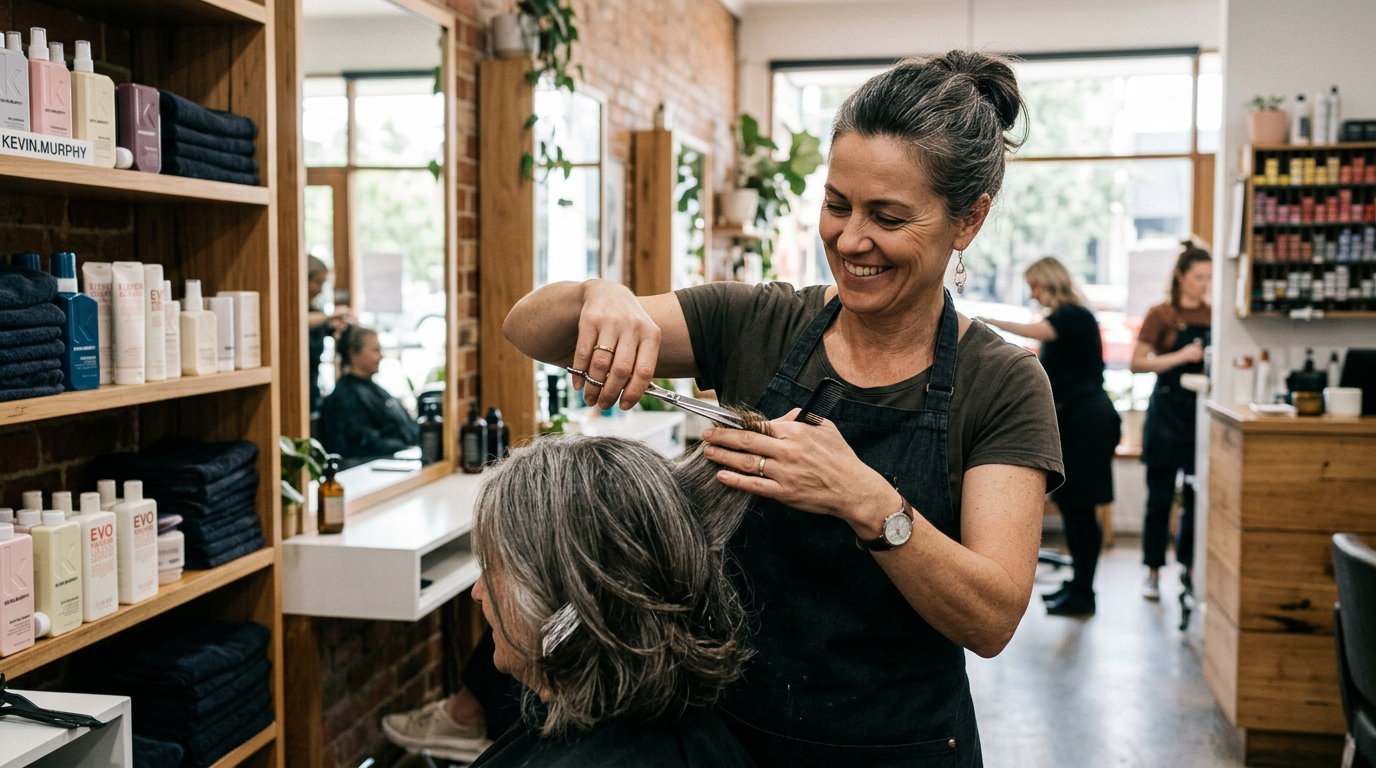
You have the experience. Fifteen years behind the chair. Twenty years running a salon. A decade of facials, waxing, and skin treatments, with clients who return every six weeks because they trust you completely. You have trained junior staff. You have handled difficult clients, sensitive skin, and the colour corrections that went wrong for someone else. You know this work.
And then someone asks for the certificate.
Maybe a job application required a formal qualification you never needed before. Maybe a new employer had a compliance checklist. Perhaps it was an insurance requirement, or a regulatory change in your state regarding advanced treatments. It might have been a client who asked, politely, whether you were formally qualified, making you feel the ground shift slightly.
The system is not questioning your skill. It is questioning your paperwork. That is a very different problem, and it has a very different solution.
The certificate question nobody warned you about
For most of the history of the Australian hair and beauty industry, experience spoke for itself. You learned from someone who knew the craft. You built a clientele. You developed your eye, your technique, and your professional judgement. The work was your proof.
Formal qualifications have become increasingly important across the industry. This is not because the work has changed, but because the systems around the work have changed. Employers, insurers, and regulators now reference specific nationally recognised qualifications when setting requirements. For advanced treatments in particular, such as cosmetic tattooing, laser hair removal, and skin needling, the rules across Australian states and territories are evolving. Formal training requirements are becoming more common in how these services are governed.
The qualifications that matter in the hair and beauty industry sit within the SHB training package, which is the nationally recognised framework for hairdressing and beauty services in Australia. These are the qualifications that employers list in job ads, that insurers reference in policy documents, and that regulators point to when setting standards for who can perform certain treatments.
If you trained overseas, whether in the UK, New Zealand, Asia, or elsewhere, your qualifications are generally not automatically recognised in Australia. They can be used as supporting evidence in a formal assessment process, but they do not transfer directly. The Australian system requires local recognition.
Why this happens to the most experienced people in the industry
There is a structural reason why the most experienced people in the hair and beauty industry are often the ones without formal qualifications. It is not a personal failure. It is a timing problem.
You learned when learning looked different. You trained under a senior stylist or therapist who passed on their knowledge directly. You completed an apprenticeship that was never formally recorded in a way the current system recognises. You trained overseas before migrating to Australia, in a system that did not produce the same paperwork. Or you simply worked in an era when your reputation, not a certificate, got you the job.
The formal qualification system was not built to see you. It was built to track people who moved through it from the beginning. If you came in through a different route, such as mentorship, migration, or decades of practice, the system has no record of you. Your expertise is real. It is just invisible to the systems that decide who is formally recognised.
This is the mismatch that sits underneath the certificate question. Your skill is not in doubt, but the system has no way to count what you have already achieved.
This challenge is explored in depth in our article on why salon experience doesn't automatically translate to formal recognition.
What RPL actually is (and what it isn't)
Recognition of Prior Learning (RPL) is a formal assessment process that evaluates your existing skills and knowledge against the requirements of a nationally recognised qualification. If your experience meets the standard, the qualification is issued. If gaps are identified, targeted training addresses those specific areas. The qualification you receive through RPL is identical to one earned through study, because the assessment standard remains the same.
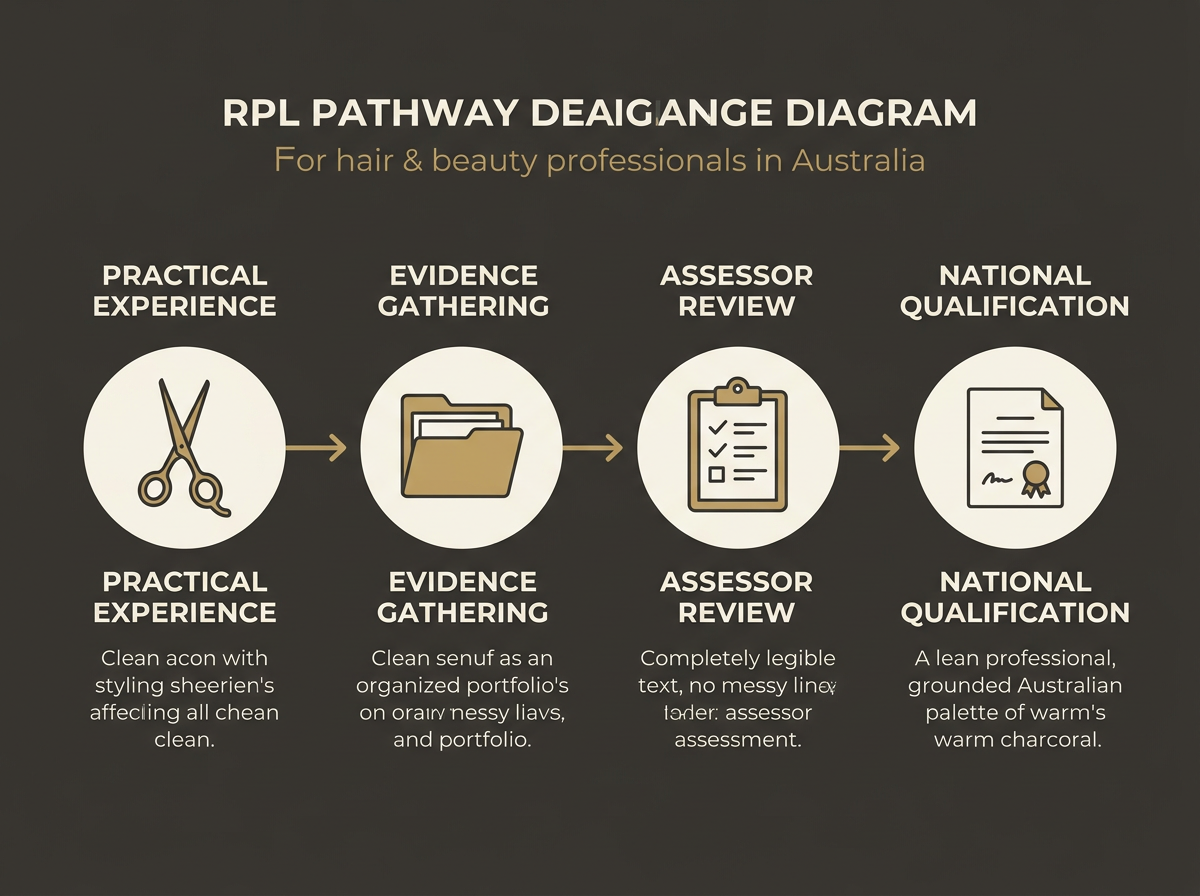
That is what RPL is. Here is what it is not.
RPL is not a shortcut, a way to purchase a certificate, or a loophole in the system. It is a rigorous, legitimate assessment pathway that exists within Australia's national vocational education and training framework, established because the system recognises that expertise can be acquired outside formal study. The assessment is conducted by a qualified assessor from a Registered Training Organisation (RTO). The RTO issues the qualification. RPL it guides candidates through the process; we do not assess or certify.
Experience counts as evidence. That is the core principle. Your years behind the chair, your client outcomes, and your professional practice are highly relevant to the formal system. They are the raw material of the assessment. The RPL process translates your skills into a format the system can recognise.
A qualification earned through RPL is nationally recognised. It carries the same weight as one earned through a TAFE course or a private training provider, because the assessment standard is identical.
What beauty industry experience actually counts as evidence
The evidence that supports an RPL assessment in the hair and beauty industry includes employment records showing your job title and duration of work; payslips or contracts that confirm your role; and references from employers, salon owners, or long-term clients. You can also provide photographs of your work, including colour results, nail art, skin treatments, or styling. Other useful materials include records of continuing professional development, product training, supplier workshops, informal training records from an apprenticeship or overseas study, and a portfolio of your skills.
Most experienced beauty professionals have more evidence than they realise, even if they have never thought of it that way. Payslips might be in a folder, client photos are on a phone, and references exist in the professional relationships built over years. Product training certificates are often sitting in a drawer.
The RPL process helps you identify, organise, and present that evidence so an assessor can evaluate it against the qualification standard. You are not starting from scratch. You are starting with everything you have already achieved, and simply showing the proof.
The qualifications most relevant to hair and beauty professionals
The following nationally recognised qualifications are the most relevant to experienced hair and beauty professionals in Australia. These sit within the SHB training package and are the standards that employers, insurers, and regulators typically reference.
- Certificate III in Hairdressing: the foundational trade qualification for hairdressers, covering cutting, colouring, and chemical services.
- Certificate IV in Hairdressing: for senior hairdressers moving into leadership, mentoring, or specialist roles.
- Diploma of Beauty Therapy: the qualification for experienced beauty therapists working across a broad range of skin, body, and specialist treatments.
- Certificate IV in Beauty Therapy: for beauty therapists with experience in advanced skin and body treatments.
- Certificate III in Nail Technology: for nail technicians working across natural nail care, gel, and acrylic systems.
- Certificate II in Retail Cosmetics: for professionals working in cosmetics retail and beauty consulting.
- Diploma of Salon Management: for experienced salon owners and managers seeking formal recognition of their business and leadership skills.
If you are unsure which qualification is most relevant to your experience, the Free Skills Review helps clarify your options. The right qualification depends on the depth of your actual experience, not on what sounds most impressive.
Please note that qualification codes and titles in the SHB training package are updated periodically. The qualifications listed here reflect the current framework, but we recommend confirming current codes and status through training.gov.au or during your Free Skills Review.
What happens if there are gaps
An RPL assessment might identify gaps, which are areas where the assessor finds that your experience does not fully meet the qualification standard. This is not a failure; it is simply the assessment doing its job.
When gaps are identified, targeted training addresses those specific units. You do not have to repeat everything, only the parts the assessment has identified as incomplete. The qualification you receive at the end of the process is still nationally recognised because the assessment standard has been met.
To be clear, RPL is a genuine assessment rather than a rubber stamp. The assessor's professional judgement is independent. The process is rigorous because the qualification must carry real value. That standard is what makes the recognition worth holding.
We would rather guide you to the right pathway than enrol you in the wrong one. If RPL is not the right option for your situation, we will tell you honestly. The Free Skills Review exists for this reason: to give you an accurate picture before you commit to anything.
Your experience deserves to be counted
You have a resume, even if it is not written on paper. Your years behind the chair, the clients who trust you, and the skills you have built through practice and professional care are real. They are not less valuable than formal study; they are simply a different form of evidence.
Recognition of Prior Learning exists because the formal system acknowledges that expertise can be acquired outside a classroom. It is not a compromise. It is a pathway designed for exactly the situation you are in.
Recognition shouldn't require starting over. Your skills are proven. We help you show them.
The decision is yours. If you want to find out whether your experience is enough for formal recognition, a Free Skills Review is where that conversation starts. It is straightforward, cost-free, and carries no obligation.
General information only, current at the date shown. Licensing rules change, so check the current requirements with the relevant regulator before you rely on them. RPL it Australia is a student support service, not a Registered Training Organisation; qualifications are assessed and issued by our partner RTOs.