SIT31021 explained: What overseas-trained pastry chefs need to know about Australia's patisserie qualification
SIT31021 is Australia's Certificate III in Patisserie. If you trained overseas, here's what the qualification covers and what evidence you may already have.
By RPL it Australia9 min read
What is SIT31021 and why does the code matter?
SIT31021 is the national qualification code for the Certificate III in Patisserie within Australia's SIT Tourism, Travel and Hospitality Training Package. This is the formal credential that Australian employers, licensing bodies, and skills assessment authorities use to verify your skills. While the title and the code are used interchangeably, the code is what appears on official occupation lists, visa documentation, and job advertisements.
If you trained as a pastry chef outside Australia, you have likely never seen this code. This does not mean you lack the necessary skills. It simply means the Australian system requires them to be presented in a specific format. Understanding the content of SIT31021 is the first step to determining how your overseas training and commercial kitchen experience align with local standards.
You can read more about the Certificate III in Patisserie RPL pathway on the product page.
What the Certificate III in Patisserie actually covers
SIT31021 is not an introductory course. It is a professional qualification covering the standard duties of commercial patisserie work. The qualification consists of 21 units: 15 core units and 6 elective units. If you have worked in a commercial kitchen, you will recognize most of the required skills and processes on this list.
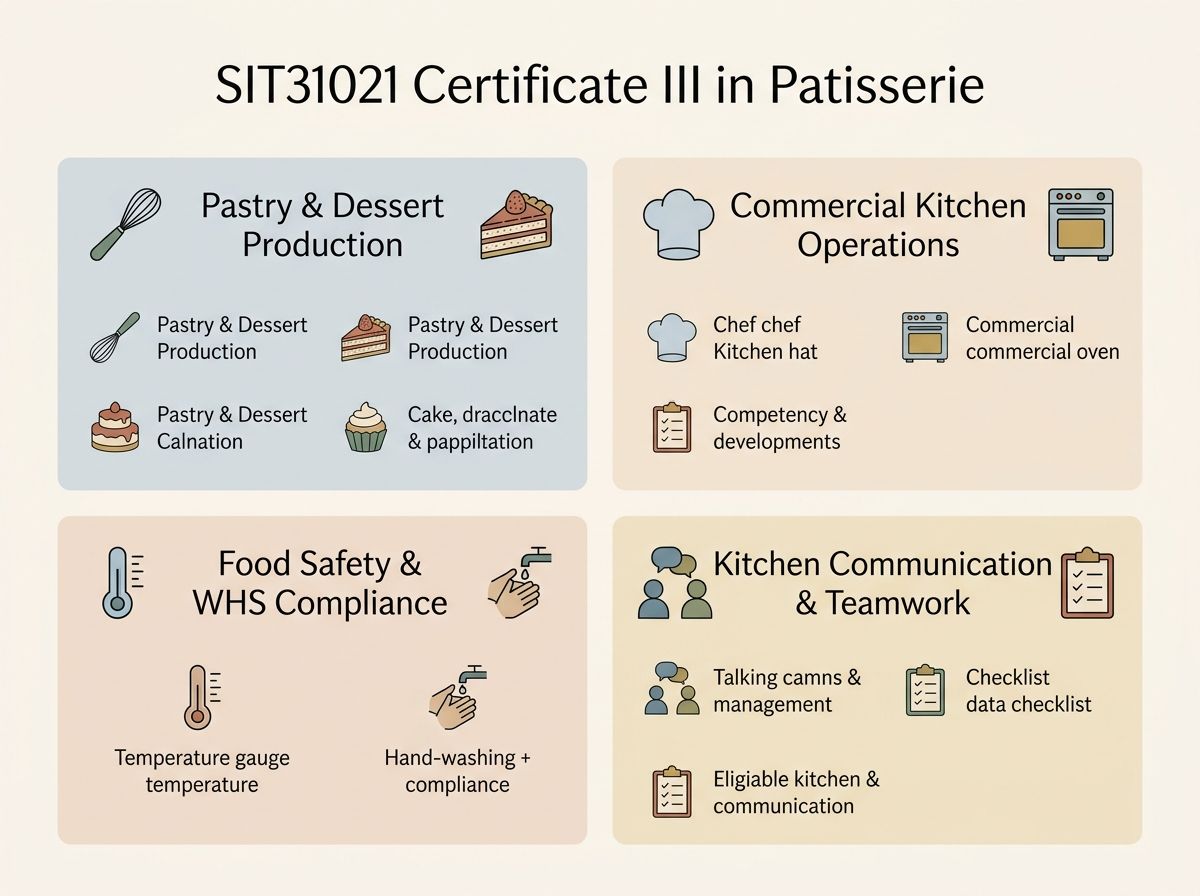
The core units are grouped into clear operational areas. The first is pastry production. This includes units covering cakes, specialized cakes, pastries, yeast-based bakery products, petits fours, and plated desserts. These units form the technical core of the qualification, involving laminated doughs, choux pastry, enriched breads, sugar work, and chocolate. If you have prepared these items in a professional capacity, your experience is directly relevant.
The second group covers day-to-day kitchen operations. This includes using food preparation equipment, basic cookery methods, working effectively in a team, cleaning premises, and receiving and storing stock. These standard operational duties underpin professional kitchen environments globally.
The third area covers food safety and work health and safety (WHS). It includes two units on hygienic practices and safe food handling, along with one unit on safe work practices. These units are mandatory across all Australian hospitality qualifications. Whether your international safety training meets these standards depends on your documentation and the Registered Training Organisation (RTO) conducting your assessment. This requirement varies between providers and is best discussed early in the process.
The fourth group focuses on communication and leadership. This includes coaching colleagues in job skills, plus elective options like customer service or cultural awareness. If you have supervised junior staff, managed kitchen teams, or worked in customer-facing roles, this experience is highly relevant.
Elective units vary depending on the RTO. They often cover areas like preparing and modeling marzipan, catering for special dietary requirements, producing Asian desserts, or planning and costing recipes. The exact combination of electives depends on the training provider you choose.
How the Australian system differs from overseas patisserie training
Most international patisserie programs, such as the French CAP Pâtissier, European apprenticeships, City & Guilds awards, or culinary diplomas from the Philippines, India, and Sri Lanka, match or exceed the technical depth of SIT31021. The issue is not your skill level. The difference is that Australian RTOs must assess candidates against specific domestic competency standards, and international qualifications do not automatically align with this system.
This is a documentation and mapping challenge, not a reflection of your skills. A parliamentary committee report on skilled migration noted that some migrants face occupational downgrading, preventing them from working in roles that match credentials earned outside Australia. This situation often occurs because of barriers in transferring international qualifications, rather than a lack of actual expertise.
Policy settings that recognize the skills of international workers are essential to help them contribute fully to the Australian workforce. Recognition of Prior Learning (RPL) is the formal mechanism established to address this gap, allowing you to have your existing skills assessed against Australian standards regardless of where they were learned.
What evidence do you already have? A self-assessment for overseas pastry chefs
RPL assessment for SIT31021 relies entirely on evidence. An assessor compares your practical experience against the requirements of each competency unit. Most overseas-trained pastry chefs working in commercial kitchens already possess substantial evidence. The main task is organizing and presenting this documentation so an Australian assessor can verify your skills.
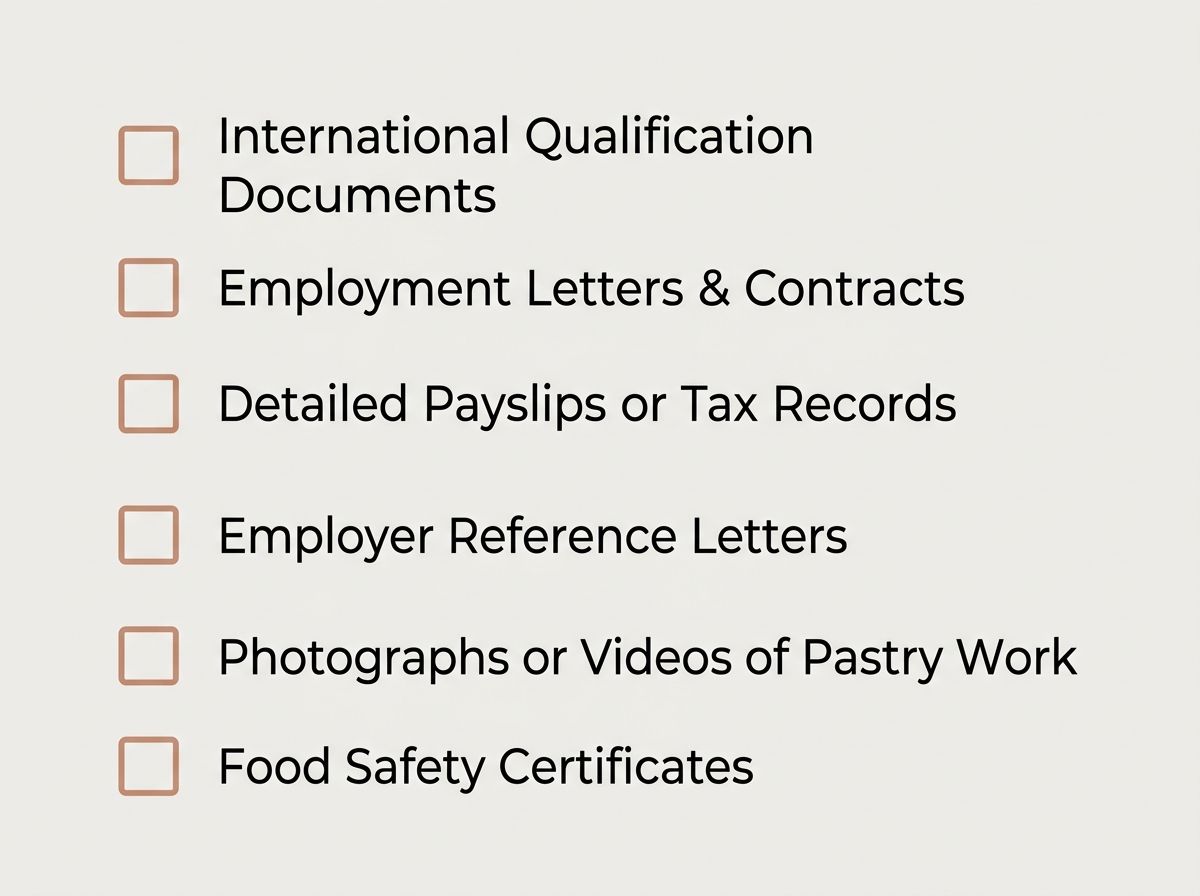
Here is a list of common evidence types used for SIT31021 RPL. You do not need to provide every item listed, but a broader range of documentation strengthens your application.
- Your international qualification certificates (such as a CAP Pâtissier, City & Guilds, or culinary diploma), with English translations if necessary
- Employment letters or contracts from commercial kitchens detailing your roles and responsibilities
- Payslips or official tax records confirming your employment history and duration of work
- References or statutory declarations from head chefs, executive chefs, or kitchen managers confirming your technical abilities
- Photographs or videos of your pastry work, including plated desserts, cakes, viennoiserie, chocolate, and sugar work
- Records of international food safety training or hospitality certifications
- Evidence of supervisory duties, such as staff rosters, training logs, or written references
- Industry awards, competition results, or media features highlighting your work
Industry guidelines indicate that candidates seeking SIT31021 RPL should have practical experience in a commercial kitchen or bakery performing a diverse range of patisserie tasks. Working within a professional kitchen team is highly regarded. The range and depth of your hands-on skills are more important than a specific number of years, as assessors look at what you can actually do rather than just your time on the job.
Regarding food safety units, policies vary between providers. Some RTOs accept international food safety certifications within an RPL portfolio, while others require a gap assessment or short training course to meet Australian standards. Confirming how your chosen RTO handles food safety units is an important early step in the process.
The RPL pathway: How SIT31021 assessment works for overseas-trained chefs
RPL for SIT31021 is a formal assessment process managed by a Registered Training Organisation. It is a thorough evaluation of your skills against national standards. An assessor reviews your compiled evidence against the requirements of each unit. Units with sufficient evidence are credited, while any identified skill gaps can be addressed through targeted gap training.
The assessment process generally consists of an initial skills review, submission of your evidence portfolio, and an assessor evaluation. This evaluation may include a technical interview or a practical observation. If you meet all competency requirements, the RTO issues the qualification. Any necessary gap training is arranged during this process.
RPL it assists candidates by helping you organize your evidence, clarify unit requirements, and work with partner RTOs. The qualification is issued directly by the RTO, not by RPL it. The resulting Certificate III in Patisserie (SIT31021) is identical to those awarded through traditional study, as the assessment standards remain the same.
Common questions from overseas pastry chefs about SIT31021
These questions are frequently asked by international pastry chefs considering the SIT31021 assessment pathway.
Can my overseas patisserie experience be assessed for SIT31021 RPL?
Yes. RPL is open to any pastry chef with relevant commercial experience, regardless of where they acquired their skills. Assessment is based on your demonstrated competence rather than where you trained. If your background covers the units within SIT31021 and you can document your work, RPL is a practical option.
Does my overseas qualification count toward SIT31021?
Your international qualification serves as valuable supporting evidence, but it does not replace the Australian assessment process. An RTO assessor evaluates it alongside your work history, references, and portfolio. Credentials like a French CAP Pâtissier, a City & Guilds certificate, or an international culinary diploma strengthen your application but require formal mapping to meet Australian requirements.
Is SIT31021 relevant to skilled migration visa applications?
Skilled visa eligibility in Australia depends on your nominated occupation, not simply your qualification code. Applicants must work in an occupation listed on the relevant skilled migration lists, such as the Medium and Long-term Strategic Skills List (MLTSSL) or the Short-term Skilled Occupation List (STSOL), which dictate the available visa pathways.
For trade occupations like Pastrycook (ANZSCO 351112) or Cook (ANZSCO 351411), Trades Recognition Australia (TRA) is the skills assessing authority for migration. TRA's Migration Skills Assessment program applies when the occupation is listed on the MLTSSL or STSOL with TRA as the assessing body. TRA recommends verifying with the Department of Home Affairs before applying to ensure your visa pathway requires a skills assessment and that TRA is the correct authority for your occupation.
William Angliss Institute is a TRA-approved assessment body for roles like Pastrycook, Cook, Chef, and Baker under the TSS and OSAP programs. You should confirm current assessment arrangements directly with TRA and the Department of Home Affairs, as policy guidelines are subject to change.
A migration skills assessment is different from receiving an Australian qualification, occupational registration, or license. TRA evaluates whether your international skills and experience meet Australian industry standards for migration purposes. This is a separate process from an RPL qualification assessment.
For current information on eligible occupations, the Department of Home Affairs publishes the skilled occupation lists used for visa applications. Criteria vary by list and visa subclass, and these documents are updated regularly.
What if I have gaps in my evidence?
Gap training is a standard component of the RPL process. If your documentation does not fully meet the requirements for a specific unit, the RTO will outline the targeted training or assessment needed. This avoids the need to repeat your entire training, letting you address specific gaps while gaining recognition for your existing experience.
How long does SIT31021 RPL take?
Assessment timelines depend on the completeness of your portfolio, individual RTO processing times, and whether you need to complete any gap training. A well-prepared file with clear evidence generally progresses faster. These timeframes are indicative, and your RPL consultant can provide a more accurate estimate once they have reviewed your documentation.
Your next step: Find out if your experience qualifies
You have the kitchen experience. The next step is confirming whether your documentation maps to the SIT31021 requirements in a format an assessor can verify. Our Free Skills Review is designed to answer this question.
The Free Skills Review is a practical, no-obligation assessment. It is not a sales pitch, but a straightforward evaluation of whether your international experience aligns with the Certificate III in Patisserie (SIT31021) RPL requirements. If another path is more suitable for your situation, we will advise you of that directly.
General information only, current at the date shown. Licensing rules change, so check the current requirements with the relevant regulator before you rely on them. RPL it Australia is a student support service, not a Registered Training Organisation; qualifications are assessed and issued by our partner RTOs.