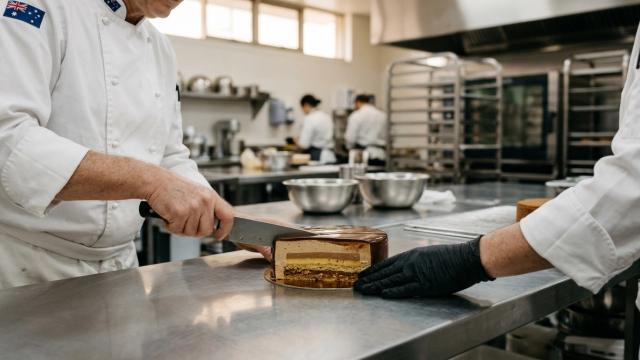
Your Overseas Pastry Training Doesn't Automatically Count Here — But Your Work Does
Trained as a pastry chef overseas but told your qualifications don't count in Australia? Here's why — and how your kitchen work can still earn you SIT31021.
By RPL it Australia7 min read
You Have the Skills. The System Just Can't See Them Yet.
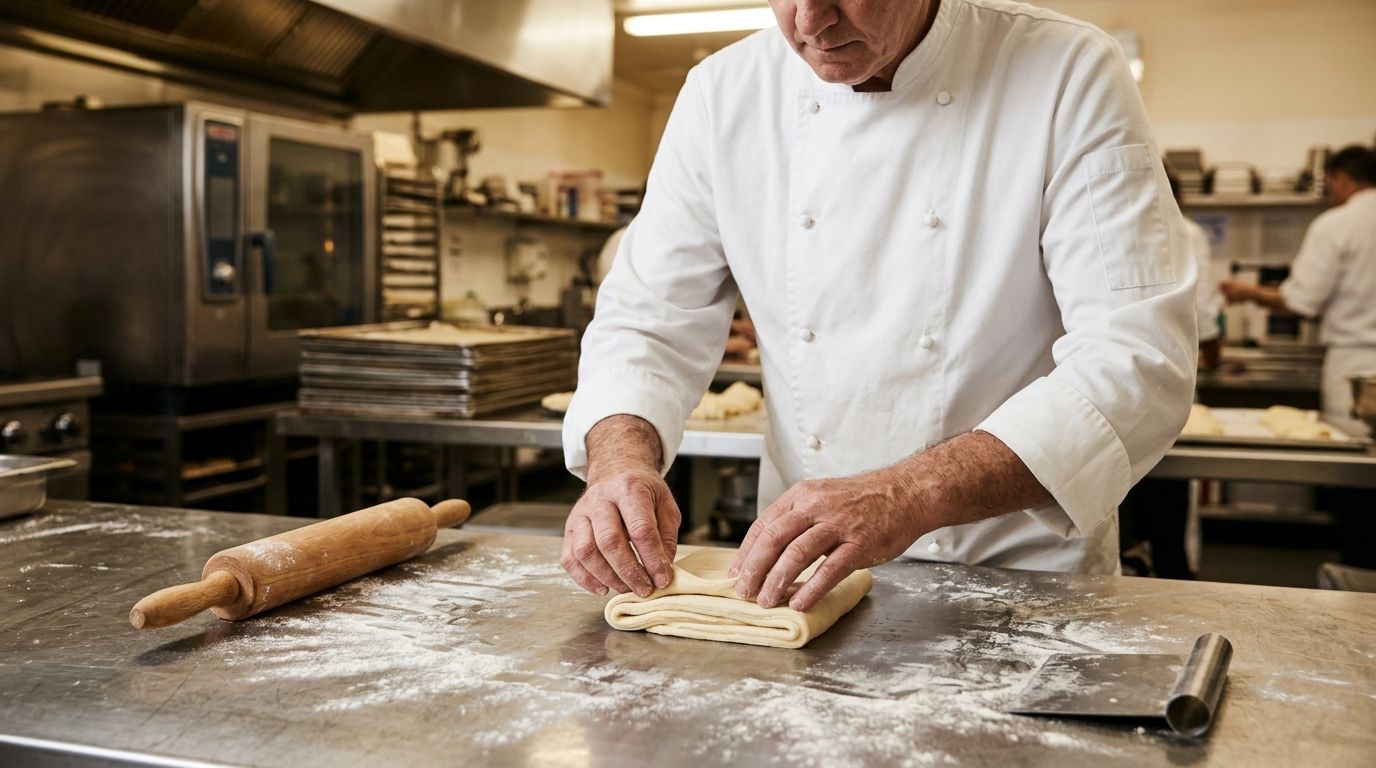
You have the experience. Years of it — laminating croissant dough before dawn, tempering chocolate for plated desserts, producing petits fours for service. You trained seriously, worked in professional kitchens, and built a craft that took real discipline to develop.
Then you arrived in Australia, and the system looked straight through you.
Not because your skills aren't real. They are. The problem is administrative: Australia's vocational training system issues its own qualifications, assessed against its own national framework. A patisserie diploma from another country — however rigorous — was assessed against a different set of national standards. That gap isn't a judgment on your ability. It's a paperwork problem. And paperwork problems have solutions.
This article names that gap clearly, explains why it exists, and walks through how Recognition of Prior Learning (RPL) uses your demonstrated kitchen work as the evidence base for formal Australian recognition.
Why overseas patisserie qualifications don't automatically transfer
Australia's vocational education and training (VET) system is nationally regulated under the Australian Qualifications Framework (AQF). Every qualification issued in Australia — including the Certificate III in Patisserie (SIT31021) — sits within this framework and is assessed against nationally standardised units of competency. Qualifications issued in other countries were assessed against different national frameworks, regardless of how comprehensive or demanding those frameworks were.
A patisserie diploma from Paris, Tokyo, or Manila may represent world-class training. It was simply assessed against a different national standard. Australian employers, licensing bodies, and skills assessment authorities require evidence against the Australian standard — not because your overseas training was inadequate, but because the frameworks don't automatically map to each other.
This is the recognition gap: the distance between what you can demonstrably do and what the Australian system can currently see. It affects skilled migrants across many industries, and it's one reason why some experienced professionals find themselves working well below their actual capacity after arriving in Australia.
We've written about this pattern in detail — if you want to understand the broader picture of why skilled migrants often work below their capacity in Australia, that article is worth reading.
What SIT31021 actually covers — and why your kitchen experience maps to it
The Certificate III in Patisserie (SIT31021) is a nationally recognised Australian qualification covering the core competencies of professional pastry work. It comprises 21 units in total — 15 core units and 6 elective units — and reflects the role of pastry chefs who use a wide range of patisserie skills alongside sound knowledge of kitchen operations.
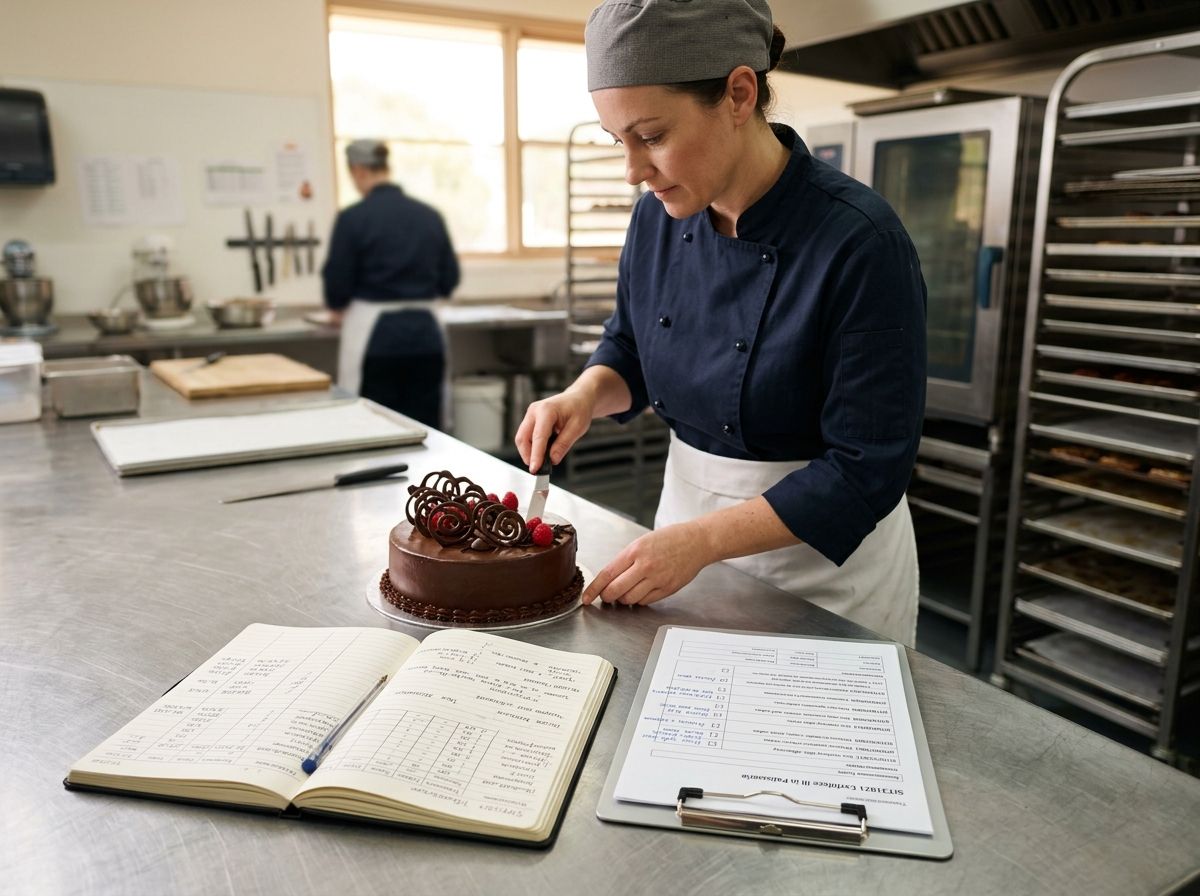
The core units include competencies such as:
- Produce cakes (SITHPAT011)
- Produce specialised cakes (SITHPAT012)
- Produce pastries (SITHPAT013)
- Produce yeast-based bakery products (SITHPAT014)
- Produce petits fours (SITHPAT015)
- Produce desserts (SITHPAT016)
- Participate in safe food handling practices (SITXFSA006)
- Use food preparation equipment (SITHCCC023)
- Work effectively in a commercial kitchen (SITHCCC034)
If you've worked in a professional pastry kitchen, you've almost certainly been doing these things. The question isn't whether you can do them. The question is whether that competency has been formally documented against Australian standards.
That's the distinction that matters. Your training happened in a different country. Your skills exist in every kitchen you've worked in. RPL is how those two facts become one qualification.
The recognition gap has a name — and a pathway through it
Recognition of Prior Learning (RPL) is a formal assessment process within Australia's VET framework. It evaluates existing skills, knowledge, and experience against the official requirements of a nationally recognised qualification — using evidence from your working life rather than requiring you to repeat training you've already completed.
RPL is not a shortcut. It is a legitimate, nationally regulated assessment pathway. The Australian Skills Quality Authority (ASQA) strictly regulates RPL delivery across Australia, and RTOs — Registered Training Organisations — must follow rigorous evidence and assessment requirements when issuing qualifications through RPL. The qualification you receive through RPL carries the same national standing as one earned through traditional study.
RPL it does not conduct assessments or issue qualifications. That is the role of RTOs. What we do is guide you through the process — helping you understand what evidence is needed, how to present your experience, and what to expect at each stage.
If you've been told your overseas experience 'doesn't count', it may be that it simply hasn't been translated into the right form yet. We've written about this pattern across different industries — translating overseas expertise into Australian recognition is exactly what RPL is designed to do.
What evidence does an RPL assessment for SIT31021 actually use?
RPL assessment draws on evidence of what you've actually done. For a patisserie qualification, that evidence comes from your professional kitchen career. The specific evidence requirements vary by RTO — the assessing organisation determines what is needed and whether it is sufficient — but the raw material already exists in your working history.
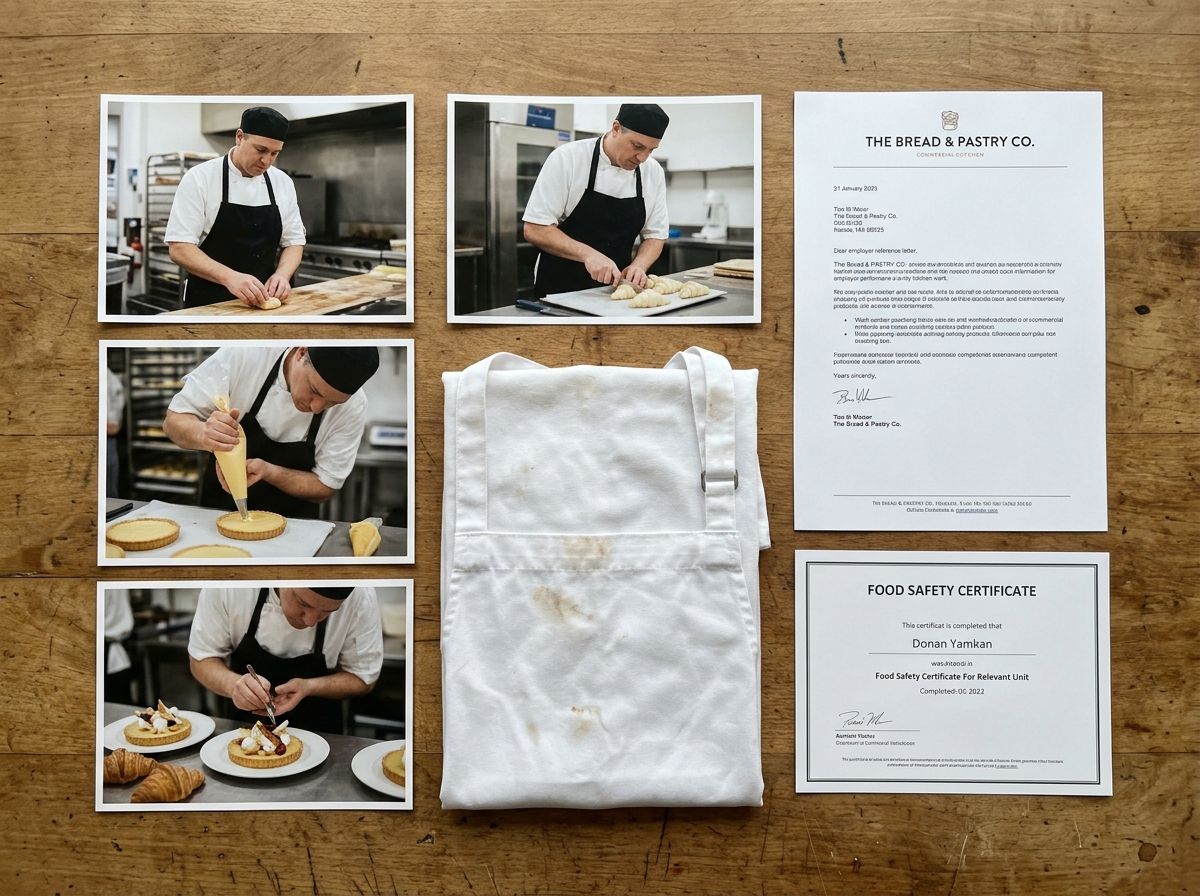
Evidence that RTOs may consider for SIT31021 RPL typically includes:
- Employment records and payslips showing your roles and tenure
- References from head chefs, employers, or supervisors who can speak to your competency
- Photographs of work you've produced — plated desserts, pastry products, chocolate work
- Menus or recipes you've developed or contributed to
- Food safety certificates you hold
- A practical skills demonstration, if required by the assessing RTO
Some RTOs state that RPL is available to candidates with skills and knowledge gained outside the formal education and training system, including work and life experience. Others note that RPL may reduce the duration or time needed for course completion, depending on the evidence provided.
One important note on food safety: SIT31021 includes food safety as a core requirement. Whether overseas food safety certifications you hold can be used as supporting evidence for the relevant units varies by RTO. Some may consider them alongside other evidence; others may require you to demonstrate current competency against the Australian unit. This is worth clarifying directly with your RPL provider.
We know this feels unfamiliar. We'll guide you through what's needed.
The qualification and skills assessment: what overseas pastry chefs should know
For overseas-trained pastry professionals, SIT31021 matters beyond employment. Skills assessment for certain visa pathways in Australia requires a formal qualification or demonstrated competency assessed against Australian standards.
Trades Recognition Australia (TRA) administers skills assessment programs for trade occupations and delivers them through TRA-authorised Registered Training Organisations. TRA publishes an 'Australian Qualifications by Occupation' document that sets out the relevant AQF qualification for specific occupations it assesses.
According to William Angliss Institute — a TRA-authorised assessing body for hospitality trades — Pastrycook (ANZSCO 351112) is aligned to SIT31021 Certificate III in Patisserie for assessment purposes. Chef (ANZSCO 351311) has a separate pastry pathway aligned to SIT40721 Certificate IV in Patisserie.
TRA administers multiple skills assessment programs, and the correct program depends on your occupation, passport country, where you studied, and the visa you are seeking.
Importantly, TRA advises that applicants must confirm with the Department of Home Affairs whether their specific visa pathway and circumstances actually require a skills assessment before applying. TRA also states it cannot advise applicants on the right occupation — that determination rests with the applicant, informed by the Home Affairs skilled occupation lists and ANZSCO definitions.
The key takeaway: holding SIT31021 may be relevant to your visa pathway, but the specific requirements depend on your individual circumstances. Verify your situation with the Department of Home Affairs and a registered migration agent before drawing conclusions.
Is RPL the right pathway for every overseas pastry chef?
Honest answer: not necessarily. RPL works best when your experience is substantial, recent, and directly relevant to the units in the qualification. We would rather guide someone to the right pathway than enrol them in the wrong one.
RPL for SIT31021 is likely a strong fit if:
- You have worked in a professional pastry kitchen in a substantive role — not just assisting
- Your experience covers a range of patisserie products, not a single specialisation
- You can gather evidence of your work — references, employment records, photographs, food safety certifications
- Your experience is reasonably current
RPL may not be the right fit if your kitchen experience has been limited in scope, very brief, or primarily in a support role where you weren't independently producing patisserie products. In those cases, a more structured training pathway may serve you better.
It's also worth knowing that if an RPL assessment identifies gaps in your competency, gap training is typically available to address those areas. The assessment process is designed to be honest — not to exclude people, but to ensure that the qualification issued reflects genuine competency.
Your work deserves to be counted
Your skills are real. Your experience counts. Your recognition is earned.
The Certificate III in Patisserie (SIT31021) is the Australian qualification that formally reflects the competency you've spent years developing. RPL is the pathway that uses your demonstrated kitchen work as the evidence base for that recognition — not a shortcut, but a rigorous and legitimate assessment of what you already know and can do.
You can find out more about the Certificate III in Patisserie (SIT31021) and the RPL pathway on our qualification page.
The next step is yours to take.
General information only, current at the date shown. Licensing rules change, so check the current requirements with the relevant regulator before you rely on them. RPL it Australia is a student support service, not a Registered Training Organisation; qualifications are assessed and issued by our partner RTOs.