Tired of the skills shortage? The plumbers are already on your site
NT plumbing skills shortage? Your experienced crew may already qualify via RPL. Learn how RPL plumbing pathways turn on-site expertise into formal licences.
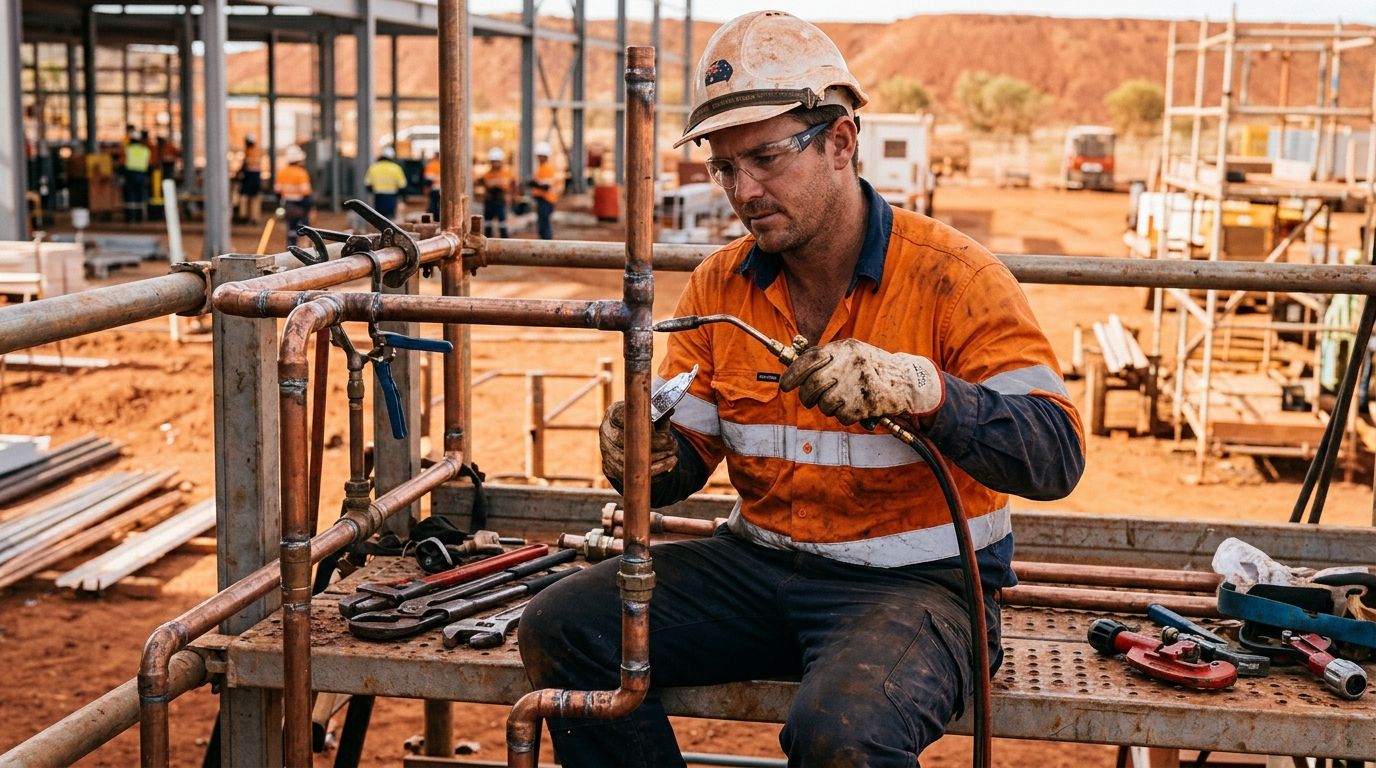
The NT plumbing skills shortage is real, but the diagnosis is wrong
Every site manager in the Territory has felt it. You are pricing a job, submitting a tender, or trying to staff a remote infrastructure project, and the qualified plumbers are not there. Or so the story goes.
The dominant narrative frames the NT plumbing shortage as a pipeline problem. There are not enough people entering the trade, not enough apprentices coming through, and an entire generation of tradespeople retiring without replacements.
That narrative is incomplete. On most NT sites, experienced plumbers are already working. They have been on the job for years, sometimes decades. They know the systems, the materials, and the local conditions. They have handled remote area installations, mining camp infrastructure, wet season complications, and everything in between.
The problem is not that the talent does not exist. The problem is that the talent exists in a form that the formal licensing system cannot readily recognize.
This is a paperwork shortage rather than a skills shortage. The experienced talent is already on the tools.
This shift in perspective changes the solution entirely. If the problem is a training pipeline, you must wait years for new tradespeople to emerge. If the problem is documentation, you can begin solving it immediately using the workforce you already have.
What 'experienced but undocumented' means in the NT plumbing sector
In the Northern Territory, pathways into plumbing work are often less formal than in southern states. Workers enter the trade through remote area contracts, mining site roles, informal mentorship on family or community projects, or by migrating from interstate without transferring their credentials. Some have worked alongside licensed plumbers for years, gaining competency through practical experience on site rather than classroom instruction.
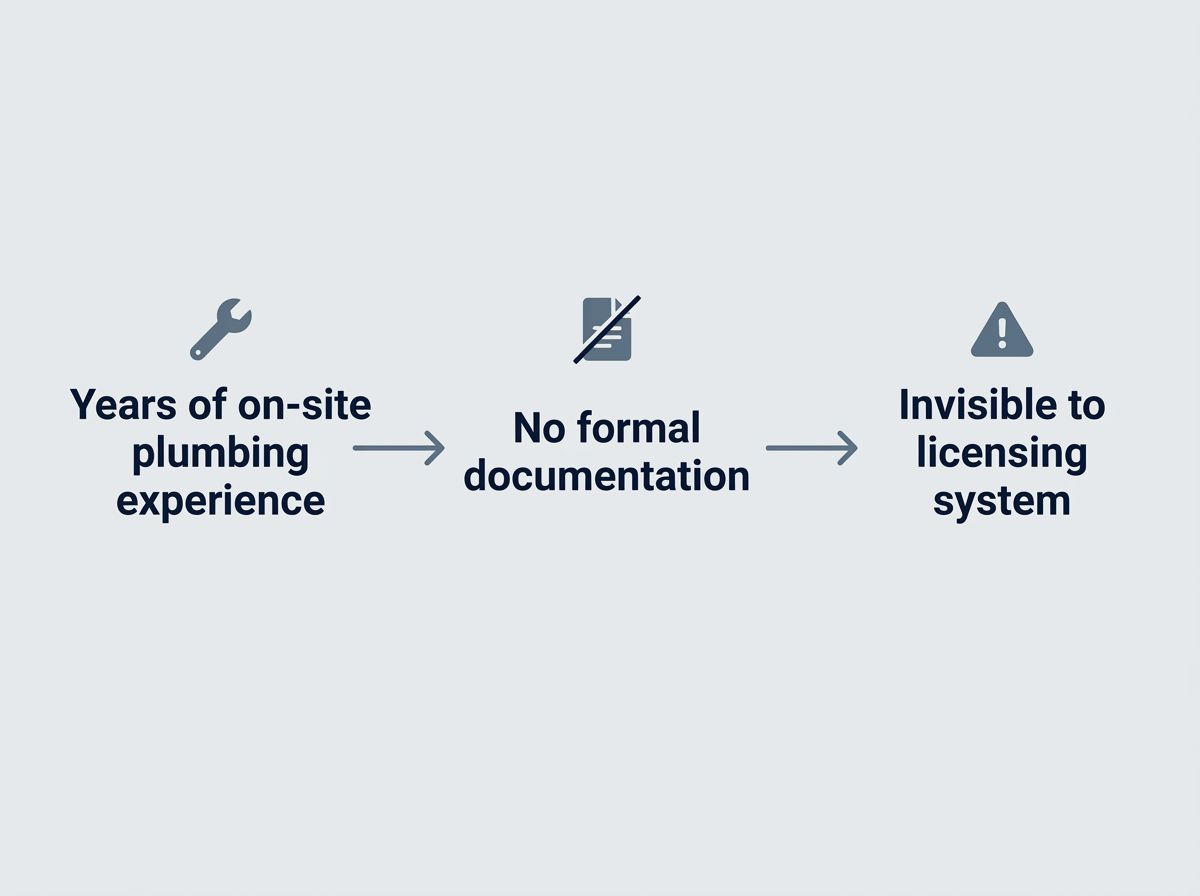
The result is a workforce that is genuinely capable but remains invisible to the formal licensing system. Their competence is real and shows up every day on your sites. But because it was not acquired through a standard registered training pathway, the system does not recognize it.
This is not a failure of the worker. It is a structural gap between how skills are developed in the Territory construction sector and how formal systems are designed to recognise them.
Your crew has the practical experience. The licensing system has simply not documented it yet.
Recognition of Prior Learning exists to bridge this gap. It creates a rigorous, legitimate pathway for formal systems to assess and acknowledge what experienced workers already know and do daily.
Why the traditional qualification route does not work for your workforce
The standard advice is simple: enrol your workers in a Certificate III in Plumbing, send them through TAFE, and have them complete the standard apprenticeship pathway to get the qualification.
For an apprentice entering the trade for the first time, that pathway makes sense. For an experienced adult worker who has been doing the job for five, ten, or fifteen years, it is operationally disruptive and frustrating.
Consider what the traditional pathway actually requires. Block-release training means weeks away from the job site. In the NT, where remote locations compound every logistical challenge, that often requires flights, accommodation, and extended absences from projects that cannot afford the gap. The cost is not just the course fees; it is the lost productivity of removing a skilled worker from the tools for extended periods.
Beyond the logistics, there is a human element. Asking an experienced tradesperson to sit in a classroom studying things they already know is a poor use of their time. It sends a message that their years of work do not count, which harms morale, retention, and your ability to recruit skilled staff in the first place.
There is a more practical route, but it requires a clear understanding of what Recognition of Prior Learning actually is and what it is not.
What RPL plumbing pathways actually are and what they are not
Recognition of Prior Learning (RPL) is a formal assessment process. A qualified assessor from a registered training organisation (RTO) evaluates whether a worker's existing skills, knowledge, and experience meet the competency standards required for a nationally recognised qualification. For plumbing, this refers to the Certificate III in Plumbing (CPC32420), which is the benchmark qualification for trade licensing in most Australian jurisdictions.
RPL is not a shortcut, a workaround, or a method to bypass proper assessment. It is a rigorous, nationally recognised pathway operating within the same regulatory framework as any other qualification route. The qualification issued following a successful RPL assessment is identical to the qualification earned through traditional classroom study. It carries the same national recognition because the assessment process is genuine.
The difference is how competency is demonstrated. Rather than requiring a worker to complete coursework and supervised training hours, the assessor evaluates evidence of competency that already exists. This evidence can include records of completed work, employer references, site documentation, photographs of installations, logbooks, or third-party verification from supervisors or clients.
The assessment is conducted by a qualified assessor from the partner RTO. While RPL it guides candidates and employers through the preparation, helping to identify suitable workers, gather evidence, and navigate the pathway, the RTO performs the assessment and issues the qualification. This distinction clarifies what the process involves and who is responsible for each step.
It is also important to be realistic about outcomes: not every worker who pursues RPL will immediately achieve the qualification. If gaps in competency are identified, targeted gap training may be required. An honest suitability assessment before enrolment is essential to ensure both the employer and the worker invest in the right pathway.
How to identify which workers in your team are ready for RPL
Not every experienced worker is ready for RPL. A realistic suitability assessment must come before enrolment. As an employer, you are in the best position to review which team members likely have the necessary evidence of competency to support an RPL pathway.
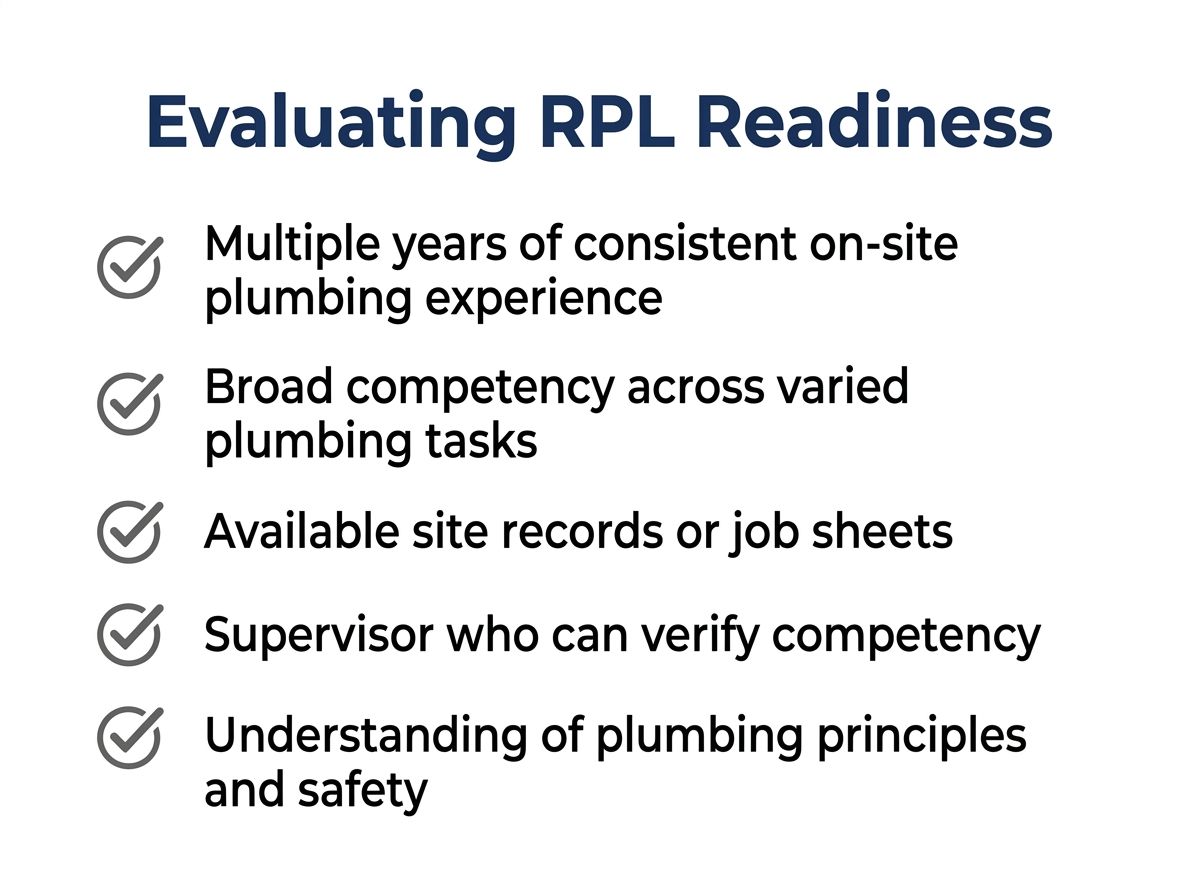
The following indicators suggest a worker is a strong candidate for assessment:
- They have worked in plumbing roles for several years, with consistent on-site experience across different tasks.
- Their work covers a broad range of plumbing competencies, rather than a single specialised area.
- They have documentation of their work, including site records, job sheets, completion certificates, or employer logs.
- A supervisor, site manager, or licensed plumber can provide a reliable third-party report of their competency.
- They can explain what they do and why, demonstrating an understanding of the trade beyond basic instructions.
Workers who have spent years in a narrow role, or whose work history is difficult to document, may face larger gaps. The RPL process will identify these areas, but it is useful to hold an initial conversation before committing to the pathway.
Experience in remote plumbing, mining infrastructure, or community housing projects in the Territory is highly relevant to the competency standards of the Certificate III in Plumbing. The varied and demanding nature of local site conditions often helps workers demonstrate practical competency across multiple assessment units.
The business case: what formalising your plumbing workforce unlocks
Beyond compliance, a qualified plumbing workforce expands the projects your business can tender for. In the Territory, where government infrastructure contracts, remote community projects, and mining support work represent major revenue opportunities, formal qualifications are a standard requirement rather than an afterthought.
Most government and commercial contracts in the Territory require plumbing work to be completed by, or under the direct supervision of, a licensed tradesperson. If your team lacks formal qualifications, you must either decline those contracts or take on compliance risks by proceeding without the required credentials. Neither option serves the business.
There are also significant insurance implications to consider. Construction and plumbing industry policies typically state that all regulated work must be executed by appropriately qualified and licensed personnel. When unlicensed workers carry out these tasks, the insurance coverage of your business may be compromised. This represents a risk that is easy to overlook until an actual claim is made, at which point the financial consequences can be severe. We do not advise on specific insurance arrangements; employers should seek guidance from their insurer or broker on the implications for their specific situation.
Formalising your workforce qualifications is about more than risk management. It allows you to secure the contracts your team is already capable of executing, and to demonstrate that capacity to clients, regulators, and insurers in a standard format they accept.
What the RPL plumbing process looks like in practice
The RPL process is guided by RPL it through a structured framework. This is how the pathway operates from an employer's perspective.
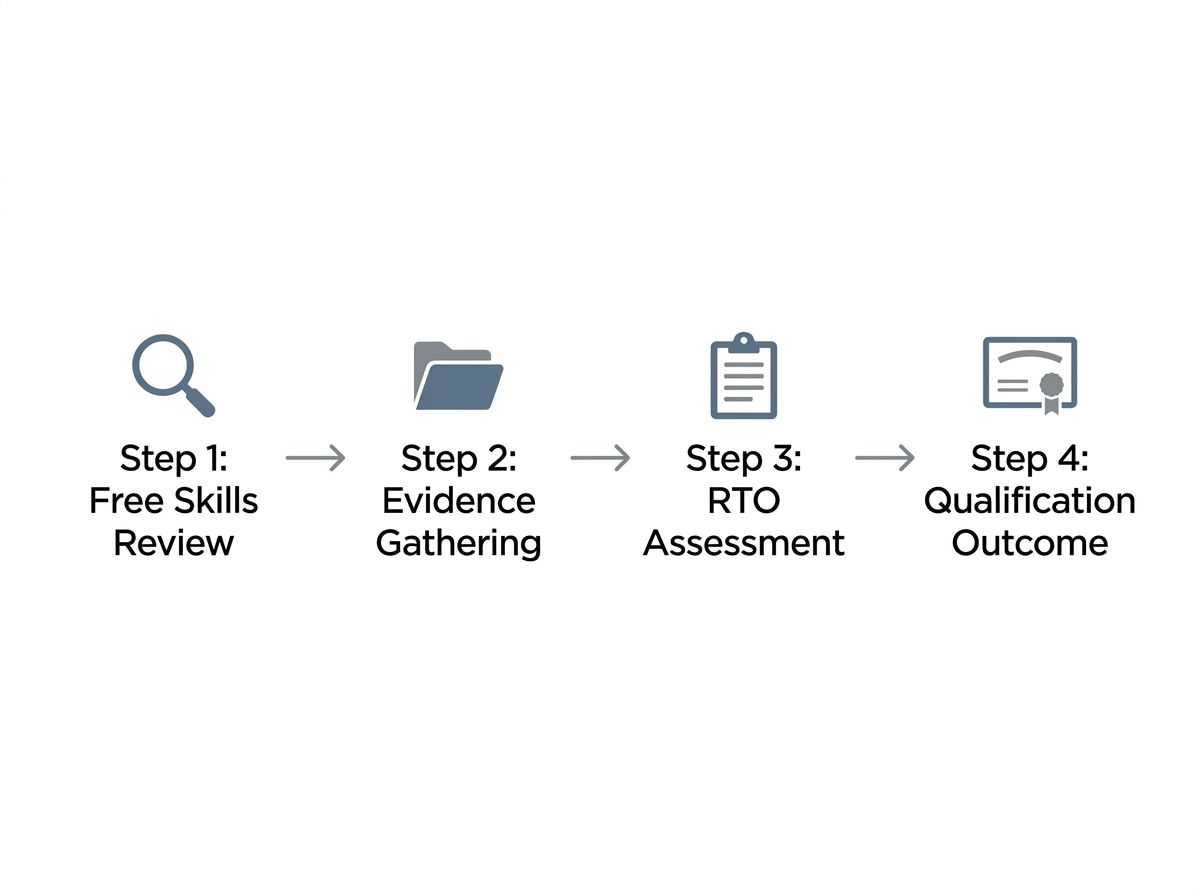
The process starts with a Free Skills Review. This assessment determines whether a worker is suitable for RPL based on their experience, the nature of their work, and available documentation. The review costs nothing and involves no commitment. It serves as the starting point, not the final decision.
If the skills review indicates suitability, the next stage is evidence gathering. During this phase, the worker's practical experience is translated into the formal documentation the RTO assessor needs to evaluate competency. RPL it supports this step, helping to identify what evidence exists, how to present it, and what gaps may need to be addressed. This stage requires the most active effort from the worker and the employer as sources of documentation and third-party verification.
The evidence is then submitted to the RTO for formal evaluation. The assessor, who is a qualified professional from the registered training organisation, determines whether the material demonstrates competence across the units of the Certificate III in Plumbing. Depending on the RTO's assessment methodology, this review may involve a practical component, a structured technical conversation, or a portfolio review.
If the assessor identifies gaps in competency, targeted training is arranged. This training covers only the specific units where evidence was insufficient, rather than repeating the entire qualification. Once competency is demonstrated across all required units, the RTO issues the qualification.
Timeframes vary depending on the individual worker's circumstances, available evidence, and the RTO's assessment schedule. Because this is a genuine assessment, the process requires time to complete thoroughly. What it does not require is months of classroom attendance or prolonged absences from the worksite.
The first step: a Free Skills Review for your plumbing team
If you employ experienced plumbers who lack formal qualifications, the process is almost certainly worth exploring. The immediate questions are identifying which workers are ready and understanding what the pathway would look like for your specific business setup.
The Free Skills Review is designed to address those questions. It is a no-cost, no-obligation assessment that provides a realistic picture of your team's standing, with no enrolment required and no commitment.
Daily experience can serve as evidence. The first step is determining whether your team's on-site history is ready for formal recognition.
Ready to Get Recognised?
Start with a free skills review to find out if RPL is right for you.