Why Sending Your Best Unqualified Sparkies to TAFE is Costing You Money
Sending experienced sparkies to TAFE day-release costs far more than most contractors calculate. See the hidden costs and why the RPL electrician pathway changes the math.

The default assumption that's bleeding your business
When a new contract lands and your best sparky doesn't have their ticket, most electrical contractors do the same thing: they ring TAFE. It feels responsible. It feels thorough. It's what the industry has always done. The apprenticeship model built this reflex into the trade, and nobody questions it.
Here is the problem. The apprenticeship model was designed for 18-year-olds learning a trade from scratch. It was not designed for a 15-year veteran who has been pulling cable, reading plans, and troubleshooting complex installations since before some of those apprentices were born. Sending that person to TAFE day-release is not the responsible choice. It is the expensive one.
The RPL electrician pathway exists because experienced adult workers are not apprentices. They do not need to learn the trade. They need to demonstrate that they already know it. That distinction has real financial consequences for your business — and most contractors have never done the maths.
If workforce compliance is already costing you contracts, this is worth reading first.
What day-release TAFE actually costs an electrical business
The visible cost of TAFE is the course fee. Depending on the state and provider, fees for the Certificate III in Electrotechnology Electrician (UEE30820) vary — and your worker may be eligible for subsidised rates under state training programs. That part is manageable.
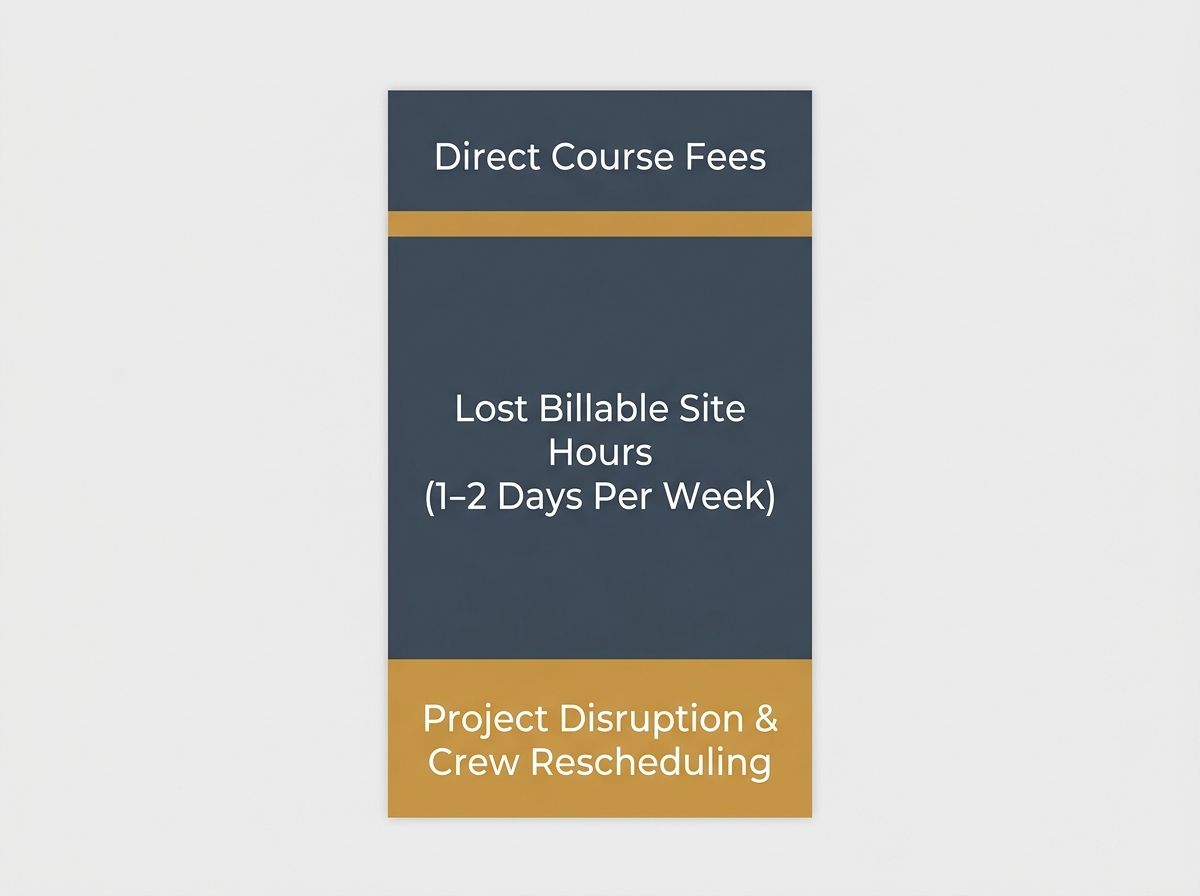
The invisible cost is what happens every day your most productive sparky is sitting in a classroom instead of on the tools.
Day-release programs typically require attendance one or two days per week over a period that can stretch to 12 months or longer, depending on the provider and the worker's prior recognition. That is a significant number of working days removed from your schedule — not in one block, but as a recurring weekly drain that compounds across every project you are running.
Consider what a licensed, experienced electrician generates on a productive day on site. That figure — whatever it is for your business — is the opportunity cost multiplier. Multiply it by the number of classroom days across the full program. Add the course fees. Add the cost of reorganising your crew around a recurring absence. The total is rarely what contractors expect when they first make the call to TAFE.
For an experienced worker, the classroom content is largely redundant. They are not filling knowledge gaps — they are sitting through material they mastered years ago, at a pace designed for people who have never held the tools. The business pays for every one of those hours twice: once in the course fee, and once in the billable work that did not happen.
Understanding what the UEE30820 actually requires helps clarify why experienced workers are in a different position to first-year apprentices.
The morale cost nobody puts in the spreadsheet
There is a cost that does not appear on any invoice, and it is the one most likely to hurt you long-term.
Your best sparky knows they already know this. They have been doing this work for years. They have trained junior workers, solved problems that stumped less experienced people, and built a reputation on site. Now you are asking them to sit in a classroom with 18-year-olds and learn how to strip wire.
The message that sends — even if it is unintentional — is that their years of experience do not count. That the system does not see what you see. That formal recognition requires them to start from the beginning, regardless of where they actually are.
Experienced tradespeople do not leave jobs over pay alone. They leave when they feel their competence is not respected. Replacing a skilled electrician is not a simple recruitment exercise. The cost of finding, onboarding, and bringing a replacement up to the productivity level of a 15-year veteran — accounting for recruitment fees, lost productivity during the transition, and the institutional knowledge that walks out the door — is substantial. Industry research on skilled trades replacement consistently places this figure at a significant multiple of annual salary, though the exact figure varies by role and context.
That risk does not appear in the TAFE fee schedule. But it belongs in the calculation.
What the RPL electrician pathway actually looks like
Recognition of Prior Learning for electricians is not a shortcut. It is not a workaround. It is a formal, nationally recognised assessment pathway conducted by a registered training organisation (RTO) under the Australian Qualifications Framework. The qualification at the end — the UEE30820 Certificate III in Electrotechnology Electrician — is the same qualification. The pathway to it is different.
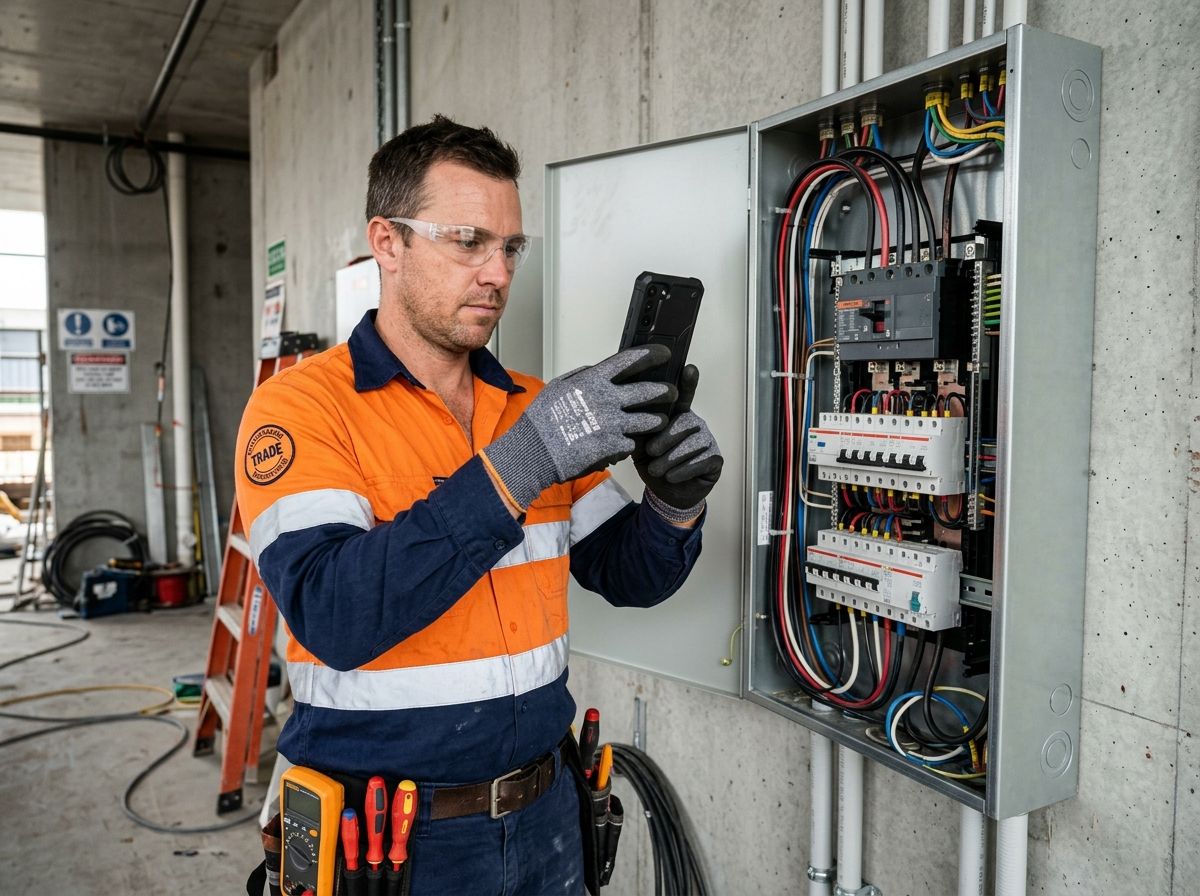
For an experienced worker, RPL means demonstrating competency through evidence of what they already do on the job, rather than repeating training they completed years ago through practical experience. A qualified assessor from the delivering RTO evaluates that evidence against the units of competency in the UEE30820. If the evidence is sufficient, competency is recognised. If gaps are identified, gap training is provided — typically at no additional cost.
The types of evidence that typically support an electrician's RPL assessment include employer statutory declarations, site records and logbooks, photographs of completed work, references from supervisors or clients, Safe Work Method Statements, and records of toolbox talks or safety inductions. This is not an exhaustive list — the specific requirements depend on the assessor and the units being assessed. Candidates should expect a genuine, rigorous process.
Critically, the worker stays on the job during the RPL process. The evidence gathering happens around their existing schedule. The assessment is conducted by the RTO assessor, not by TAFE on a day-release timetable. The disruption to your business is a fraction of what day-release requires.
RPL timelines vary depending on the candidate's experience, the completeness of their evidence, and the assessor's schedule. They are not guaranteed and should not be treated as fixed. What can be said is that the process does not require recurring weekly absences from the job site over an extended period.
The ROI comparison: TAFE day-release vs. RPL electrician pathway
When you lay the two pathways side by side, the comparison is not close — for an experienced worker.
TAFE day-release: course fees (which vary by state and subsidy eligibility) plus the opportunity cost of recurring weekly absences across the full program, plus the project disruption cost of reorganising your crew around a predictable gap, plus the morale impact on a worker who knows they are repeating what they already know.
RPL electrician pathway: the RPL service fee (which varies by provider — request a quote through the Free Skills Review to understand the cost for your specific situation), plus a modest investment of time in evidence gathering, with the worker staying on the job throughout the assessment process.
The RPL pathway does not suit every worker. A person with limited documented experience, significant skills gaps, or who has not been actively working in the trade may not be a strong RPL candidate. Honest suitability assessment before any enrolment is not just good practice — it is the only way to make sure the pathway is right for the individual. Enrolling an unsuitable candidate wastes time and money for everyone involved.
For the right candidate — an experienced sparky with years of documented, hands-on electrical work — the financial case for the RPL electrician pathway over TAFE day-release is clear. The qualification outcome is identical. The cost to your business is not.
Is the RPL electrician pathway right for your worker?
Before you enrol anyone, it is worth understanding whether RPL is the right fit. Not every experienced sparky is an ideal RPL candidate, and honest suitability assessment protects both the worker and your business.
A strong RPL candidate for the UEE30820 is typically someone who has been actively working in the electrical trade for a meaningful period, across a range of tasks that align with the qualification's units of competency. They can point to documented evidence of their work — records, references, site documentation — and they have been doing this work recently, not years ago in a different context.
If there are genuine skills gaps — areas of the qualification where the worker has limited or no experience — gap training is part of the RPL process and is typically provided at no additional cost. The assessor identifies gaps; the training addresses them. This is not a failure of the process. It is the process working as it should.
If a worker's experience is primarily undocumented, or if they have been working in a narrow slice of the trade that does not cover the breadth of the UEE30820, RPL may not be the most appropriate pathway. In those cases, a different approach — or a combination of RPL and structured training — may serve them better. The Free Skills Review exists to answer this question honestly, before any commitment is made.
What to do next: getting your sparky assessed without disrupting the job
The process starts with a conversation, not a classroom. The Free Skills Review is the entry point — no cost, no commitment, no disruption to the job site. It is an honest assessment of whether the RPL electrician pathway suits your worker's specific experience and documentation.
If the pathway is suitable, the next steps involve gathering evidence that already exists in your worker's professional history: site records, employer declarations, logbooks, references. RPL it guides candidates through this process — helping them understand what evidence is needed and how to present it clearly. The formal assessment is then conducted by a qualified assessor from the delivering RTO, who determines competency against the UEE30820 units. If the assessment is successful, the qualification is issued by the RTO. It is nationally recognised because the assessment is genuine.
Throughout this process, your worker stays on the tools. The business keeps its productive capacity. The compliance requirement is met through a pathway that respects what your worker has already built over years on the job.
The decision is yours. But the maths of the alternative — recurring weekly absences, redundant classroom time, and a demoralised veteran sparky — is worth doing before you make the call to TAFE.
Learn more about the Certificate III in Electrotechnology Electrician (UEE30820) and the RPL pathway.
Ready to Get Recognised?
Start with a free skills review to find out if RPL is right for you.