Why relying on unqualified fitters is a major liability (and how MEM30219 resolves it)
Experienced but unqualified mechanical fitters are a compliance risk. Here is what MEM30219 covers and how RPL resolves it without downtime.
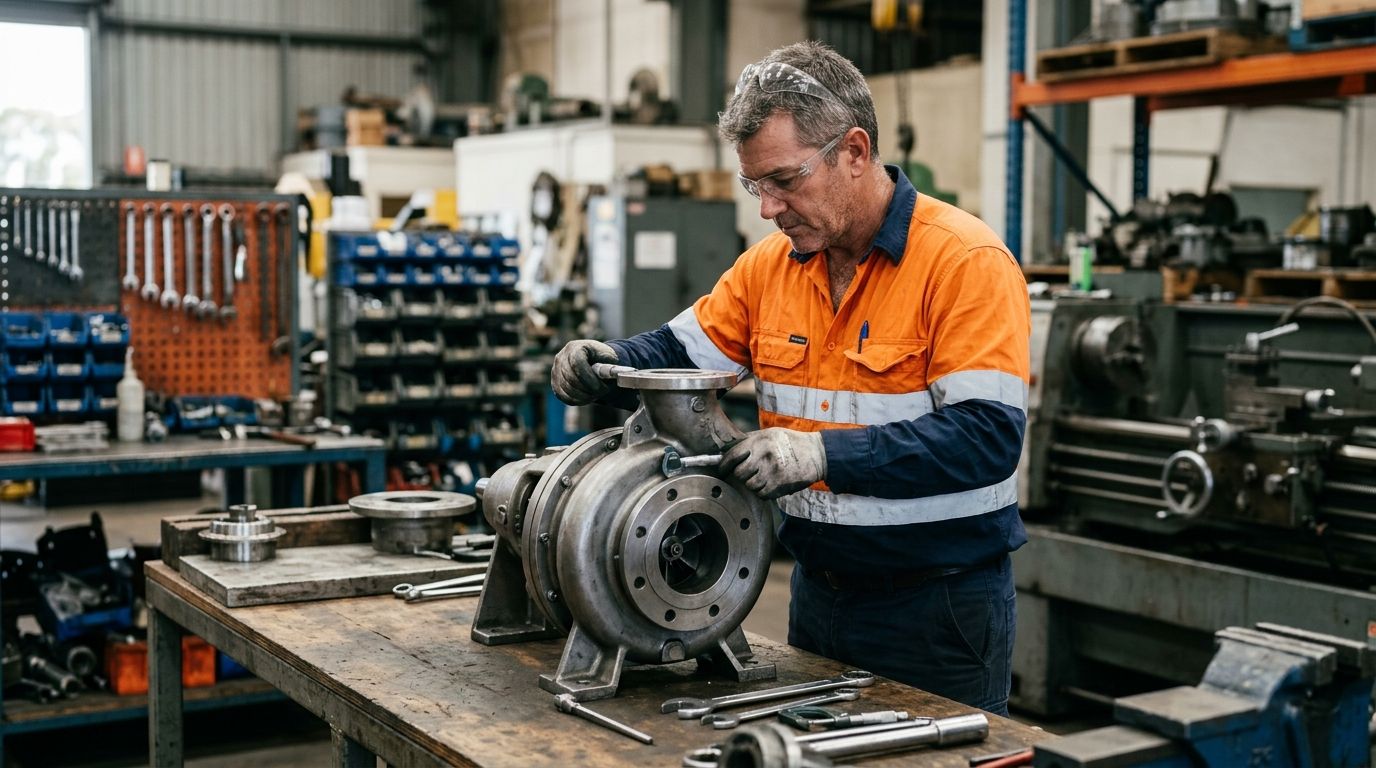
The counterintuitive truth about your most experienced fitters
Your fitters are skilled. That is not the question.
The question is whether their skill exists in a form that your insurer, your principal contractor, and the relevant regulator will recognise when something goes wrong, or when a tender lands on your desk. In those moments, years of experience on the tools counts for little without the formal qualification to back it up.
Here is the counterintuitive reality that most employers in construction, mining, manufacturing, and utilities have not fully mapped: the mechanical fitter who has been doing the job for fifteen years without a formal qualification is not your most reliable asset. Without MEM30219, the Certificate III in Engineering (Mechanical Trade), they may be your most exposed liability.
This is not about doubting competence. It is about understanding how formal systems assign responsibility. Competence that has never been formally assessed sits entirely on the employer's ledger. The worker performs the task. If something goes wrong, the employer carries the compliance question alone.
The good news is that the experience creating this risk is also the foundation for resolving it.
What MEM30219 covers and why it matters
MEM30219 is the Certificate III in Engineering (Mechanical Trade), the nationally recognised qualification for mechanical fitters in Australia. It is delivered by registered training organisations (RTOs) and assessed against national competency standards within the Manufacturing and Engineering training package.
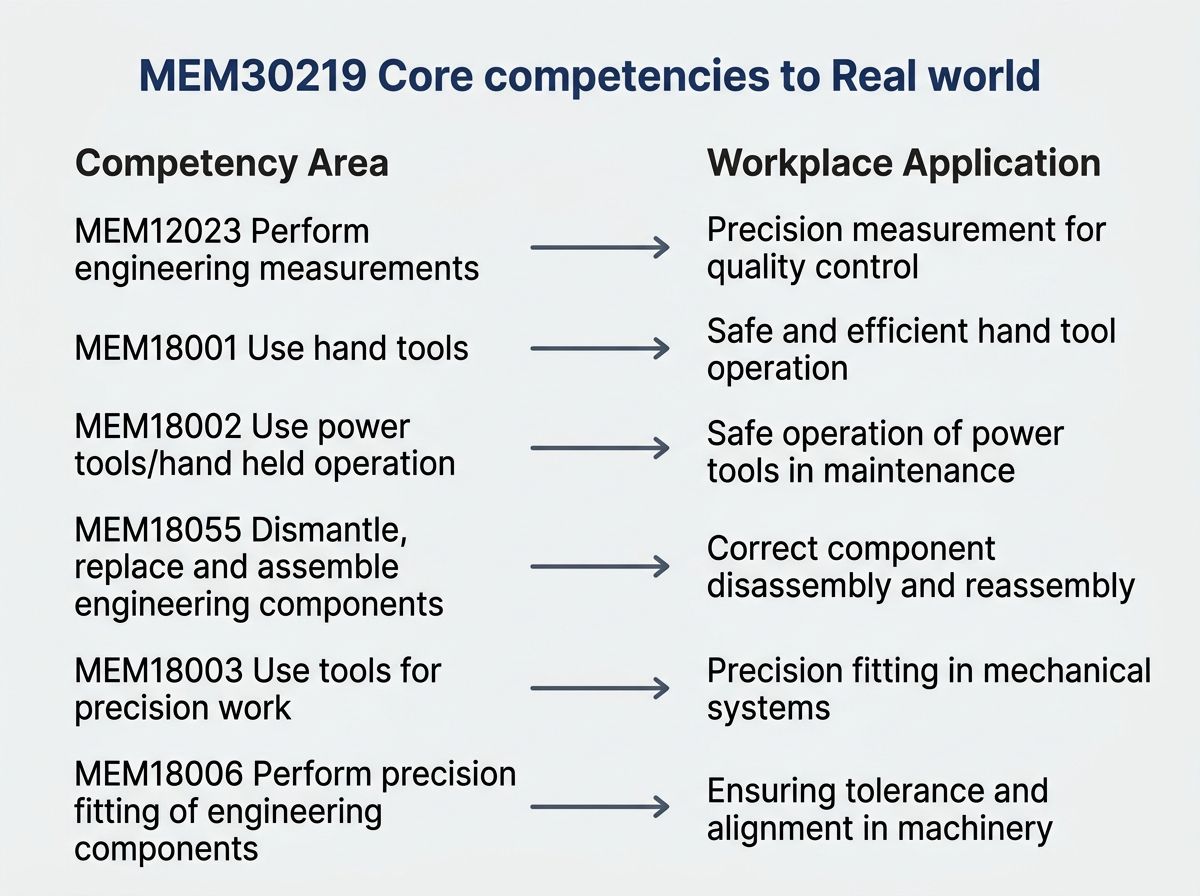
The qualification covers the core technical competencies that define the mechanical fitting trade: precision measurement and calculation, the use of hand and power tools, mechanical component assembly and disassembly, maintenance of mechanical systems, and adherence to workplace health and safety requirements in engineering environments. Elective units allow the qualification to be tailored for specific industry settings, including mining, oil and gas, utilities, and heavy manufacturing.
For employers, MEM30219 matters for a specific reason. It is the benchmark against which regulators, principal contractors, and insurers measure whether a mechanical fitter is formally competent to perform the work. It is not a measure of how good a fitter is. It is a measure of whether their competency has been formally verified by a qualified assessor against a national standard.
That distinction is the source of the liability.
The three liability doors you open when fitters are not formally qualified
Most employers are aware of one of these risks, but few have mapped all three. Each door opens independently, and they compound.
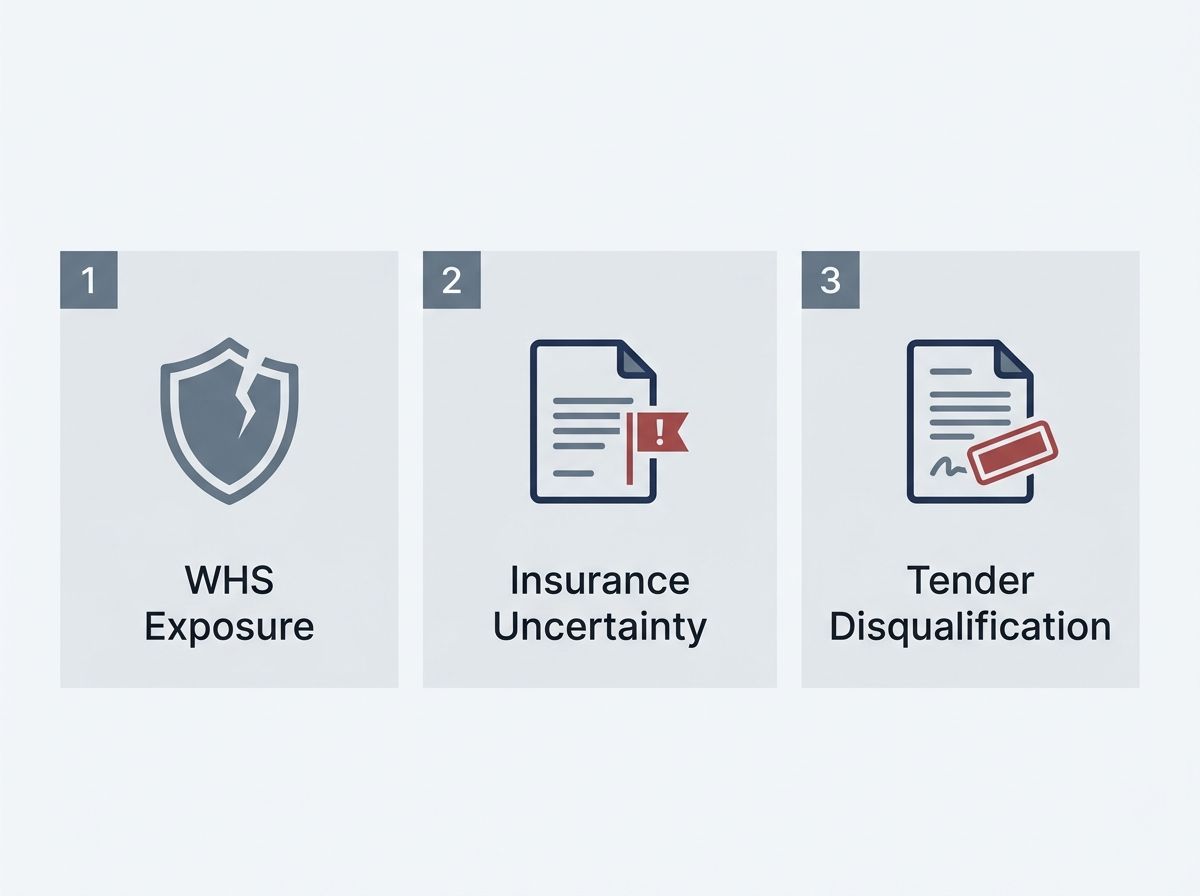
Door one: work health and safety exposure
Australian work health and safety legislation places a duty of care on employers to ensure that workers performing tasks are competent to do so safely. Where a formal qualification is the recognised standard for a role, as MEM30219 is for mechanical fitting in many regulated industry contexts, the absence of that qualification raises a compliance question that experience alone cannot answer.
This does not mean an incident must occur for the exposure to exist. Regulators conducting audits, site inspections, or responding to complaints can identify unqualified workers performing work that carries a qualification expectation. The employer's position in that scenario is uncomfortable regardless of how competent the worker actually is.
The structural reality is this: when a worker holds MEM30219, the formal assessment of their competency has been conducted by a qualified assessor and recorded against a national standard. When they do not, that assessment has never happened, meaning the employer is implicitly vouching for competency they have no formal mechanism to verify.
Door two: insurance coverage uncertainty
Industrial and public liability insurers assess risk in part by evaluating whether the workforce performing covered work meets the qualification expectations for that work. An unqualified worker performing mechanical trade tasks in a regulated environment introduces a variable that insurers may treat as a material risk factor.
The specific implications vary by policy, insurer, and context. This article does not constitute insurance advice. What remains structurally true is that workforce qualification status is a factor in how industrial risk is assessed, and employers with unqualified workers in trade roles carry a question mark that formally qualified workforces do not.
If you have not reviewed your policy conditions in relation to workforce qualification requirements, that conversation with your broker is worth having before an incident prompts it.
Door three: tender disqualification
Government contracts, infrastructure projects, and Tier-1 principal contractor prequalification frameworks increasingly require that trade workers hold nationally recognised qualifications. For mechanical fitters, MEM30219, or an equivalent, is the benchmark that appears in workforce compliance schedules.
An employer whose mechanical fitters cannot demonstrate formal qualification may find themselves excluded from tenders they are otherwise capable of winning. The work is there. The skills are there. The paperwork is not, and the paperwork is what the tender requires.
This is the most commercially visible of the three doors, and often the one that finally prompts action. But by the time a tender is lost, the WHS and insurance exposure has already been accumulating.
The pattern of principal contractors mandating formal qualifications is well established across the construction and engineering sectors, and it is accelerating.
Why 'they've been doing it for years' is not a compliance defence
The most common employer rationalisation for not addressing workforce qualification gaps is tenure. He has been doing this for twenty years. She knows this plant better than anyone. They trained the apprentices.
Tenure is not a compliance defence. Regulators do not accept it. Insurers do not accept it. Tender evaluation panels do not accept it. The formal systems that govern industrial work assess qualification status, not years of service.
Here is the counterintuitive edge of this: the longer a worker has been performing mechanical trade work without MEM30219, the longer the employer has been carrying the exposure. Tenure does not reduce the liability. It extends the period during which it has existed.
This is not a criticism of the worker. Their competence is real. Their experience is genuine. The problem is structural: their competence has never been formally assessed and recorded against a national standard. That gap sits on the employer's ledger, not the worker's.
The pivot is this: tenure is exactly what makes Recognition of Prior Learning viable. The same years of experience that create the exposure are the evidence base for resolving it.
How RPL converts liability into a credentialled asset without pulling workers off the tools
Recognition of Prior Learning (RPL) is the formal pathway through which an experienced mechanical fitter's existing skills and knowledge are mapped against the MEM30219 competency standards. It is not a training programme. It does not require workers to sit in a classroom and relearn what they already know. It is an assessment of competency that already exists.
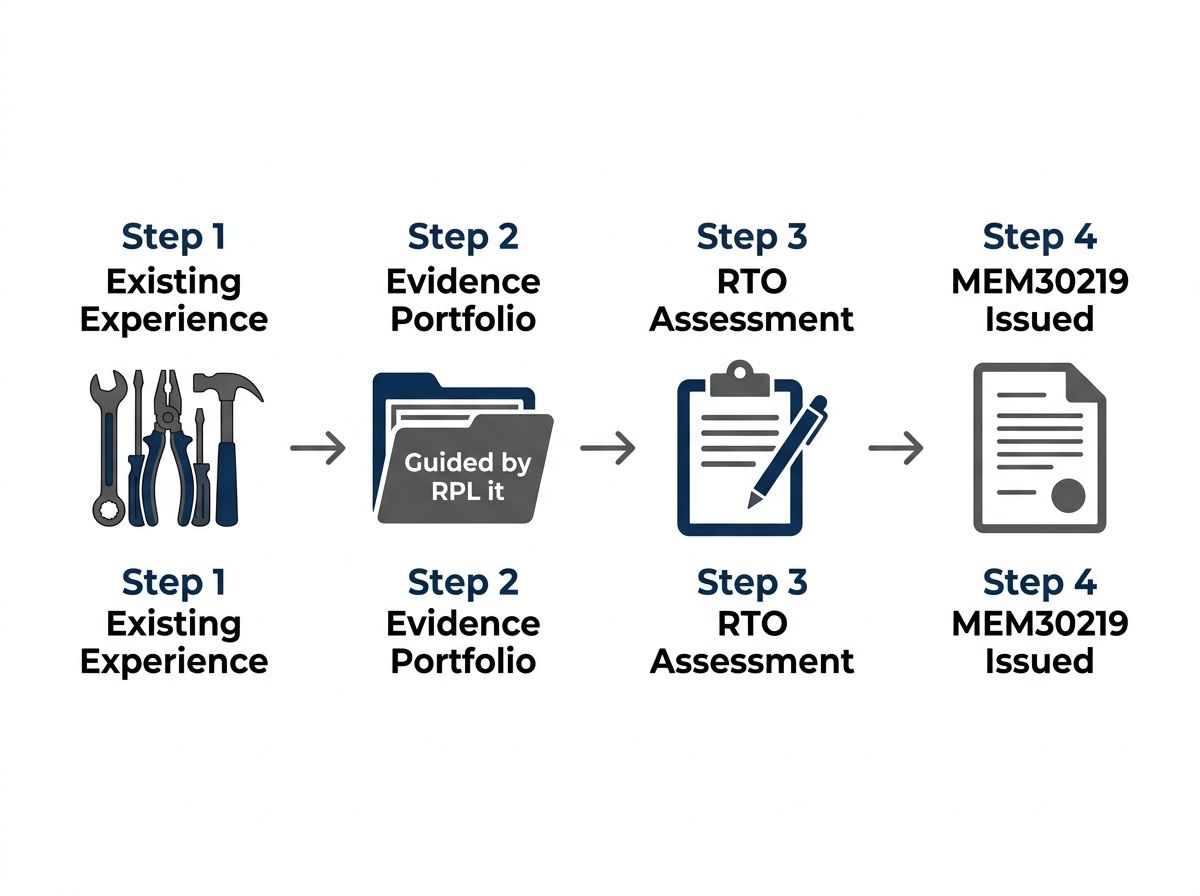
The process works like this: the worker's existing experience is documented as evidence, including employment records, supervisor references, examples of work performed, records of tasks completed, and in some cases, workplace observations. That evidence is then assessed by a qualified assessor from a registered training organisation (RTO) against the MEM30219 competency standards.
If the assessor determines that the evidence demonstrates competency across the required units, the RTO issues the MEM30219 qualification. The qualification is nationally recognised because the assessment is genuine, conducted by a qualified assessor against a national standard.
Any honest assessment must recognise that gap training may be required. If the evidence assessment identifies areas where the worker's documented experience does not fully cover a particular unit, gap training addresses those specific areas before the qualification is issued. This is not a failure, but the process working as intended. Reputable RPL providers disclose this upfront.
RPL it guides workers and employers through the evidence documentation process. The RTO conducts the assessment and issues the qualification. The timeframe for the process varies depending on the worker's experience profile and the evidence available. While it is not something that can be promised in advance, for workers with substantial relevant experience, the process is typically more efficient than starting a full qualification from scratch.
What employers need to know before starting the MEM30219 RPL process
Before initiating the RPL process for your mechanical fitters, there are several practical considerations worth understanding.
- Not every worker will be suitable for RPL. Suitability depends on the nature and breadth of their experience, the types of mechanical trade tasks they have performed, and whether their work history aligns with the MEM30219 competency standards. Honest suitability assessment protects everyone: the worker, the employer, and the integrity of the qualification.
- Employers typically play a supporting role in the RPL process. This may include providing employment records, confirming the worker's role and responsibilities, and in some cases allowing workplace observations by the RTO assessor. The administrative burden on the employer is generally modest.
- The qualification is issued by the RTO, not by the RPL guidance provider. RPL it guides the candidate through the evidence documentation process; the RTO's qualified assessors conduct the formal assessment and issue the nationally recognised qualification.
- Gap training may be required for some workers. This is disclosed honestly at the outset of the process, not after enrolment. If a worker's experience does not fully cover certain competency areas, targeted gap training addresses those areas specifically, rather than requiring the entire qualification.
- Suitability varies by individual. Two workers with the same job title and similar tenure may have different RPL outcomes depending on the specific tasks they have performed and the evidence available to document them.
The starting point for any employer considering MEM30219 RPL for their workforce is an honest suitability assessment that tells you what is viable before any commitment is made.
The Free Skills Review: find out if your fitters are RPL-ready
Your fitters have the experience. The question is whether that experience is documented in a form that supports a formal RPL assessment against MEM30219.
The Free Skills Review is the no-commitment starting point. It is free. There is no obligation. You will receive honest guidance on whether your workers' experience qualifies them for MEM30219 through RPL, and what the pathway looks like if it does. If RPL is not the right fit for a particular worker, that will be the advice you receive.
The decision is yours. The pathway is clear. The first step costs nothing.
Ready to Get Recognised?
Start with a free skills review to find out if RPL is right for you.