Why 10 Years on NT Sites Won't Get You Past the Licence Gate Without a Trade Qualification
Experienced on NT sites but blocked by the licence gate? Discover why trade qualifications are required, how the system works, and how RPL can help.

The pattern every experienced NT tradie recognises
You have the experience. You have run the sites, made the calls, trained the apprentices, and delivered the work. But somewhere along the way — when a contract came up, or a pay grade opened, or a site access requirement landed on your desk — the system told you that your years on the tools were not enough. Not because you lacked competence. Because you lacked the paper.
This is not a story about skill. It is a story about the form that skill takes in a formal system. And it is a pattern that plays out, repeatedly, for experienced tradies working across the Northern Territory — from Darwin's construction sites to remote infrastructure projects across the Top End.
The gate is not about competence. It is about the credential. Understanding why that gate exists — and how to open it — is what this article is about.
Stage one: you do the work. Someone else signs off.
The first stage of the pattern is often invisible until you try to move up. You are doing the work — running the job, making the technical decisions, carrying the responsibility on site. But the paperwork goes under someone else's name. The licence holder signs off. You do the work.
This arrangement feels temporary at first. You are building experience. You are learning the trade properly. You will get your own licence eventually. But eventually has a habit of staying in the future.
In licensed trades across Australia — building, plumbing, electrical, refrigeration and air conditioning, and others — workers who have not yet obtained their formal qualification must work under the supervision of a licensed practitioner. The licensed person carries the legal responsibility. The experienced worker carries the practical load. The gap between those two things is where the pattern begins.
Stage two: the contract you cannot win
The second stage arrives when opportunity appears. A government contract. A tender for a commercial project. A promotion to site supervisor or leading hand. A role that requires you to be named as the responsible person.

And then you discover the requirement: you need to hold your own licence. You cannot bid. You cannot be named. You cannot access the pay grade the role demands.
Government and commercial contracts across Australia increasingly require licensed tradespeople to be named as the responsible party. Insurance requirements follow the same logic. Site access protocols on major projects — particularly in the resources and infrastructure sectors that drive a significant portion of NT construction activity — often require workers to demonstrate formal qualifications. The experienced worker who has been doing the work for a decade cannot meet that requirement on paper.
The gate is not about competence. It is about the credential. And until the credential is in place, the gate stays closed.
This is a pattern that plays out in every state — the experienced worker doing the work while the licence holder takes the contract.
Stage three: the qualification wall
When the experienced worker investigates how to get licensed, they discover the requirement: a formal trade qualification. Not a test of competence. Not a portfolio review of site experience. A nationally recognised qualification — typically a Certificate III or Certificate IV — issued by a registered training organisation (RTO).
The system is not designed to assess what you know from years of doing the work. It is designed to assess whether you have been through a recognised learning pathway. For workers who learned on the job — through mentorship, through necessity, through years of doing — this feels like being asked to prove you can walk by attending a walking class.
Trade licensing in Australia is regulated at the state and territory level, and requirements vary by trade and jurisdiction. In the Northern Territory, the relevant licensing bodies administer requirements for different trade categories — building practitioners, plumbers, electricians, and others each have their own regulatory framework. Across these frameworks, the common thread is the same: a formal qualification is a prerequisite for a licence. The experience you have accumulated on NT sites is real. The system requires it to be presented in a specific form before it will open the gate.
Why the NT context makes this pattern harder
The qualification wall exists everywhere in Australia. But the NT adds specific layers of difficulty that make the pattern harder to break.
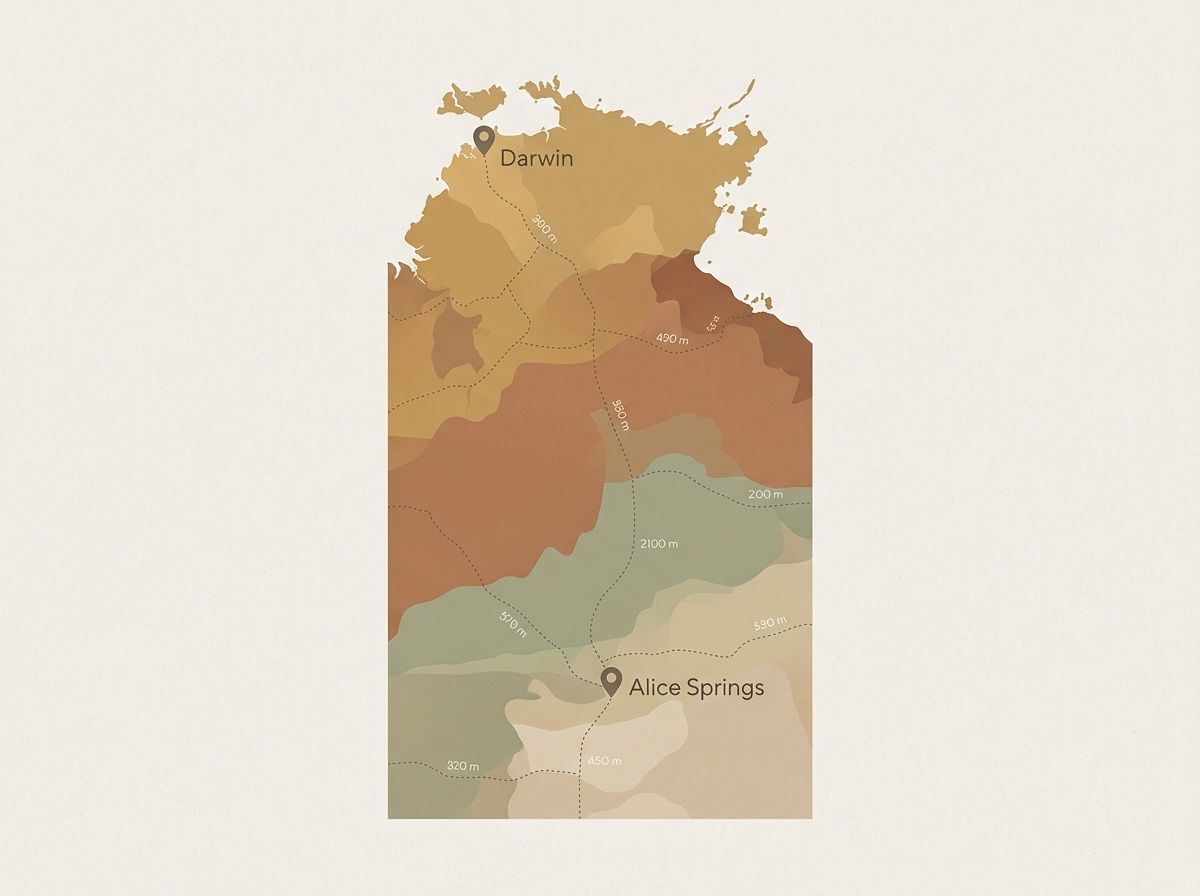
Geographic isolation is the first. The Northern Territory is one of the least densely populated jurisdictions in Australia, and the number of registered training organisations operating locally is comparatively small. Australia's national VET regulator, ASQA, regulated 3,837 RTOs nationally as at 30 June 2025 — but the NT's share of that national training market is a fraction of what is available in larger states.
ASQA is the national regulator for VET in the Northern Territory, meaning NT-based RTOs are registered on the national training register rather than through a separate state authority. But registration on a national register does not mean delivery in your postcode. For workers in Darwin, Katherine, Alice Springs, or on remote sites across the Top End, accessing a local RTO that delivers the specific trade qualification they need can be genuinely difficult.
The workforce composition of NT construction adds another layer. Historical data from the 2006 Census showed that 4.5% of people working in the Northern Territory were usual residents of another state or territory — and construction workers accounted for 20% of those who commuted into the NT for work. The NT recorded a net gain of interstate workers in that period, with more people entering for work than leaving.
The NT construction workforce has long drawn workers from interstate and overseas — people who learned their trade in other jurisdictions, under different systems, and who may hold partial qualifications, overseas credentials, or simply years of undocumented site experience. For these workers, the qualification wall is not just a bureaucratic hurdle. It is a genuine structural barrier that the NT's training market is not always well-positioned to address locally.
There is also the question of mutual recognition. Under Australia's automatic mutual recognition arrangements, an interstate licence holder can generally use their existing licence to carry out the same activities in the NT. But mutual recognition recognises an existing licence — it does not issue an NT licence. And if a worker relocates to the NT and wants to hold an NT licence, they will typically need to apply through the relevant NT licensing authority.
What Recognition of Prior Learning actually does
Recognition of Prior Learning — RPL — is the formal mechanism within Australia's vocational education and training system that allows a registered training organisation to assess existing skills and knowledge against the requirements of a qualification, without requiring the candidate to repeat learning they have already demonstrated through work.
For experienced NT tradies, RPL is not a shortcut. It is a rigorous assessment process. A qualified assessor from the delivering RTO maps the candidate's existing evidence of competency against the units of competency in the relevant qualification. If the evidence demonstrates competency across the required units, the qualification is awarded. The assessment is genuine. The qualification is nationally recognised.
The experience already exists. The task is making it visible to the formal system.
Gap training may be required if the evidence does not fully cover all units of competency. This is not a failure of the process — it is the process working as it should. An honest assessment identifies where competency is demonstrated and where additional evidence or training is needed. The outcome is a qualification that reflects genuine competency, not a credential that was issued without assessment.
Research into RPL patterns in Australian VET suggests that trade-related training packages — including utilities, manufacturing, and construction — tend to have higher proportions of qualifications completed through RPL than many other sectors, reflecting the depth of on-the-job learning in these industries.
The evidence NT tradies already have
Workers who have spent years on NT sites are not starting from zero when it comes to RPL evidence. The work itself has generated evidence of competency — the task is presenting it in a structured way that maps to the qualification requirements.
Some RTO guidance describes the kinds of evidence that may be considered in an RPL assessment for trade qualifications. These can include employment records and payslips, references from supervisors or employers who can speak to the scope of work performed, photographs of completed work, project documentation, safety records, licences and tickets already held, and records of any prior training or partial qualifications.
For self-employed tradies or those who have worked across multiple sites and employers, some RTO guidance also notes that client references, contracts, invoices, and business records can form part of an RPL portfolio. Where paperwork is limited, a structured competency conversation with the assessor — or a practical demonstration — may also be used to demonstrate competency.
Requirements vary by RTO, by qualification, and by assessor. The evidence that is sufficient for one assessment may not be sufficient for another. This is why an honest suitability assessment before enrolment matters — it identifies what evidence exists, what gaps there may be, and whether RPL is the right pathway.
Understanding how site experience translates into RPL evidence is the first practical step in the process.
Breaking the pattern: what happens after the qualification
Once the trade qualification is in place, the licence application becomes possible. The gate opens.

The worker can apply to the relevant NT licensing authority, submit evidence of their qualification alongside any other required documentation, and work through the licensing process. NT occupational licence applications can typically be lodged online through Licensing NT or through a Territory Business Centre. The specific requirements — including any experience evidence, identity checks, or other prerequisites — vary by trade and licence category, and the NT licensing authority is the authoritative source for current requirements.
The qualification does not create the skill. It makes the skill visible to the formal systems that control access to work. For workers who have spent years doing the work without the credential, this is not a new beginning. It is recognition of what was already there.
For current NT trade licence requirements and the specific qualifications needed for each trade category, visit the NT trade licence page.
Is RPL the right pathway for you?
RPL is not suitable for everyone. It requires genuine, demonstrable competency across the units of the qualification — not just years of time on site. The breadth and depth of experience matters, not just its duration.
Workers who have been performing the full scope of the trade, across multiple contexts and work environments, with evidence to support it, are generally strong candidates for RPL. Workers who have been doing a narrow slice of the trade, or who lack documentation of their experience, may need to consider gap training or other pathways alongside RPL.
An honest assessment of suitability comes before enrolment — not after. This is not a limitation of the process. It is the process working with integrity. The right outcome is a qualification that reflects genuine competency. The wrong outcome is an enrolment that leads nowhere.
Trade licensing requirements vary by state and territory, and the specific qualifications required for each NT licence category are set by the relevant NT licensing authority. Understanding what is required before you begin the RPL process is an important first step.
The first step is honest. A Free Skills Review tells you whether your experience is likely to meet the RPL threshold — before you commit to anything.
Ready to Get Recognised?
Start with a free skills review to find out if RPL is right for you.