You don't need another apprenticeship: The truth about the UEE30820
Working as an electrician? You do not need another apprenticeship. Learn how RPL turns your site experience into a UEE30820 qualification.
What the UEE30820 actually is (and what it isn't)
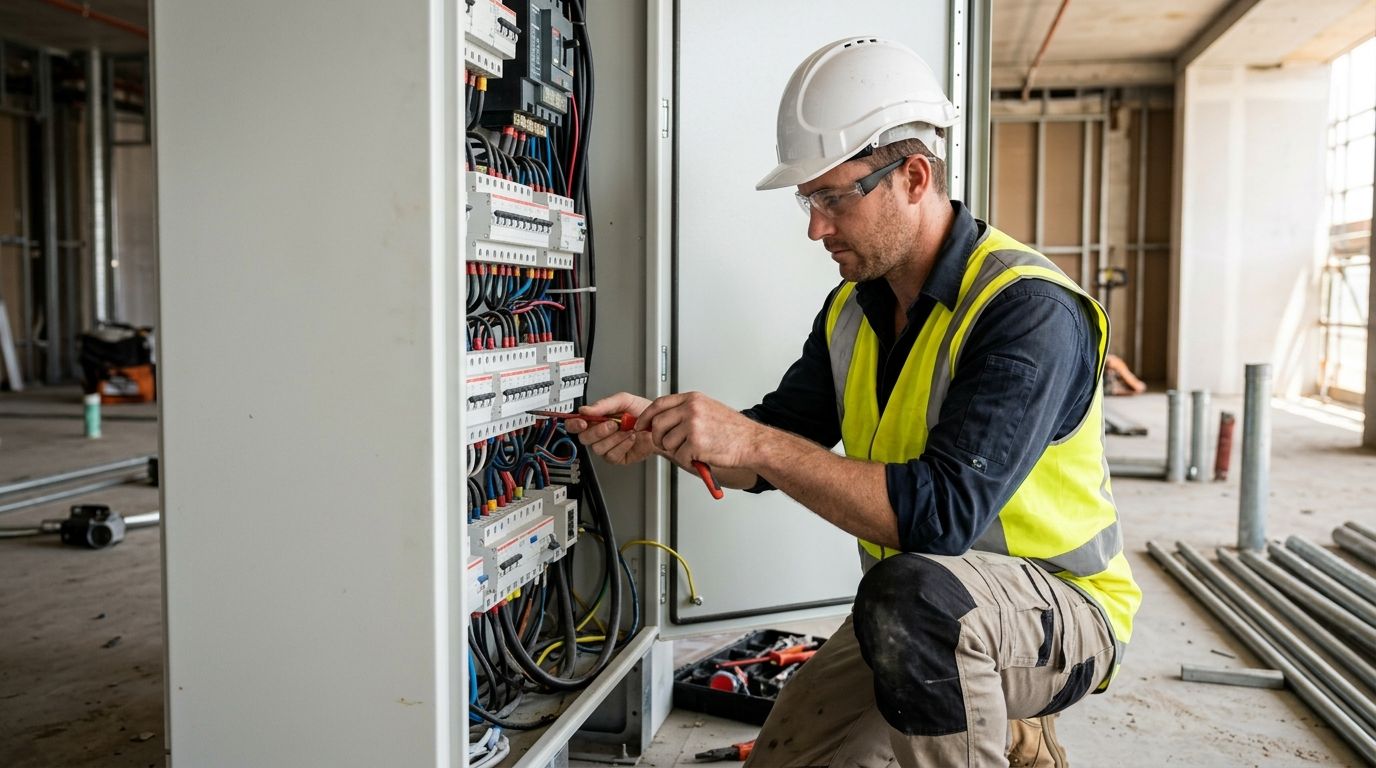
The UEE30820 is the Certificate III in Electrotechnology Electrician, the nationally recognised qualification that forms the foundation of electrical licensing across Australia. Most people assume that obtaining it requires enrolling in an intensive classroom course. It does not. The qualification is about demonstrating competency against a set standard. For experienced electricians, that competency already exists.
The UEE30820 is a competency standard rather than a traditional course. It describes what a qualified electrician can do, covering daily tasks, safety protocols, and technical knowledge. Whether you acquired those capabilities through a formal four-year apprenticeship or through years of hands-on work on Australian sites is, from an assessment perspective, secondary. What matters is whether you can demonstrate them.
Electrical licensing in Australia is regulated by each individual state and territory. The UEE30820 qualification, or an approved equivalent, is a prerequisite for licensing in most jurisdictions, but holding the qualification alone does not automatically grant you a licence. Licensing requirements, including supervised work experience, additional local assessments, and state-specific criteria, are set by each regulator and vary accordingly.
If you are looking for specific qualification details, you can review the full UEE30820 Certificate III in Electrotechnology Electrician pathway on our dedicated qualification page.
The apprenticeship assumption: Why experienced electricians get this wrong
The common assumption is that trade qualifications can only be earned through classroom study. This makes sense for someone entering the trade with zero experience. It is incorrect for someone who has spent years pulling cable, terminating switchboards, and commissioning systems on Australian sites.
A standard electrical apprenticeship in Australia typically takes four years to complete. This pathway was designed for a beginner who has never held a pair of pliers and needs structured, highly supervised training from the ground up.
You are not a beginner. You have already done the work on site. The apprenticeship model was built for newcomers. Recognition of Prior Learning was designed for experienced workers whose practical competency has not yet been translated into a formal qualification.
The frustration of being told to start your training over, to sit in a classroom with first-year apprentices and repeat basic lessons you mastered years ago, is completely understandable. It is also unnecessary. The RPL pathway exists because the formal system recognises that trade competency can be built through real work experience, not just through classroom training.
What the UEE30820 actually measures and why you have already done it
The UEE30820 is structured around individual units of competency, which are specific, practical tasks and technical knowledge requirements. These are not academic exercises. They are duties that experienced electricians perform daily on Australian job sites.
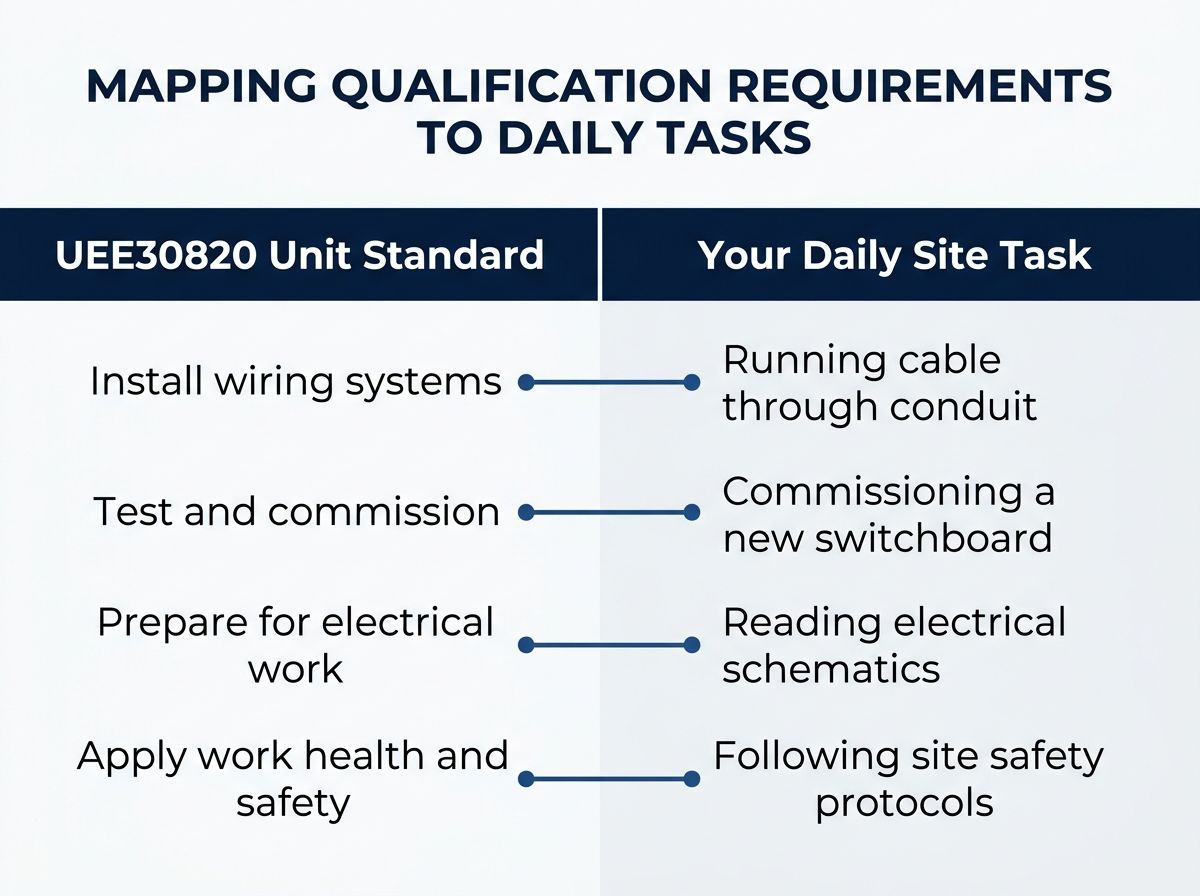
Look closely at what the qualification actually measures. Core units focus on applying work health and safety practices in electrotechnology environments, solving problems in electrical wiring installations, installing systems and equipment, testing and commissioning circuits, and reading technical diagrams or schematics. These are not classroom simulations. They are the practical realities of commercial, industrial, and residential electrical work.
If you have been running cable through conduit on commercial fit-outs, you have been performing the installation work this qualification measures. If you have commissioned a new switchboard before handover, you have been demonstrating testing and commissioning skills. If you regularly read and work from electrical drawings on site, you have been applying the technical knowledge required for the qualification.
The core question is not whether you can do this work. The question is whether you can prove it, and that is exactly what an RPL assessment is designed to verify.
How RPL works for the UEE30820: The practical reality
Recognition of Prior Learning is a formal, regulated assessment pathway, not a shortcut or a loophole. A qualified assessor from a registered training organisation (RTO) evaluates your existing work history and skills against UEE30820 standards. The process is thorough. The difference is that the assessment starts from your current skill level, not from scratch.
Evidence for an electrical RPL assessment typically includes official employment records like payslips, letters from employers, or superannuation history. You will also provide references from licensed sparkies or supervisors who can vouch for your work, photos of your completed installations, and any prior qualifications, licences, or training certificates you hold.
Because the UEE30820 supports an unrestricted electrical licence, RTOs must ensure that safety-critical skills are thoroughly verified. Depending on your submitted evidence and the specific RTO, you may need to complete a practical demonstration or a structured technical interview. These assessment methods can include oral, written, or practical tasks, and can be conducted directly in your workplace where appropriate.
The RTO assessor makes the final decision on competency. RPL it guides you through the process of compiling your evidence, helping you understand what is required, how to collect it, and how to present it clearly. If the assessor identifies any gaps in your skills, they will recommend targeted gap training, which is typically completed through the RTO.
The WA Government's guidance on assessment confirms that RTO assessment methods can include oral, written, or practical options, and that assessments can occur directly in the workplace where suitable. This standard applies to RPL candidates across all trades.
Who this pathway is (and isn't) for
RPL for the UEE30820 is built for electricians with substantial hands-on experience in Australian electrical work who do not yet hold a formal qualification. If you have been installing, testing, commissioning, and troubleshooting electrical systems on Australian sites, and you can document that experience, RPL is likely a suitable pathway for you.
It is not suitable for anyone with minimal hands-on experience, those entering the trade for the first time, or those with purely theoretical training. An honest assessment of your suitability is critical. Enrolling someone who is not ready wastes time and money. A reputable provider will tell you early on if this pathway is not the right fit.
If you gained your experience overseas, different rules apply. Electrical licensing in Australia is run by individual states and territories, and overseas-trained electricians often face licensing requirements beyond the UEE30820 itself. Your state or territory licensing authority is the best place to find specific guidance for your situation.
The licence gate: Why the UEE30820 matters beyond the certificate
In most Australian states and territories, you cannot hold an electrical licence without the UEE30820 or an equivalent qualification. Without this licence, you cannot legally perform electrical work unsupervised, tender for contracts as an independent electrician, or secure the public liability insurance needed to protect yourself and your clients.
Electrical licensing in Australia is managed at the state and territory level. In Queensland, for example, WorkSafe Queensland's Electrical Licensing Eligibility Guide lists the UEE30820 as a qualification that maps to the electrical mechanic licence class. The guide also states that the nominated Qualified Technical Person on any electrical contractor licence must hold an active Queensland electrical licence.
WorkSafe Queensland's Electrical Licensing Eligibility Guide outlines the qualifications and eligibility criteria for electrical licences in Queensland, including how the UEE30820 fits into the licensing pathway.
Licensing rules vary across the country. Queensland may require skills and qualification assessments for applicants without standard qualifications, alongside other state-specific criteria. In New South Wales, NSW Fair Trading administers electrical licences. Every jurisdiction has its own process, and the local state or territory regulator is the correct source for current requirements that apply to your situation.
An electrical licence is required for working on electrical equipment or installations designed to operate at voltages above specific thresholds. Because precise definitions and thresholds vary by state and territory, you should check directly with your local regulator to confirm which rules apply to your current work.
Every day you work without the formal qualification is a day of legal and financial exposure. The pathway is available; the question is whether your experience qualifies.
What happens next: Starting without commitment
The first step is a Free Skills Review. This is a practical, no-obligation assessment to see if your experience matches the requirements of the UEE30820. It is not an enrolment, but an honest check of your eligibility.
If your experience fits, we will outline the process: the evidence you need to gather, how the assessment works, and what to expect from the RTO. If your experience is not quite there yet, we will tell you. We prefer to help tradespeople find the correct pathway rather than starting an assessment that cannot be completed.
Your skills are real, and your experience counts. The RPL pathway is designed for tradespeople who have already done the work on site and simply need to have it formally recognised.
Ready to Get Recognised?
Start with a free skills review to find out if RPL is right for you.