Why your years on the tools don't mean anything without the paperwork
You know the job better than anyone on site. So why does the paperwork keep blocking you? Here is the pattern every mechanical fitter needs to break.
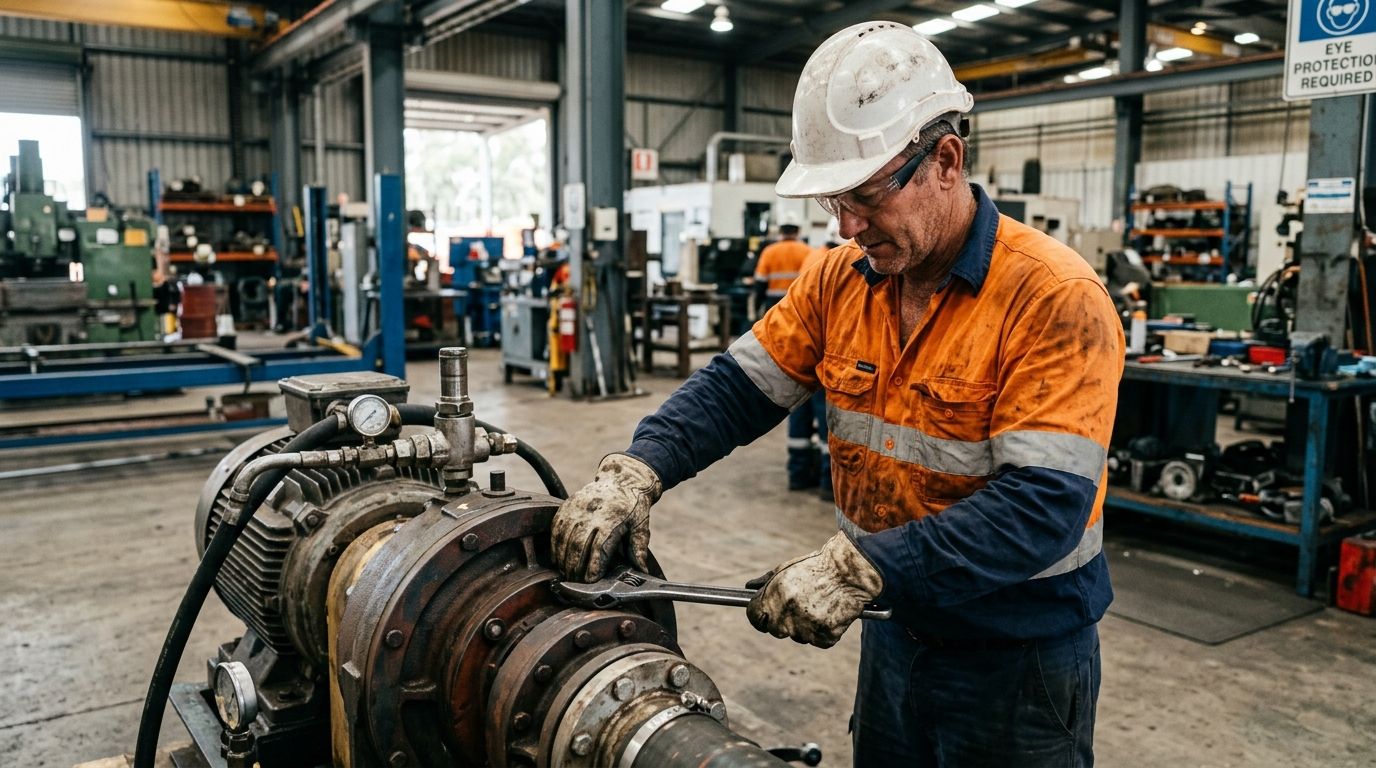
The pattern every mechanical fitter recognises
You have been on the tools for years. You know how to align a pump, strip a gearbox, and diagnose a hydraulic fault before anyone else on site has even opened the manual. The apprentice asks you questions. The supervisor defers to your judgement. The job gets done because you are there.
Then the site induction form asks for your trade certificate, and everything stops.
This is not a one-off. It is a pattern. Once you see it clearly, you will recognise it in conversations with mates who are just as capable as you and just as stuck.
The system does not assess what you can do. It assesses what you can prove.
That is the gap. It is not a reflection of your competence, but a structural problem with a practical solution that most experienced mechanical fitters do not know exists.
Stage one: how skills accumulate
Most mechanical fitters did not enter the trade through a formal apprenticeship. They started alongside experienced tradespeople in a workshop, on a mine site, in a manufacturing plant, or at a processing facility. They learned by doing, building competence through repetition, problem-solving, and being handed a job to figure out.
Over time, that informal learning becomes genuine expertise. You develop a feel for precision measurement that no classroom teaches. You understand how hydraulic systems behave under load, and you know when a bearing is about to fail before the instruments confirm it. You have completed fitting and assembly work that would challenge people with half your age and twice the paperwork.
That expertise is real and deep. In formal systems, however, it remains largely invisible.
The Certificate III in Engineering – Mechanical Trade (MEM30219) is the nationally recognised qualification covering the competencies experienced mechanical fitters develop on the job. This includes fitting and assembly, mechanical maintenance, hydraulic and pneumatic systems, precision measurement, and workplace safety. If you have been doing this work for years, you have demonstrated these competencies on every shift. The qualification simply has not been attached to your name.
Stage two: site requirements tighten
Something has shifted in Australian industrial and commercial workplaces over the past decade. What was once an informal arrangement, such as a foreman who knew your work or a contractor who vouched for you, has been replaced by documented compliance requirements.
Principal contractors now require prequalification. Site inductions ask for credential cards, and insurance policies reference formal qualifications. Tier-one construction and resources companies increasingly filter contractor lists by documented trade certification rather than demonstrated ability alone.
This is not a conspiracy against experienced workers. It is the natural result of tightening work health and safety obligations, increased principal contractor liability, and a broader push toward documented competency across Australian industry.
The result is the same regardless of the cause: the fitter's skills have not changed, but the rules around proving them have.
This same pattern is playing out across other Australian trades, not just mechanical fitting.
Stage three: when the credential gap becomes a wall
The moment the credential gap becomes visible is usually sudden. It does not announce itself gradually. It arrives at a site gate, in a tender document, or during a conversation with an employer who says that the role requires a formal trade certificate.

You have been doing this work for years. The person who got the contract, the promotion, or the site access you were denied may have less experience than you, but they have the paperwork.
This is the licensing barrier. It is not a question of competence, but of documentation. The system has no mechanism to recognise what you know unless it has been formally assessed and recorded.
The trigger events are easy to recognise: a regulator notice, a contractor prequalification requirement, or an employer making the certificate a condition of continued engagement. Each is a version of the same wall.
You know the job, but the paperwork says otherwise.
Stage four: the false choices
When experienced mechanical fitters hit this credential wall, they typically see two options, and neither of them is practical.
The first is to go back and complete an apprenticeship. For someone with a family, a mortgage, and a decade or more of trade experience, this is rarely realistic. Engineering trade apprenticeships typically run for several years. Spending that time learning in a classroom alongside school leavers what you already do professionally is not just impractical, it disregards the expertise you have built.
The second option is to keep working informally and hope compliance checks do not catch up. This works until it does not. When it stops working, the consequences, including lost contracts, site bans, and insurance complications, can be significant.
Both options are traps. The apprenticeship repeats what you already know, while the informal route carries increasing risk as compliance requirements tighten.
There is a third option. Most experienced mechanical fitters do not know it exists, or they have heard of it but assumed it was not for them.
How RPL works for a mechanical fitter
Recognition of Prior Learning (RPL) is a formal assessment pathway that evaluates your existing skills and experience against the units of competency in a qualification. For a mechanical fitter pursuing the Certificate III in Engineering – Mechanical Trade (MEM30219), your site experience is the evidence.
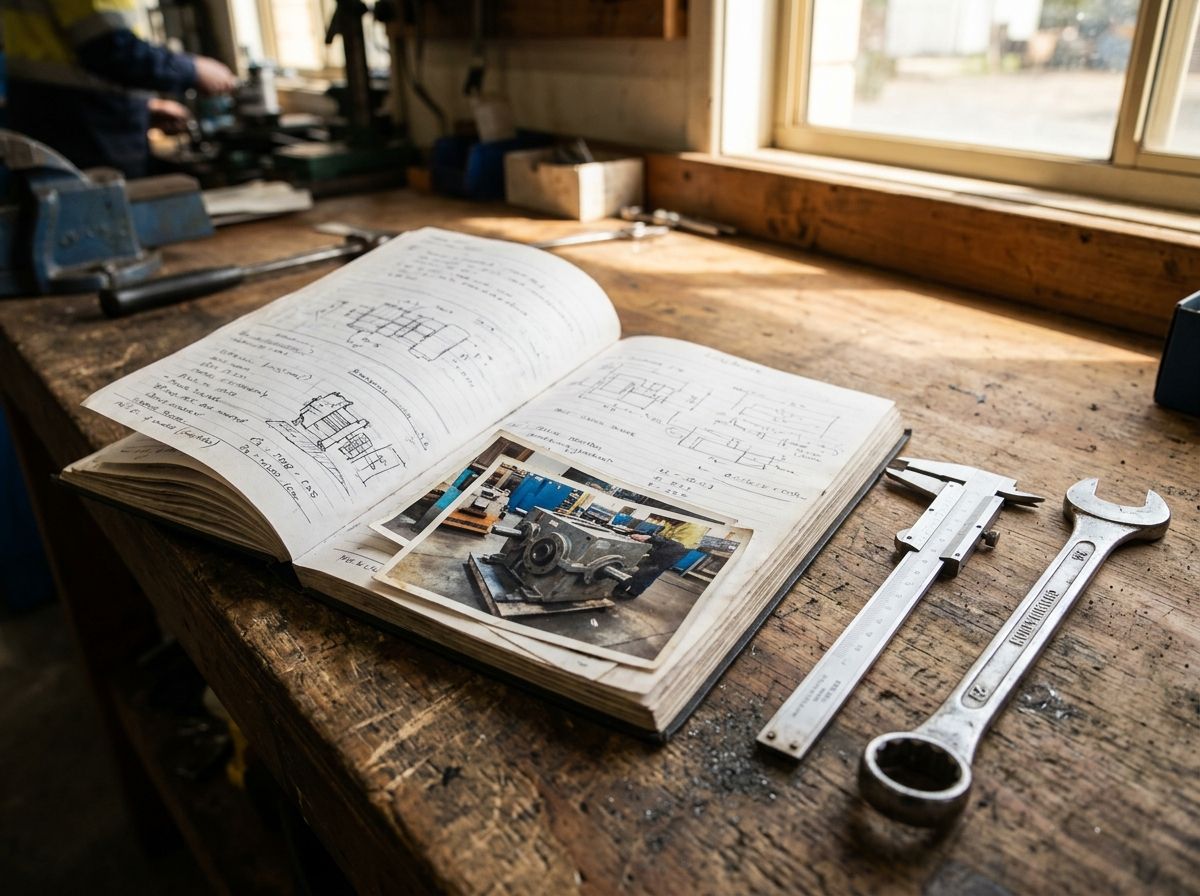
The assessor is not there to teach you. They are there to determine whether your current work meets the standard required by the qualification. Your work history, demonstrated tasks, employer references, and site records are what the assessment draws on.
It is worth being clear about what RPL is and is not. It is a rigorous, nationally recognised assessment process, not a shortcut or a rubber stamp. If gaps in competency are identified during the assessment, gap training may be required, which is provided as part of the process. The qualification you receive at the end is issued by a registered training organisation (RTO) and carries the same national recognition as a qualification earned through an apprenticeship.
The evidence supporting an RPL assessment for a mechanical trade qualification typically includes records of work completed, logbooks, photos of projects, employer or supervisor statements, and practical demonstrations. The assessor uses this evidence to map your experience against the competency units in the qualification.
The process is guided, meaning you do not have to navigate it alone.
Learn more about the MEM30219 and whether RPL fits your situation.
What your years on the tools prove
The MEM30219 qualification covers the core competencies of mechanical fitting work. Without citing specific unit codes that we cannot verify here, the areas of competency the qualification addresses are well understood within the trade. These include the fitting and assembly of mechanical components, maintenance of mechanical equipment, working with hydraulic and pneumatic systems, applying precision measurement techniques, and operating safely within workplace health and safety requirements.
If you have been working as a mechanical fitter in a manufacturing plant, a mine site, a processing facility, or an industrial maintenance role, you have almost certainly been performing work that maps directly to these competency areas. Every time you have aligned a coupling, replaced a seal, diagnosed a fault in a hydraulic circuit, or completed a preventive maintenance schedule, you have demonstrated trade competency.
The RPL process gives that demonstration a formal name. It does not create the competency; it recognises it.
This is the core of what RPL offers experienced mechanical fitters: a formal record of your existing skills rather than a new education. It provides recognition instead of repetition.
The honest caveat is this: not every applicant will have experience that maps cleanly to every unit in the qualification. Some fitters will have deep expertise in certain areas and less exposure in others. The assessment process identifies those gaps, and where they exist, structured gap training is available. The goal is a qualification that accurately reflects your competency, without overstating or understating it.
Breaking the pattern: your next step
The four-stage pattern of skills accumulating, sites getting stricter, the credential gap becoming a wall, and false choices trapping the fitter is not inevitable. It is a structural problem with a practical solution.
RPL exists to break this cycle. It was designed for people in this situation: experienced workers whose skills are real but unrecognised, who cannot afford to repeat training they do not need, and who require a legitimate pathway to formal recognition.
The first step is not enrolment, nor does it require a commitment of any kind. It is an honest assessment of whether your experience maps to the qualification requirements, and that assessment is free.
A Free Skills Review gives you a clear picture of where your experience sits relative to the MEM30219 competency requirements. It is the starting point, not the finish line, and it carries no obligation to proceed.
You have the experience. The question is whether your formal records match it. Find out for free, with no commitment required.
Ready to Get Recognised?
Start with a free skills review to find out if RPL is right for you.