Paying the 'ticket tax': The hidden cost of working under someone else's builders licence
Skilled builders working under another contractor's licence pay a 'ticket tax' in lost margin and control. This is what it costs and how to stop it.
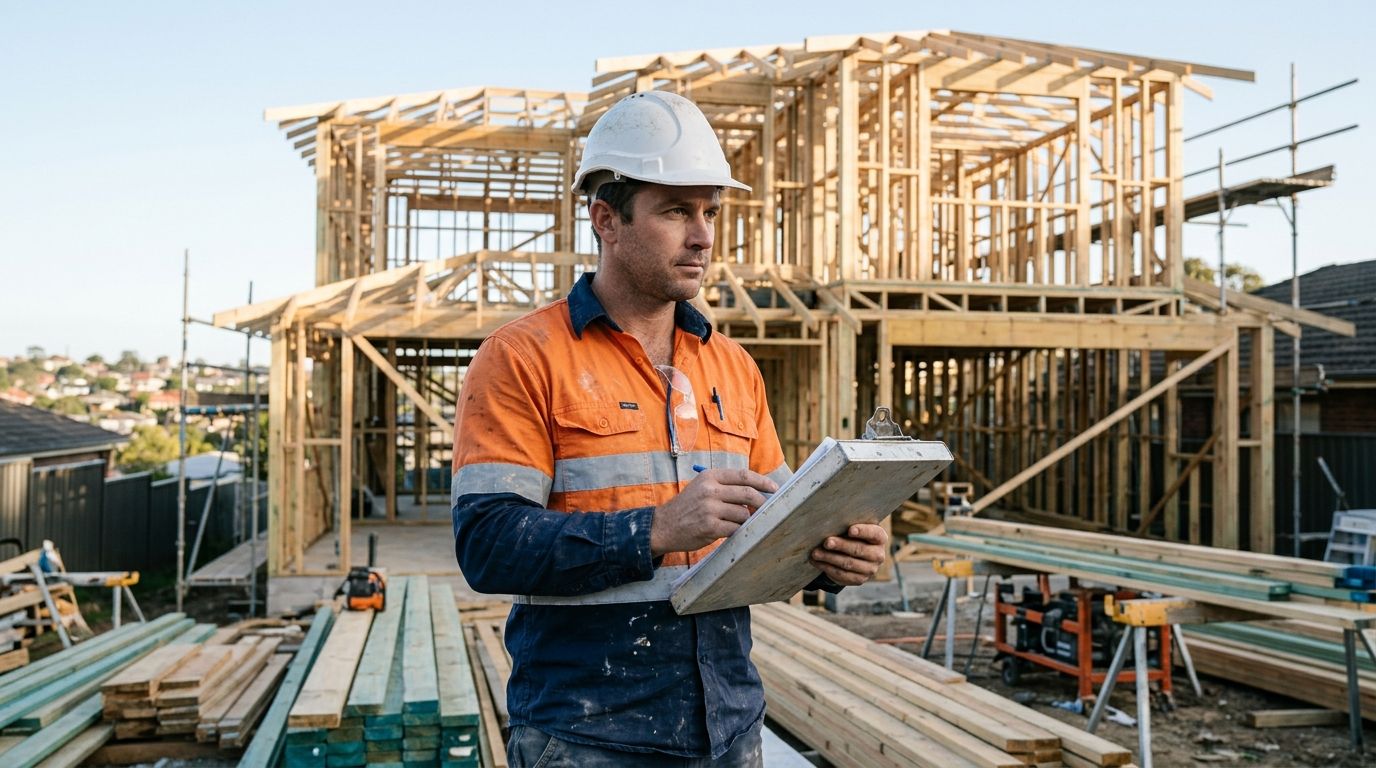
You are building their business, not yours
You manage the site. You solve the problems. You deal with the subbies, the inspectors, and the clients who change their minds on a Friday afternoon. The build goes up because of your decisions: your experience, your judgment, and your years on the tools.
But the name on the contract is not yours. The licence number on the paperwork belongs to someone else. When the job is done, the compliance record, the reputation, and a portion of the margin go with it.
This is the ticket tax. It is not a line item on any invoice. It is the accumulated cost, in money, control, and professional recognition, of doing the work without holding the credential that gives you the legal right to work under your own name.
In NSW, a contractor licence is required to carry out, advertise, or contract for residential building work valued at more than $5,000 in labour and materials, including GST. That threshold covers a wide range of work, including kitchen and bathroom renovations and full residential builds. If you do this work without your own licence, you are doing it under someone else's. This arrangement has a cost most builders never sit down to calculate.
The NSW Government sets out which categories of building and trade work require a contractor licence. This threshold applies broadly across residential building work, not just to general builders.
What the ticket tax actually costs you
The financial structure of working under someone else's builders licence varies. There is no published standard; arrangements are informal by nature. The mechanics, however, are consistent. The licence holder takes something in exchange for their name on the paperwork: sometimes a flat fee per project, sometimes a percentage of the margin, or sometimes a supervisory arrangement that limits which jobs you can take and how you can price them.
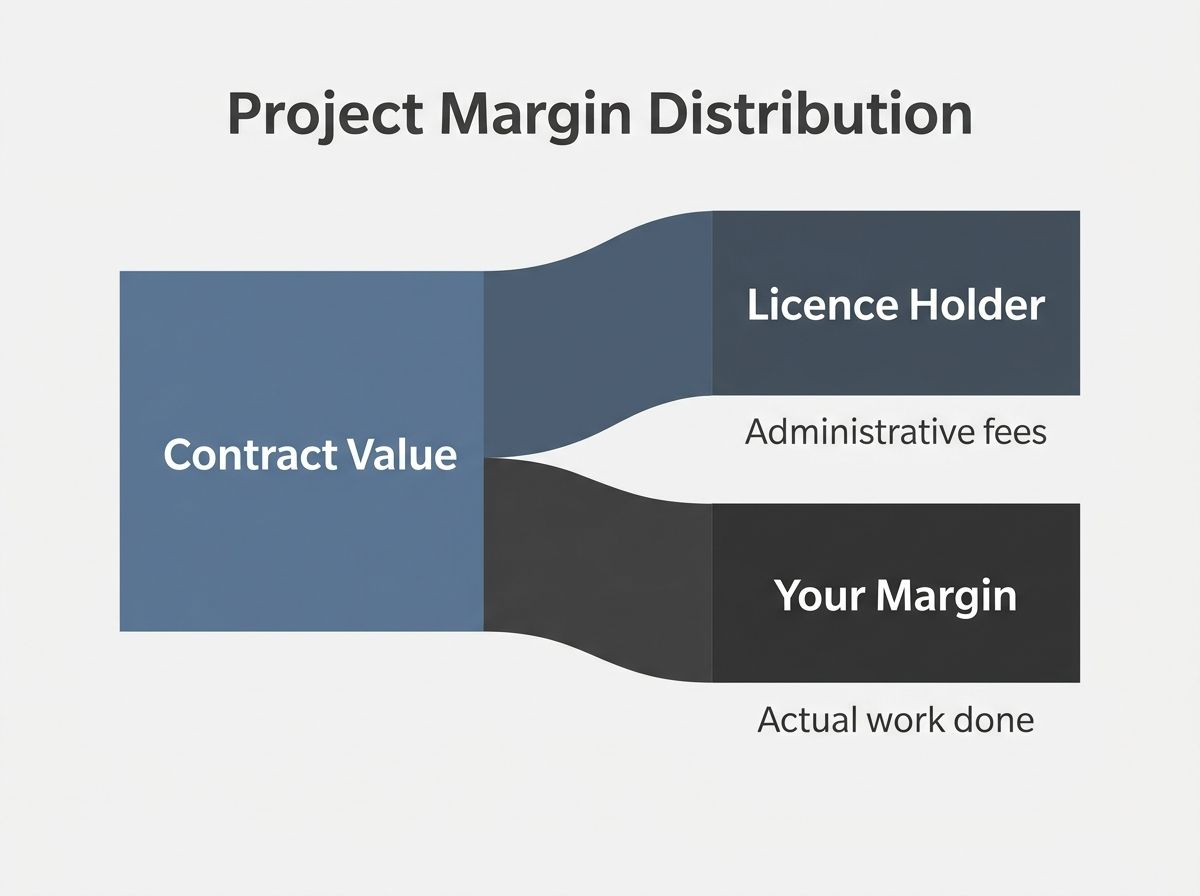
Consider the scale of what is at stake. According to the Australian Bureau of Statistics, the average cost to build a new house in NSW was around $349,900 in 2018-19. Even at a conservative margin, a portion of that money going to a licence holder on every project adds up quickly. Multiply that across multiple builds, and the ticket tax becomes a substantial annual figure, paid quietly project by project.
Beyond the direct cost, there is the indirect cost of what you cannot do. Without your own licence, you cannot enter a residential building contract directly, quote in your own name above the threshold, or build your own compliance record. Every job you complete builds someone else's business history instead of yours.
The control you give up when you do not hold the ticket
The financial cost is real, but the loss of control is harder to quantify and accept.
When someone else holds the licence, they hold the regulatory responsibility. Because of this, they have legitimate authority over how the work is conducted. They can set conditions, limit which projects you take on, or withdraw at any time for any reason, leaving you without a legal basis to continue.
NSW Fair Trading takes unlicensed building work seriously. Under the Home Building Act 1989 (NSW), it is an offence to carry out residential building work without holding a contractor licence, an owner-builder permit, or being an employee of a licence or permit holder. The maximum penalties are high, and enforcement is active.
In October 2023, NSW Fair Trading and the Australian Border Force ran Operation Hammer, visiting 26 construction sites in North-West Sydney. Officers spoke to 48 people, identified nine unlicensed contractors, and issued each an on-the-spot fine of $2,200 per infringement. The companies employing those contractors were then investigated for their fitness to hold a licence. Fair Trading has stated that using unlicensed and unsupervised contractors creates onsite safety concerns, poor build quality, and defective buildings.
The NSW Government's account of Operation Hammer illustrates how enforcement works in practice, and how quickly an informal arrangement can become a formal problem for everyone involved.
There is a specific frustration in this arrangement that experienced builders know well. You may have been on site for fifteen years, managed complex builds, navigated difficult clients, and solved problems that no training course could prepare you for. Yet the person whose name is on the licence might have far less experience than you. On paper, they are the responsible party. In practice, you do the work and carry the risk if the arrangement breaks down.
Why the arrangement exists and why it persists
The ticket tax arrangement is not a personal failing. It is a systemic response to a regulatory gap.
Builders who have the skills but not the credential have no other legal option for residential work above the threshold. The arrangement persists because the pathway to a builders licence has historically felt inaccessible: classroom-based, time-consuming, and designed for people who have not already spent years on site. The Housing Industry Association has noted that each Australian state and territory has distinct occupational and business licensing arrangements for builders, trade contractors, and workers in the residential building industry. Navigating this fragmentation takes effort.
In NSW, the Certificate IV in Building and Construction (CPC40120) is part of the licensing pathway for builders and site supervisors. But this qualification has traditionally been delivered through classroom study, which makes little sense for someone already managing residential builds. You did not end up working under someone else's ticket because of a bad decision, but because the formal pathway looked impossible from where you were standing.
A builders licence is a recognition of your existing skills
For experienced builders, the pathway to a builders licence is not about learning new skills. It is about presenting the skills you already use on site as formal evidence.
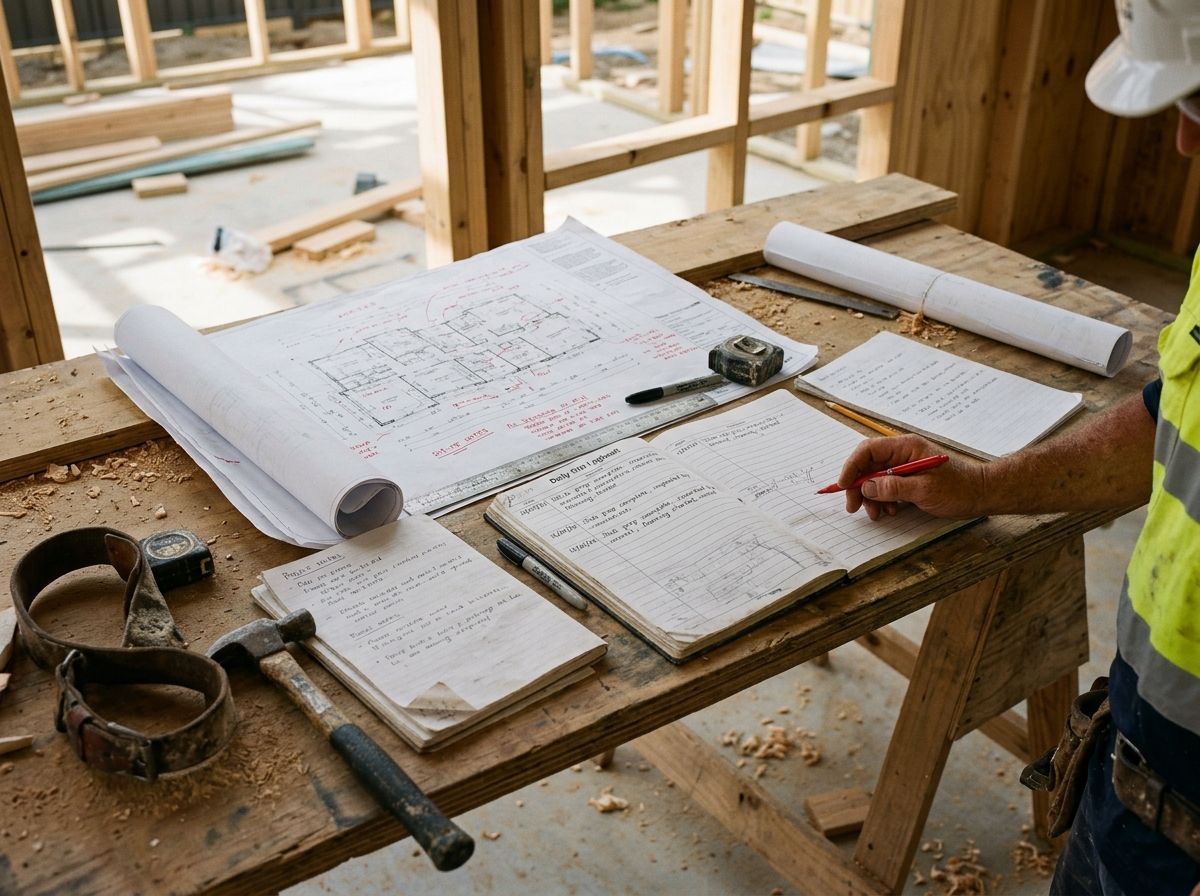
Recognition of Prior Learning (RPL) is an assessment pathway that evaluates your existing experience against the units of competency in a qualification. Instead of sitting in a classroom, you work with an assessor to document what you already know and can do. The assessment is genuine. The qualification, when awarded, is nationally recognised because the process is rigorous.
For CPC40120, the Certificate IV in Building and Construction, RPL typically involves demonstrating experience in a supervisory or management capacity across residential and low-rise building projects. Evidence can include site documentation, project records, photographs, previously completed certificates, and referee details from a current builder, supervisor, or manager who can verify your experience. Specific requirements vary by registered training organisation (RTO), and some applicants may need to complete gap training if their experience does not fully cover the qualification's requirements.
RPL is not time-referenced, but your skills must be current and match the performance criteria of the individual units of competency. It is a thorough assessment of what you know, not a rubber stamp.
The Master Builders Association of NSW outlines what an RPL pathway for CPC40120 typically involves, including the experience profile and evidence types that assessors require.
Experience is evidence. The work you have done—managing projects, solving problems, and supervising sites—forms the foundation of an RPL assessment. That history does not disappear just because it was not formally recognised at the time.
What ending the ticket tax actually looks like
When you hold your own builders licence, your working arrangement changes fundamentally.
Your name goes on the contract. Your licence number appears on the compliance documentation. You can enter residential building contracts directly for work above the $5,000 threshold without routing through someone else's ticket. This allows you to build your own compliance record, reputation as a licensed contractor, and business history.
The margin that went to the licence holder stays with you. The control once subject to someone else's veto becomes yours. The decisions about which projects to take, how to price them, and how to run the site are yours to make, within the regulatory framework that now applies to you directly, rather than through an intermediary.
Builder and site supervisor licensing requirements vary across states and territories, and holding CPC40120 may be one part of a broader licensing pathway depending on your jurisdiction. NSW Fair Trading is the licensing authority in NSW, and requirements beyond the qualification may apply. The qualification is the foundation, not the complete picture.
Is your experience enough to stop paying the tax?
Not everyone who has worked on site is suitable for RPL. It depends on your specific experience: its depth, its breadth, and whether it maps to the units of competency in CPC40120.
Typically, RPL applicants for this qualification have at least three years of experience in a supervisory or management role, such as a site supervisor, foreperson, construction project manager, or builder. Some RTOs require evidence across at least one residential and two commercial building projects, along with project documentation demonstrating your involvement at a supervisory level. Some RTOs also require a valid White Card and referee details from a current builder or supervisor who can verify your experience.
One RTO indicates that RPL assessment may be completed in approximately two to eight weeks, depending on the applicant's experience and knowledge. This is one provider's indicative timeframe, not a universal guarantee. What matters is whether your experience genuinely meets the standard, not how quickly the process is completed.
The decision is yours. The most practical way to find out whether RPL is the right pathway for your experience is to have it assessed before you commit to anything.
Ready to Get Recognised?
Start with a free skills review to find out if RPL is right for you.