Your Tools Say Carpenter. Does Your Paperwork?
You've built the skills, but in NSW your tools don't licence you. Learn how RPL helps experienced carpenters get qualified without starting over.
By RPL it Australia10 min read
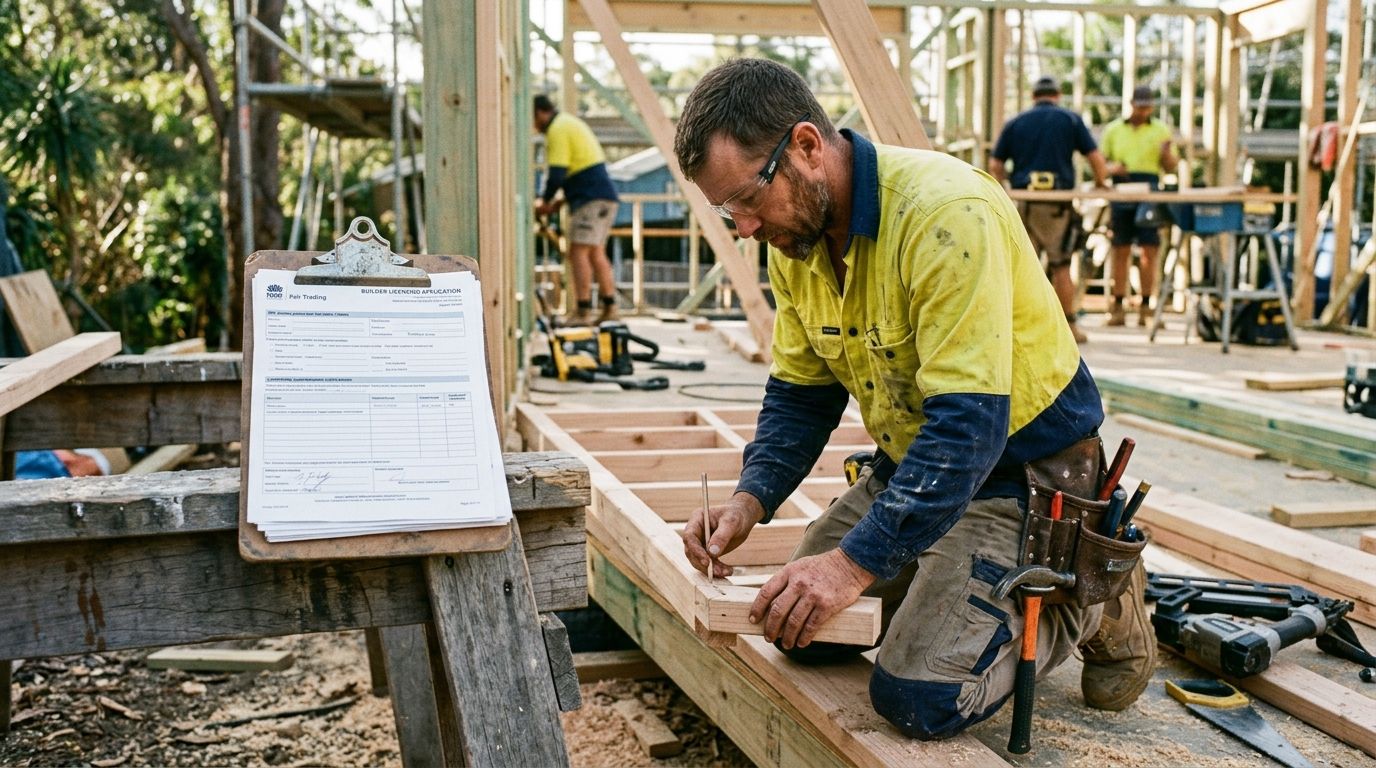
The gap between what you can do and what you can prove
You know how to read a site. You know how to frame a wall, set out a staircase, and hang a door to a tolerance that holds for decades. You've done it hundreds of times, on dozens of sites, for clients who trust you with their homes. That skill is real, and it is not in question here.
The problem is that the formal licensing system in NSW doesn't see skill. It sees credentials. And for many experienced carpenters, those two things have never been in the same place at the same time.
That gap, between what you can do and what you can formally prove, is the focus of this article. This is not to lecture you or suggest you have done anything wrong, but to help you work out exactly where you sit and what your options actually are.
NSW enforcement of unlicensed building work is active. The Building Commission NSW conducts compliance programs to detect and deter unlicensed contractors, and can take enforcement action including penalty notices, prosecution and disciplinary action.
In October 2023, NSW Fair Trading and the Australian Border Force visited 26 residential construction sites in North-West Sydney as part of 'Operation Hammer'. Nine unlicensed contractors on those sites were each issued an on-the-spot fine of $2,200 per infringement. The operation was described as a response to industry concerns about an increase in workers not licensed to contract work or not supervised by accredited contractors.
That is the current situation. Now let's work out where you sit in it.
The four levels of carpentry licensing awareness in NSW
Not every carpenter is in the same position. Some have been working informally for years without ever thinking about licensing. Others hit a roadblock last week when a builder asked for their licence number. Others know exactly what they need and are trying to work out how to get there without starting from scratch.
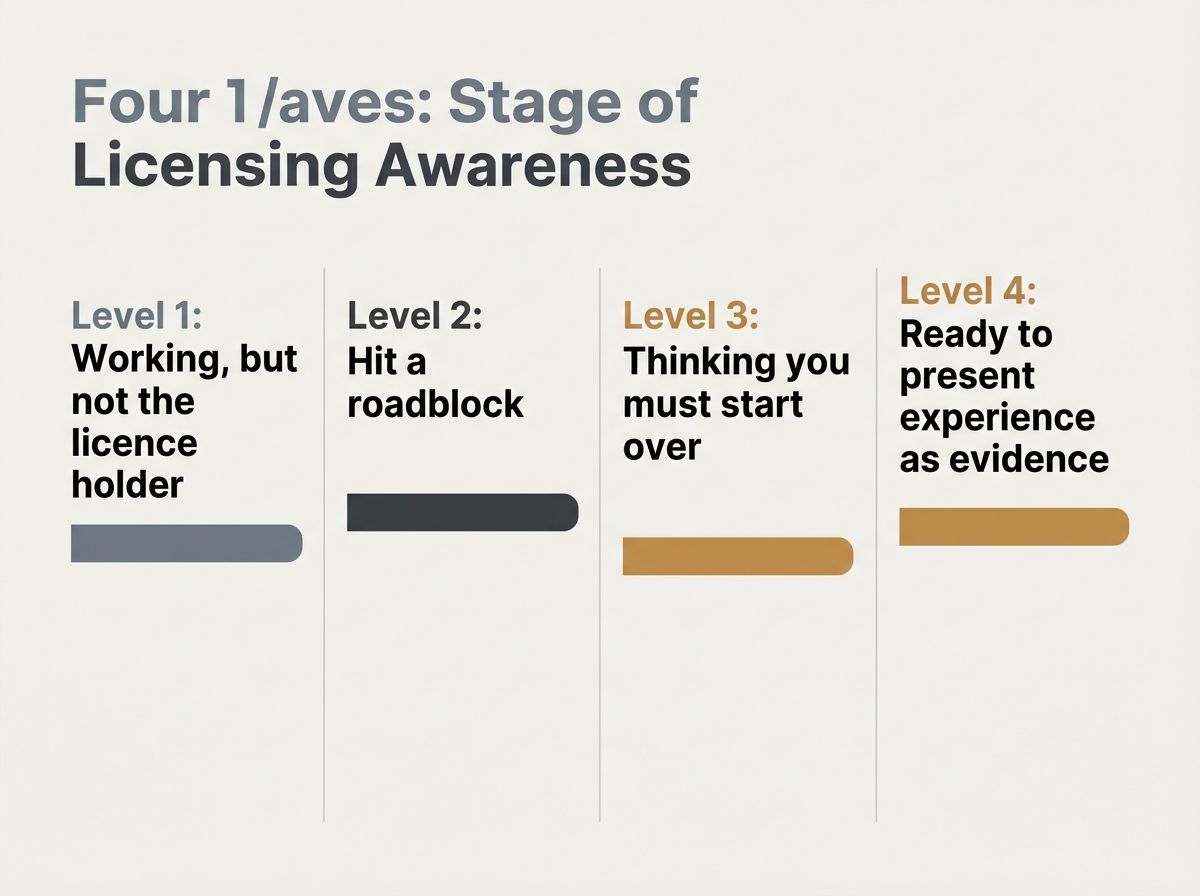
The four levels below are diagnostic, not judgmental. Read through them and find yourself. Each one has a different next step.
Level 1: You are working, but you are not the licence holder
You've been doing carpentry work on residential sites for years. You're good at it. But the licence on the job belongs to the builder or the principal contractor, not to you. You quote through them, invoice through them, or simply show up and do the work under their arrangement.
This is a common pattern in the NSW residential construction sector. In many employment contexts, it is a workable arrangement, but it is worth understanding your legal position clearly.
In NSW, a contractor licence is required to carry out, advertise or contract for residential building or trade work, including carpentry, valued at more than $5,000 in labour and materials (including GST). That threshold applies to subcontracting too: where a subcontract forms part of an overall contract for building or trade work valued at more than $5,000, the subcontractor needs a contractor licence in the relevant category, even if the subcontract itself is worth less than $5,000.
The NSW Government's own guidance makes this explicit: a general builder can include trade or specialist work in a contract, but unless the builder personally holds that category of licence, the work must be subcontracted to the holder of a contractor licence in the relevant category.
In other words, working under a builder's licence does not automatically cover you as a subcontractor doing carpentry trade work. The arrangement may feel settled, but it rests on someone else's credential, creating a dependency that can quickly become a problem.
If you have been relying on an informal arrangement with a builder for years, it is worth reading about what happens when that arrangement ends.
Level 2: You hit a roadblock and it surprised you
You quoted for a job. They asked for your licence number. You didn't have one. Or you tried to tender for a project that required each subcontractor to hold their own contractor licence. Or your public liability insurer asked a question you couldn't answer.
The licensing barrier is real, and it tends to appear at the worst possible moment, just as you are trying to grow rather than when you have time to deal with it. The frustration of that moment is completely understandable. You have the skill; the requirement is a system rule, not a reflection of your competence.
Doing unlicensed building or trade work in NSW can attract fines of up to $22,000 for an individual or $110,000 for a company under the Home Building Act 1989. That is the maximum penalty, not a typical outcome, but it represents your actual legal exposure.
If you're at Level 2, you already know this barrier exists. What you need now is a clear path to get through it, without repeating training you have already done on the tools.
Level 3: You know you need the licence, but you think you have to start over
You have accepted that you need the formal qualification. You know the NSW Contractor Licence (Carpentry) requires a Certificate III in Carpentry (CPC30220 or equivalent). But when you look at what that takes, you might think it means years of study, classroom sessions covering things you already know, time off the tools, and money you cannot spare.
That assumption is understandable. It is also, for many experienced carpenters, incorrect.
You do not have to sit in a classroom and learn what you already know.
Recognition of Prior Learning (RPL) is a formal assessment pathway that evaluates what you already know and can demonstrate, rather than requiring you to repeat training from the beginning. It is not a shortcut or a workaround. It is a legitimate, nationally recognised assessment process built specifically for people in your position.
Recognition should not require starting over. That is the principle RPL is built on. If your experience is genuine and can be proved with evidence, the assessment process is designed to recognise it.
For context: traditional institutional study for the CPC30220 Certificate III in Carpentry is commonly around two years full-time, with apprenticeship pathways typically running three to four years. These are indicative figures; duration and fees vary by provider and should be confirmed with the relevant institution. The point is not to compare timelines, but to name the common assumption that getting formally qualified means repeating a multi-year journey you have already made on the job.
If you're at Level 3, the next step is finding out whether your experience is likely to support an RPL pathway. That is a question worth asking before you assume the answer.
Level 4: You have the experience, you just need to present it as evidence
Experience can be evidence. That is the core idea behind RPL, and it is what separates a Level 4 carpenter from someone still stuck at Level 3.
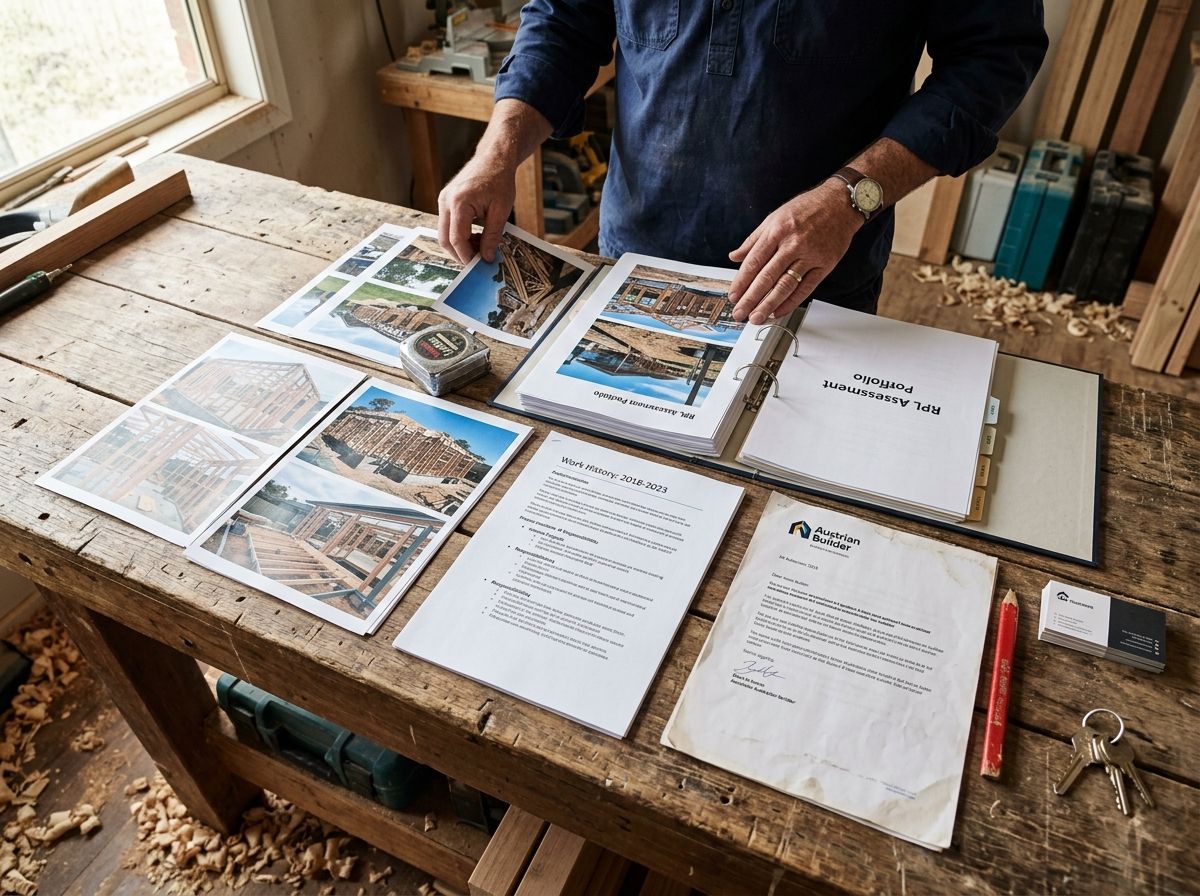
At Level 4, you understand that RPL is a genuine assessment process. It is rigorous and requires preparation, but it assesses what you already know and can demonstrate, rather than what you can memorise in a classroom.
For CPC30220 Certificate III in Carpentry, RPL assessment is available through registered training organisations (RTOs). At least one NSW-located RTO identifies CPC30220 as available via RPL, with assessment conducted through workplace-based evidence and simulated industry assessment. Entry requirements vary by RTO. One provider, for example, states a minimum of two years of industry experience among its requirements, while another lists three years. Requirements differ, and you should confirm the specifics with the RTO you approach.
What does RPL evidence for carpentry typically look like? Based on what RTOs commonly request, it can include:
- Site photos or videos of carpentry work you have completed
- A resume and work history documenting your carpentry roles and projects
- Reference or employer letters from builders, site supervisors, or foremen who can confirm your skills and experience
- Payslips, invoices, or project records that support your work history
- Government-issued identification
- A current General Construction Induction White Card
This is not an exhaustive or universal list. Different RTOs set different evidence requirements, and the assessment may also involve an interview or practical observation. The RTO determines what is sufficient and currently relevant.
One important note on qualification currency: CPC30220 has been listed as superseded by CPC30326 Certificate III in Carpentry on the National Register. At least one RTO states it continues to offer CPC30220 during the transition period. Before proceeding, confirm the current status of the qualification and any transition arrangements with your RTO and on training.gov.au.
If you're at Level 4, you're ready to take the next step. That step is finding an RTO that offers CPC30220 via RPL and understanding what evidence you will need to gather.
For more detail on the NSW Carpentry Trade Licence pathway, including what the licence covers and how to apply, see the Trade Licence NSW Carpentry page.
What the NSW carpentry licence actually requires
To hold a Contractor Licence (Carpentry) in NSW, you need a nationally recognised qualification, such as the CPC30220 Certificate III in Carpentry or equivalent, and at least two years of verified experience in carpentry work. You must be at least 18 years old and meet NSW Fair Trading's fit and proper person requirements.
The licence is required to carry out, advertise or contract for residential building or trade work, including carpentry, valued at more than $5,000 in labour and materials (including GST). NSW issues different licence types depending on your role: individual contractor licence, company or partnership contractor licence, and qualified supervisor certificate. The type you need depends on whether you are contracting for work, supervising it, or both.
Applications are lodged through Service NSW. Fees and processing requirements should be confirmed directly with NSW Fair Trading before you apply, as these are subject to change.
The NSW Government's carpentry licensing page sets out the current licence types, scope of carpentry work, and qualification requirements in detail.
Carpentry is classified as trade work in NSW, with scope defined by reference to the Home Building Regulation 2014, covering work such as framing, stairs, windows, doors, floors, wallboards, metal framing, formwork for concreting, and some cladding and non-habitable outdoor structures. This is not an exhaustive list; refer to the regulation for the legal definition.
Where do you actually sit? A self-assessment for NSW carpenters
Use these diagnostic statements to locate yourself honestly.
If you have been doing carpentry work on residential sites for years but have never held your own contractor licence, you are at Level 1. Your next step is understanding the subcontracting rules that apply to your situation and deciding whether you need your own licence to continue working legally.
If you have recently been asked for a licence number you do not have, or found yourself locked out of a tender or insurance arrangement because of a missing credential, you are at Level 2. Your next step is understanding what the NSW Contractor Licence (Carpentry) requires and whether RPL is a viable path to getting there.
If you know you need the formal qualification but have been putting it off because you assumed it meant going back to TAFE and starting from scratch, you are at Level 3. Your next step is finding out whether your experience is likely to support an RPL pathway. That question is worth asking before you assume the answer.
If you understand that RPL is a legitimate assessment pathway and you are ready to find out what evidence you would need to gather, you are at Level 4. Your next step is a conversation with an RTO that offers CPC30220 via RPL, or a free skills review to understand your starting position.
The Free Skills Review: Find out if your experience qualifies
The Free Skills Review is a no-obligation assessment of whether your carpentry experience is likely to support an RPL pathway toward your NSW Contractor Licence. It is free, carries no commitment, and is completely honest. If your experience is unlikely to support an RPL pathway, we will tell you that directly.
We would rather guide you toward the right pathway than enrol you in the wrong one. That is the only way this works, both for you and for us.
Your tools say carpenter. The question is whether your paperwork can say the same. The decision is yours.
The Building Commission NSW oversees compliance and enforcement for the Home Building Act 1989, which requires builders and tradespeople to be licensed for the residential building work they do.
NSW Fair Trading's Operation Hammer in October 2023 demonstrated active enforcement of licensing requirements on residential building sites across North-West Sydney.
General information only, current at the date shown. Licensing rules change, so check the current requirements with the relevant regulator before you rely on them. RPL it Australia is a student support service, not a Registered Training Organisation; qualifications are assessed and issued by our partner RTOs.