Working under someone else's plumbing licence: The Friday afternoon site shutdown
Site inspections don't care how skilled you are. If you work under another plumbing licence in NSW, the consequences can be severe. Here is how to fix it.
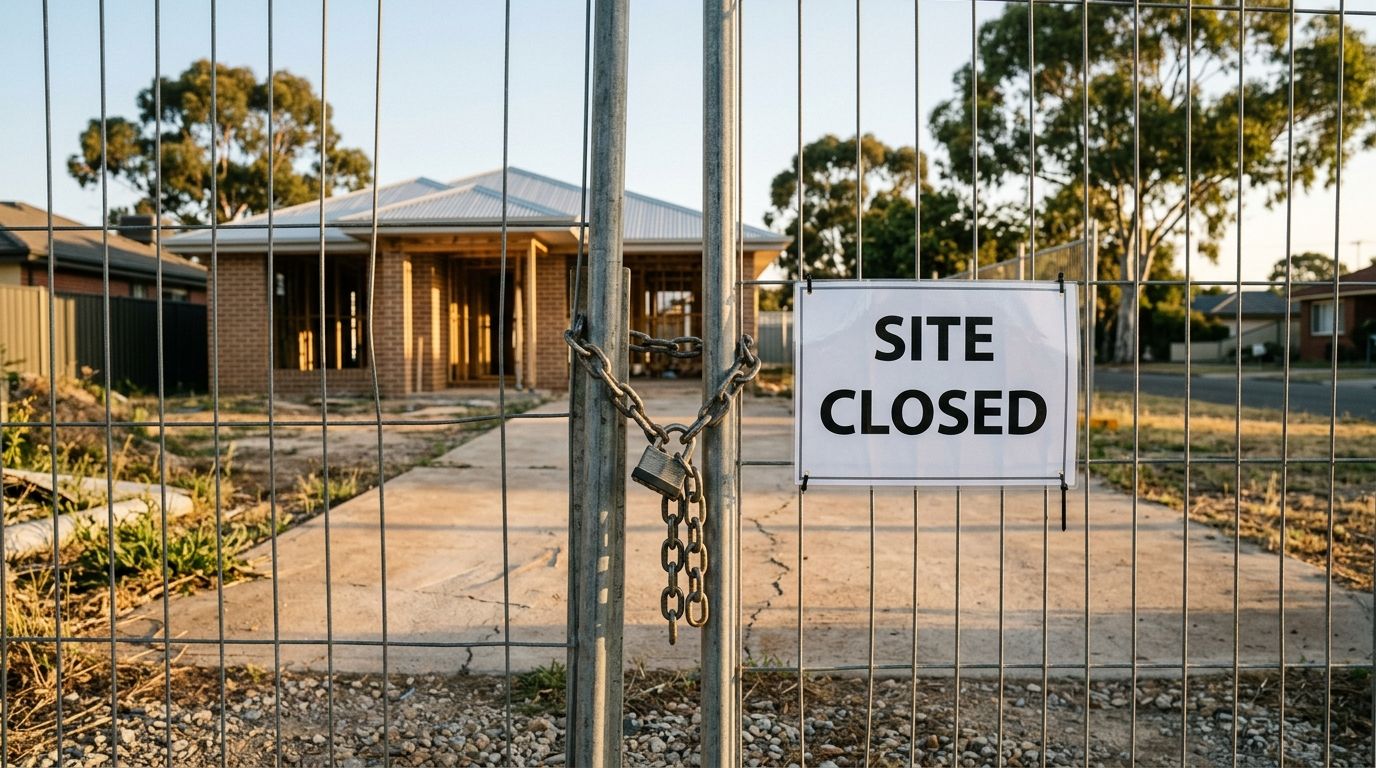
It is 2:30 on a Friday, and the inspector arrives
The job is going well. You have been on this site for three weeks. The rough-in is finished, the fixtures are installed, and the client is happy. Then a vehicle pulls up. An inspector in a hi-vis vest with a clipboard walks through the gate. They want to see your licence. Not the paperwork on the wall, but your actual licence card. The card with your name on it. You do not have one. The name on the contract belongs to a person who has not been on this site in a fortnight.
You are told to pack up your tools. Work stops immediately, and the site is shut down.
It is 2:30 on a Friday afternoon. The next few hours will likely be some of the most expensive of your career. This includes fines, lost progress, damaged client relationships, and the realization that your working arrangement offered no real protection. This was deferred risk, and the bill has just arrived.
What working under someone else's licence actually means in NSW
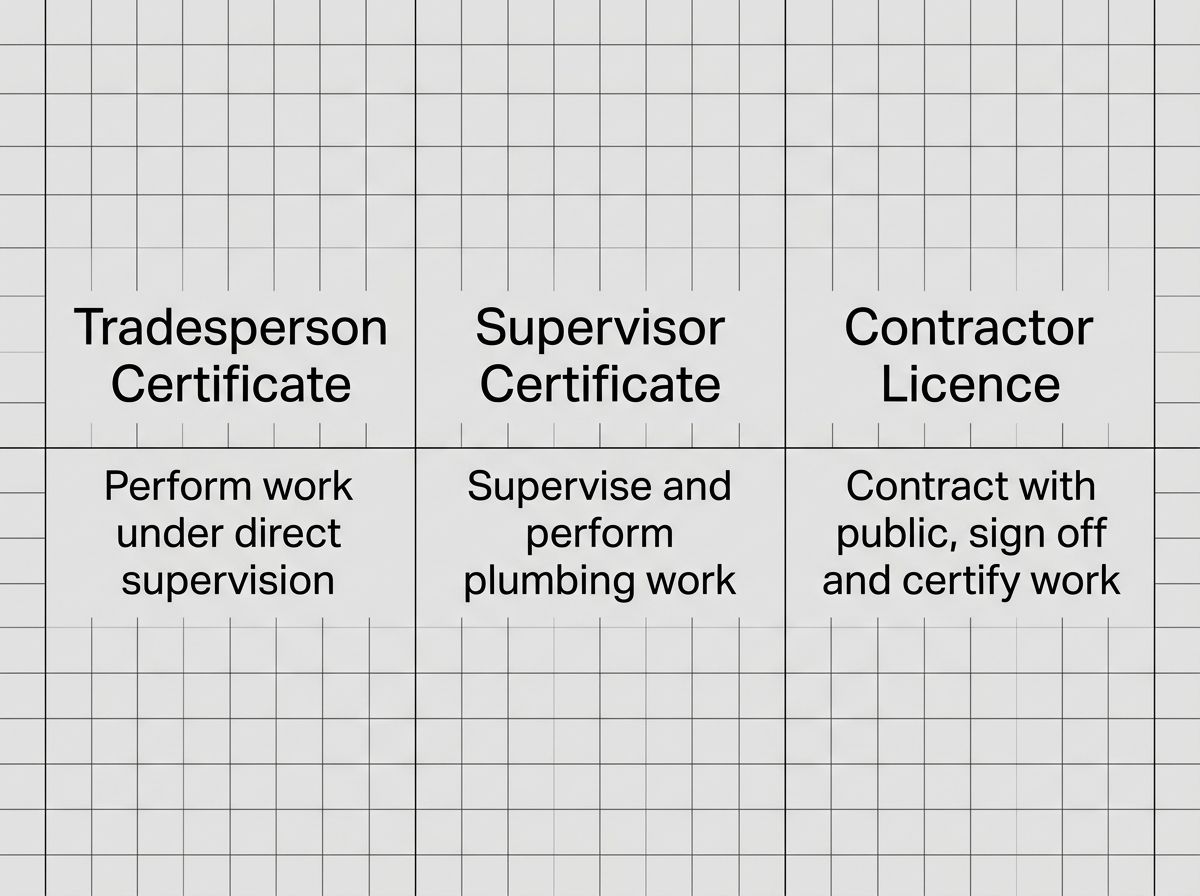
Plumbing work in NSW is strictly regulated. Different licence categories carry different legal permissions. A tradesperson certificate allows you to perform plumbing work under direct supervision. A contractor licence or supervisor certificate allows you to contract directly with clients, supervise teams, and sign off on completed work. The core distinction is legal responsibility. The licence holder is responsible for all work completed. If you perform or supervise plumbing work without holding the correct licence, you are operating without the legal authority to do so.
This arrangement is common across the trade. A business owner holds the contractor licence, while an experienced plumber, often with a decade or more on the tools, does the actual physical work. The licence holder's name is placed on all the official paperwork. Everyone understands how this works, and nobody expects the setup to be challenged.
However, this setup has a major vulnerability. The licence holder is legally responsible for work they may not have physically supervised, and you remain entirely unprotected. If an issue arises, such as a defect, a customer complaint, or a site inspection, your lack of a personal licence means you have no legal standing. The licence holder's liability quickly becomes your problem as well.
The immediate consequences: What happens when the work stops
A site shutdown for unlicensed plumbing work is an enforcement action, not a warning. The consequences occur immediately and build up quickly.
- All work stops. No further plumbing tasks can be performed on site until the licensing issue is completely resolved.
- The client must be notified. Depending on your contract terms, this can lead to a formal dispute, delay claims, or contract termination.
- The licence holder faces disciplinary action from Fair Trading NSW. Their licence is directly at risk, which threatens their entire business.
- The unlicensed worker faces personal liability. Fines for performing unlicensed work are a standard enforcement tool in NSW.
- Insurance coverage is compromised. Public liability and professional indemnity policies require work to be completed by licensed tradespeople. Unlicensed work can void these policies, leaving you personally liable for defects or property damage.
- Other trades on site lose working hours. The disruption of a plumbing shutdown affects subcontractors and builders across the project.
- The relationship with the client is damaged. Even if work resumes, the client now knows you lacked the correct credentials, which damages long-term trust.
The financial impact involves more than just the immediate fine. It includes the loss of contract value, the cost of project delays, personal liability for defects, and reputational damage in an industry where news travels quickly. A single shutdown on a Friday afternoon can easily cost more than the time you saved by avoiding licensing paperwork.
Why this arrangement seemed safe, and why it was not
Borrowing a licence is a common practice because, in most cases, nothing goes wrong. Inspections are rare. Having the business owner's name on the paperwork is usually accepted without question. The work you produce is of high quality, and everyone on site knows your capability.
Your trade competence is real. You have years of experience, a history of completing complex installations, and a reputation for quality. Nobody is questioning your ability. The issue is that the regulator does not assess unverified skills. They look for the physical licence card. If that card bears someone else's name, your practical skill does not change the regulatory violation.
The arrangement felt secure because it had never been audited. However, the risk was building up with every project. Each job completed under a borrowed licence was another instance of exposure. A sudden site inspection is not a matter of bad luck. It is simply the moment this ongoing risk becomes a reality.
The scramble to resolve the issue, and why it takes time
After a site shutdown, the immediate reaction is to find a quick fix. You want to submit the paperwork and get back to work. However, obtaining your own NSW plumbing licence is not an overnight process, nor is it a simple matter of filling out a form.
To apply for a contractor or supervisor licence in NSW, you must hold the prescribed qualification. For plumbers, this is the Certificate IV in Plumbing and Services (CPC40920), or an equivalent credential accepted by NSW Fair Trading. If you hold a Certificate III but have not completed the Certificate IV, you cannot apply for a contractor licence. You must obtain the qualification first.
Completing a qualification and processing a licence application both take time. Meanwhile, your work remains suspended, the client grows impatient, and financial pressure increases. This urgent effort reveals that the issue is structural, not administrative. Operating under a borrowed licence was always likely to lead to this outcome.
If you are currently in this position, or want to avoid it in the future, a Free Skills Review is the first step. This provides a clear assessment of whether RPL is a suitable pathway for you, with no obligation to proceed.
The only permanent solution: Your own NSW plumbing licence
The only way to prevent another shutdown is to obtain your own NSW plumbing licence. This means no longer borrowing a licence or relying on another supervisor to be present on site. You need your own credentials.
To get licensed, you must hold the correct qualification. For most plumbers seeking a contractor or supervisor licence in NSW, this is the Certificate IV in Plumbing and Services (CPC40920). With this qualification, you can apply for your licence through NSW Fair Trading. Once your application is approved, you are the licence holder. You gain full legal protection, allowing you to contract directly with clients, supervise staff, and certify your own work. The inspector's site visit is no longer a risk.
For experienced plumbers who have the skills but lack the formal qualification, Recognition of Prior Learning (RPL) offers a practical pathway to the CPC40920 credential. RPL is not a shortcut. It is a thorough assessment process where your work history and practical experience are evaluated against national competency standards. If you can demonstrate your competence, a registered training organisation (RTO) assesses your evidence and issues the qualification. RPL it helps guide candidates through this process.
The central principle of RPL is that your industry experience serves as evidence. Your years on the tools, your work on complex jobs, your experience supervising others, and your technical problem-solving can all be documented and assessed. The qualification formally recognizes your existing knowledge, allowing you to apply for the licence.
What RPL actually involves for an experienced plumber
RPL is not a test to see if you can do the job. You already have those skills. Instead, it is a structured method of documenting the work you have already completed throughout your career.
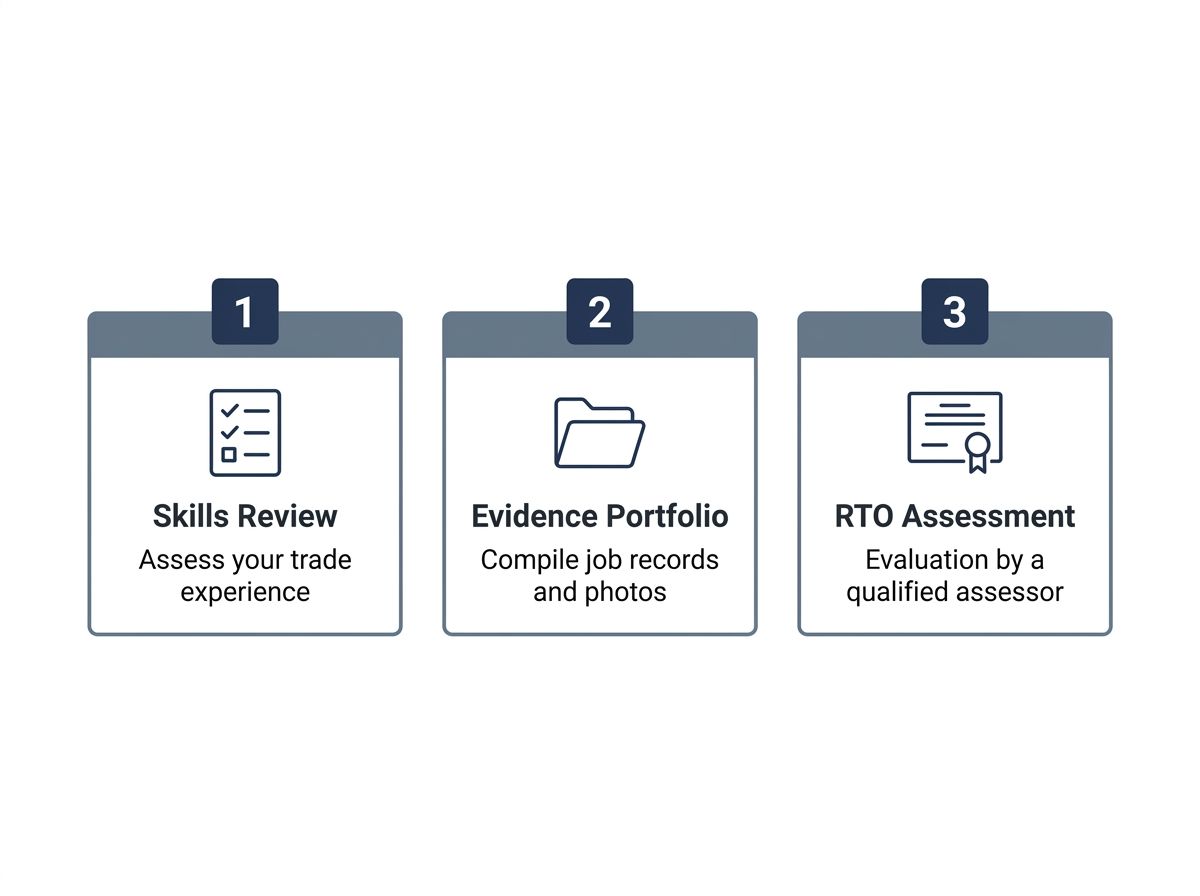
The process starts with a skills review to determine if your experience aligns with the competency standards for the CPC40920 qualification. If it does, you begin gathering evidence. This involves documenting the projects you have completed, the plumbing systems you have installed, your supervisory roles, and your technical decision-making. Your evidence file may include job records, photos of your work, references from employers or clients, and a technical interview with an assessor.
A qualified assessor from the partner RTO reviews your evidence against national competency standards. If they identify areas where your documented experience does not fully meet the standard, targeted gap training can be provided. Once you demonstrate competency across all required units, the RTO issues the qualification. RPL it supports you through every stage of this process, though the final assessment and issuance remain the responsibility of the RTO.
When you demonstrate competency, the outcome is a nationally recognized Certificate IV in Plumbing and Services. This credential meets the educational requirements for a NSW plumbing contractor or supervisor licence. It is the exact same qualification issued under the Australian Qualifications Framework as one earned through classroom study. The only difference is that RPL acknowledges your existing skills instead of requiring you to repeat training.
Start with a free skills review with no obligation
Your first step is not enrolment. It is a free, no-obligation skills review to assess whether RPL is the right option for your situation. If RPL is not suitable, we will tell you directly. If it is, you will understand exactly what is required before you make any commitment.
You already have the trade experience. The goal is to determine if your work history can be compiled into evidence that meets the national standard for the CPC40920 qualification. A skills review answers this question clearly, without high-pressure sales and at no cost to you.
The choice to proceed is entirely yours.
Ready to Get Recognised?
Start with a free skills review to find out if RPL is right for you.