15 years on site vs a graduate with a degree: Breaking the WHS paper ceiling
Experienced WHS professionals are being passed over for senior roles by degree holders with less site time. Here is what is happening and how to fix it.
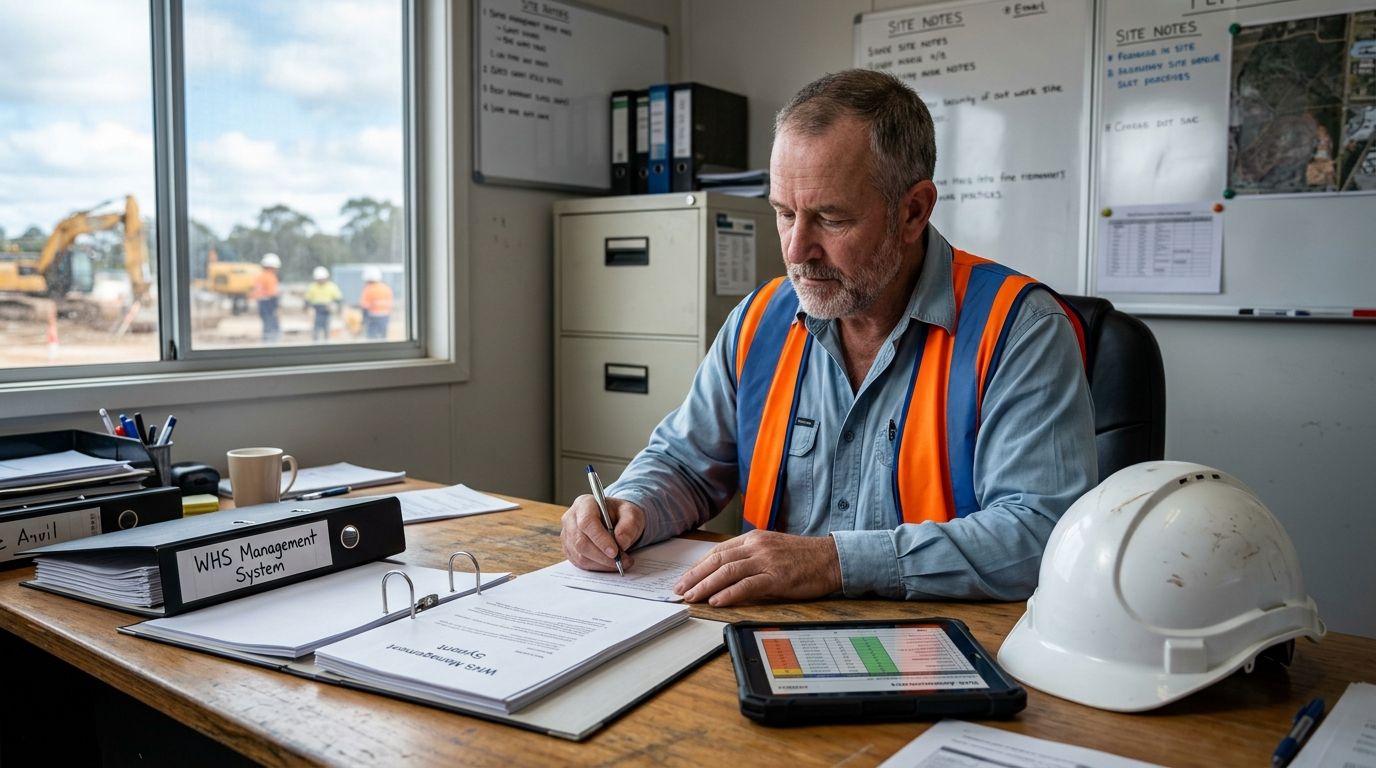
The moment every experienced safety professional recognises
You have been on site for fifteen years. You have written the WHS management system. You have led the incident investigations, run the audits, trained the new starters, and kept people safe in environments where the stakes are real. You know the legislation. You know the risks. You know what works.
Then the senior WHS Manager role comes up. You apply. The job goes to someone with a degree, two years of experience, and a qualification that says they are ready for it.
This is not an isolated case. It is a pattern. If you have lived it, you already know exactly what it feels like to be measured by paper instead of performance.
Your skills are real. Your experience counts. The problem is not what you know. It is the form that knowledge exists in.
Why senior WHS roles are now credential-gated
Over the past decade, senior WHS roles in Australia have increasingly required formal qualifications as a baseline hiring filter. For entry-level and mid-level positions, a Certificate IV in Work Health and Safety is typically the minimum. For senior WHS Manager, HSEQ Manager, and Safety Director roles, a Diploma or Advanced Diploma of Work Health and Safety is commonly listed as a requirement or strong preference.
This shift is driven by several forces working together. Regulatory frameworks under the model WHS Act place significant duties on officers and senior managers. These are duties that organisations want to demonstrate are held by formally credentialled practitioners. Insurance and liability considerations push HR departments to document that senior safety roles are filled by people with recognised qualifications. And applicant tracking systems filter resumes before a human ever reads them.
The credential is not always a proxy for competence, but it is a real gate. For experienced WHS professionals without the formal qualification, it is a gate that keeps closing.
Safe Work Australia publishes the model WHS laws and guidance that underpin these regulatory obligations. This is the framework that organisations point to when they require senior WHS practitioners to hold formal credentials.
Five ways the WHS paper ceiling shows up
The credential ceiling does not announce itself. It shows up in specific, recognisable moments. If any of these sound familiar, you are not imagining it.
- You wrote the WHS management system that the new WHS Manager has just been hired to oversee.
- You trained the graduate who now holds the role above you, and they still call you when they do not know the answer.
- Your incident investigation reports are used as training examples across the organisation, but you cannot apply for the role that writes the policy.
- You have been acting in the senior WHS role for twelve or eighteen months, but the permanent appointment requires the credential you do not hold.
- You are the person the regulator speaks to during an inspection because everyone knows you are the one who actually understands the site, but your job title does not reflect it.
Each of these scenarios is a version of the same structural problem. Your competence is visible to everyone around you. It is invisible to the formal systems that make hiring decisions.
What the Advanced Diploma of Work Health and Safety covers, and why experienced practitioners already know it
The Advanced Diploma of Work Health and Safety (BSB60619) is a nationally recognised qualification at AQF Level 6, listed on the national training register at training.gov.au. It consists of 11 units of competency, five core and six elective, and is designed for practitioners operating at a senior or specialist level in WHS management.
The core competency areas of BSB60619 include developing and implementing WHS management systems, managing WHS risks, leading and facilitating WHS consultation and participation processes, managing WHS information and data systems, and evaluating WHS management systems. These are not theoretical concepts. They are the daily work of experienced WHS professionals.
Consider what the qualification is actually asking for, mapped against what a senior WHS practitioner already does:
- Developing and implementing a WHS management system: You designed and rolled out the site WHS management system that the organisation currently operates under.
- Managing WHS risks across an organisation: You conduct hazard identification, risk assessments, and control implementation as a core part of your role.
- Leading WHS consultation and participation: You run toolbox talks, safety committee meetings, and worker consultation processes.
- Managing WHS information and data: You maintain incident registers, analyse trends, and report to senior leadership.
- Evaluating WHS management system performance: You conduct internal audits and review system effectiveness against regulatory requirements.
The qualification is not designed to teach you these things. It is designed to formally assess whether you can demonstrate them. For experienced WHS professionals, the gap is not competence. It is evidence.
The full unit list and performance evidence requirements for BSB60619 are publicly available on the national training register.
Recognition of Prior Learning: The pathway that does not require starting over
Recognition of Prior Learning (RPL) is a formal assessment process that evaluates existing skills and experience against national qualification standards, without requiring classroom study. It is a legitimate, regulated pathway within the Australian VET system, overseen by the Australian Skills Quality Authority (ASQA).
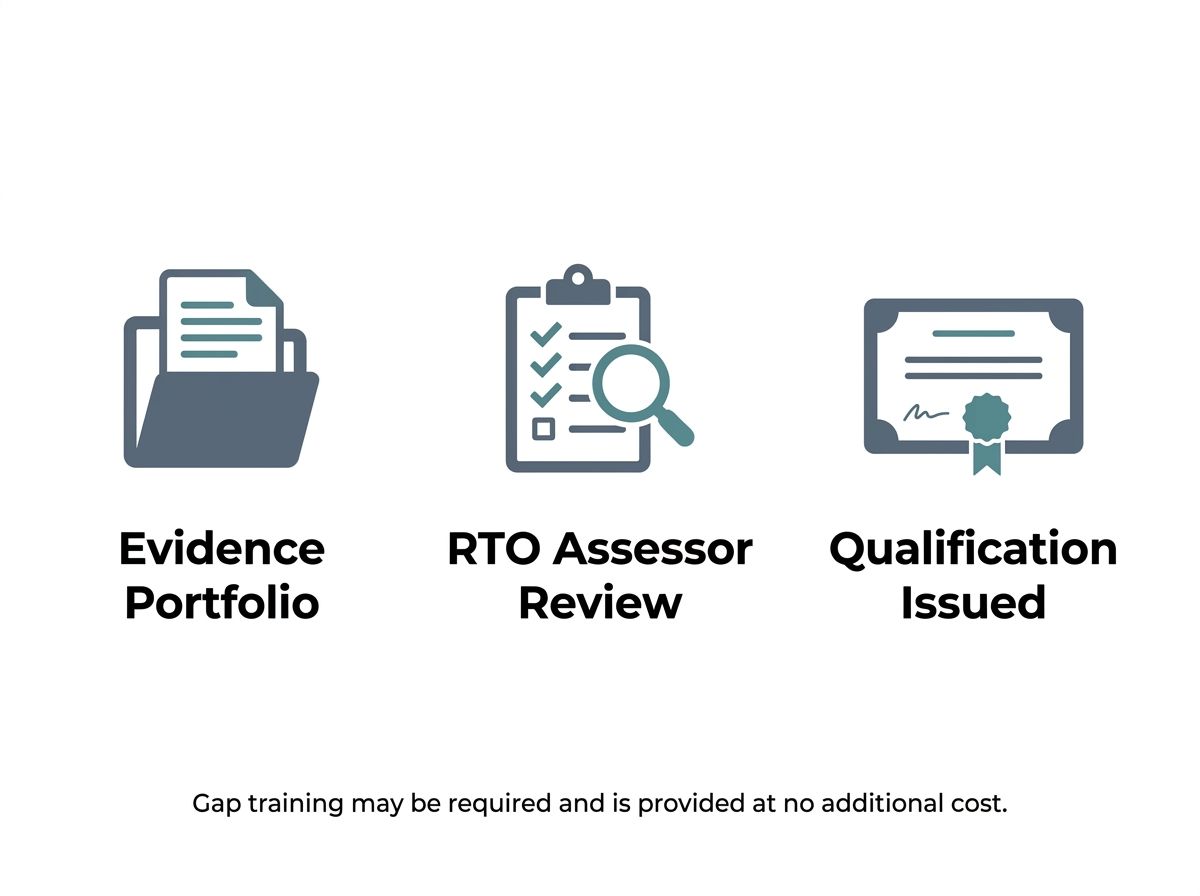
RPL for the Advanced Diploma of Work Health and Safety works like this: a qualified assessor from a registered training organisation (RTO) reviews evidence of your existing WHS competency against the BSB60619 unit requirements. If the evidence demonstrates that you meet the standard, the qualification is issued. The assessment is genuine, and so is the qualification it produces.
This is not a shortcut. It is a rigorous assessment pathway designed for people who already have the competence. The difference is that instead of sitting in a classroom learning what you already know, you are presenting evidence of what you have already done.
A few important things to understand about how RPL works: The assessment is conducted by a qualified assessor from the delivering RTO, not by the guidance service that helps you prepare your evidence. The RTO issues the qualification. If gaps in competency are identified during assessment, gap training may be required. With RPL it, this is provided at no additional cost. And the outcome of assessment is the assessor's professional judgement, not a guaranteed result.
ASQA publishes guidance on how RPL works within the Australian VET system, including what constitutes valid and sufficient evidence for assessment.
The same principle applies across industries: experience can be evidence, and formal recognition does not require starting over.
What evidence actually looks like for a WHS Advanced Diploma
The most common barrier experienced WHS professionals face when considering RPL is not a lack of competence. It is uncertainty about what counts as evidence. The answer is usually more than you think.
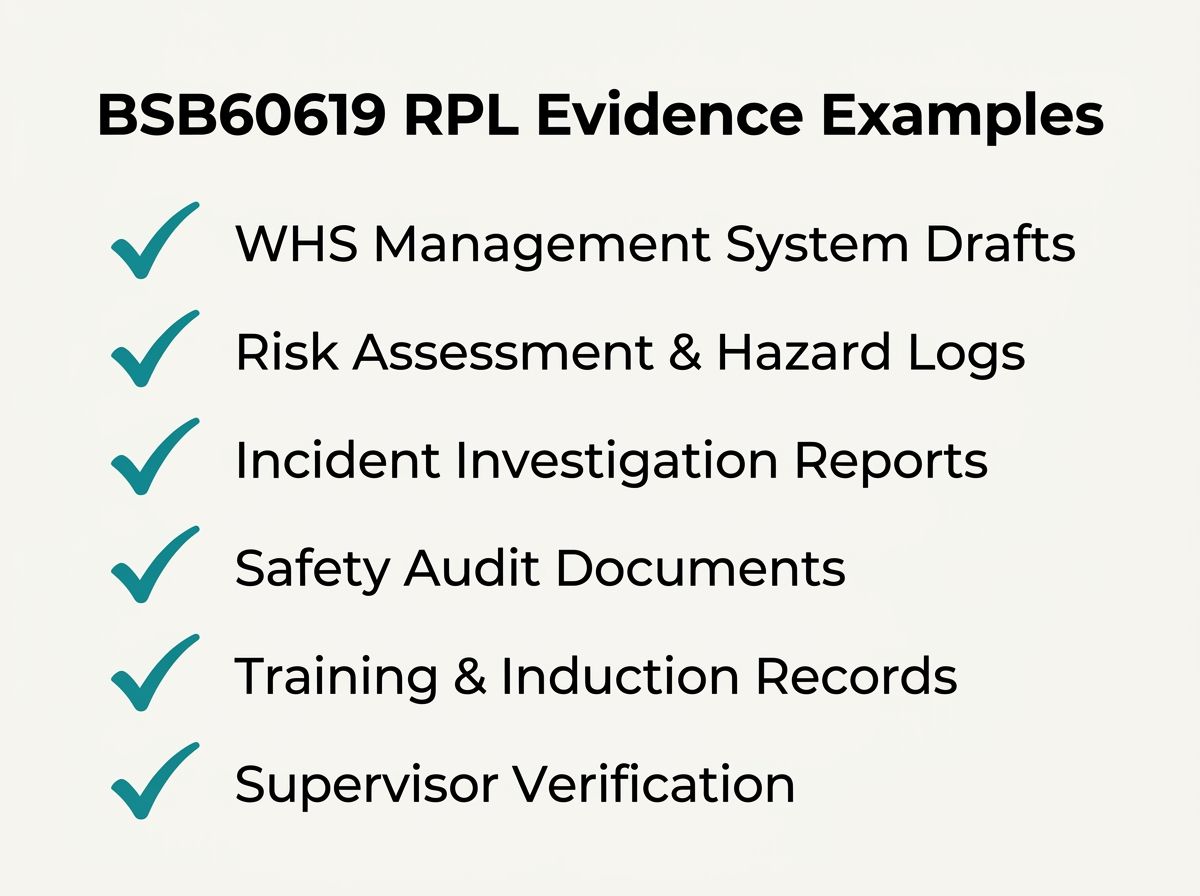
For BSB60619 RPL assessment, the types of evidence that experienced WHS practitioners typically already have include:
- WHS management system documentation you have authored or significantly contributed to
- Hazard identification and risk assessment records
- Incident investigation reports, including root cause analysis and corrective action plans
- Safety audit reports and follow-up records
- Training delivery records, including toolbox talks, inductions, and safety briefings you have delivered
- Third-party verification from supervisors, clients, or colleagues who can confirm your WHS responsibilities
- Position descriptions that document your WHS accountabilities
- Performance reviews that reference your WHS management contributions
Not every piece of evidence needs to be perfect. What assessors are looking for is a coherent picture of competency: evidence that, taken together, demonstrates you have been operating at the level the qualification describes. A guided evidence review can help you identify which of your existing documentation is most relevant and how to present it effectively.
Is RPL the right pathway for you? Honest guidance before you commit
RPL is not suitable for everyone, and honest guidance matters more than enrolment numbers. The Advanced Diploma of Work Health and Safety via RPL is typically well-suited to WHS professionals who:
- Have five or more years of experience in a senior or specialist WHS role
- Have been responsible for designing, implementing, or managing WHS systems, rather than just following them
- Have conducted or led formal incident investigations, risk assessments, or safety audits
- Have documented evidence of their WHS work, such as reports, records, plans, or third-party verification
- Have held accountability for WHS outcomes, not just advisory or support functions
If your experience is primarily in a support or compliance-checking role, or if your documentation is limited, RPL may not be the right pathway at this point. A Free Skills Review will tell you that honestly, before you commit to anything.
The right first step is always to understand your suitability before making any decision. That is what the Free Skills Review is for.
Your experience is real. The recognition is earned.
Return to that moment. The fifteen years on site. The management system you wrote. The graduate who got the role. The phone call they made to you on their first week because they did not know the answer.
The problem is not your competence. It never was. The problem is that your competence exists in a form that formal systems struggle to see. Your skills speak. The Advanced Diploma of Work Health and Safety (BSB60619) via RPL is the guided process that helps them be heard.
Recognition should not require starting over. It should require demonstrating what you have already achieved.
The paper ceiling is real. So is the pathway through it.
If you have spent years building WHS systems, running audits, and managing safety outcomes, your experience is real. A Free Skills Review will help you understand whether it can be formally recognised. It costs nothing and commits you to nothing. The decision is yours.
Ready to Get Recognised?
Start with a free skills review to find out if RPL is right for you.