Why 10 Years of Management Experience Is Costing You Promotions (And How to Fix It)
Your management experience is real — but HR filters for qualifications, not competence. Learn how a Diploma of Business via RPL translates what you already do into formal recognition.

The promotion you deserved went to someone with less experience
You have the experience. You have been running the team, managing the budget, delivering the results. And then the role went to someone with less time in the industry — but a diploma on their CV.
That moment is not imaginary. It happens to capable, experienced managers across Australia every year. And the frustrating part is that it has almost nothing to do with your competence.
Australian Bureau of Statistics data shows that in 2022–23, employment rates for people with diploma-level qualifications were close to those with bachelor degrees — and that the vast majority of employed people with non-school qualifications reported their credential was relevant to their current job. Qualifications are embedded in how the workforce is structured, not just how it is hired.
The problem is not your ability. The problem is a system that requires evidence in a specific format — and your decade of demonstrated management capability does not yet exist in that format.
The counterintuitive truth: HR is not assessing your competence
Here is the insight that changes everything: when a company lists a Diploma of Business as a requirement for a management role, they are not questioning whether you can do the job. They are managing risk.
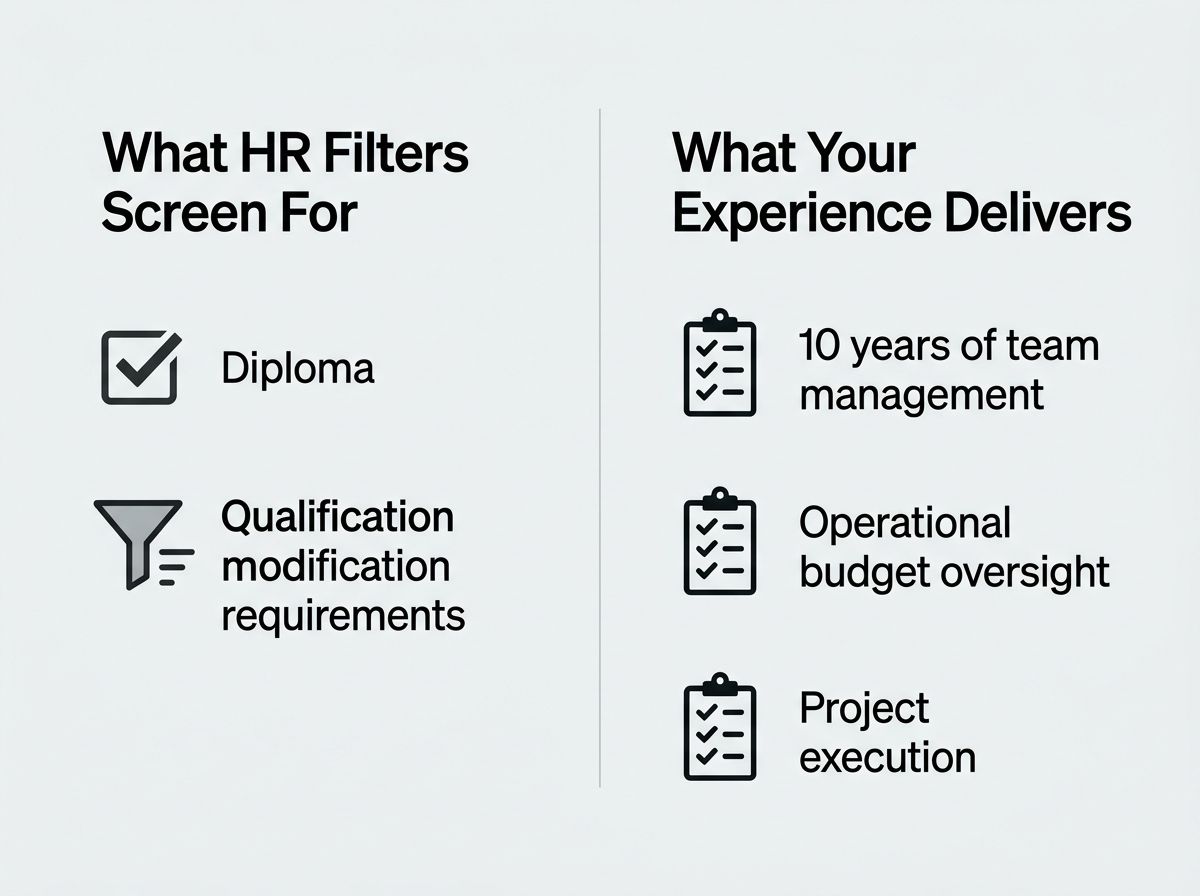
Qualification requirements in job advertisements work as screening filters. They allow hiring managers and automated systems to sort applications consistently, reduce liability exposure, and demonstrate due diligence to boards, insurers, and regulators. A formal credential is auditable. Years of demonstrated performance, however real, is not — at least not in the format those systems require.
This is not a flaw in the system. It is the system doing exactly what it was designed to do. Understanding that shifts your position from 'why am I being overlooked?' to 'what does the system need from me, and how do I provide it?'
The paper ceiling is not about your capability. It is about the format of your evidence.
Why 'just keep performing well' is career advice that no longer works
The conventional wisdom is straightforward: deliver results, build your reputation, and promotion will follow. For a long time, in many organisations, that was true.
It is increasingly not enough. As organisations grow, as compliance requirements tighten, and as HR processes become more systematised, formal qualifications have become embedded in role eligibility criteria — not just hiring preferences. A performance review that rates you as exceptional cannot override a policy that lists a diploma as a prerequisite for the next level.
This is not a personal judgement. It is a structural reality. The people making promotion decisions may know you are capable. They may even advocate for you. But if the role description requires a qualification and you do not hold one, the conversation often ends before it begins.
Hard work matters. Results matter. But without the credential, your performance exists in a format the system cannot formally recognise for advancement.
What a Diploma of Business actually signals to employers
The BSB50120 Diploma of Business is a nationally recognised qualification on the Australian Qualifications Framework. When an employer sees it on a CV, it signals something specific: that the holder's management competence has been formally assessed against a national standard by a registered training organisation.
That is a different thing from 'they studied business management.' It means their capability was measured against defined criteria and found to meet them.
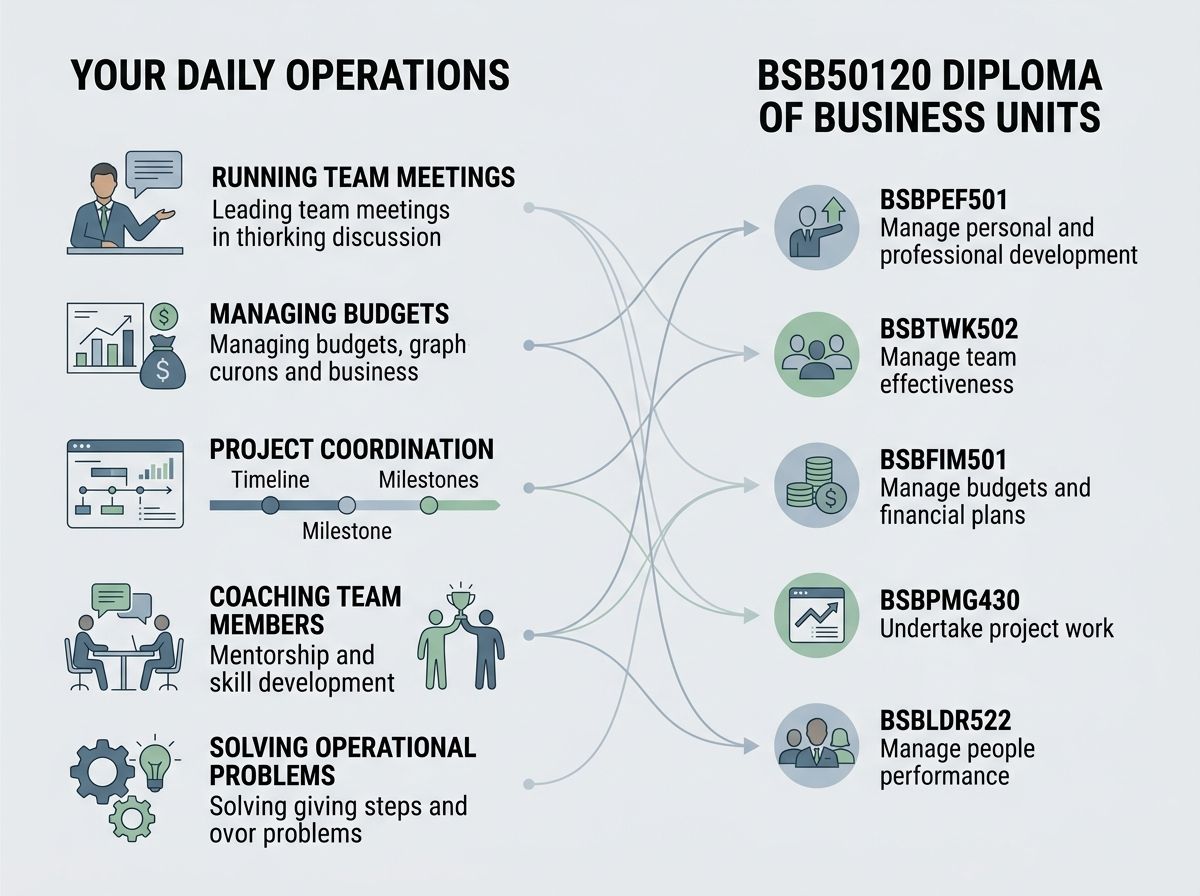
The qualification's five core units cover competency areas that experienced managers are likely already working in every day. According to the official training.gov.au qualification release, those core units involve: managing budgets and financial plans, managing business resources, developing workplace policies and procedures for sustainability, leading communication in the workplace, and developing critical thinking in others.
If you are running team meetings, managing a budget, overseeing operations, handling performance conversations, and driving projects to completion — your daily work maps closely to what this qualification covers. The question is not whether you have the competence. The question is whether it has been formally assessed.
The RPL it Business and Finance page outlines how experienced professionals can pursue a Diploma of Business via RPL.
The paper ceiling is real — but it has a door
The paper ceiling is the invisible barrier that blocks capable, experienced professionals from advancing because they lack a formal credential — not because they lack the ability. It is not a reflection of your worth. It is a structural feature of how formal systems recognise competence.
Experience can be evidence. That is the principle behind Recognition of Prior Learning. RPL does not ask you to go back to a classroom and re-learn what you already know. It asks you to demonstrate — through structured evidence — that your existing experience meets the competency requirements of the qualification.
A Diploma of Business via RPL is not a workaround. It is the mechanism that translates existing management evidence into the format the system requires. The door through the paper ceiling exists. Whether you can walk through it depends on what your experience can demonstrate — and that is what a formal RPL assessment determines.
What the RPL process looks like for business and management experience
The RPL process for a business qualification is structured and guided — not something you navigate alone. At a high level, it involves four stages: a skills review, evidence gathering, assessment by a registered training organisation, and qualification issuance.
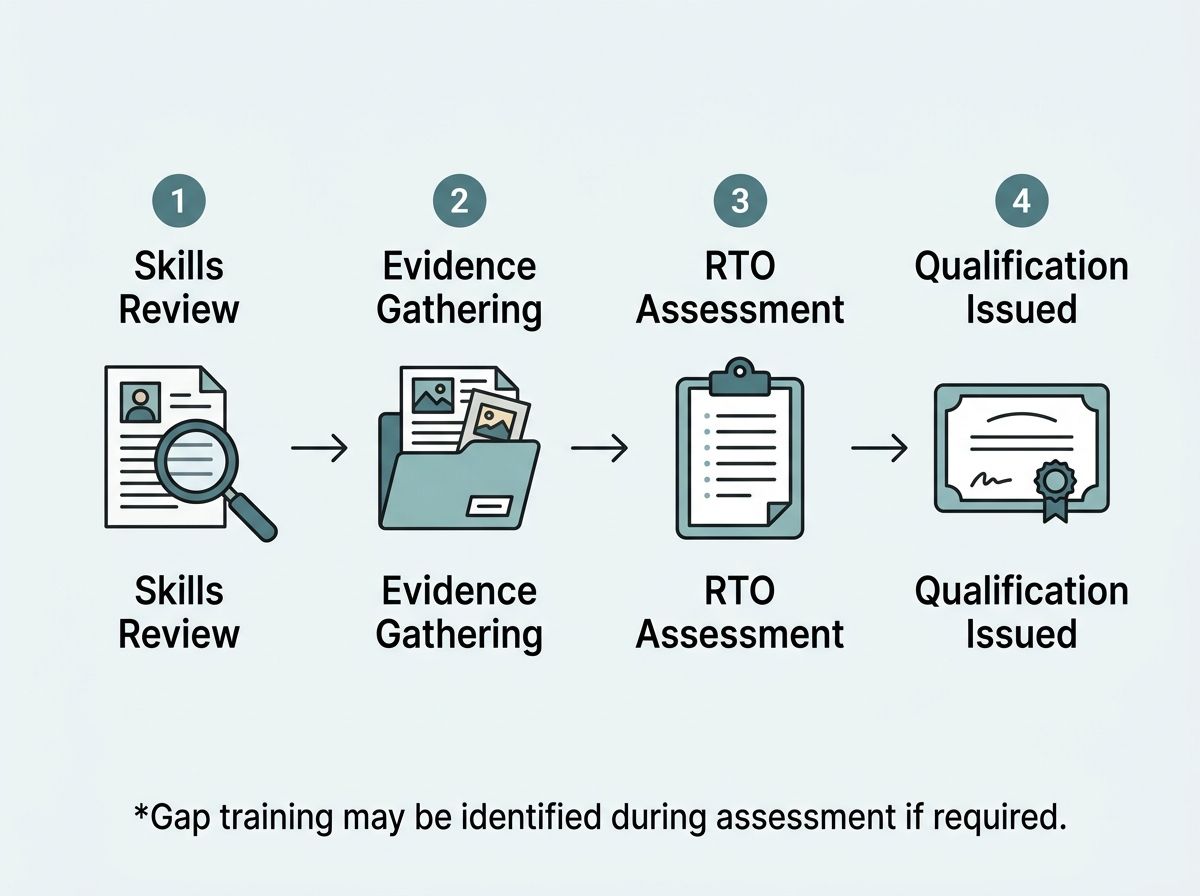
The skills review is the starting point. It maps your existing experience against the qualification's competency requirements to identify where your background is likely to be relevant and where gaps, if any, may exist.
Evidence gathering is where your management history becomes the case for your competence. For business and management RPL, evidence commonly includes work samples such as project plans, financial reports, and operational documentation; employment records and position descriptions; performance reviews and KPI records; and third-party reports from supervisors or colleagues who can verify your responsibilities and outcomes.
The assessment is conducted by a qualified assessor from the delivering registered training organisation — not by RPL it. The assessor reviews your evidence against the qualification's competency standards. If gaps are identified during assessment, gap training is typically provided to address them. This is a normal part of the process and does not mean the RPL pathway has failed.
The qualification is issued by the RTO once competency is demonstrated. Because the assessment is genuine and conducted against national standards, the qualification is nationally recognised.
Is your experience enough? What typically qualifies for a Diploma of Business via RPL
Whether your experience is sufficient for a Diploma of Business via RPL depends on a formal assessment — not a checklist. But there are indicators that suggest your background may be relevant.
According to publicly available guidance from RPL providers, people with management or supervisory experience across a range of settings — including government, business operations, health, and similar organisational environments — may find their experience relevant to BSB50120 assessment. Indicative roles that providers have noted as potentially relevant include team leaders, supervisors, operations managers, executive officers, and managers with responsibility for staff, budgets, or operational outcomes.
The key is not your job title. It is what you actually do. If your work involves managing people, overseeing resources, planning and delivering projects, communicating across an organisation, and making decisions with financial or operational consequences — those activities map closely to the competency areas the Diploma of Business covers.
That said, RPL is a competency-based assessment process. Suitability is determined by a qualified assessor reviewing your evidence against the qualification's requirements — not by a job title or years of service alone. The Free Skills Review is how you find out where you actually stand.
Your experience is real. The question is whether it has been recognised.
You have the experience. The system is not questioning your competence — it is requiring a specific form of evidence. The Diploma of Business via RPL is how that evidence is formally presented, assessed, and recognised.
Your skills speak. We help them be heard.
The decision is yours. If you want to understand whether your management experience is relevant to a Diploma of Business via RPL, the Free Skills Review is the place to start — free, with no obligation, and no commitment required.
Ready to Get Recognised?
Start with a free skills review to find out if RPL is right for you.