The 'I'll Get Around to It' Trap: Working Without a QLD Trade Licence
Queensland tradespeople working under another person's QBCC licence are building someone else's business. Here is the real cost, and how a different path looks.

You know the trade. The licence is the problem.
You have the experience. You have been doing this work for years, probably longer than some of the people who hold the licence above you. Your competence is not in question. What is missing is the credential that gives you permission to work independently, quote for jobs, and build your own business.
That gap between what you know and what you can legally do on your own is the licence gate. For many skilled Queensland tradespeople, this gap remains for years. The pathway exists, but the most obvious route through it feels impossible.
Queensland's building and construction industry is one of the largest in the country. According to Queensland Treasury, construction employed around 288,000 people in the state in 2025 and contributed $41.2 billion to the Queensland economy in 2024–25. That represents thousands of skilled people doing regulated work. The Queensland Building and Construction Commission (QBCC) is the body that decides who can do that work legally, and under whose name.
If your name is not on a QBCC licence, you are working under someone else's. That arrangement has a real cost, and it compounds every month you put it off.
What 'getting around to it' actually looks like in QLD
Postponing your licence is not a matter of laziness. It is often a rational short-term calculation that becomes costly over time. Going to TAFE means months of lost income, while the paperwork looks overwhelming. Since the work keeps coming in, you find reasons to defer.
The pattern settles in. You work under your employer's or principal contractor's QBCC licence, keeping your quotes under the threshold that requires your own licence. You turn down larger jobs, including commercial projects and government tenders that require your own credentials. Meanwhile, you watch licensed colleagues earn higher rates, quote independently, and secure their own client base.
The QBCC administers licensing across Queensland's building and construction industry under several Queensland statutes, including the Queensland Building and Construction Commission Act 1991. Licences for contractors, nominee supervisors, and site supervisors are issued under this Act. Plumbing and drainage work is regulated under the Plumbing and Drainage Act.
The QBCC lists a range of available trade licence classes, which include carpentry, plumbing, painting and decorating, tiling, glazing, concreting, gasfitting, air conditioning, and refrigeration. The specific licence class you need depends on the type of work you do. According to QBCC guidance, building work above a certain dollar threshold requires a QBCC licence. The QBCC's consumer guidance references a figure of around $3,300, though monetary thresholds can change and you should confirm them on the QBCC website before relying on them.
The QBCC actively enforces these requirements. In 2024–25, the regulator conducted targeted site visits focusing on unlicensed contracting and licensed contractors operating outside their approved scope. This was supported by a month-long compliance campaign in October 2024. Unlicensed contracting was the single largest offence category in the QBCC's 2024–25 investigation caseload.
During that same year, the QBCC completed 3,682 licensing audits across 1,116 site visits. Where potential unlicensed activity is identified, the regulator undertakes further investigation.
The real cost: You are building someone else's business
Here is the financial reality that most tradespeople in this position avoid saying out loud: you are generating profit for the person whose name is on the QLD trade licence, rather than for yourself.
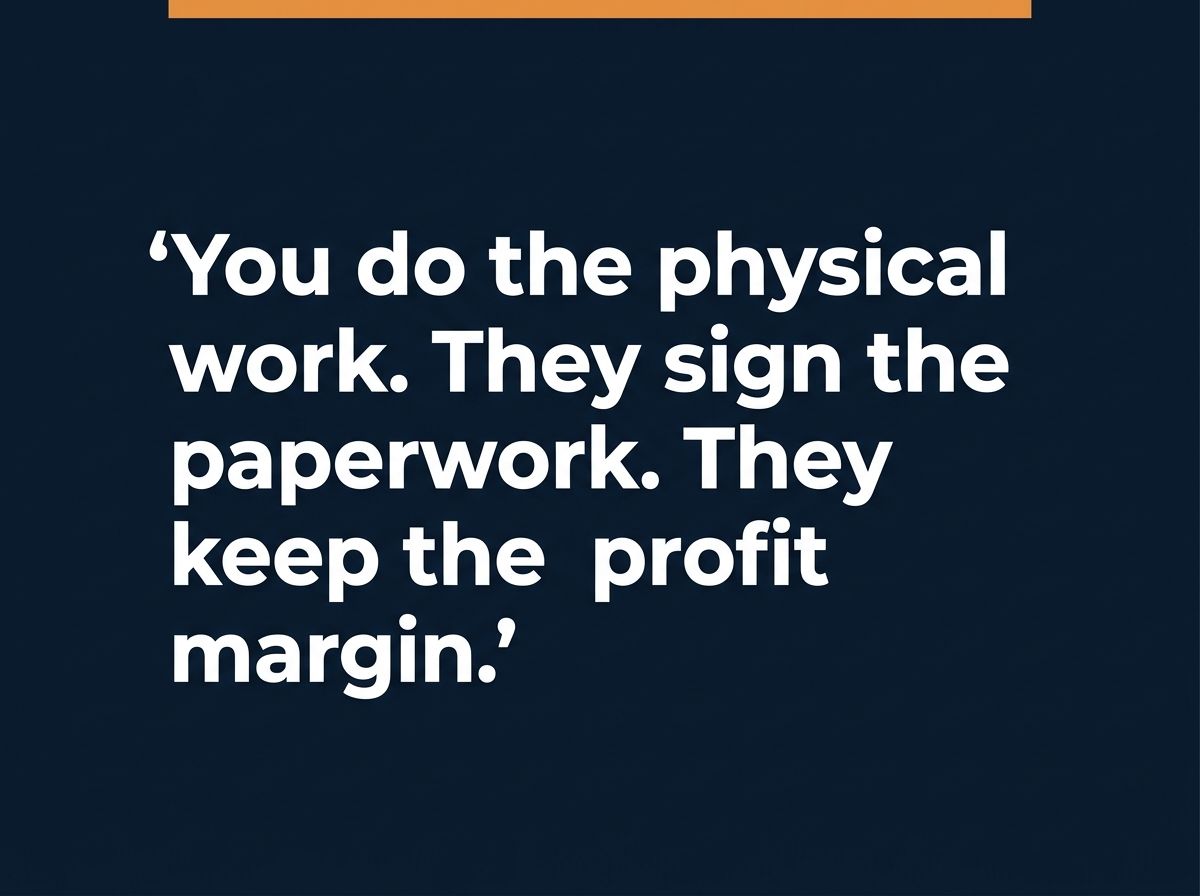
While you do the physical work, they sign the paperwork and retain the profit margin.
When you work under someone else's QBCC contractor licence, every dollar of profit above your wage goes to the licence holder. They hold the legal authority while you take the physical risk on site. This arrangement benefits them, but it is considerably less advantageous for you.
The QBCC describes a contractor licence as suitable for sole traders, subcontractors, or companies wanting to enter building contracts directly with clients. That is the core difference. With your own licence, you can quote and contract directly, keeping the full margin. Without it, you are always working for someone else's profit.
The longer this situation continues, the more the cost compounds. Every month without a licence means losing profit margins, missing tender eligibility, and building someone else's business equity instead of your own. The licence is more than bureaucracy; it is the pathway to a different income tier.
Why TAFE feels impossible (and why that is the wrong calculation)
The objection is valid. TAFE takes time, and for a working tradesperson, time is income. Sitting in a classroom learning techniques you already use daily, at the cost of months of earnings, is a calculation that rarely makes sense in the short term.
TAFE Queensland is the largest VET provider in the state, serving over 139,000 students annually across more than 420 programs. Certificate III programs are designed for gaining a trade, while Certificate IV programs focus on supervisory and management positions. TAFE Queensland also lists Recognition of Prior Learning as an available pathway.
The issue is that most tradespeople make their decisions assuming TAFE is the only option. It is not. The standard calculation comparing months of lost income against getting a licence relies on incomplete information.
There is a formal assessment pathway that evaluates your existing skills, rather than requiring you to study what you already do. This is a different route to the same destination rather than a shortcut, and for experienced tradespeople, it is often the more practical choice.
How RPL works for QLD trade licensing: Experience as evidence
Recognition of Prior Learning (RPL) is a formal assessment process that evaluates your existing skills and experience against the units of competency required for a qualification. It is a standard part of Australia's vocational education system rather than an exemption from it.
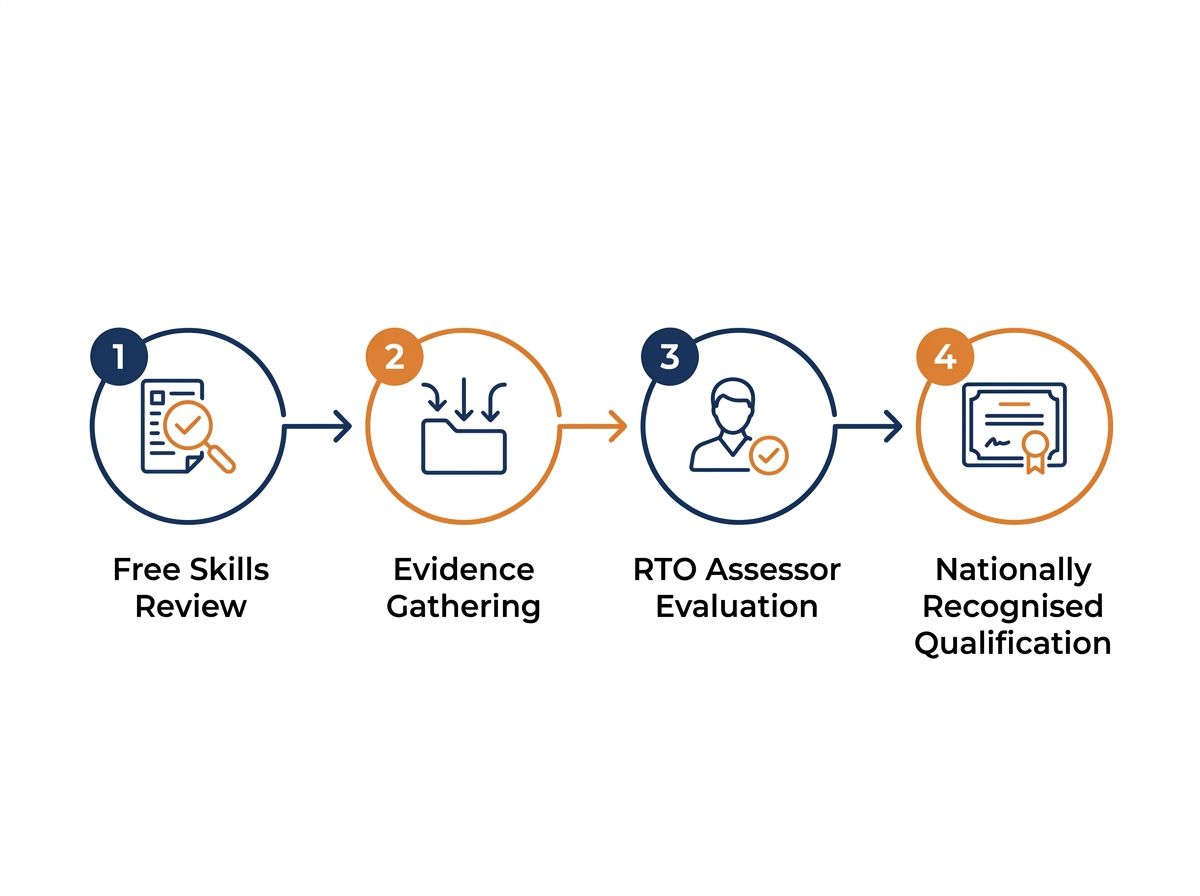
RPL is an assessment-only process. Competency-based assessment for RPL must be conducted by qualified assessors from a registered training organisation (RTO). The RTO conducts the assessment and issues the qualification, rather than an external consultant or service provider. The qualification is nationally recognised because the assessment meets national standards.
For tradespeople, this means years of on-the-job work can be documented and assessed against relevant units of competency. The assessment process can also identify any gaps in your skills. Where gaps exist, target training can follow. RPL may be partial, meaning you demonstrate competency in certain units and complete training for others.
Under the Standards for Registered Training Organisations, an RTO must offer RPL to individual students, unless the requirements of the training package or licensing rules prevent it. Requirements vary by qualification and licence class.
For QBCC contractor licence applications, the QBCC requires applicants to demonstrate technical qualifications, managerial qualifications for specific classes, relevant experience, and financial criteria. The QBCC assesses each application individually by reviewing your experience, requesting further details if necessary, and issuing a decision. Outcomes are not guaranteed.
Some training providers state that RPL assessment is among the pathways that can satisfy QBCC educational requirements, but you should verify this directly with the QBCC for your specific licence class before proceeding. Requirements vary, and the QBCC remains the authoritative source.
For information on QLD trade licence pathways and requirements, see the RPL it Trade Licence QLD page.
What trades in QLD require a QBCC licence?
In Queensland, the QBCC lists a range of trade contractor licence classes. The following are among the trades listed on the QBCC's available licences page, though you should verify the current list directly with the QBCC as requirements can change:
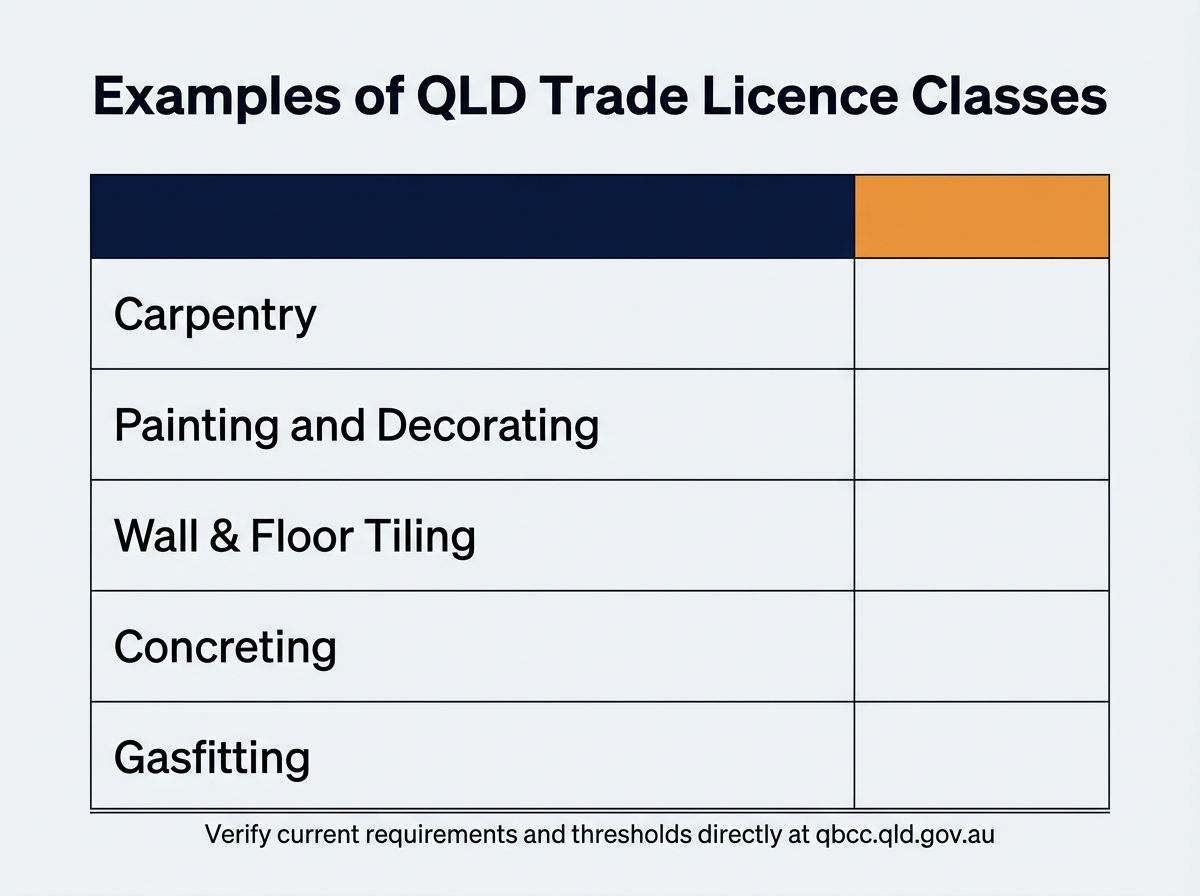
- Carpentry
- Plumbing and drainage (regulated under the Plumbing and Drainage Act)
- Painting and decorating
- Wall and floor tiling
- Concreting
- Bricklaying and blocklaying
- Gasfitting
- Glass, glazing and aluminium
- Roof tiling
- Waterproofing
- Metal fabrication and erection — structural
- Shopfitting (trade)
- Cabinet making
- Joinery
- Steel fixing
- Stonemasonry
- Structural landscaping (trade)
- Swimming pool construction, installation and maintenance
- Air handling duct installation
- Plastering (drywall and solid)
The QBCC issues different licence types based on your role: a contractor licence for direct contracts with clients; a nominee supervisor licence to oversee work on behalf of a company; a site supervisor licence to manage on-site work without contracting; and occupational licences for specialist trades like plumbing, drainage, gasfitting, and fire protection.
The QBCC's available licences page lists the current trade licence classes and is the authoritative source for confirming which licence applies to your trade.
According to the QBCC's 2024–25 Annual Report, at the end of that reporting period Queensland had 49,281 active trade contractor licences, 28,845 active builder licences, 16,039 nominee supervisor licences, and 5,402 site supervisor licences. Because licensees can hold multiple licence classes, these figures do not represent unique individuals.
The procrastination tax: What every month without a licence costs you
Every month a skilled tradesperson defers their licence adds to a compounding opportunity cost. Delaying is a decision that results in an active financial loss rather than a neutral holding pattern.
Without a QBCC contractor licence, you cannot quote directly for commercial projects, tender for government contracts, or take on jobs above the legal dollar threshold. This restriction prevents you from building a business in your own name.
The QBCC maintains a public licensee register that consumers and project managers search before hiring. If your name is not on it, you are excluded from those opportunities.
The QBCC actively enforces compliance. In 2024–25, the regulator conducted monthly licensing audits across Queensland, including on-site inspections to verify that tradespeople are licensed. Unlicensed contracting was the single largest offence category in the QBCC's investigation caseload that year.
You have the skills. The licence gives you the legal authority to charge for them under your own name and retain your full profit margin.
Is RPL right for your situation? What to consider before you start
Not everyone is suitable for RPL. Acknowledging this is a practical starting point rather than a limitation.
RPL requires documented experience, evidence of competency, and a broad range of skills across relevant training units. A qualified assessor from an RTO makes the final suitability determination rather than the applicant or a third-party advisor. The assessor evaluates your experience against training requirements to identify any gaps.
Tradespeople with limited experience, those who have worked only in a narrow specialty, or those unable to provide clear evidence may not qualify for full RPL. In these situations, gap training or a different training pathway is more appropriate. The assessment process itself helps identify these needs.
The first step is a skills review, which evaluates your situation before you make a commitment. It costs nothing and carries no obligation. It shows whether your experience supports an RPL pathway and explains what that process involves.
We prefer to guide you to the right pathway rather than enrol you in the wrong one. If RPL is not the right fit for your situation, we will let you know directly.
Stop working for someone else's licence
You have years of experience. The work you do every day is real, and your trade skills are proven.
A licence is what stands between your current role and the ability to run your own business, quote directly, and build your own brand. It is a formal recognition of your competence rather than a test of it.
Getting recognised should not mean starting your training over. There is an assessment pathway based on what you already know, rather than a repeat of the classroom journey. Your suitability depends on your specific work history and the licence class you require.
The decision is yours. If you want to find out if your experience supports a QLD trade licence through RPL, start with a Free Skills Review. It costs nothing and carries no obligation.
Ready to Get Recognised?
Start with a free skills review to find out if RPL is right for you.