Doing the Supervisor's Job Without the Supervisor Licence NSW Paycheck
Running the site but can't sign the paperwork? Learn what the NSW supervisor licence requires and how RPL turns your experience into the Qualified Supervisor Certificate.

You're Running the Site. You Just Can't Sign Off on It.
You make the calls. You direct the labour. You manage the subcontractors, read the plans, and solve the problems before the principal contractor even knows there was one. When something goes wrong on site, people look to you. When something needs to be decided, you decide it.
But when the paperwork needs to be signed — the work orders, the compliance documentation, the sign-offs that make the job legal — someone else puts their name on it. Someone who may have less site time than you. Someone who holds a piece of paper you don't.
That piece of paper is the NSW Qualified Supervisor Certificate. Without it, the supervision, the direction, the responsibility you carry every day cannot be formally recognised as yours. You are doing the supervisor's job. You are not being paid as a supervisor. That is not a competence problem. It is a credential problem.
If you're making the calls on site but can't sign the paperwork, you're being underpaid. This article explains what the supervisor licence NSW requires, what it unlocks, and how experienced construction workers are using Recognition of Prior Learning to close the gap.
What the NSW Supervisor Licence Actually Is (and Why It Matters)
The formal name is the Qualified Supervisor Certificate — often called the QSC. In NSW, it is the credential that permits a person to be nominated as the supervisor on a contractor licence, to take legal responsibility for residential building and trade work, and to ensure that work is carried out with due care and skill, in compliance with relevant regulations, and using suitable materials.
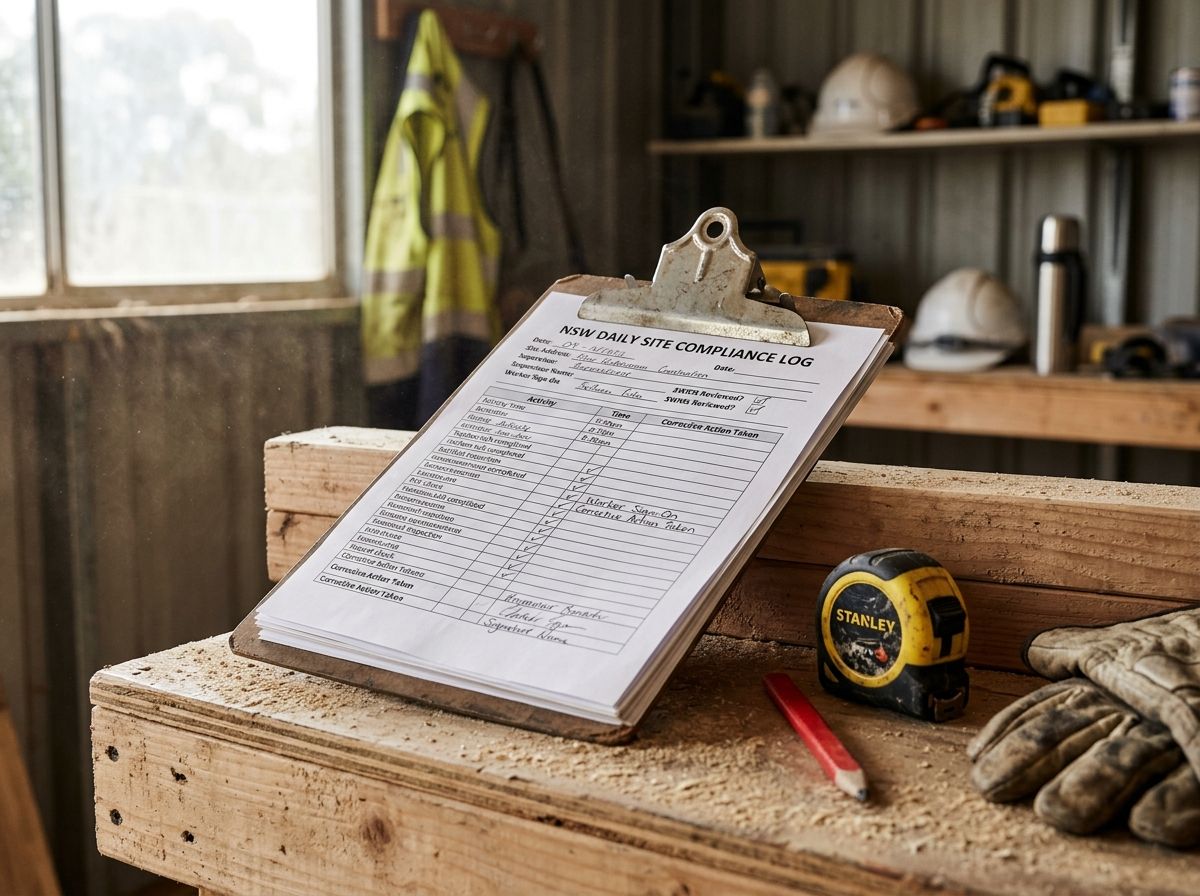
According to Service NSW, a qualified supervisor is responsible for all work carried out under their supervision. That responsibility is not informal — it is the legal basis on which the work is authorised. Without a QSC holder nominated on the contractor licence, the work cannot proceed under that licence in the way the law requires.
Importantly, a qualified supervisor must be an employee of the licence holder, a member of the partnership, or a director of the company holding the contractor licence. The QSC is an individual credential — it attaches to a person, not a business — but it must be exercised within an appropriate employment or ownership relationship.
The QSC framework sits under the Home Building Act 1989 (NSW) and the Home Building Regulation 2014 (NSW), with Building Commission NSW as the administering agency. Applications are lodged through Service NSW. The certificate can be issued for 1, 3 or 5 years.
What the QSC does not authorise is equally important. A qualified supervisor certificate allows the holder to do the work described on the certificate and to supervise that work. It does not allow the holder to contract or advertise for work independently — that requires a contractor licence. Understanding the distinction matters when you are planning your pathway.
The Salary Gap You're Funding for Someone Else
The financial cost of the credential gap is real. Market data suggests that site supervisor roles in Australia attract materially higher remuneration than unlicensed leading hand or foreman positions performing similar functions. A 2026 industry guide aggregating data from SEEK, Indeed and Glassdoor reports indicative site supervisor salary benchmarks of approximately $100,000–$120,000 at the lower end, rising to $145,000–$160,000 or more for experienced supervisors on Tier 1 contractor projects in Sydney.
The same guide reports salary bands by experience level: entry-level supervisors (0–3 years) in the range of $85,000–$100,000; mid-career (4–9 years) $110,000–$135,000; and senior supervisors (10+ years) $135,000–$160,000 or more. These are indicative market averages drawn from job-advertising data and vary by location, project tier, and individual circumstances. They do not represent a guaranteed outcome.
What the data does not capture — because it is difficult to measure — is the gap between what an unlicensed worker performing supervisor functions earns and what a licensed supervisor in the same role earns. That gap exists. You make the decisions. Someone else signs off. Someone else gets paid for it.
For indicative salary benchmarks for site supervisor roles across Australia, including experience-band breakdowns, see the
What NSW Requires to Get the Qualified Supervisor Certificate
To be eligible for a Qualified Supervisor Certificate in NSW, applicants must meet a number of requirements. According to the Australian Business Licence and Information Service (ABLIS), these include being at least 18 years of age, being considered a fit and proper person, not being disqualified from holding an authority, and having the qualifications and practical experience specified by the Authority for the relevant licence class.
Additional eligibility factors include not being subject to an unsatisfied Tribunal order, not holding a currently suspended authority, and not having an unreasonable number of complaints, penalties, cautions or insurance claims against you. Applicants must also not be an apprentice or trainee.
The specific qualifications required vary by licence class. Service NSW states that applicants must hold the qualifications specified for the licence class they are applying for, and directs applicants to the categories and classes of building and trade work for the current list. The qualification requirement is not uniform — it depends on the specific category of work covered by the certificate you are seeking.
For building and specialist categories, the Certificate IV in Building and Construction (CPC40120) is the qualification most commonly associated with the supervisor licence NSW pathway. Multiple registered training organisations in NSW describe their CPC40120 programmes as designed to meet the qualification requirements for NSW building licensing. However, NSW Fair Trading and Building Commission NSW apply additional criteria beyond the qualification itself — holding the qualification is a necessary but not sufficient condition for the QSC.
Applicants must apply in person at a Service NSW Centre. Required documents include proof of identity, one recent passport-sized photo, a current National Police Check no older than four months from submission, the original copy of your qualifications, a completed application form, and — for building and specialist categories — details of your employment and experience. A referees' statement form may be required depending on the category of work. A fee applies; current fee amounts are published on the NSW Government fees page and should be confirmed before you apply.
The full application requirements for a qualified supervisor certificate in NSW are published by
Why Experienced Supervisors Shouldn't Have to Start From Scratch
You have the experience. The question is whether it has been formally assessed.
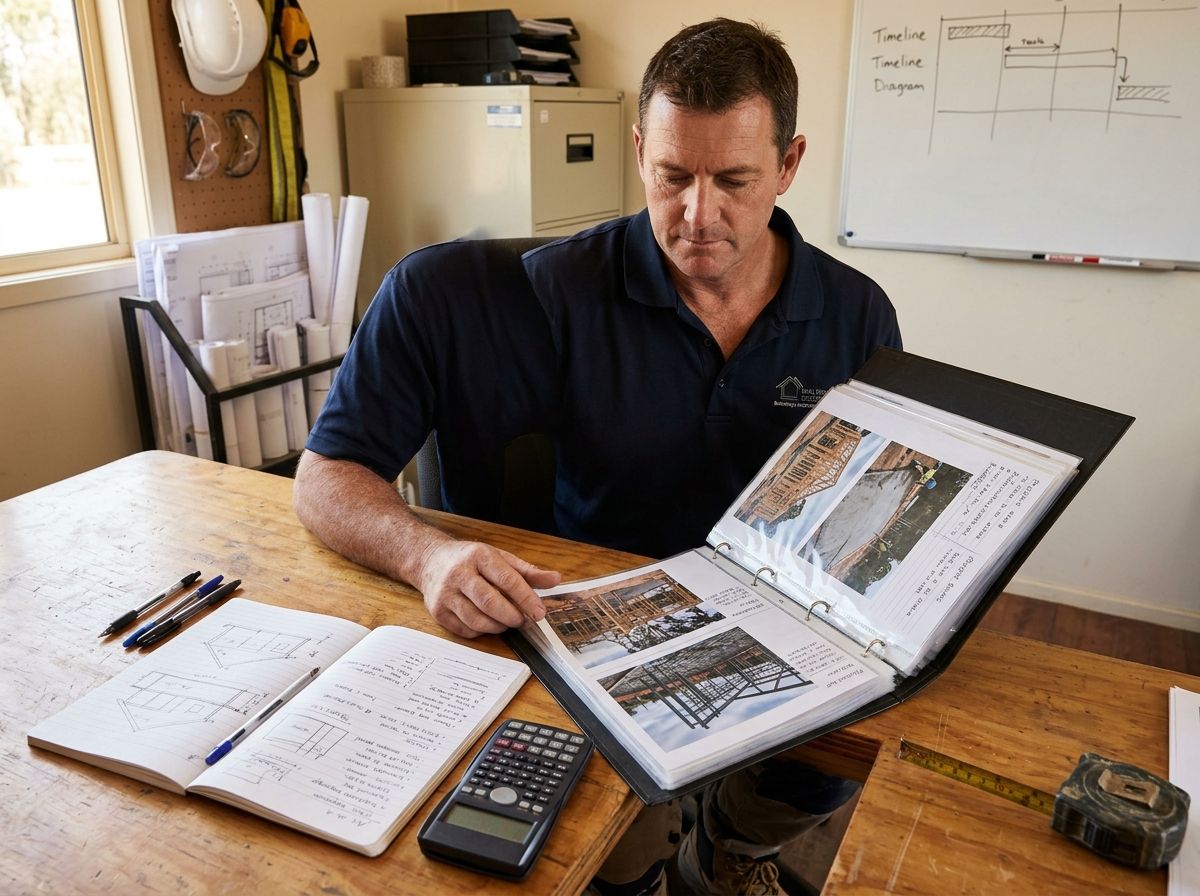
Recognition of Prior Learning — RPL — is a formal assessment pathway within the Australian Qualifications Framework. It allows an assessor from a registered training organisation (RTO) to evaluate your existing knowledge and skills against the units of competency in a nationally recognised qualification. If your experience demonstrates the required competencies, you can be awarded the qualification — or individual units — without repeating learning you have already done.
For the Certificate IV in Building and Construction (CPC40120), the qualification covers 19 units of competency: 11 core units and 8 elective units. The elective units you need depend on whether you are pursuing the Builder or Site Manager occupational outcome — and the specific electives required for NSW licensing purposes are a consideration when selecting your pathway.
The CPC40120 qualification itself has no formal entry requirements at the qualification level. RTOs may set their own RPL entry requirements. As an example, one RTO delivering CPC40120 via RPL lists entry requirements of three to four years of demonstrated experience in a building or construction role and a minimum of two work referrals from qualified builders. Another describes an indicative RPL duration of two to eight weeks, dependent on experience and knowledge — though actual timeframes depend on the evidence you provide, any gap training required, and the RTO's assessment process.
RPL is not a shortcut. It is a rigorous assessment of what you already know and can do. If gaps are identified during assessment — areas where your experience does not yet meet the competency standard — gap training is provided. The qualification issued at the end of the process is nationally recognised because the assessment is genuine.
Your experience is real. RPL helps you demonstrate it. The qualification is the result of that assessment — and it is the same nationally recognised qualification whether obtained through RPL or traditional study.
Warning Signs You're Already Past the Breaking Point
The gap between what you do on site and what you are legally permitted to do is not always visible — until it becomes urgent. These are the warning signs that the situation has become critical.
- Your employer has told you they need a licensed supervisor on the next contract — and you are not one.
- You have been asked to sign off on work you are not legally authorised to sign.
- A competitor has won a tender you could not bid for because the principal contractor required a nominated qualified supervisor.
- A colleague performing similar functions has been subject to regulatory action for unlicensed supervision.
- Your employer's contractor licence is at risk because the nominated qualified supervisor has left and no replacement has been found.
- You are being paid as a leading hand or foreman while performing the functions of a licensed supervisor — and the gap is widening.
- You have received a notice or inquiry from a regulator about your role on a project.
NSW Fair Trading — and Building Commission NSW as the administering agency — can take disciplinary action against authority holders and, under some laws, against directors and supervisors of businesses. According to NSW Fair Trading's published guidelines, disciplinary action may include a caution or reprimand, a monetary penalty, conditions on an authority, suspension or cancellation of an authority, and disqualification from involvement in the management of a business requiring an authority. Disciplinary actions may also be published on public registers.
NSW Fair Trading states that the purpose of disciplinary action is to protect the public and the industry rather than to punish, and that it prioritises the most serious financial, safety and other harms to the public. A Notice to show cause may be issued before action is taken, giving the authority holder an opportunity to respond. In some circumstances, an immediate suspension may be put in place when a Notice to show cause is issued.
If you recognise yourself in any of the warning signs above, the credential gap is no longer a background concern. It is a present risk.
NSW Fair Trading's published guidelines on how it approaches disciplinary action are available on the
The Pathway From Experience to Qualified Supervisor Certificate
The pathway has two distinct stages. The first is the qualification. The second is the licence application. Both are necessary. Neither can substitute for the other.
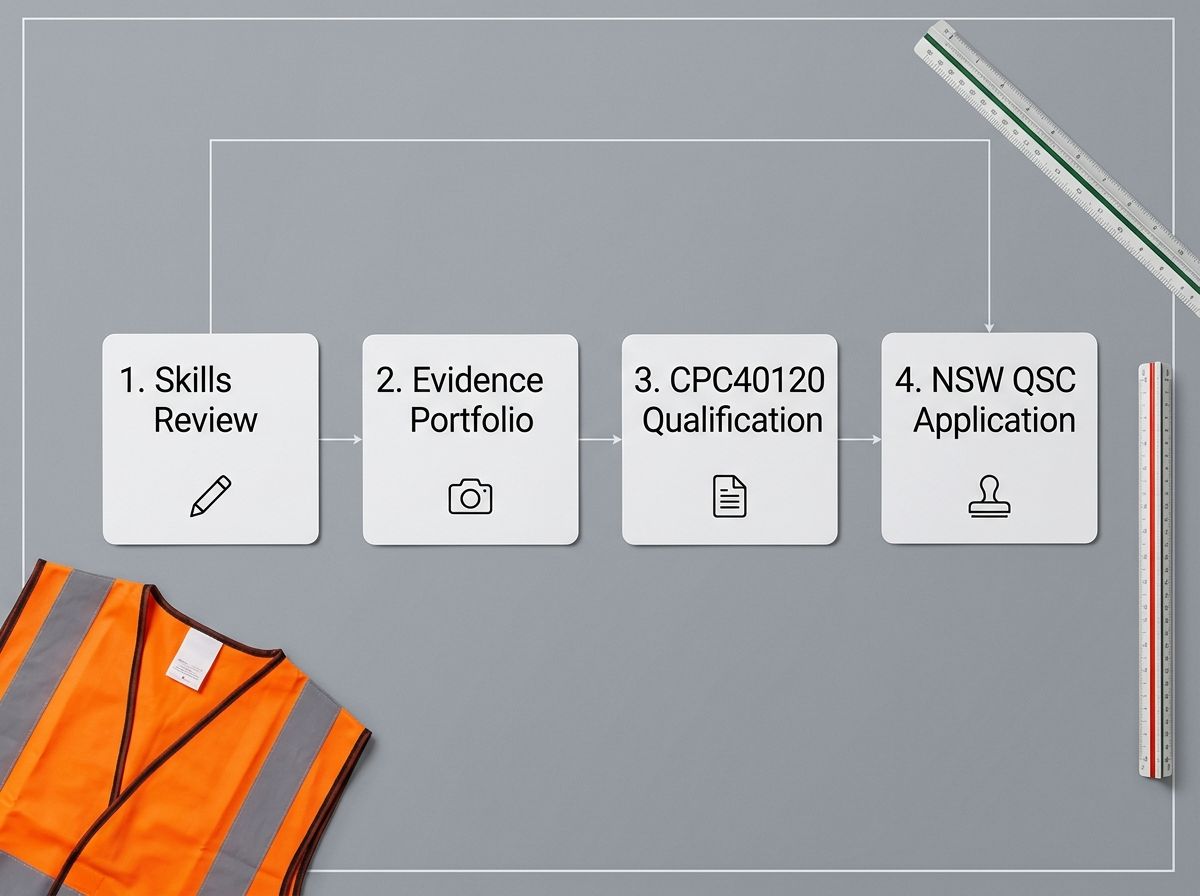
Stage one: the qualification. If you do not currently hold the Certificate IV in Building and Construction (CPC40120), RPL is the mechanism for experienced construction workers to have their existing competency formally assessed. RPL it guides candidates through the process — from an initial skills review to evidence gathering, assessor engagement, and qualification outcome. The assessment is conducted by a qualified assessor from a registered training organisation. RPL it does not assess or award qualifications; RTOs do. If gaps are identified, gap training is provided.
Stage two: the QSC application. Once you hold the relevant qualification, you can apply for the Qualified Supervisor Certificate through Service NSW. The application must be lodged in person at a Service NSW Centre. You will need your qualification documents, proof of identity, a current National Police Check, a completed application form, and — for building and specialist categories — details of your employment and experience. A fee applies; check the current fee on the NSW Government fees page before you apply.
Processing begins once the application, supporting documents and fee payment are received. Processing times can change, and if further information is requested, the processing time will increase. Applications can be refused, and if refused, the applicant is advised in writing of the reasons and internal review options.
It is an offence to make a false statement or leave out information when applying for a licence or certificate. A licence issued on misleading grounds may be cancelled and the applicant may be prosecuted.
The decision is yours. But the pathway is clear: qualification first, then application. Your experience is the foundation. The RPL process is how it gets formally assessed. The QSC is what Building Commission NSW issues when the application is approved.
The NSW Government's step-by-step guide to applying for a trade or building licence or certificate is available at
Start With a Free Skills Review — No Commitment Required
The first step does not require a decision. It requires an honest conversation about whether your experience is likely to support RPL for the Certificate IV in Building and Construction.
RPL it's Free Skills Review is exactly that — a no-cost, no-obligation look at your background against the requirements of the qualification. We would rather point someone toward the right pathway than enrol them in the wrong one. If RPL is not the right fit for your situation, we will tell you. If it is, we will explain what the process involves and what to expect.
Your skills speak. We help them be heard.
Ready to Get Recognised?
Start with a free skills review to find out if RPL is right for you.