The Real Cost of a Missing Diploma for Hospitality Managers
Passed over for senior hospitality roles? A missing SIT50422 Diploma could cost you thousands. Here is the realistic breakdown of the salary gap.

The Area Manager role went to someone else again
You know the scenario. A senior role opens up: Area Manager, Operations Manager, or Regional F&B lead. You have been doing the work informally for months, perhaps years. You know the venues, the teams, and the numbers. Then the role goes to an external hire. Someone who has a Diploma.
This is not a skills gap. It is a paper gap, and it has a real dollar value attached to it.
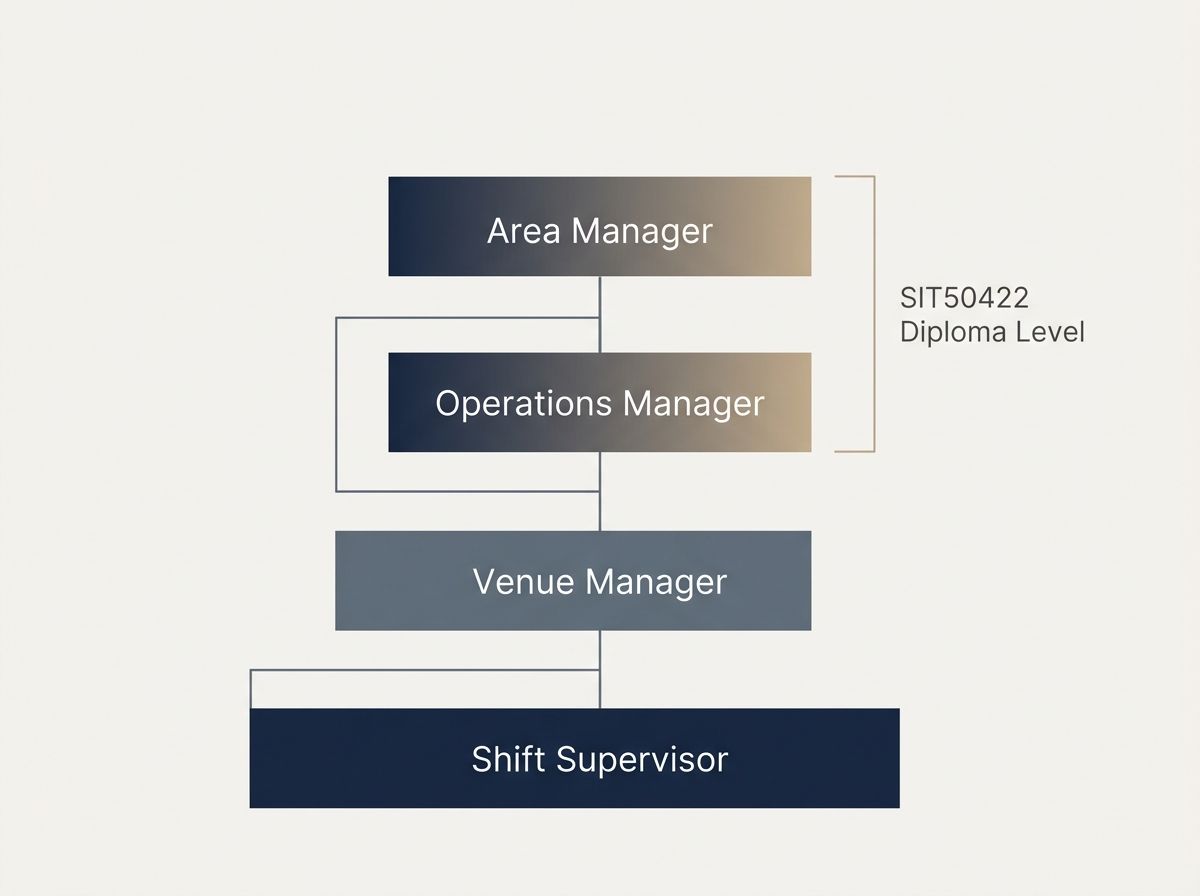
For experienced hospitality professionals, such as shift supervisors, venue managers, and senior coordinators, the SIT50422 Diploma of Hospitality Management is the credential that separates your current duties from the title and salary that should go with them. Without it, the system does not recognize your capability. It sees an unchecked box.
That frustration is real, and it is worth addressing directly before looking at how to resolve it.
What the Diploma unlocks, and what it costs you to go without it
The SIT50422 Diploma of Hospitality Management is a nationally recognised qualification. Training providers describe it as reflecting the role of senior operators who combine broad hospitality skills with managerial knowledge to coordinate hospitality operations. It sits at a middle management level. It is the qualification designed for professionals who lead teams, manage departments, and run venues.
According to SEEK Career Advice, advertised salaries for Venue Manager roles in Australia range from $85,000 to $100,000 nationally. Within the hospitality and tourism industry specifically, the average advertised salary is lower, sitting at around $75,915. SEEK notes that its figures are drawn from employer-disclosed salary ranges in job ads from the previous three months, and that some figures include superannuation while others do not.
SEEK's salary data for Venue Manager roles in Australia shows an indicative advertised range of $85,000 to $100,000, with the hospitality and tourism industry average sitting lower at around $75,915.
For comparison, Indeed data cited by Axis Institute puts the average annual salary for a Food and Beverage Manager at $69,592 and a Restaurant Manager at $66,530. These figures come from a secondary source and should be treated as indicative only, but they show the salary band that experienced hospitality professionals often find themselves in without a formal management qualification.
The reality is that the salary difference between a senior coordinator or F&B manager role and a venue or operations management role is substantial. The exact gap varies by employer, state, and role level. The research for this article did not find a single verified figure that confirms the "$20,000 a year" figure that circulates in industry conversations. What the evidence does show is a clear salary band difference between management-level and coordinator-level roles in Australian hospitality. That gap is real, even if the precise number depends on your specific context.
The SIT50422 Diploma is the qualification that training providers and government careers guidance associate with roles including restaurant manager, cafe manager, front office manager, bar manager, club manager, motel manager, and catering operations manager. According to the WA Government's Jobs and Skills WA, senior hospitality roles such as club manager, bar manager, and holiday park and resort manager are considered suitable for those with a Certificate IV, Diploma, or Advanced Diploma of Hospitality Management.
The WA Government's Jobs and Skills WA careers guidance lists a Diploma of Hospitality Management as one of the accepted qualifications for senior venue roles including club manager and bar manager.
The compounding cost of waiting another year
The salary gap is not a one-time loss. It compounds over time.
If the difference between your current role and the management role you are qualified for in practice is $15,000 a year, which is a conservative estimate based on the salary bands above, that equals $45,000 over three years. Over five years, it is $75,000. That is a substantial amount of foregone income for work you are already performing.
The cost is also structural. It shows in every performance review where your experience fails to translate into a title. It appears when a less experienced hire steps into a role you have been covering, or when your application stalls at the qualification checkbox. These are the compounding costs of the paper gap, and they do not get smaller by waiting.
The internal monologue is familiar: "I have been doing this work for over a decade. I know more than most people with the qualification. But every time I apply for the next level, the first question is about my certificate." That is not imposter syndrome. It is a structural reality, and there is a direct way to address it.
Why HR filters applications, and why it is not about your capability
Understanding why the Diploma functions as a hiring benchmark helps to reframe the frustration.
HR departments in hospitality groups use formal qualifications as a risk-mitigation signal, not as a direct capability assessment. A qualification like the SIT50422 Diploma tells a hiring manager that a candidate has been formally assessed against national competency standards. It acts as a proxy for accountability and a shorthand indicating that your skills have been independently verified. It is not an assessment of whether you can do the daily job, but it is the standard they use to verify it.
The system is not questioning your capability. It is requiring a specific form of evidence. That distinction is important because it means the problem is solvable.
The senior hospitality roles that government careers guidance associates with Diploma-level qualifications involve duties that experienced operators already perform. These tasks include staff rostering, leading and supervising teams, overseeing safety and security, managing financial reconciliations, handling stock control and liquor purchasing, and maintaining compliance with legal requirements. These are not theoretical competencies. They are the daily responsibilities of experienced venue managers and senior coordinators.
The gap is not between what you do and what the qualification covers. It is between what you do on shift and what has been formally documented and assessed.
Your experience exists, but it needs to be presented as evidence
The SIT50422 Diploma of Hospitality Management can be assessed through Recognition of Prior Learning (RPL). This means experienced hospitality professionals do not need to re-learn what they already know. Instead, they need to document and present their existing experience as evidence against the units of competency.
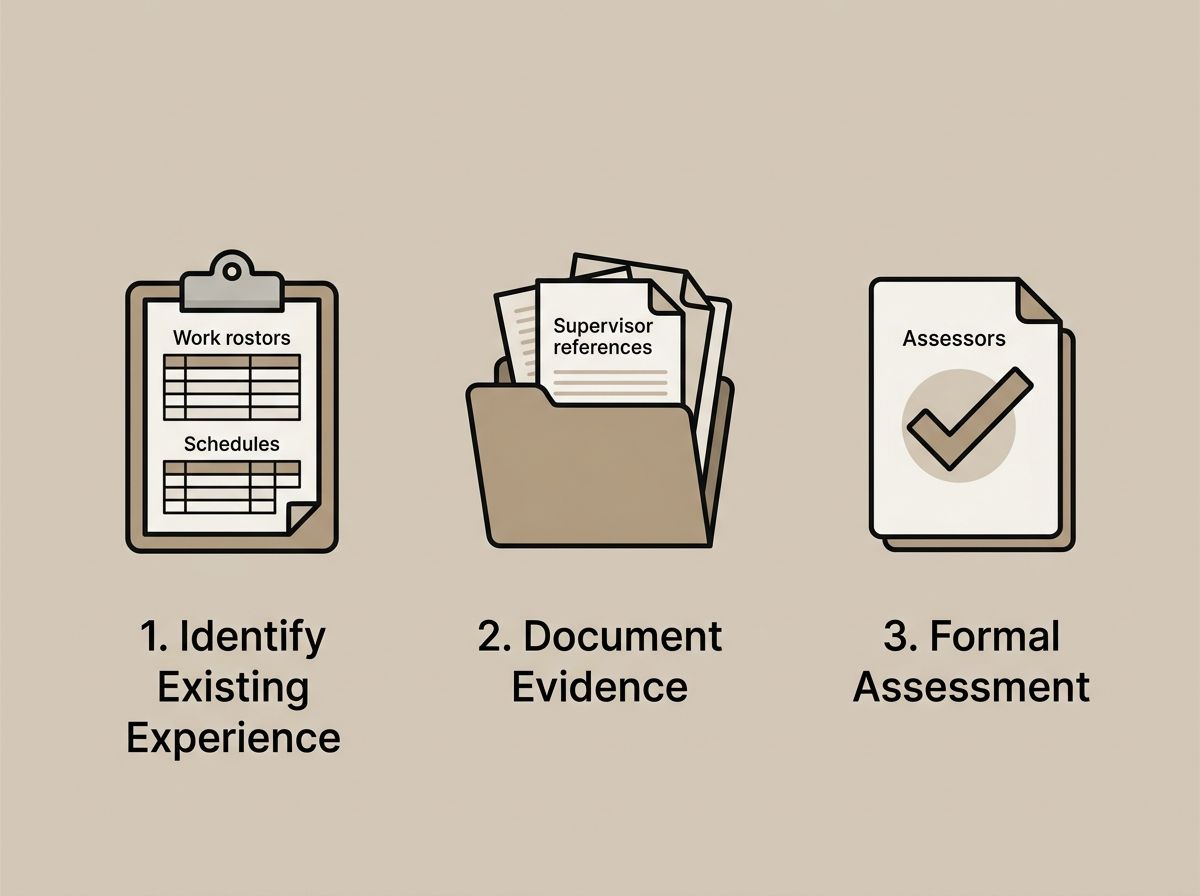
RPL is an assessment process that evaluates your relevant prior learning and experience, which can include formal training, work experience, and informal learning, to determine whether you meet the requirements of a qualification. It is a rigorous, assessor-led process. It is not a shortcut.
For SIT50422, the types of evidence that RTOs typically consider include work records and employment history, employer or supervisor references, portfolios of work such as rosters, financial reports, or operational plans, and third-party reports from colleagues or clients. Specific evidence requirements vary by RTO and assessor. What counts as sufficient, current, and authentic evidence is determined by the assessing organisation, not by a universal checklist.
One RTO, Swiss Institute Australia, lists an indicative RPL timeframe of 8 to 16 weeks for SIT50422. Page Institute notes that exact timeframes are difficult to provide and that course completion, which may combine RPL with some face-to-face training, can range from 6 to 18 months. These are indicative ranges from individual providers, not national standards or guarantees.
Swiss Institute Australia lists an indicative RPL timeframe of 8 to 16 weeks for SIT50422, with outcomes subject to the quality and relevance of evidence provided.
It is also important to be realistic: if an assessor identifies gaps between your experience and the qualification's requirements, gap training may be required. This is not a failure. It is part of a rigorous assessment. A genuine RPL process is designed to recognise what you know and identify what, if anything, still needs to be addressed. That rigor is what makes the resulting qualification nationally recognised and credible to employers.
It is about recognition, not repetition. You have already done the work. The process is simply about presenting it correctly.
What happens when you stop waiting
Experienced hospitality professionals who pursue the SIT50422 Diploma through RPL do not go back to school. They go through a guided process of documenting what they already know, such as rosters they have built, teams they have led, venues they have managed, and compliance obligations they have met. That documentation becomes evidence. That evidence is assessed, and if competency is demonstrated, the qualification is issued.
Completing the qualification does not guarantee a promotion, a salary increase, or a specific employment outcome. Requirements vary by employer, role, and location. What it does is remove the paper gap, which is often the single obstacle filtering you out of hiring discussions you should already be part of.
Your skills are there. The question is whether the system is set up to recognise them without the certificate.
The first step is finding out whether your experience maps to the SIT50422 Diploma before you commit to anything. That is what the Free Skills Review is designed for.
Ready to Get Recognised?
Start with a free skills review to find out if RPL is right for you.