The invisible ceiling holding back experienced chefs
You run the kitchen, but the pay grade says otherwise. Learn why the credential ceiling holds experienced chefs back and how to break the cycle.

You run the kitchen, but the new hire has the certificate
Imagine this. You have worked in commercial kitchens for over a decade. You can handle service for 300 covers calmly. You manage the brigade, control food costs, design the menu, and train the junior cooks who join each season. By any practical measure, you are the kitchen manager, regardless of your official title.
Then a kitchen manager role opens up. It is the job you have done informally for years. You apply, but the position goes to someone with three years of cooking experience who holds a Certificate IV in Kitchen Management and receives the salary to match.
This is not your imagination, nor is it a reflection of your ability. You are missed because your qualifications are not in the format employers look for.
This is a common issue in commercial kitchens across Australia. It is a structured barrier with a specific name.
The credential ceiling
The credential ceiling does not measure your skill. It reflects a formal system that demands proof of competency in a specific format. On-the-job experience, regardless of its depth or duration, does not automatically meet this administrative requirement.
Experienced chefs often go through a predictable cycle. They build real mastery, only to hit a pay or promotion barrier. They watch less-experienced peers with qualifications move ahead, and the cycle repeats at the next venue, during the next review, or in the next job application.
The Hospitality Industry (General) Award sets minimum pay rates by classification level rather than years of experience alone. Kitchen manager and head chef classifications have higher pay bands. In practice, employers use formal qualifications as a screening tool for these positions when hiring. The qualification becomes the filter, even when you already have the capability.
This issue is not limited to hospitality. It occurs in many sectors where experienced professionals find that hiring and payroll systems do not recognize uncertified expertise.
Stage 1: The mastery phase
The first stage of this cycle often feels the most frustrating because it occurs when your capability in the kitchen is completely established.
You can anticipate how a service will run before it even begins. You know which section might fall behind, which cook needs support, and how to manage the pass to keep the kitchen moving. You have built strong relationships with suppliers, managed inventory cycles, and kept food costs under control. You have also trained junior cooks who now run their own kitchens.
The Certificate IV in Kitchen Management (SIT40521) is a national qualification that covers these exact areas: managing kitchen operations, leading teams, controlling costs, planning menus, and maintaining safety compliance. It consists of 33 units of competency, including core modules in food safety supervision, kitchen management, and financial control.
For an experienced chef, these skills are not theoretical. They represent the daily responsibilities of running a commercial kitchen. Your practical knowledge is real, but it is not in the format required for formal recognition.
Stage 2: The barrier to career progression
The second stage occurs when a promotion, a better-paying role at a new venue, or a kitchen manager position in an expanding restaurant group becomes available.
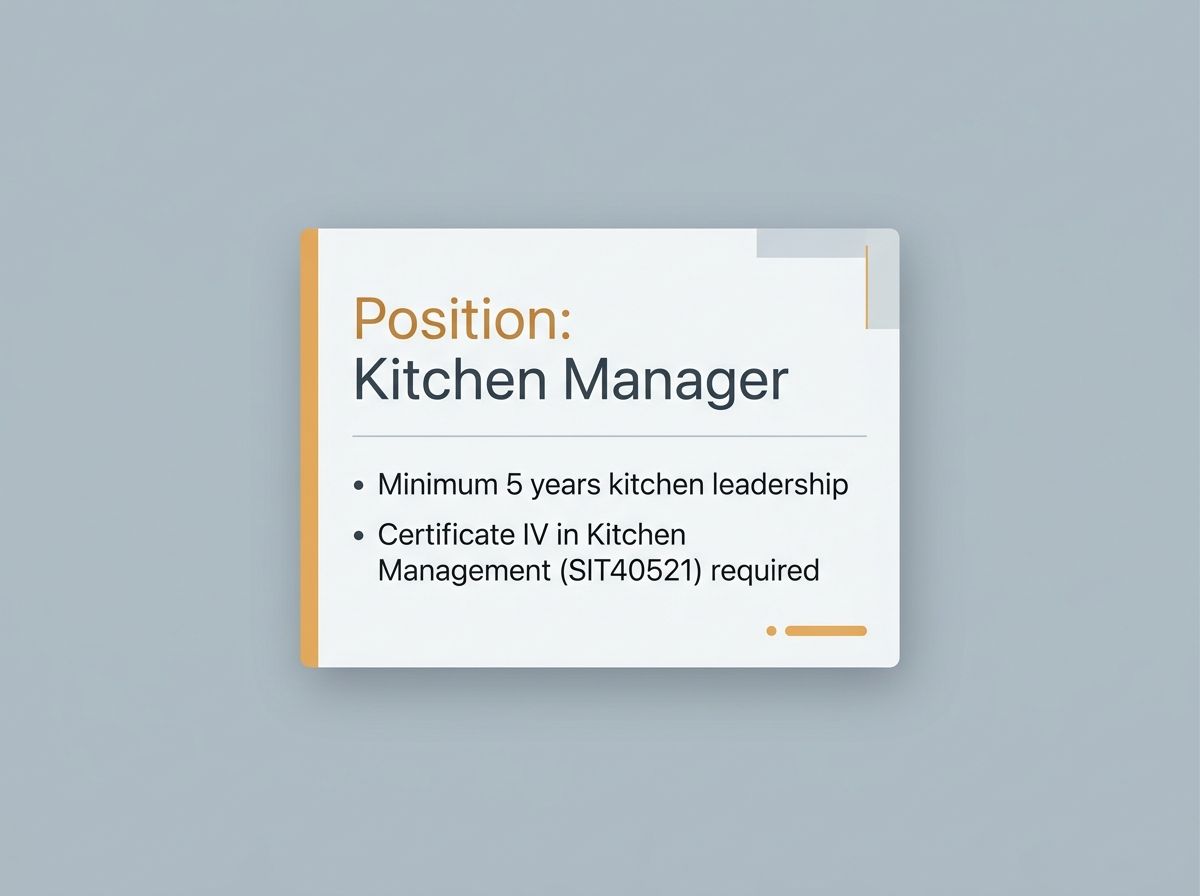
In these situations, the initial screening process usually focuses on formal qualifications.
Kitchen manager positions in Australia often list a Certificate IV in Kitchen Management as a mandatory requirement or a strong preference. The qualification shows employers that your skills meet national standards and have been verified rather than simply claimed. For human resources departments and hospitality groups managing risk across multiple venues, this formal verification is a key requirement.
This leads to a frustrating situation where you are assessed on paper rather than on your actual performance in the kitchen. Employers are not questioning your ability, but they require your credentials to be presented in a specific format.
You may have managed a 300-cover service on a busy Saturday, yet the role goes to a candidate with a certificate and much less experience. While this feels unfair, it is a structural issue with the hiring process rather than a personal slight.
Stage 3: Why the cycle repeats
Over time, this cycle becomes exhausting. A chef might move to a new venue, only for the same issue to emerge. They attempt to negotiate a higher wage, but the lack of formal qualifications limits their options. When they apply for senior roles within larger hospitality groups, the credential requirement arises again.
The cycle continues because the underlying issue remains unaddressed. As the chef gains more experience, the gap in formal qualifications remains. During every promotion cycle, wage negotiation, or job application, the same barrier appears.
Without formal qualifications, your experience is difficult for automated hiring and payroll systems to evaluate. This is a matter of administrative format rather than a reflection of your hard work or ability.
The Jobs and Skills Australia occupational profile for chefs highlights persistent recruitment challenges in the sector, showing that the demand for skilled kitchen staff is high. However, employers specifically seek qualified professionals, which drives the hiring decisions that affect your career progression.
How can you break this cycle?
Translating your kitchen experience into formal qualifications
The core issue is the format of your evidence rather than your actual capability. The solution does not require you to study what you already know, but to present your current skills in a way that formal assessment systems can recognize.
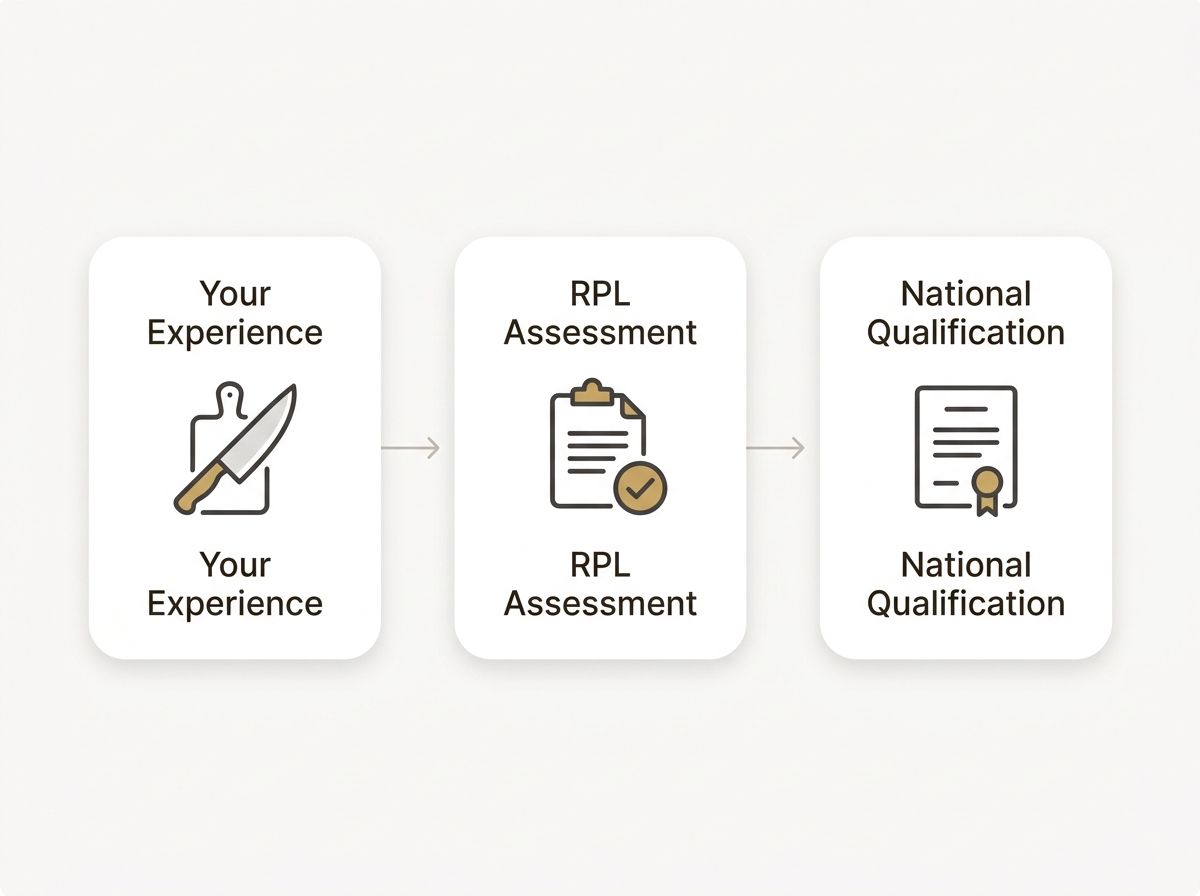
Recognition of Prior Learning (RPL) is an assessment pathway that evaluates your current skills against national qualification standards. One Registered Training Organisation (RTO) describes it as a process that assesses skills and knowledge gained through work and life experience against formal qualification requirements.
For experienced chefs, seeking RPL for the Certificate IV in Kitchen Management (SIT40521) allows you to have your management skills formally assessed. You do not need to repeat training for skills you use daily; instead, you provide evidence that you already possess them.
This qualification is nationally recognized and applies to cooks and chefs working in supervisory or leadership roles. For experienced professionals operating at this level, RPL is a practical method to convert your existing expertise into a standard qualification that employers recognize.
Read more about the Certificate IV in Kitchen Management (SIT40521) and the RPL process for experienced chefs.
Your hands-on experience is valid evidence, provided it is structured to meet formal assessment guidelines.
The assessment process: RPL is not a shortcut
It is important to understand that RPL is a formal evaluation process rather than a way to bypass assessment. Your existing skills are measured against national standards, which ensures the integrity and value of the qualification you receive.
For the SIT40521 qualification at one RTO, the assessment relies on a portfolio of evidence supported by a professional interview with technical questions. As the applicant, you are responsible for gathering and submitting documented proof of your current skills.
If your portfolio and interview do not fully demonstrate competency in a specific area, the training provider may require a practical challenge test to verify your skills.
Assessment methods for kitchen management qualifications vary. They can include written assignments, practical cooking tasks, scenarios, case studies, logbooks, portfolios, projects, or work journals, depending on what the assessor requires to confirm your competence.
You may also need gap training. If an assessor finds that you cannot yet demonstrate competency in a specific unit, you must complete targeted training before that unit can be approved. This ensures the qualification remains robust and respected.
A qualified assessor from an RTO conducts the evaluation. While RPL it assists you throughout the process by helping you organize and present your evidence, the final assessment and the qualification are issued directly by the partner RTO.
RPL processes and requirements differ among training providers, as each RTO has its own standards for acceptable evidence. Receiving clear, honest advice about your eligibility before you enrol is essential for a successful outcome.
Ensuring your practical experience is recognized
You have already built the necessary skills and experience. Obtaining formal recognition is a practical next step.
The credential ceiling is a real barrier, but it is one you can bypass. Experienced chefs can access formal recognition by organizing their work history into structured evidence, breaking the cycle of being overlooked.
Taking this step can help align your qualifications with your daily responsibilities.
Ready to Get Recognised?
Start with a free skills review to find out if RPL is right for you.