SIS30321 Explained for Coaches Without a Certificate
Learn how the Certificate III in Fitness (SIS30321) works for informal coaches. Find out how your coaching experience translates into a formal qualification.
By RPL it Australia7 min read
What SIS30321 actually is
SIS30321 is the national code for the Certificate III in Fitness, which serves as the entry-level qualification for fitness instructors in Australia. If you have spent years coaching group sessions, instructing individual clients, or working on a gym floor, this qualification is the formal standard that matches the daily work you already perform.
This code sits within the national Sport, Fitness and Recreation Training Package. While it might look like bureaucratic shorthand, it represents a structured framework of the practical skills and knowledge a competent instructor must demonstrate. For many experienced coaches, these requirements map directly to the work they have been doing for years without formal certification.
You can see the full qualification details on the RPL it product page.
If you are searching for this specific code, you likely know the name of the qualification already. Your main question is whether your practical experience actually counts toward it. This guide is designed to help you answer that question directly.
What the qualification covers in practice
The SIS30321 qualification is built on a series of competency units, which are specific skill and knowledge areas defining what a qualified instructor can do. Each unit has an official code and title, but they describe practical tasks that experienced coaches perform every single week.
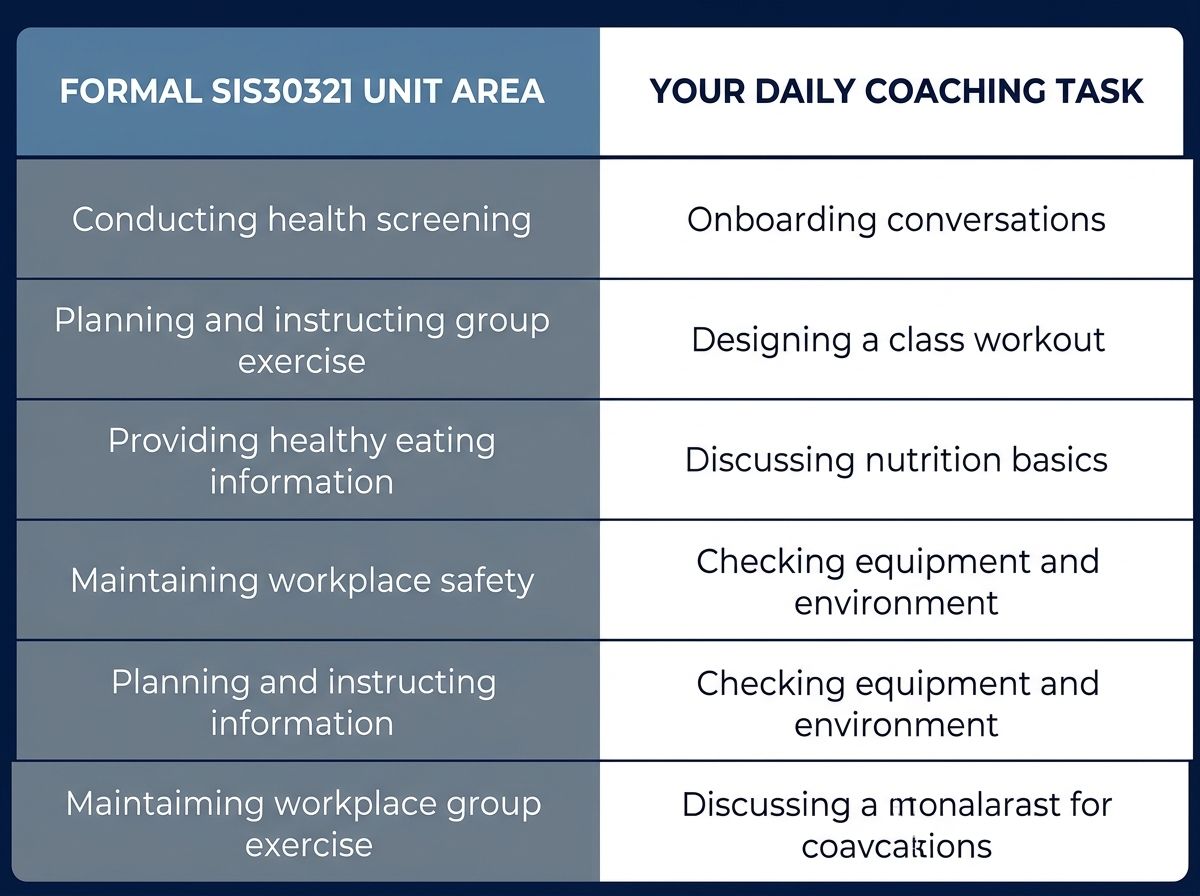
Here is how those units translate into daily coaching tasks, moving from formal terminology to practical workplace activities:
- Conducting health screening and fitness assessments: the intake conversation you have with new clients before designing their programs.
- Instructing group exercise sessions: leading classes, cueing movements, and managing client safety across different fitness levels.
- Designing and delivering individual fitness programs: creating tailored plans based on client goals, medical history, and physical capacity.
- Applying basic exercise science: understanding how the body adapts to training and how to safely progress loading over time.
- Maintaining a safe exercise environment: managing workplace risks, handling incidents, and knowing when to refer clients to medical professionals.
- Providing first aid: holding current first aid and CPR certificates, which are standard requirements across fitness qualifications.
- Communicating with clients and colleagues: maintaining professional standards, delivering feedback, and establishing clear professional boundaries.
The official unit titles are written in highly technical language, but the actual tasks are straightforward. If you have been coaching for any length of time, you will recognize these activities as your standard daily practice.
Note: The specific unit codes and titles for SIS30321 are published on training.gov.au, which serves as the authoritative source for official lists. While the descriptions above reflect the general skills required in a Certificate III in Fitness, you should verify the exact unit requirements with a registered training organisation before making decisions about your pathway.
Does your coaching work cover these standards?
The real question is not whether you can pass a written exam, but whether your regular coaching work demonstrates these practical skills.
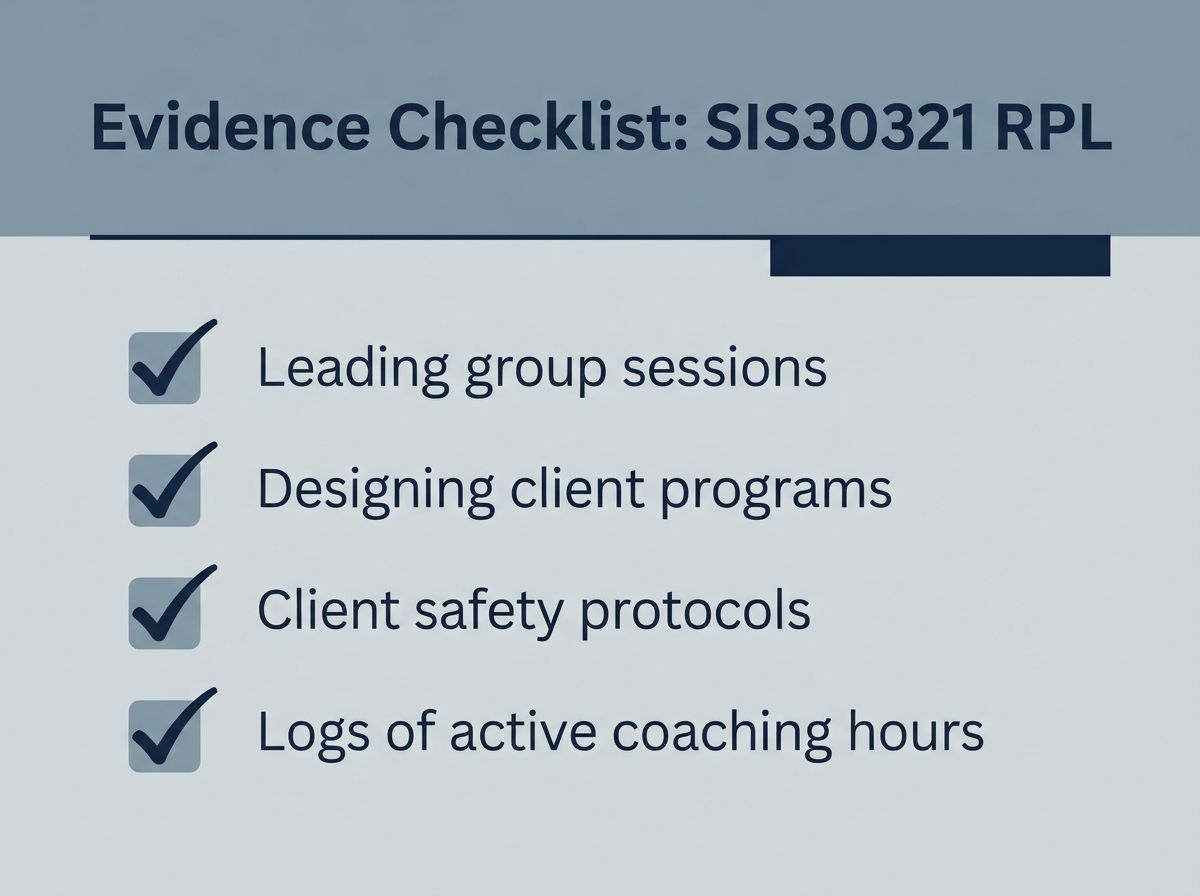
Recognition of Prior Learning (RPL) is the formal process used to assess this. It involves gathering evidence of your past work so an assessor from a registered training organisation can evaluate it against the qualification standards. This is not an academic examination; it is a review of your documented work history.
Several common coaching activities can serve as evidence for your SIS30321 RPL application:
- Leading group fitness classes, including boot camps, gym sessions, community sports, or school athletic programs.
- Instructing individual personal training clients, even if done informally or outside a formal business.
- Managing client intake processes, such as health history screenings, goal setting, and physical assessments.
- Designing training programs for clients, whether documented in a physical notebook or digital software.
- Teaching exercise techniques and cueing movement safely for clients with varying fitness levels.
- Holding a valid first aid or CPR certificate, which is a core requirement.
- Working inside a gym, recreation centre, or sports club in an instructional role.
- Collecting performance feedback from clients, employers, or club committee members.
If you routinely perform these tasks, your experience likely covers a substantial portion of SIS30321. While this is not an automatic guarantee of success, it provides a strong foundation for an assessment.
There are also practical limits to consider. Certain competency units require supervised practical demonstrations that can be difficult to prove through past work history alone. First aid is typically a strict, standalone requirement; if your certification has lapsed, you will need to update it regardless of your experience. A formal assessment will identify any gaps, and targeted training is usually available to help you bridge them.
The barrier between your practical skills and a formal qualification is rarely a lack of ability. Usually, it is simply a lack of documentation. The goal is to present your work history in a structured format that an assessor can easily verify.
Why get certified if you already know how to coach?
The Certificate III in Fitness does not measure how talented you are as a coach. Instead, it is a formal credential that translates your existing skills into a format recognized by external organizations.
Gyms, fitness studios, and sports clubs increasingly require formal qualifications for employment, liability insurance, and professional registration. This requirement is a matter of administrative compliance rather than a judgment of your skills. Insurers require verified credentials, employers must manage risk, and industry associations use qualifications to maintain standards.
Consequently, experienced instructors who lack SIS30321 can find themselves locked out of roles, facilities, or programs that they are fully capable of running. While the qualification does not change how you coach, it makes your existing experience visible to the entities that control access to these opportunities.
There is also long-term career progression to consider. The Certificate III in Fitness is the baseline qualification in the sector. The Certificate IV in Fitness, which covers advanced personal training, builds directly on this foundation. If you intend to advance your qualifications later, the Certificate III is the standard starting point.
How RPL works for SIS30321
Recognition of Prior Learning is a formal, nationally recognized assessment pathway under the Australian Qualifications Framework. It exists because the vocational education system acknowledges that professionals gain valuable skills outside classrooms through practical work, industry experience, and self-directed learning.
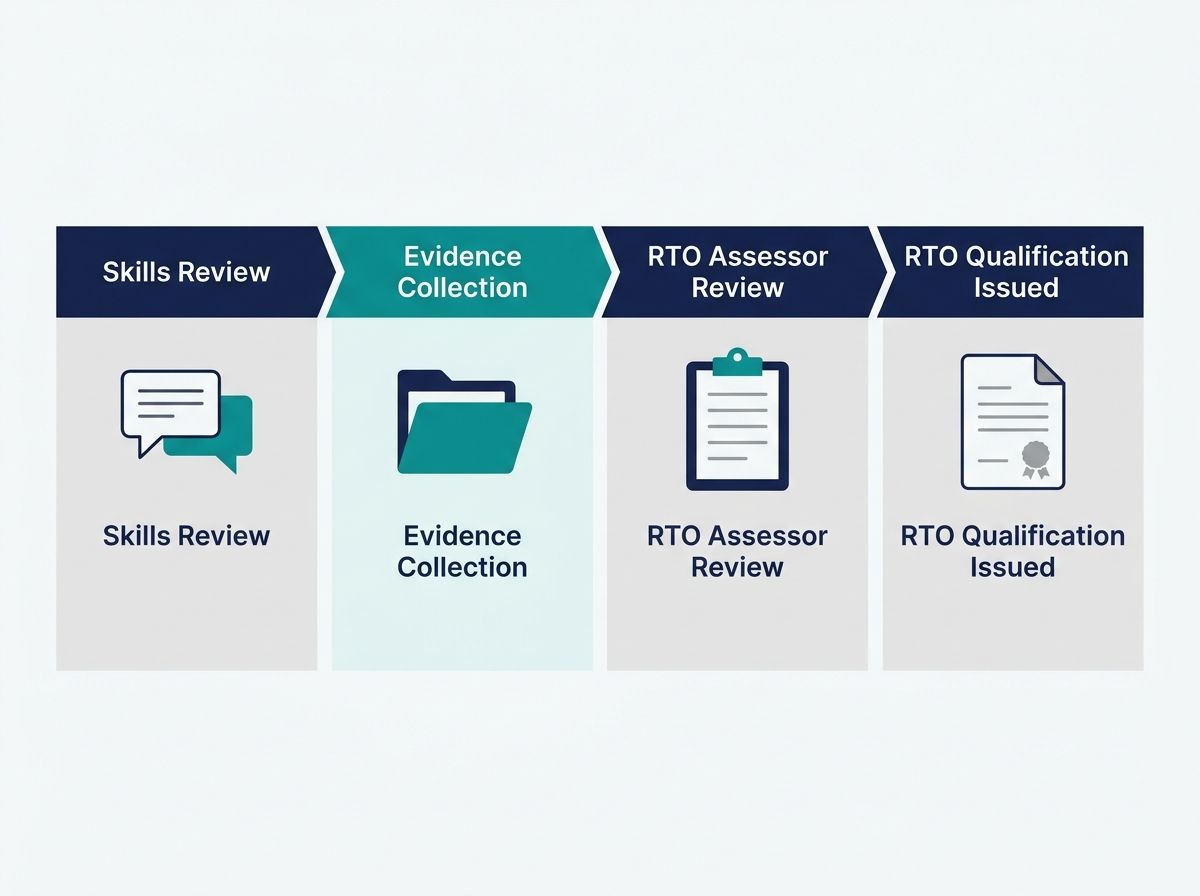
For this qualification, an assessor from a registered training organisation evaluates your evidence against national standards. This assessor is employed directly by the training provider, which is the body that issues the qualification. RPL it assists you in gathering and structuring your evidence so the assessor can review it efficiently.
The assessment process generally follows four stages:
- Initial skills review: a direct discussion of your background, experience, and potential evidence.
- Evidence collection: compiling records of your work, such as employment history, client logs, references, program examples, and certifications.
- Formal assessment: a qualified assessor from the training organization reviews your documentation against the SIS30321 standards.
- Final outcome: the assessor determines which requirements you have met and identifies any areas where you need further evidence.
If the assessor identifies any gaps, targeted training is typically available to resolve them. This is not a setback; it is a normal part of a rigorous assessment process. The qualification remains highly respected across the industry because the assessment standards are genuine.
RPL is not a shortcut or an easy option. It is a thorough assessment pathway designed for experienced professionals. The primary difference between RPL and traditional study is that RPL begins by acknowledging your existing competence, rather than assuming you need to start from scratch.
You can read more about the SIS30321 RPL pathway on our dedicated page.
Is your coaching experience sufficient?
Your eligibility for RPL depends on three core factors: depth, duration, and documentation.
Depth means your experience must cover the actual competency areas of SIS30321, rather than just a few isolated tasks. Duration is important because assessors look for consistent, sustained practice over time. Documentation is the main practical requirement: your skills must be verifiable through written records, references, program plans, or certificates.
Many coaching backgrounds align closely with the requirements of SIS30321. Others might have minor gaps, such as formal client screening files, written program designs, or lapsed first aid credentials. A structured review will show exactly where you stand.
A Free Skills Review is a straightforward way to start. It involves a discussion about your coaching history and the evidence you can provide, giving you a clear picture of your options before you commit time or money to any pathway.
You already have the practical coaching experience. The next step is organizing that background into a verifiable format. That is what our skills review is designed to help you achieve.
General information only, current at the date shown. Licensing rules change, so check the current requirements with the relevant regulator before you rely on them. RPL it Australia is a student support service, not a Registered Training Organisation; qualifications are assessed and issued by our partner RTOs.