Passed over for a promotion because of an HR checkbox? You are not alone
Experienced IT professionals often lose roles to candidates who simply hold the certificate. Learn what this costs your career and how RPL can resolve it.

The email that lands like a punch
You already knew before you opened it. The subject line was too neutral. The greeting too formal. And then there it was: the polite, carefully worded confirmation that the role had gone to someone else.
You know the person who got it. You have worked alongside them, or you have seen their LinkedIn profile, or someone in your network mentioned their name. They have fewer years in the industry than you do. Their production experience is thinner. Their technical depth is shallower. But they have the certificate. And in the moment that mattered, when an HR system or a hiring manager ran their checklist, that certificate was the only thing being counted.
Your decade of experience building systems, managing infrastructure, shipping code, or keeping networks running is invisible. Not because anyone assessed it and found it lacking, but because no one assessed it at all. The filter ran before a human ever read your name.
If you have been in this position, you know the particular frustration. It is not rage. It is something quieter and more corrosive: the feeling that the work you have done, the problems you have solved, and the expertise you have built over years simply do not count in the format the system requires.
You are not alone in this. This situation is structural, not personal.
Why the system works this way (even when it does not make sense)
HR departments are not, in most cases, assessing your competence. They are managing risk and processing volume. When a role attracts dozens or hundreds of applications, the first pass is rarely human. Automated screening tools filter applications against a set of criteria, and formal qualifications are among the easiest details to check. Either the box is ticked or it is not.
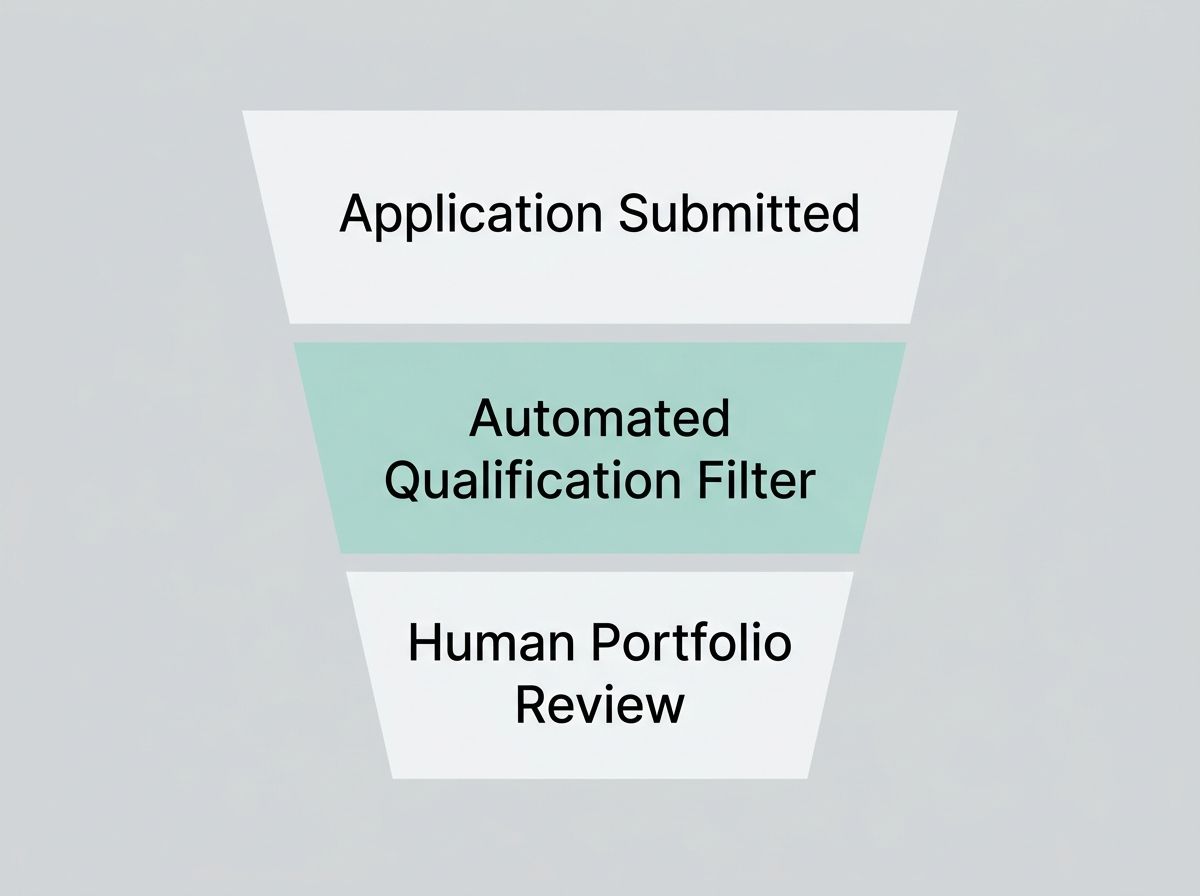
This is not a judgement of your ability. It is a compliance mechanism. The person who configured the filter might never have considered whether the qualification requirement was the right proxy for the competence they actually needed. It was simply in the position description, it went into the system, and the system ran.
Government and enterprise procurement adds another layer. Many ICT contracts and panel arrangements specify qualification requirements for contractor personnel. This is not because the client has assessed what qualifications predict performance, but because qualification requirements are auditable. They provide a defensible paper trail. When something goes wrong on a project, 'the contractor held a Diploma of IT' is a more useful line in a review than 'the contractor had twelve years of relevant experience.'
None of this makes the system right, but understanding how it works is the first step to navigating it. The qualification requirement is not a judgement of your competence. It is a checkbox in a process designed for volume and risk management, not for identifying the best candidate for the role.
The specific irony of IT
In most industries, the paper ceiling is frustrating. In IT, it is absurd.
Consider the senior developer who has spent a decade building and maintaining the cloud infrastructure that runs an organisation's core systems, only to be filtered out of a role by an ATS running on infrastructure they could configure in their sleep. Or the systems administrator who has kept enterprise networks running through incidents, migrations, and security events that would have broken a less experienced operator, yet cannot bid on a government contract because the tender specifies a formal ICT qualification they do not hold on paper.
The people most likely to be filtered out by these systems are often the ones who understand those systems best. They entered the industry through self-directed learning, on-the-job experience, mentorship, necessity, and genuine aptitude. They built their expertise in the real world, not in a classroom. Now, the formal world of HR checklists and procurement frameworks cannot see them.
This is not a niche problem. The IT industry in Australia has a long history of practitioners who built careers through experience rather than formal study. Many of the most capable people in the sector hold no formal qualification, or hold qualifications that do not match the specific credential a job advertisement requires. The credential gap is real, it is common, and it costs experienced IT professionals opportunities they have genuinely earned.
What this actually costs you (before you ask what RPL costs)
Before discussing the cost of addressing the qualification gap, it is worth naming the cost of leaving it in place.
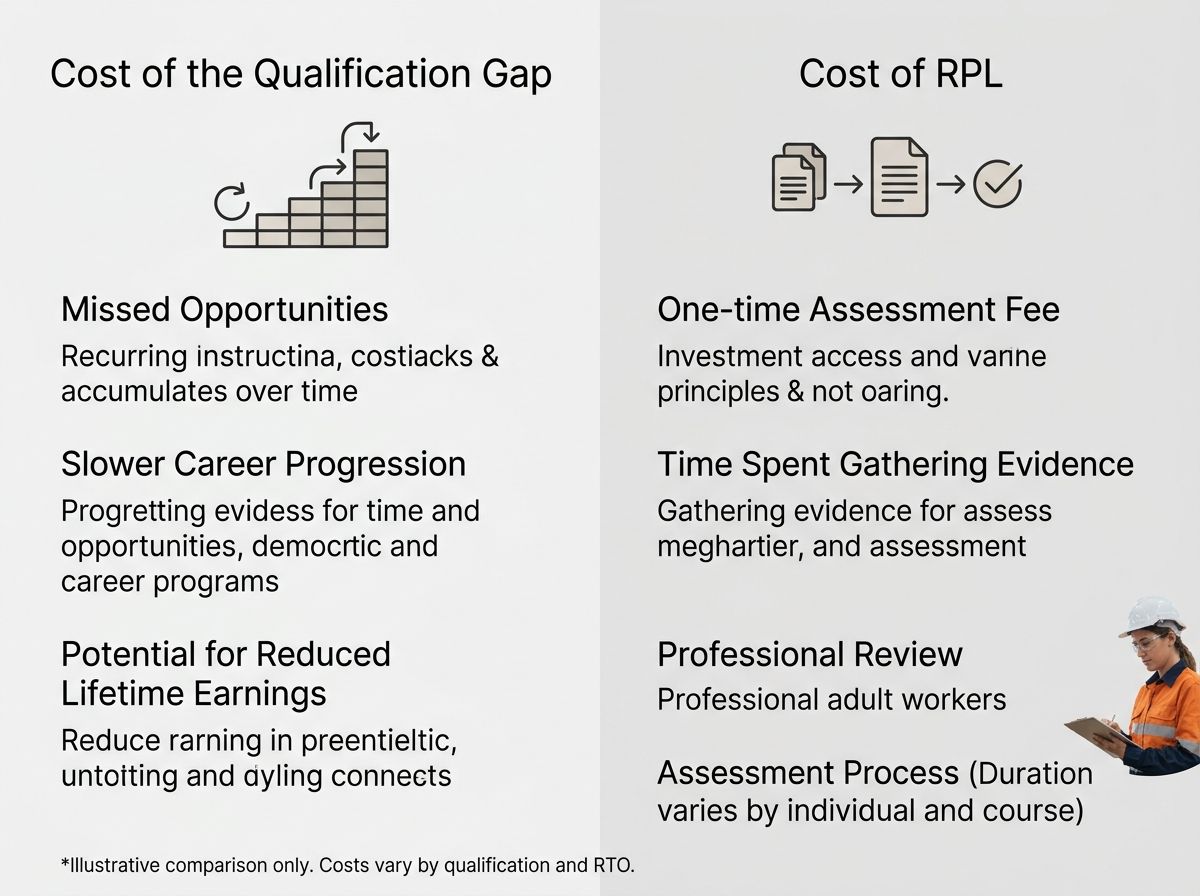
The most visible cost is the promotion or role you did not get. But the paper ceiling is not a single event; it operates as a recurring filter. Every time you apply for a senior role that lists a formal qualification as a requirement, the filter runs. Every time a government or enterprise contract specifies credentialed personnel, you are excluded from the bid. Every performance review where your experience is acknowledged but your advancement is blocked by a credential requirement adds to the tally.
Roles that require formal qualifications typically attract different salary bands than equivalent roles that do not. The gap between where you are and where your experience should place you, if the system recognized it, compounds over time. It is not a single cost; it is a recurring tax on your career.
The question is not simply 'how much does RPL cost?' The more useful question is: compared to what? If the qualification gap has cost you one significant opportunity in the past few years, such as a promotion, a contract, or a senior role, the calculation becomes straightforward. The cost of addressing the gap is finite. The cost of leaving it in place is ongoing.
What RPL actually is (and what it is not)
Recognition of Prior Learning (RPL) is a formal assessment process within Australia's vocational education and training system. It is conducted by a registered training organisation (RTO), and it evaluates whether your existing experience and skills meet the requirements of a nationally recognised qualification.
RPL is not about learning what you already know. It is about presenting evidence that you already know it.
The process involves gathering and documenting evidence of your competence, including employment records, project examples, references from supervisors or clients, and demonstrations of skill, and having that evidence assessed by a qualified assessor against the competency standards of the qualification. If the evidence demonstrates competency, the qualification is awarded. If gaps are identified, gap training is typically provided as part of the process.
This is a genuine assessment. Assessors are qualified professionals making real competency judgements. The qualification that results is nationally recognised because the assessment is rigorous, not because the process was easy. RPL is not a shortcut or a workaround. It is a legitimate pathway designed specifically for professionals who have built their competence through experience rather than classroom study.
RPL it does not conduct the assessment; that is the RTO's role. What RPL it does is guide you through the process: helping you understand what evidence is needed, how to document your experience effectively, and what to expect at each stage. The expertise is yours. The guidance is ours.
What does RPL cost in Australia?
RPL costs vary depending on several factors: the level of the qualification you are pursuing, the complexity of the evidence required, and the RTO delivering the assessment. A Certificate IV in Information Technology typically involves a different cost and evidence burden than a Diploma of Information Technology.
The factors that influence cost include the number of units of competency being assessed, the depth of evidence documentation required, and whether gap training is needed to address any areas where your experience does not fully map to the qualification's requirements. Gap training, where it is required, is typically included in the overall RPL process rather than charged separately.
We do not publish a single figure here, because the honest answer is that the cost depends on your specific situation: your experience, the qualification you are targeting, and the RTO you work with. The most accurate way to understand what RPL will cost you specifically is to start with a skills review.
Is RPL the right move for you?
RPL is not the right pathway for everyone, and honest guidance here matters more than a sale.
The strongest candidates for RPL in IT are professionals who have substantial, demonstrable experience in the competency areas covered by the qualification they are pursuing. This typically means several years of relevant work in roles where those competencies were genuinely exercised. They can produce evidence: employment history, project documentation, references from supervisors or clients, and examples of work that demonstrate the required skills.
If your experience is broad but does not map closely to the specific competency standards of the qualification, gap training may be part of the process. That is not a failure; it is an honest assessment. The RPL pathway is designed to recognise what you have and address what is missing, not to pretend the gaps do not exist.
The Free Skills Review is the honest first step. It is not a sales call. It is an assessment of whether your specific experience and the qualification you are targeting are a good match for the RPL pathway, completed before you make any financial commitment.
Find out where you stand
You have the experience. The question is whether that experience can be formally recognised, and what that recognition would open up for you.
The answer to that question starts with an honest assessment of your specific situation. This is not a general overview of RPL or a sales conversation, but a genuine look at your experience, the qualification you are targeting, and whether the pathway is viable.
The decision is yours. But if the HR checkbox has been blocking your career, there is a pathway designed specifically for people in your position. Find out if it applies to you.
Ready to Get Recognised?
Start with a free skills review to find out if RPL is right for you.