Stop thinking like an apprentice: why your tiling experience is already the answer
Experienced tiler with no formal qualification? RPL tiling isn't about going back to school. It is about proving what you already know. Here is how it works.
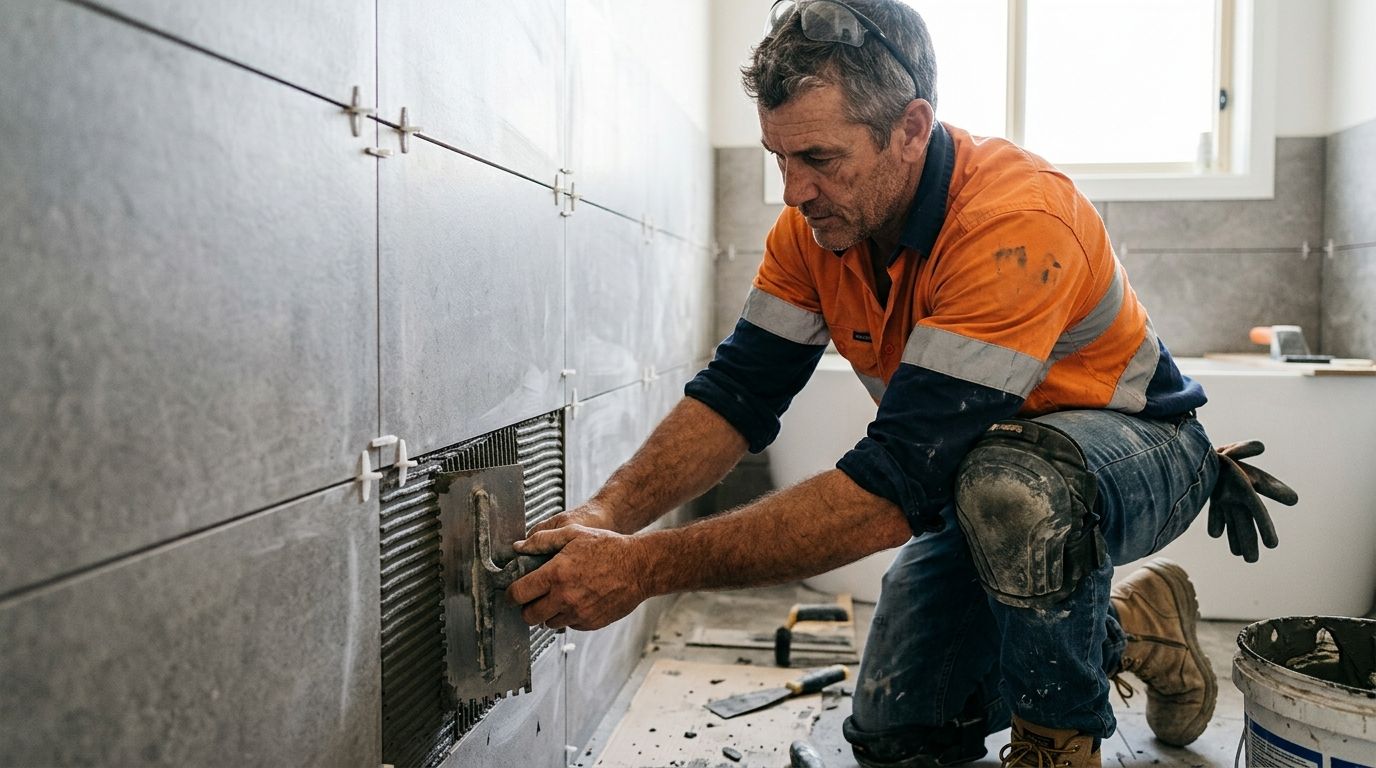
The misconception keeping experienced tilers unlicensed
You have been tiling for years. Bathrooms, kitchens, commercial fit-outs, and outdoor pavers. You know how to read a substrate, set out a pattern, cut around obstacles, and waterproof a wet area properly. You have done it hundreds of times.
Yet when the conversation turns to formal qualifications, the same thought surfaces: you think you have to go back to school, sit in a classroom, and learn things you already know while working alongside apprentices who have never touched a tile in their lives.
That assumption is wrong. It is the main reason experienced tilers remain without formal recognition longer than they need to.
RPL tiling, which is Recognition of Prior Learning for the tiling trade, is not a course. It is not a classroom. It is not a test of whether you can learn to tile. It is an assessment of whether you already can. The distinction matters enormously.
What the formal qualification system requires
The nationally recognised qualification for tilers in Australia is the Certificate III in Wall and Floor Tiling (CPC31320). It is listed on the national training register as a current qualification, requiring 20 units of competency: 17 core units and 3 elective units.
Those units describe tasks, not theories or textbook knowledge. The official qualification description covers work with ceramic, glass, slate, marble, and clay materials. This includes cutting and laying tiles on walls and floors, both interior and exterior, for residential and commercial construction.
Core units include CPCCWF3001 Prepare surfaces for tiling application, CPCCWF3002 Install floor tiles, CPCCWF3003 Install wall tiles, CPCCWF3004 Repair wall and floor tiling, CPCCWF3005 Install decorative tiling, and CPCCWF3006 Install mosaic tiling.
If you have been working as a tiler, you have been doing these things. The qualification does not ask you to learn them. It asks you to demonstrate that your work already meets the standard.
The full unit structure and packaging rules for CPC31320 are published on the national training register.
The apprentice mindset versus the evidence mindset
An apprentice needs to be taught. An experienced tiler needs to be assessed. These are fundamentally different processes, and confusing them is what keeps skilled tradespeople stuck.
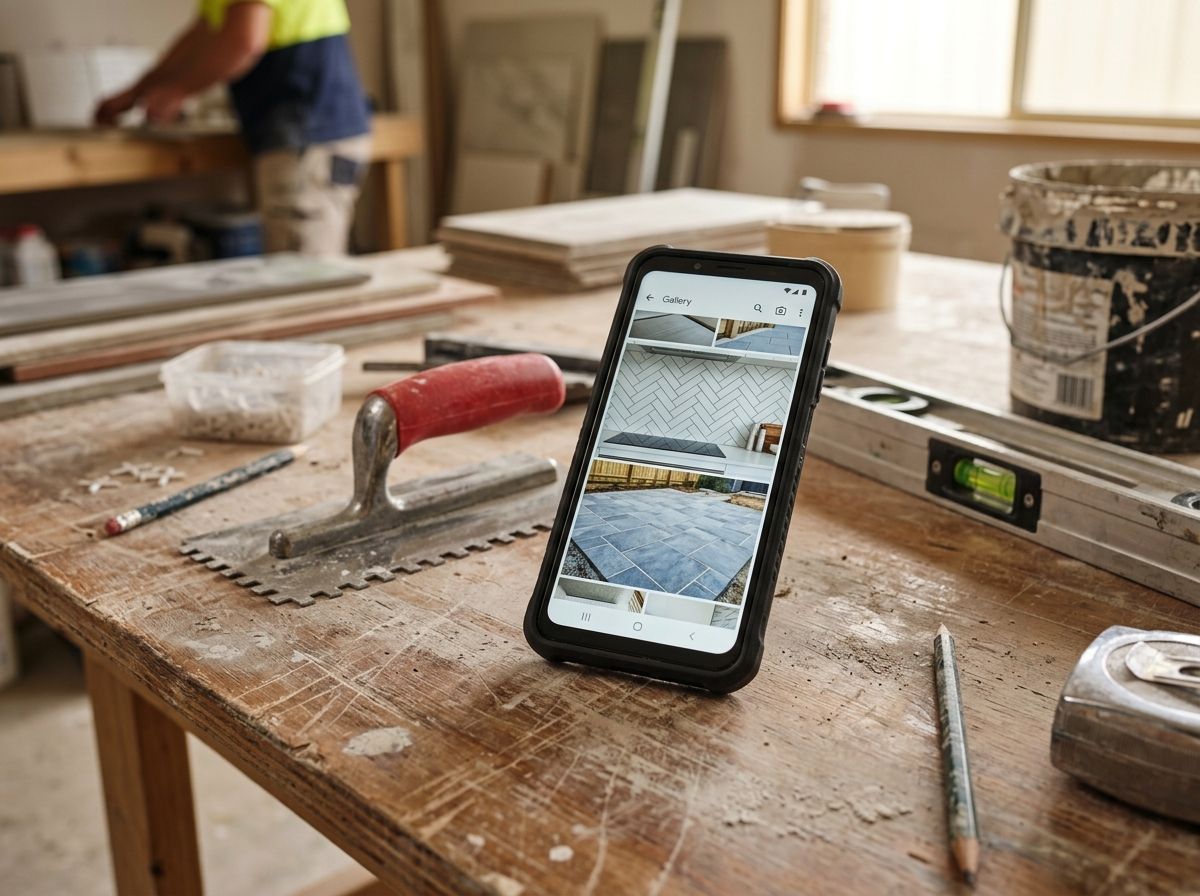
An apprenticeship starts from zero. It assumes you know nothing and builds skills from there. RPL starts from where you are. It acknowledges your experience and asks you to present it.
Your past projects are the curriculum. Your site photos are the exam. The years you have spent on the tools are not a gap to fill; they are the evidence you present.
Experience is evidence. That is the core of how RPL works. Shifting your focus from 'I need to learn this' to 'I need to show this' changes everything about how the process feels and how long it takes.
What evidence looks like for a tiler
The evidence an RPL assessor needs is practical. It is simply the documentation of work you have already completed.
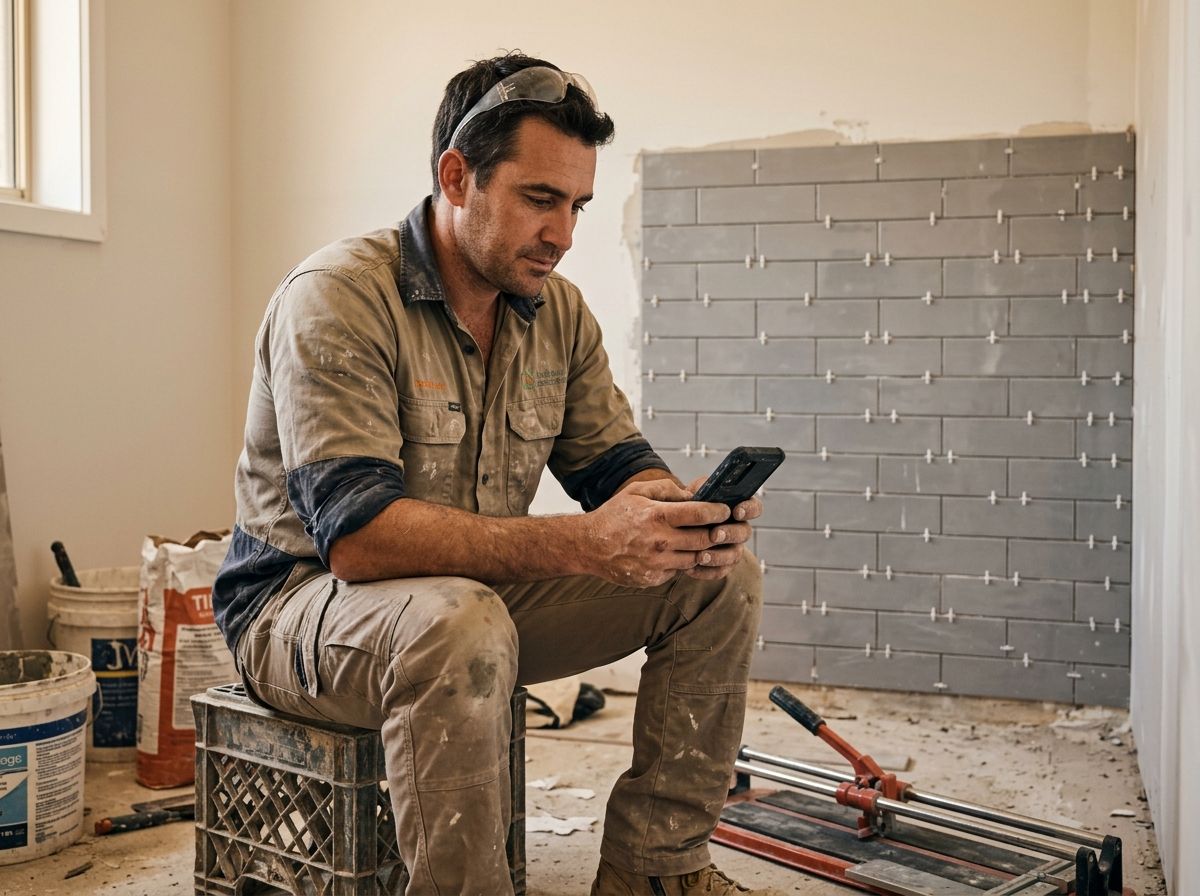
For a tiling RPL assessment, evidence may include employment records such as payslips, contracts, or letters from employers confirming your tiling work history and how long you have been doing it. It may include photos or videos of completed tiling installations, including bathrooms, kitchens, commercial spaces, and outdoor areas. You can also use written references from supervisors, builders, or contractors who have directly observed your work, logbooks or job diaries, and prior certificates or statements of attainment from previous training.
You do not need every item on that list. The goal is to build a picture of your existing competency across the units of the qualification. A qualified assessor will guide you on what is most appropriate for your situation.
The assessment also typically includes a structured interview with the assessor. This is a conversation about how you work, what decisions you make on the job, and how you handle the situations the units describe.
If you have been tiling professionally, you likely have more evidence than you realise. The phone in your pocket may already contain the most important parts of your portfolio.
Why formal qualification matters more today
The tiling industry has changed. Formal qualifications and licensing requirements are increasingly central to how the trade operates, and they vary across Australian states and territories.
In Western Australia, for example, a wall and floor tiler employed by a registered builder does not need a licence. But a tiler who contracts with others on building work valued over $20,000 must register as a building contractor. All construction workers, including tilers, need a Construction Induction Card, commonly known as a white card.
In Queensland, wall and floor tiling is a regulated trade licence category under the Queensland Building and Construction Commission.
The Certificate III in Wall and Floor Tiling is a nationally recognised qualification. However, each state and territory has its own licensing arrangements, and holding the qualification does not automatically satisfy every local licensing requirement.
Requirements vary. Before relying on any qualification for licensing, check with the relevant regulator in your state or territory, such as the QBCC in Queensland, NSW Fair Trading, the Victorian Building Authority, or the Department of Mines, Industry Regulation and Safety in Western Australia.
Western Australia's Build a Life in WA resource provides an overview of licensing requirements for wall and floor tilers in that state.
Beyond licensing, the commercial reality is shifting. Principal contractors, developers, and tier-one builders increasingly require formal qualifications before you can work on commercial or multi-residential projects. The qualification is the difference between being able to tender for work and being locked out of it.
How the RPL process works for tiling
RPL for tiling is a structured assessment process conducted by a Registered Training Organisation (RTO). RTOs are registered providers who conduct assessments and issue qualifications. RPL it guides candidates through the steps, but the assessment itself is carried out by a qualified assessor from the delivering RTO.
The process generally involves four stages. First, an initial eligibility consultation to discuss your background and whether RPL is a suitable pathway for you. Second, evidence submission and formal RPL assessment, where you gather and submit your evidence and the assessor reviews it unit by unit against the 20 units of CPC31320. Third, if the assessment identifies gaps in any units, targeted gap training is provided for those specific units. Fourth, once all units are signed off as competent, the qualification is issued.
Gap training is a real possibility. If your evidence does not fully demonstrate competency in a particular unit, you may be required to undertake some training to fill that gap. Cost arrangements for gap training vary by RTO. Some providers include gap training within their RPL fee up to a certain threshold, while others price it separately. Confirm the arrangement with your RTO before you proceed.
For timeframes, one RTO that specialises in tiling RPL indicates the assessment process typically takes between four and twelve weeks from evidence submission to a decision, depending on the strength of the evidence and whether you need gap training.
These are indicative figures from a single provider. Timeframes vary by RTO, by the complexity of your evidence, and by how many units require gap training. No specific duration can be guaranteed.
The first step requires no commitment
Before you decide whether RPL is the right path, you can find out whether your experience is likely to meet the standard.
A Free Skills Review is a no-obligation conversation that maps your background against the qualification requirements. It is not an enrolment and it is not a commitment. It is an honest assessment of where you stand, allowing you to make an informed decision about what to do next.
You have the experience. The question is whether it meets the standard. That is exactly what a Free Skills Review is designed to answer.
The decision is yours.
Ready to Get Recognised?
Start with a free skills review to find out if RPL is right for you.