When paperwork beats skill: The shift in trade compliance and how to respond
Experienced tradies are losing jobs to less skilled, qualified workers. Learn why compliance shifted and how RPL qualifications get your skills recognised.

The job goes to the worker with the certificate
You have worked in your trade for years. You understand the practicalities of the job and can easily solve complex problems on-site that a newly qualified worker would fail to recognise. Yet, it is increasingly common to see lucrative contracts go to someone else with significantly less time on the tools and far less capability under pressure, simply because they hold the qualification you do not.
This scenario is not an isolated event. Tradespeople across Australia are reporting it with growing frequency. Formal credentials have increasingly begun to carry more weight than practical competency in hiring decisions, tender awards, and site access. Your skills have not diminished, but the compliance environment has shifted around you without your input.
This systemic shift is a major source of frustration in the modern trade sector. Experienced professionals deserve a straightforward explanation of why this credential barrier has been established, along with practical advice on how to address it directly.
Why the trades shifted toward mandatory licensing
The demand for formal credentials in Australian trades did not emerge overnight. Multiple commercial and regulatory factors combined over time to make qualifications a strict operational requirement rather than a preferred option in the industry.
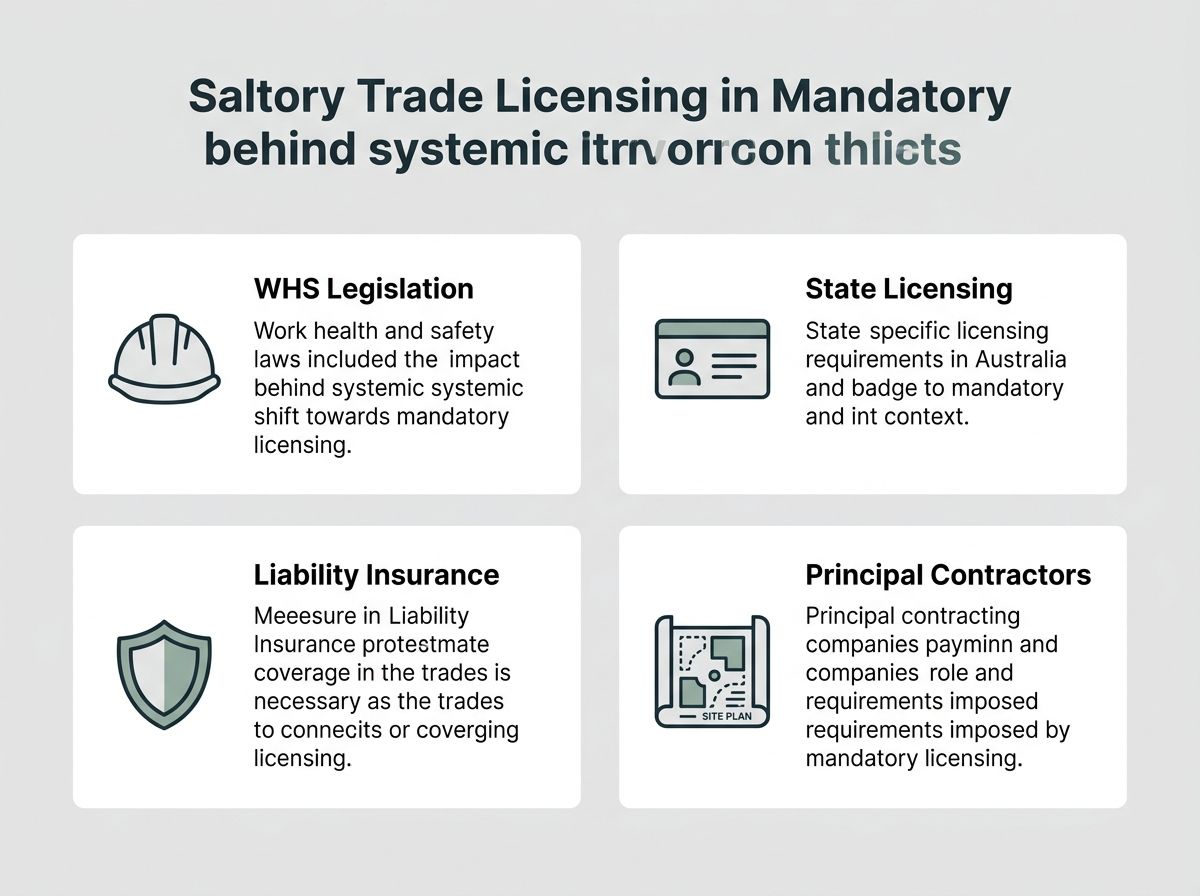
Work health and safety legislation in Australian states and territories places strict responsibilities on head contractors and employers to ensure all workers are certified for their roles. Because principal contractors carry legal liability for site safety, they manage this risk by demanding written proof of competence from everyone on-site. The most direct and legally defensible proof is a formal qualification.
State licensing bodies overseeing plumbing, electrical, construction, and refrigeration trades have steadily tightened their application and renewal standards. While the specific requirements differ depending on your location and trade, the overall trend is clear: formal qualifications are now the mandatory benchmark for licensing rather than a recommended addition.
Business insurance and liability coverage also frequently require workers to hold the correct licences. Insurers calculate premiums and risk based on formal qualifications, viewing uncertified workers as a higher liability. This creates a chain reaction where you need insurance to operate, a licence to get insurance, and a qualification to get the licence.
These regulatory frameworks are not intended to penalise experienced hands. However, for those who developed their expertise through years of on-the-job training instead of classroom study, that is the practical outcome. The compliance standards changed, leaving highly capable tradespeople to deal with the administrative hurdles.
The gap between skill and paperwork has a name
There is a distinct frustration in watching a competitor with less practical capability secure a contract, job, or promotion solely because they hold a specific certificate. This is not about professional envy; it is about a system that fails to recognise your actual skills without formal documentation.
Your practical expertise is real, but regulatory systems cannot verify it without formal paperwork.
The trades have always relied on practical capability developed through years of experience. You build your expertise through daily repetition, solving complex site problems, and working alongside other experienced tradespeople. However, licensing boards, head contractors, and compliance departments are not set up to evaluate hands-on capability directly. They rely entirely on formal credentials, which means your hard-earned practical expertise remains invisible to their administrative databases.
This is a structural mismatch between hands-on training and modern corporate compliance, rather than a personal failing. Trade qualifications are important for maintaining safety standards, but the current regulatory system lacks the administrative mechanisms to verify your existing skills unless they are presented in a highly specific, approved format.
This systemic issue is a common pattern in the broader workforce.
For tradespeople, this means immediate operational barriers like being unable to legally run a business, bid for major contracts, or supervise projects without the paperwork, regardless of your actual capability. This is often called
an experience penalty that grows the longer you work without official recognition.
What RPL qualifications actually do and what they do not
Recognition of Prior Learning (RPL) is a formal evaluation where a registered training organisation reviews your current skills against the units of competency in a national qualification. It avoids making you study things you already know, focusing instead on compiling the evidence required by regulators and employers.
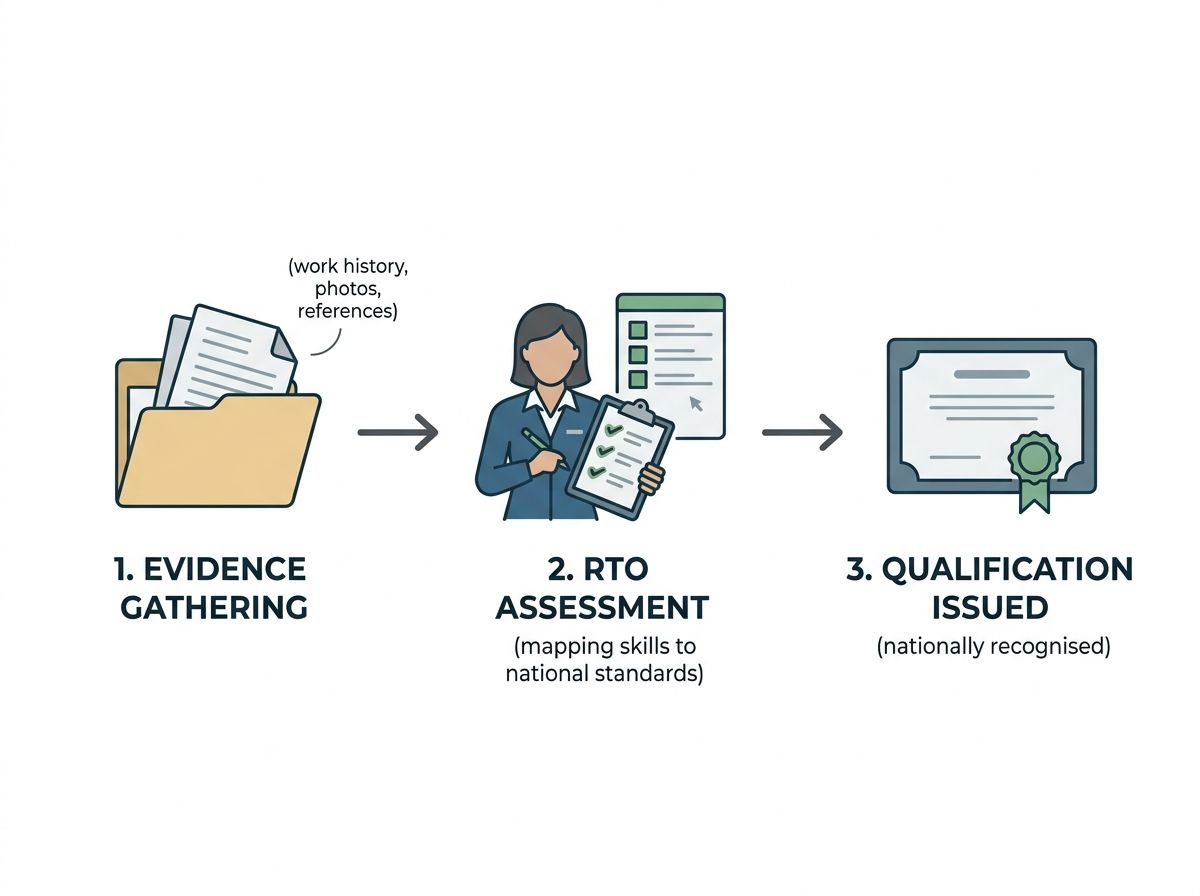
This distinction is important. RPL is not an automatic approval or an administrative shortcut. It involves a thorough assessment by a qualified assessor from a registered training organisation, matching your skills against the same national standards used for traditional courses. The process is rigorous, and the qualification is fully accredited.
The RPL process generally consists of three distinct stages. First is the evidence gathering phase, where you compile documentation of your practical experience, including your work history, references, site photographs, safety reports, and logbooks. Second is the assessment phase, where a qualified assessor from the RTO reviews this material to map your practical skills against the specific units of the qualification. Third, if the assessor confirms your competency across all required units, the RTO issues the formal qualification. If any knowledge gaps are identified during the assessment, the RTO provides targeted gap training to help you complete the outstanding requirements.
It is important to understand what RPL is not. It is not an easier option that bypasses legitimate training standards. It does not award qualifications without clear proof of competency. It is also not suitable for every worker, which is why an honest suitability assessment is always the first step before making any financial commitment.
In practice, the RPL process is a translator rather than an exam.
It converts your hands-on trade experience into the formal terms required by employers and regulators. Your practical capability remains the same, but the process makes it visible to compliance systems.
Why RPL is the most respectful pathway for experienced tradespeople
You could obtain your qualification through traditional courses, but this often requires attending classes on topics you have practiced daily for years. Taking time off work, paying full tuition, and sitting in a classroom to learn basic trade skills is rarely a practical option.
On-the-job experience is highly valuable; it is simply a different type of evidence.
RPL programs operate on this foundation. Instead of treating your years of experience as a deficiency, the assessment uses them as primary evidence of competence. The process focuses on documenting what you already know rather than teaching you basic concepts from scratch.
For tradespeople with sufficient documentation, the RPL pathway is generally faster than completing a qualification through traditional classroom study. The exact timeline always depends on the specific trade qualification, the RTO, and the evidence you can provide. This is not a shortcut, but a logical result of assessing existing capabilities rather than teaching you new skills from the ground up.
The core principle is recognition instead of repetition. This approach values your contribution to the trade and respects the skills you have already built.
What honest suitability looks like before you begin
RPL is not a universal solution, and any provider claiming otherwise is being misleading. A proper suitability assessment before enrolment is a necessary step to protect your time and money.
Successful RPL candidates usually have several years of practical, unsupervised experience in their trade. They can point to specific projects and daily tasks that map directly to the competency standards of the qualification. They must also compile supporting evidence, such as employer references, site records, photos of completed work, logbooks, invoices, or third-party observation reports. Because the acceptable types of evidence vary depending on the qualification and the specific RTO, you should confirm these requirements before you begin gathering your materials.
If your assessor identifies areas where your evidence is insufficient, you can complete targeted gap training to meet the standard. This is a common and practical part of the pathway, not a failure. The objective is to secure your qualification through a transparent process without bypassing any of the necessary standards.
It is always better to guide you to the correct training pathway rather than enrol you in an unsuitable program. This transparent approach is the foundation of a reliable assessment process.
The next step: A free skills review with no obligation
If you have years of experience but lacking a qualification is costing you money, restricting site access, or limiting your ability to operate legally, you need a clear starting point.
A Free Skills Review helps you evaluate your position. This service provides a clear assessment of whether your trade experience supports an RPL pathway before you make any commitment. It is free, carries no obligation, and serves as an initial conversation to outline your options.
You do not need to wait for a setback to occur. Getting a skills review now provides a clear overview of your standing and options. The assessment is conducted without pressure or obligation, giving you a realistic view of your pathway forward.
You have the experience, and we help you prove it.
Ready to Get Recognised?
Start with a free skills review to find out if RPL is right for you.