Stop viewing the licence as a barrier—it is a translation of your experience
If you already do the work, RPL isn't a barrier—it's a translation of your experience. Here is how the mapping works.
By RPL it Australia7 min read
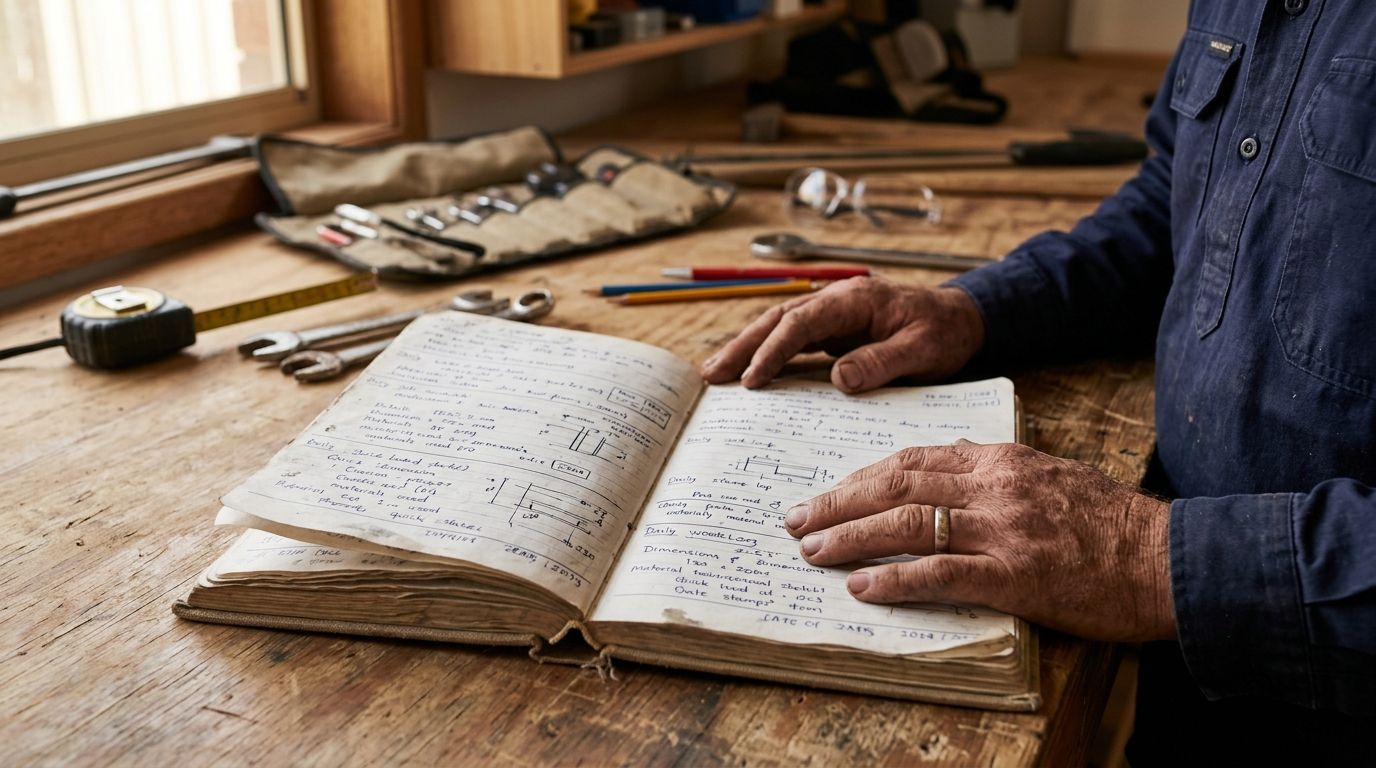
The licence isn't keeping you out—it is waiting for your evidence
You have the experience. You know the trade. You have done the work—probably for years, possibly for decades. And yet the licence sits on the other side of a process that feels as though it was designed for someone who has not done any of it yet.
That feeling is real, but the way we think about the process is often wrong.
The licence is not a gate. It is a translation.
The RTO assessor who reviews your application is not testing whether you can do the job. They assume you can, or you would not be applying. Instead, they are reading the record of the work you have already completed. They need that record in a specific format. That is the actual gap. It is not a gap in your competence, but in your documentation.
An RPL certificate is the formal way to close that gap. It takes the work you did last week—the installations, the inspections, and the jobs you ran from start to finish—and presents it in the language the qualification framework understands. You are not learning anything new. You are translating what you already know into a format the system can easily read.
What the licensing body looks for when you apply
When an assessor reviews an RPL application, they are not setting an exam. They are reading a portfolio. That portfolio is built from evidence—and evidence, in this context, means the documentation of real work you have already completed.
The evidence that supports a trade qualification RPL application generally includes:
- Records of completed jobs, including site diaries, job sheets, and work orders
- Photographs of completed work, such as installations, fit-outs, and finished projects
- Employer references or statutory declarations confirming your specific role and responsibilities
- Payslips or employment records demonstrating your active time in the trade
- Certificates of compliance or inspection records you were personally responsible for
- Logbooks or maintenance records you completed or supervised directly
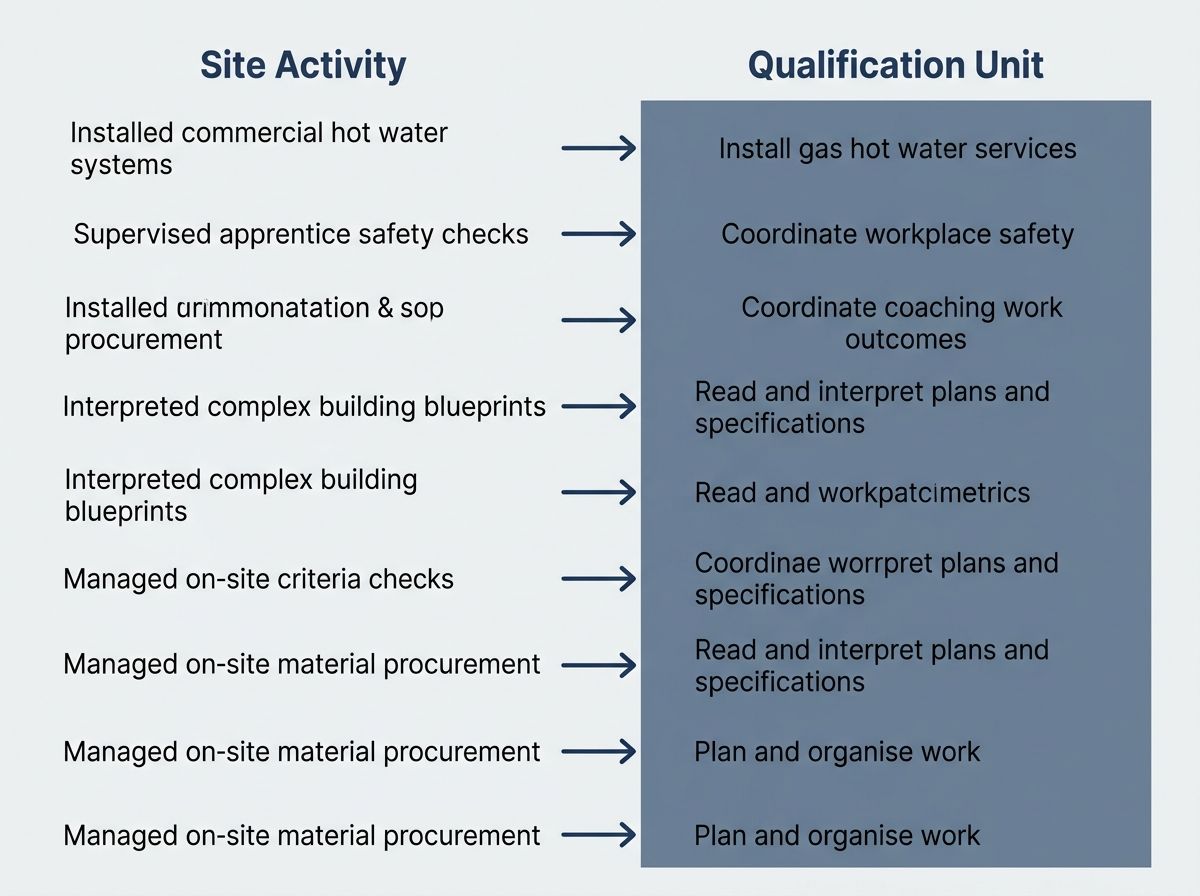
Each piece of evidence maps to a unit within the qualification. A trade qualification consists of a series of units—some technical, some covering safety, and others covering supervisory or business skills. The assessor's job is to review your evidence and determine which units it covers.
The specific evidence requirements vary by qualification and by the RTO conducting the assessment. What counts as sufficient evidence for one unit may differ from another. This is why the mapping process matters—and why it is guided, rather than something you must do alone.
The RPL process is a translation exercise rather than an exam, which changes how you prepare for it.
Your projects are already your evidence—you just need to label them
Here is the shift that matters most: the process of gathering evidence is not about creating new proof. It is about labelling the proof you already have.
Think about your last month of work. You completed jobs, solved problems on site, and supervised other workers. You ordered materials, read plans, and checked compliance. You did all of this without thinking about qualification units, simply because you were focused on doing the work.
Yet every one of those activities maps to a unit in the qualification framework. A residential plumbing installation maps to units covering sanitary drainage, water supply systems, and compliance standards. Running a crew on a commercial fit-out maps to units covering supervision, work health and safety, and project coordination. Diagnosing and fixing a fault maps to units covering troubleshooting and maintenance.
The RPL process simply makes that mapping visible. A guided evidence review takes your actual work history and determines which units your work covers, what documentation you currently hold, and where any gaps might lie.
You do not need to have kept perfect records. Most experienced tradespeople have more evidence than they realise—it is just scattered across job sheets, phone photos, employer references, and years of payslips. The guided process helps you find this evidence, organise it, and present it in the format the assessor requires.
Your experience has a formal value, and RPL is the process you use to convert it.
The licensing body is your audience, not your examiner
This change in perspective changes how you approach the entire process.
If you enter an RPL assessment thinking you have to prove yourself, you are using the wrong mindset. You are treating the assessor as a judge and the process as an exam you might fail.
The more accurate picture is that the assessor is an audience. They need to be satisfied—not that you can do the job, but that your evidence shows you have already done it. The work is finished; your only task is to communicate it clearly.
This is a major distinction. It changes your entire focus. Instead of worrying about whether you know enough, you focus on whether your evidence is clear enough. Instead of preparing to answer test questions, you prepare to present a solid record. Your focus shifts from worrying about failure to simply presenting your work well, which is a much more manageable task.
Done properly, the RPL process is a guided presentation of your skills. A skilled assessor works with you to understand your background and how to document it. They are not looking for reasons to reject your application; they are looking for evidence that supports the units you are claiming.
If the evidence is there—and for most experienced tradespeople, it is—the process works.
What happens if your evidence does not cover everything
Honesty is important here. RPL does not always cover every single unit in a qualification. For most experienced tradespeople, it covers the vast majority, but gaps can sometimes occur.
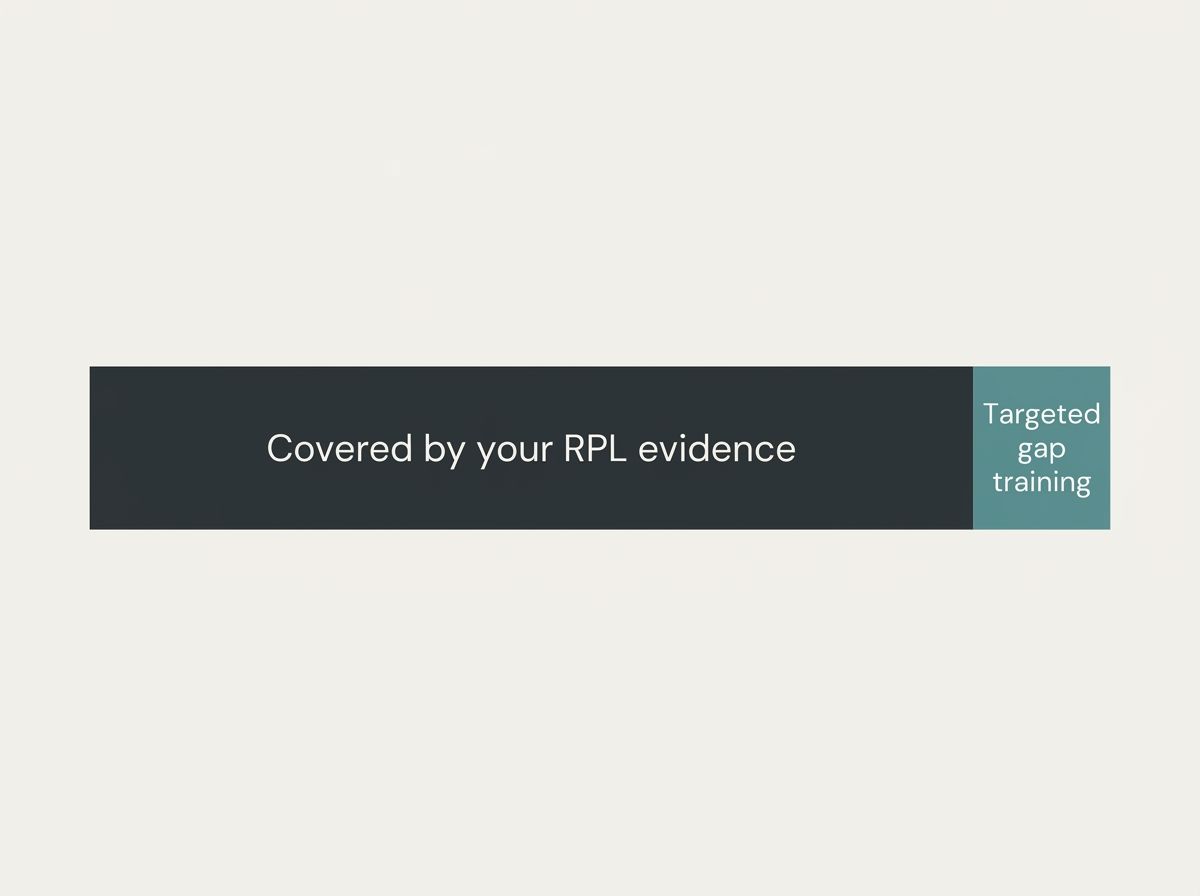
A gap is not a failure. It is simply the system working correctly. If your evidence does not demonstrate a particular unit, it means that specific area has not been formally documented—not that you cannot do the work. The subsequent gap training is highly targeted, covering only what the evidence cannot prove. It is not a full course, and you do not start over.
Gap training is typically delivered in a way that fits around your current work schedule, rather than requiring a return to the classroom for months. The specifics depend on the qualification and the RTO. What matters is that the training is proportionate to the gap. If your evidence covers most of the qualification, the gap training reflects that.
The practical advice is this: go into the process expecting that your evidence will cover most of what you need, and that any gaps will be addressed specifically and practically. Do not assume you will need to start from scratch, but do not assume you will have zero gaps either. The Free Skills Review is the step that shows you exactly where you stand.
The first step is a conversation, not a contract
The RPL process starts with a conversation, not an enrolment form and not a fee. It is a direct discussion about your experience—what you have done, how long you have worked in the trade, and what documentation you might have.
That conversation maps your existing work to the qualification requirements. It tells you what your evidence is likely to cover, where the gaps might be, and whether RPL is the right pathway for your specific situation. It provides clear guidance before you make any commitment.
If RPL is not the right pathway for you, a good guide will tell you so. The goal is not to enrol everyone, but to direct the right people through the right process.
Review the RPL qualifications available through RPL it to see the pathways for your trade.
The licence is not a barrier designed to keep you out. It is a formal record of what you already know, waiting for you to present it in the correct format. The translation is entirely possible, and the evidence is likely already there. Your first step is simply finding out what your situation looks like.
General information only, current at the date shown. Licensing rules change, so check the current requirements with the relevant regulator before you rely on them. RPL it Australia is a student support service, not a Registered Training Organisation; qualifications are assessed and issued by our partner RTOs.