The system is built for school-leavers: The truth about RPL qualifications
The education system was built for school-leavers. If you have years of experience, RPL qualifications exist to recognise the skills you already have.
By RPL it Australia7 min read

The education system has a design flaw, and you are paying for it
The traditional education and qualification system in Australia was built for a specific group: school-leavers. It targets people who arrive with no prior experience, learn everything in sequence, and progress through time-based units in a classroom. That design makes perfect sense for a 17-year-old starting from scratch.
But for someone with fifteen years of hands-on experience, this approach is a mismatch. The system is not failing experienced workers. It was simply never designed for them.
This is a structural reality, not a complaint. The Australian VET framework, with its sequential qualification levels, classroom settings, and time-based progression, reflects the needs of its original audience. The problem is that the workforce has changed. Millions of Australians have built genuine competence through work rather than study. The system, as designed, has no natural mechanism to see those skills.
Your experience is real, and your skills are real. The system simply was not built to recognize them.
What starting from scratch means for someone with 15 years of experience
When the traditional pathway tells an experienced worker to get qualified, it means sitting in a classroom, studying units of content you already use daily, alongside people who are seeing it for the first time.
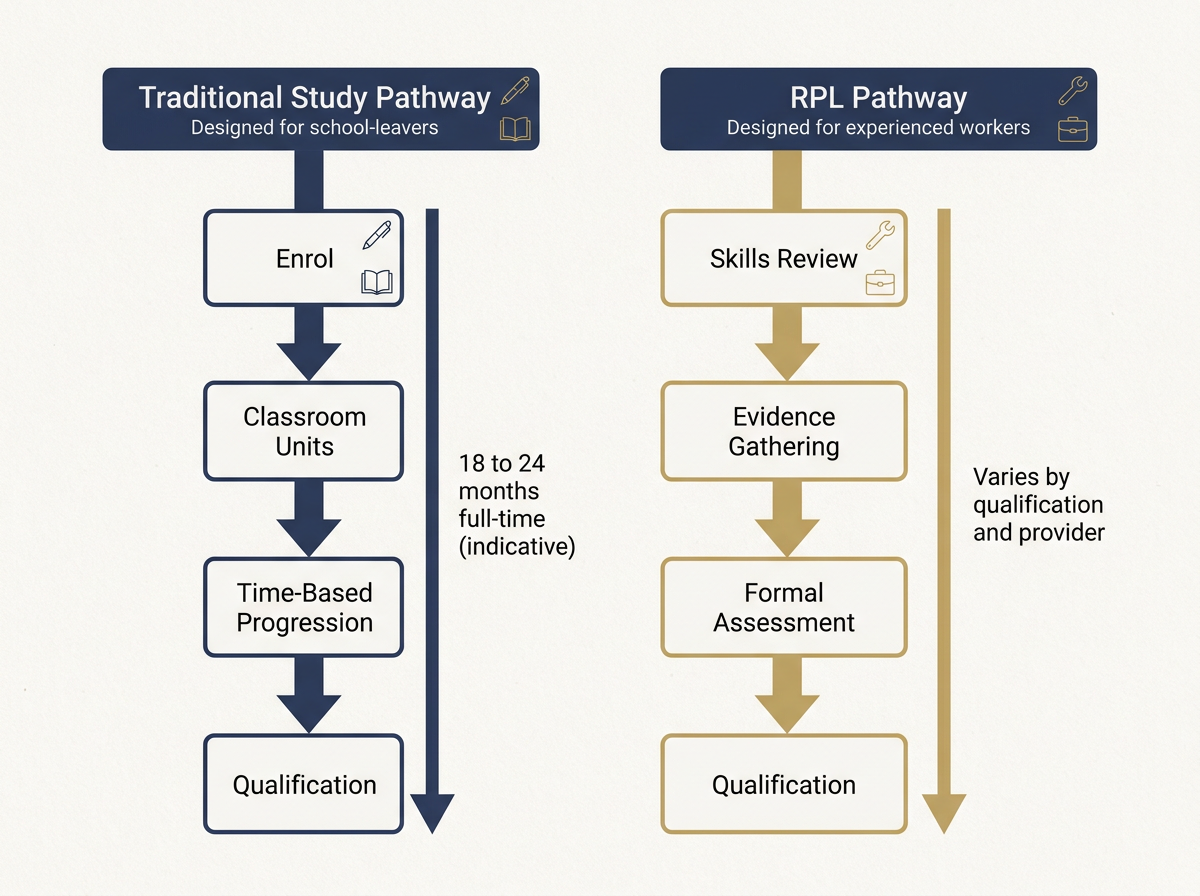
A Diploma-level VET qualification in Australia typically requires 18 to 24 months of full-time study to complete. Part-time study takes even longer. While fees vary by provider and qualification, the time investment alone is a massive burden for someone already working full-time in the field they want recognised.
The real cost is not financial. It is the experience of being told, implicitly, that your years of work do not count. It forces you to start at the beginning because the system does not distinguish between someone who has never done the work and someone who has managed it for a decade.
This is a structural limitation, not a personal failing. The traditional qualification system has no built-in mechanism to assess what you already know. It is set up only to teach.
The truth about RPL: It was not created to help you study faster
Many people assume that RPL qualifications are a shortcut through the classroom system. They are not.
Recognition of Prior Learning is a completely different pathway. It was built into the Australian VET regulatory framework because the classroom model cannot assess existing competence. RPL does not compress traditional study into a shorter timeframe. It replaces classroom study with a formal assessment of your existing knowledge.
Under the Standards for Registered Training Organisations, RPL assessments must comply with the Principles of Assessment and the Rules of Evidence to ensure that evidence is current, authentic, valid, and sufficient. This is a rigorous process, not a rubber stamp.
Your experience is the evidence. That is the core point. It is not a shortcut or a loophole, but a formal, compliant assessment pathway. It exists because regulators recognized that competence can be acquired outside a classroom.
The regulatory framework governing RPL in Australia requires that assessments meet the same standards as any other VET assessment. This includes the Principles of Assessment and the Rules of Evidence outlined in the Standards for RTOs.
Understanding why experience without an RPL certificate remains invisible to formal systems is the first step toward changing your career trajectory.
Why experienced workers are the ideal candidates for RPL, not the exception
RPL assessment is built around evidence, such as workplace records, supervisor references, photos, logbooks, performance documents, and project outcomes. These are the currencies of RPL, and they are exactly what experienced workers have in abundance.
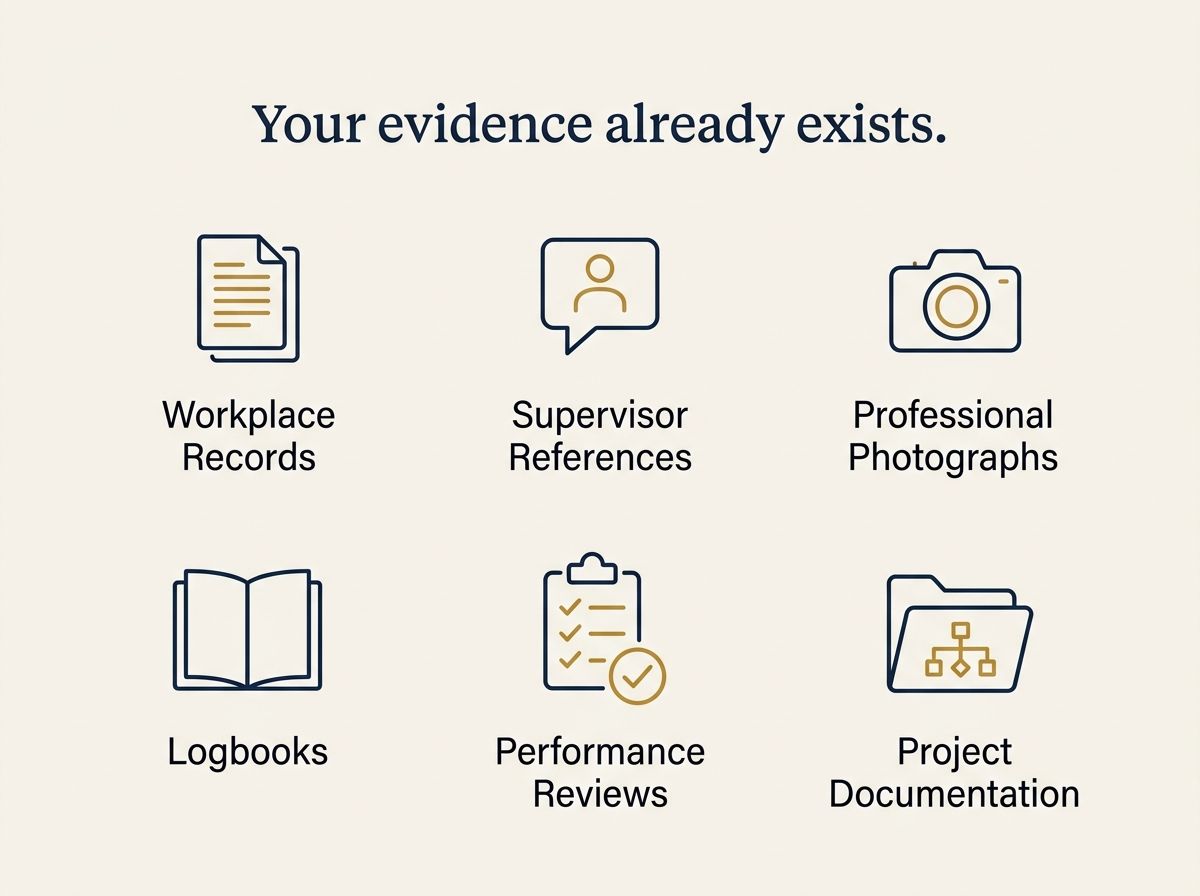
The more time you have spent in your field, the more evidence you can draw on. RPL qualifications do not reward classroom hours; they reward demonstrated competence. Experienced workers are not disadvantaged by this system. They are the people it was built for.
However, the availability and ease of the RPL process can vary. A government review of the Australian apprenticeship incentive system found that while RPL is designed to shorten training for people with prior employment experience, the process can sometimes be time-consuming, and availability is not always consistent across providers.
A government review of the Australian apprenticeship system noted that RPL is intended to acknowledge prior employment experience, but its availability and ease of use are inconsistent. This is why having a knowledgeable guide through the process makes a difference.
This is why guidance matters. The evidence you have built over years of work is real, but presenting it in the format assessors require against the specific competency standards is where professional support makes a difference.
What RPL qualifications look like in practice
RPL qualifications are nationally recognised qualifications issued by registered training organisations (RTOs) following a formal assessment. They carry the same AQF level and national recognition as qualifications earned through traditional study. The final qualification is not just a certificate of experience; it is a formal certificate of demonstrated competency.
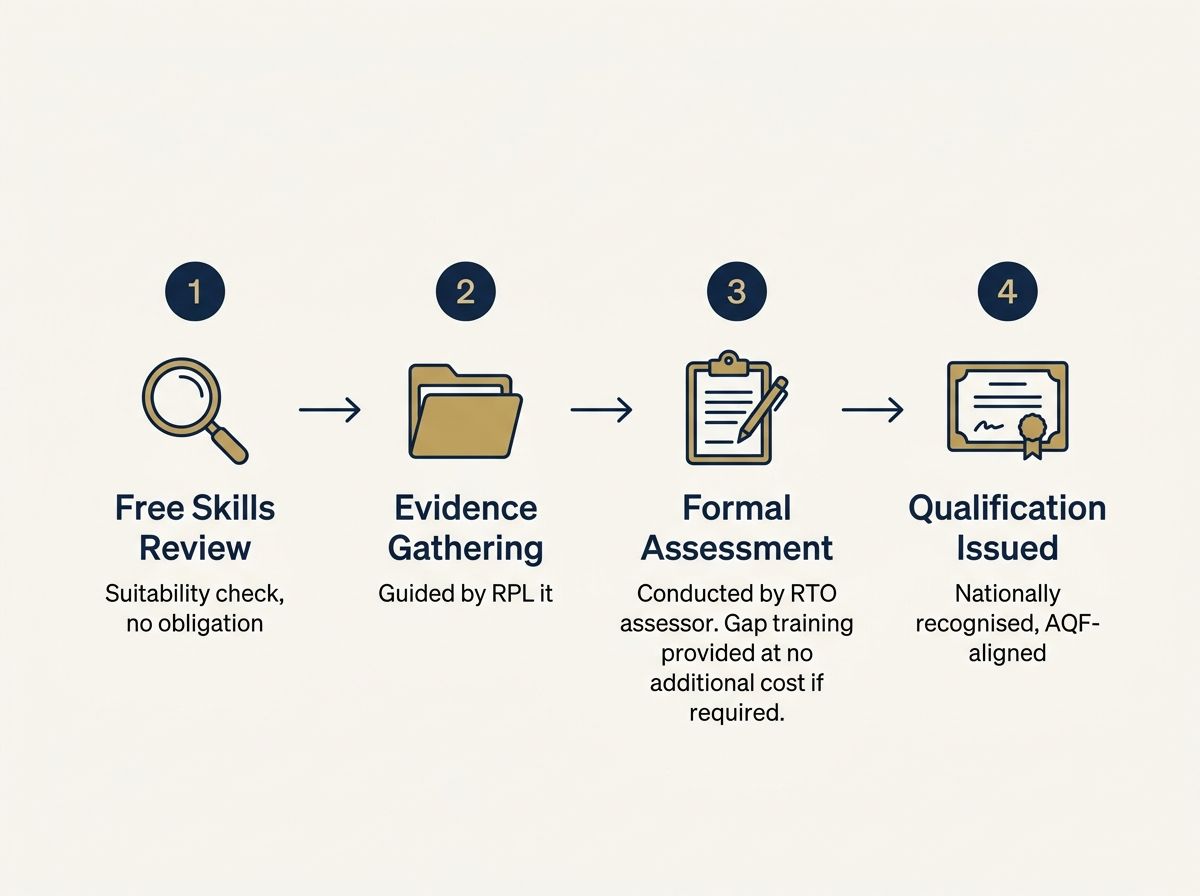
The RPL process typically begins with an initial inquiry. You receive guidance about what RPL involves, the types of evidence required, and how your experience aligns with a specific qualification. From there, the process moves through evidence collection, a formal assessment by a qualified assessor, and a determination of competency against the relevant training requirements.
According to government guidance on the RPL process, the initial step involves sharing information about the process, eligibility, and the types of evidence required before any formal assessment begins.
Some RTOs include an assessment interview as part of their RPL process. This is a structured conversation with a qualified assessor to validate your experience against the units of competency. While the specific steps vary by provider and qualification, the standard is consistent: evidence must be current, authentic, valid, and sufficient.
An important disclosure: RPL it guides candidates through this process, but the formal assessment is conducted by a qualified assessor from the delivering RTO. The qualification is issued by that RTO and not by RPL it. If any gaps in competency are identified during assessment, gap training is provided at no additional cost.
RPL is available through every ASQA-regulated registered training organisation in Australia. As of June 2025, ASQA regulated 3,837 RTOs nationally, with additional RTOs regulated by state bodies. This pathway is embedded across the entire VET system and is not confined to a handful of providers.
The Productivity Commission's Report on Government Services 2026 confirms that as of 30 June 2025, ASQA regulated 3,837 RTOs in Australia, establishing the large scale of the RPL pathway across the national VET sector.
To learn how recognition of prior learning translates years of practice into formal credentials across different industries, you can read our article on the management paradox.
The question to ask before you spend another year without recognition
The decision to pursue RPL qualifications starts with a suitability check rather than a commitment. Understanding whether your experience maps to the standards of a qualification is the first step, and you can take it without any obligation.
Not everyone is suited to RPL, and that honesty is important. The process requires genuine evidence of competency. A responsible guide will tell you clearly if your experience is unlikely to support a particular pathway. That honest assessment, before you commit to anything, is the foundation of a process you can trust.
For workers who have spent years building expertise that the system was never designed to see, that first honest conversation is the most important step. Recognition should not require starting over. It should start with finding out what your current skills are worth.
You can explore the full range of RPL qualifications available through the RPL it qualifications page, covering industries from healthcare and community services to trades and business.
General information only, current at the date shown. Licensing rules change, so check the current requirements with the relevant regulator before you rely on them. RPL it Australia is a student support service, not a Registered Training Organisation; qualifications are assessed and issued by our partner RTOs.