The 15-year management paradox: Why running the department doesn't count on paper
You have run departments and managed teams for years. Recognition of prior learning translates your management experience into a formal qualification.

The quiet indignity of being screened out
You have been running your department for fifteen years. You have managed teams, navigated operational crises, mentored staff who now hold senior titles, and made the daily decisions that keep your organisation moving. You know this work thoroughly. This is not because someone taught it to you in a lecture theatre, but because you have lived the role day after day, year after year.
Then you apply for a director-level role. You are filtered out before a hiring manager even reads your name. The automated screening software searches for a formal qualification, finds nothing in the required field, and moves on.
The reaction is not anger. It is something quieter and more disorienting: a sense that the hiring system looked straight through you. Fifteen years of proven competence—of real results, actual decisions, and daily leadership—registered as nothing. You are invisible to the software.
If you recognise this situation, this article is for you. The goal is not to convince you the recruitment system is fair. It is not. The purpose is to show you that a structured, legitimate pathway exists to make your practical experience visible on paper, in a format that these systems recognize.
The degree paradox: When the certificate matters more than competence
Formal processes in HR departments, job boards, and university admissions offices are designed to evaluate credentials rather than direct competence. A formal credential acts as a proxy. It signals that a candidate once completed a structured programme of learning assessed against a specific standard. That remains useful information.
The issue is that credentials are an inadequate proxy for capability when your skills were acquired through practical experience. A manager who has led a team of forty people, managed a multi-million dollar budget, redesigned workflows, and mentored graduates has demonstrated clear competence. They have simply done so outside the format the system is built to recognise.
This is a structural mismatch, not a personal failure. Your professional expertise is real and extensive. It simply exists in a different form from the one required by hiring systems.
Experience is not inferior to formal education; it is simply a different form of evidence.
This frustration is legitimate, and it is more common than recruitment systems acknowledge. Across Australian workplaces, many experienced managers, team leaders, and operations heads have run departments for years without formal papers. This is not due to a lack of ability, but because their career paths developed through hands-on practice rather than classroom lectures.
What recognition of prior learning actually is (and what it isn't)
Recognition of prior learning (RPL) is a formal, nationally regulated assessment process. Through this system, a Registered Training Organisation (RTO) evaluates whether a candidate can demonstrate competency against the units of a nationally recognised qualification, using their existing skills, knowledge, and experience. The qualification issued is identical to one earned through traditional classroom study because the assessment standard remains exactly the same.
This definition is important. RPL is not a purchased certificate, a shortcut, or a way to bypass assessment. It is a rigorous, structured pathway that shifts the core question of evaluation. Instead of asking whether you can learn a concept, it asks you to prove that you already apply it in your work.
The assessment is conducted by a qualified assessor from the delivering RTO. RPL it does not directly assess or award qualifications. Instead, we assist candidates throughout the process, helping you organize your professional experience into clear evidence and navigate the formal assessment requirements.
For a senior manager, this evidence typically includes performance reviews, position descriptions, strategic documents you have written, project reports, professional references from colleagues, and documented business decisions. The RTO assessor evaluates this entire body of evidence to determine whether it demonstrates competency against the specific units of the qualification.
If the assessor identifies gaps where the evidence is insufficient, targeted gap training is provided. This training is included at no extra cost, ensuring the process remains thorough and direct.
The management qualification that opens university doors
This pathway is particularly valuable for experienced managers who want to study further.
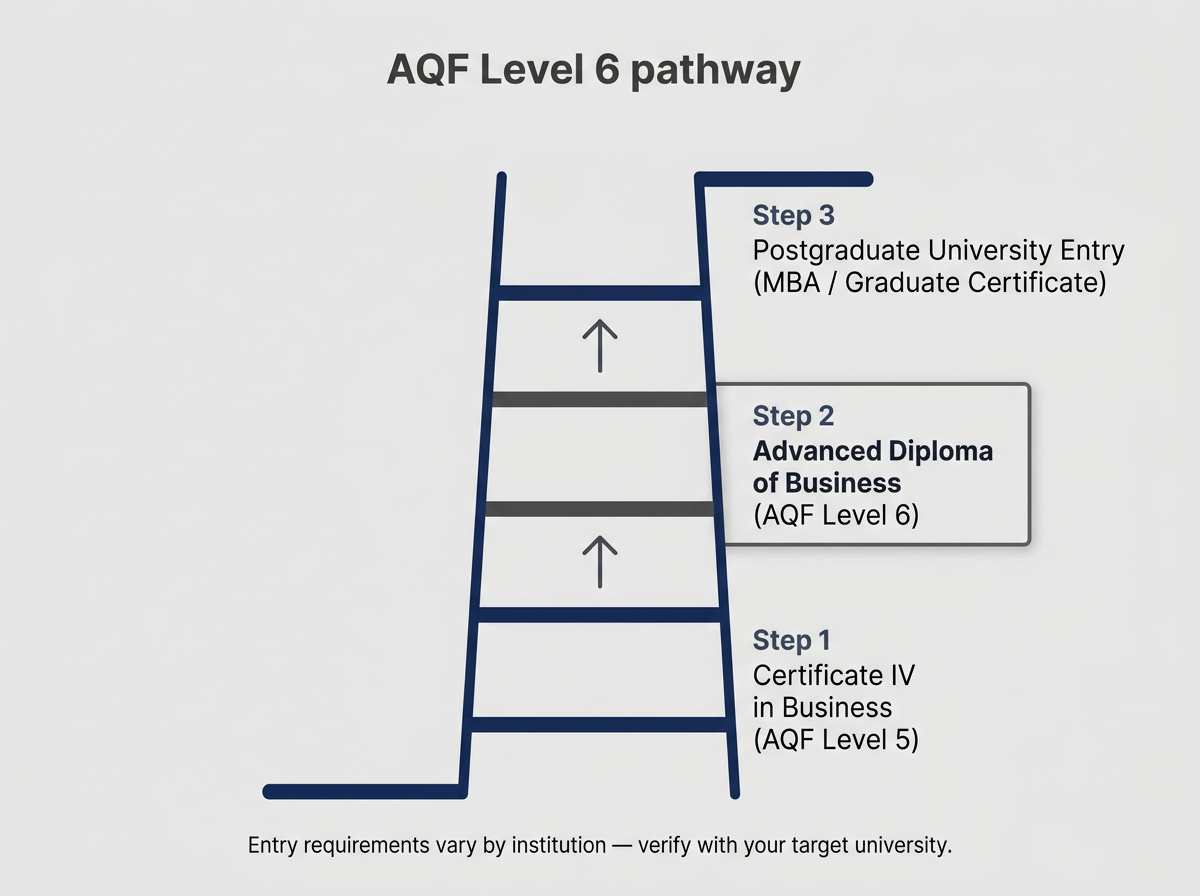
An Advanced Diploma of Business sits at AQF Level 6, bridging vocational and higher education under the Australian Qualifications Framework. Many Australian universities accept an AQF Level 6 qualification to satisfy entry requirements for postgraduate programs, including MBAs and Graduate Certificates, without requiring an undergraduate bachelor's degree.
This is a structured pathway built into the Australian qualifications framework, not a loophole. The AQF was designed to allow movement between vocational and higher education, recognising that practical experience can equal classroom study.
For a manager who has spent fifteen years developing leadership expertise but never completed an undergraduate degree, this pathway is highly practical. An Advanced Diploma of Business achieved through RPL, which is assessed against your actual management experience, can satisfy the entry criteria for postgraduate programs that would otherwise require a full three-year bachelor's degree.
Entry requirements vary by institution and program. We recommend verifying the specific rules of your target university and program directly with their admissions office before applying. However, the AQF Level 6 pathway to postgraduate study remains a structured option utilized by many experienced Australian professionals each year.
Learn more about how the Fast Track University pathway works for experienced professionals.
How the RPL process works for senior managers
The process involves four distinct stages. While it requires real effort—since it is a formal assessment rather than a rubber stamp—it is designed to work with your professional background rather than against it.
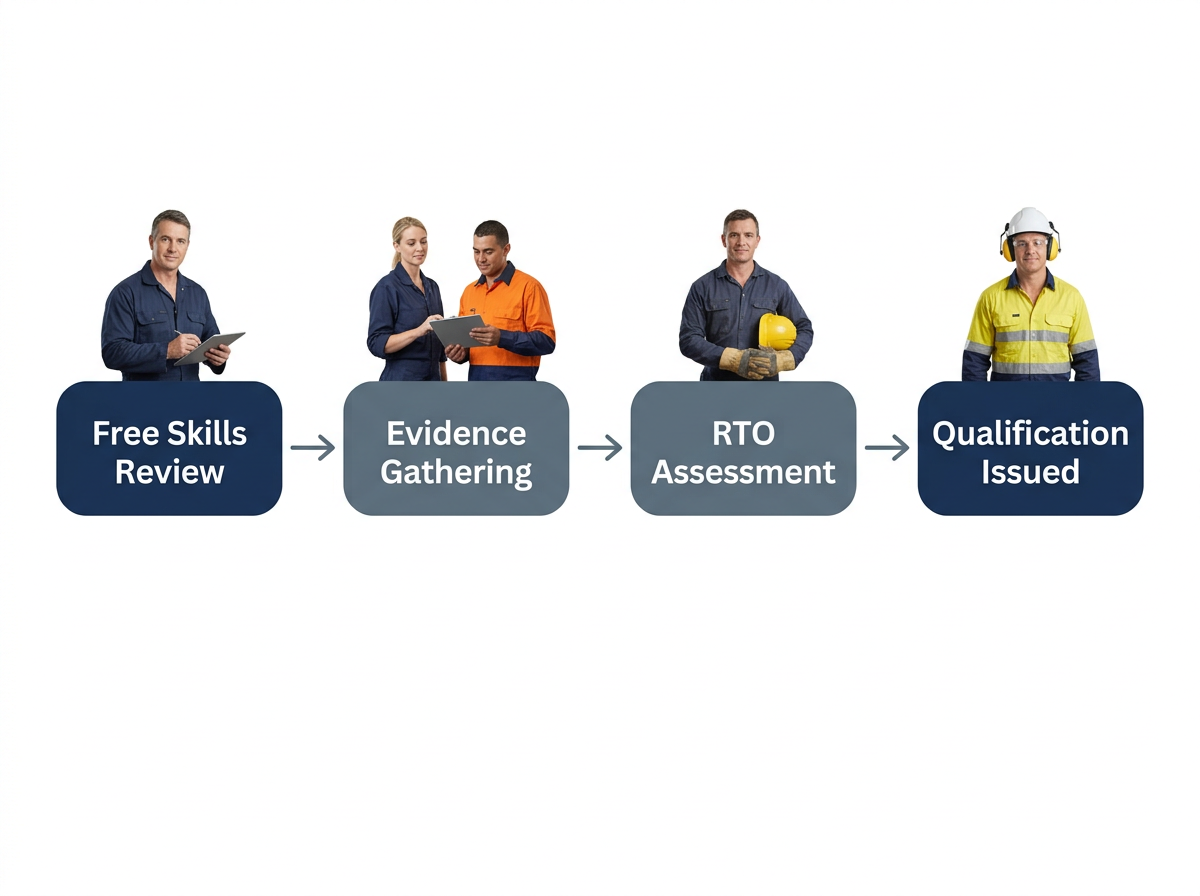
- Free Skills Review: A structured conversation to assess whether your professional experience aligns with the qualification's requirements. If the alignment is not there, we will tell you directly before you make any commitment.
- Evidence gathering: You compile documentation of your management experience, such as position descriptions, performance reviews, project records, documents you have written, and professional references. We guide you on what to collect and how to present it.
- RTO Assessment: An assessor from the Registered Training Organisation evaluates your evidence portfolio against the qualification's units. This formal assessment stage is conducted by a qualified professional from the RTO, not by our team.
- Qualification issued: If you demonstrate competency across all units, the RTO issues your qualification. If any gaps are identified, gap training is provided at no extra cost before the qualification is awarded.
Timeframes depend on your individual experience, how quickly you compile your evidence, and the assessing RTO. We do not make false promises about speed. Instead, we ensure the process remains manageable and provide guidance through every stage.
Is this pathway right for you?
RPL is designed for candidates with substantial, documented management experience. It works best if you have spent several years in roles that required actual operational and strategic responsibility. It is not a suitable option for those who have observed management without executing the work.
The practical question to ask yourself is this: if an assessor asked you to demonstrate your capability in strategic planning, operations, leadership, and financial decision-making, could you show them concrete examples of your work?
If you can, RPL is a practical way to make your experience visible to employers. If you are unsure, our Free Skills Review can clarify your options before you make any commitment to the process.
We prefer to direct you to the right pathway rather than enrol you in an unsuitable program. This direct approach is not a limitation; it is the foundation of a process you can rely on.
Recognition should not require starting over
You have a deep track record, even if it is not fully represented by a qualification. Your decisions, results, and leadership are real. The only missing element is the formal credential that translates your career history into a format HR systems recognise.
RPL is designed specifically for this scenario. It does not teach you what you already know. Instead, it assesses your existing skills through a regulated process and awards a qualification that reflects your actual level of competence.
For senior managers, an Advanced Diploma of Business (AQF Level 6) does more than validate your expertise. It can provide entry to postgraduate university programs that otherwise require an undergraduate degree.
Your practical experience is valuable. We help you present it in a format the system respects.
The decision is yours.
Ready to Get Recognised?
Start with a free skills review to find out if RPL is right for you.