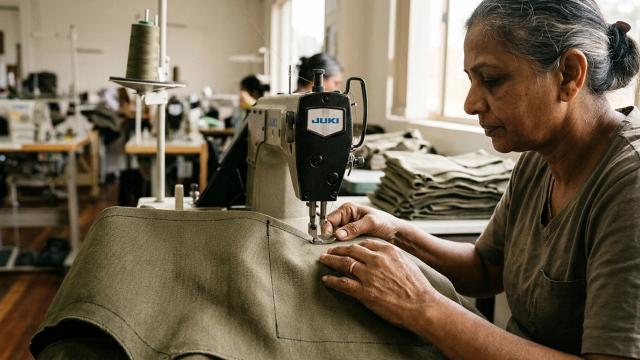
Your overseas fashion design or production management experience counts in Australia
Worked in fashion design or apparel production management overseas? Your experience may qualify for formal Australian recognition through RPL.
By RPL it Australia7 min read

The qualification wall that stops experienced fashion professionals
You have the experience. Years of it. Collections developed, production timelines managed, supplier relationships built, quality standards upheld. You have done the work that a senior fashion professional does, because that is exactly what you are.
Then you arrived in Australia, and the system looked at your career and saw nothing it could formally recognise.
This is not a skills gap. Your competence is not in question. What you are facing is a specific recognition gap. It is the distance between what you know and what the Australian qualification system can currently see. Your overseas credentials, your employer's reputation, and your years of demonstrated expertise exist in a form the system does not automatically read.
Fashion designers, production managers, technical designers, apparel development managers, and quality assurance leads face this same wall when they arrive in Australia. This wall is not about ability. It is about administrative form.
The recognition gap is real, but it is a gap that you can close.
What the recognition gap looks like in fashion and apparel
This recognition gap shows up in clear ways.
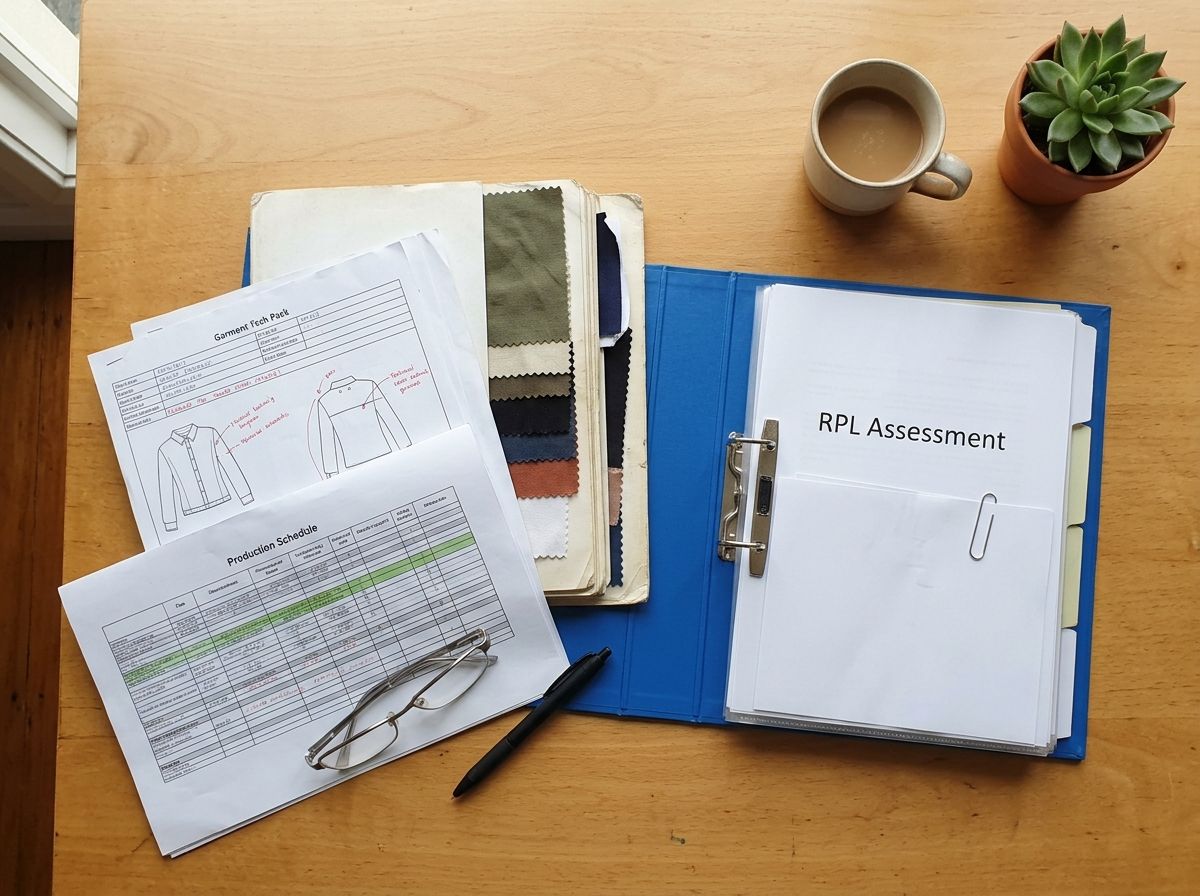
You apply for a senior role and find the employer requires an Australian qualification you do not hold, despite having managed equivalent responsibilities for a decade. You are told to enrol in a Diploma you have already completed in every practical sense through years of professional work. You watch a local graduate move into a role you are overqualified for, simply because their certificate is clear to the system and your experience is not.
If you have managed production timelines across multiple seasons, supervised pattern-making and sample development teams, sourced fabrics for commercial collections, overseen quality control, or led the technical development of garments from concept to production, you have been doing Diploma-level work. The recognition gap is the space between your actual work and the formal credential that names it.
Your experience is not less than a qualification. It is a different form of evidence. The problem is that the Australian system requires evidence in a specific format, and your overseas career is not yet in that format.
Why this happens: a problem of form, not skills
Australia operates a national qualification framework, the Australian Qualifications Framework (AQF), that defines the standards for every formally recognised qualification in the country. Qualifications issued under this framework are nationally consistent and verifiable. Overseas qualifications, regardless of their quality, are not automatically equivalent within this framework.
This is not a judgment about the quality of your training or your employer. It is a structural feature of how the Australian system works. A fashion degree from a respected institution overseas, or years of experience at a globally recognised label, does not map directly onto an AQF qualification because the mapping has never been formally done.
The system is not claiming your skills do not exist. It is simply stating that it cannot verify them yet.
The Diploma of Apparel, Fashion and Textiles (MST50122) is the Australian qualification that maps to senior-level expertise in fashion design and production management. It sits at AQF Level 5, the Diploma level, and is nationally recognised across Australia. Accessing it through the standard study pathway would mean repeating study you have already completed in practice. But there is another pathway: Recognition of Prior Learning.
What the Diploma of Apparel, Fashion and Textiles (MST50122) covers
MST50122 is the Diploma of Apparel, Fashion and Textiles, a nationally recognised qualification under the AQF. It covers the competencies expected of senior professionals working in fashion design, apparel production management, textile specification, and related fields.
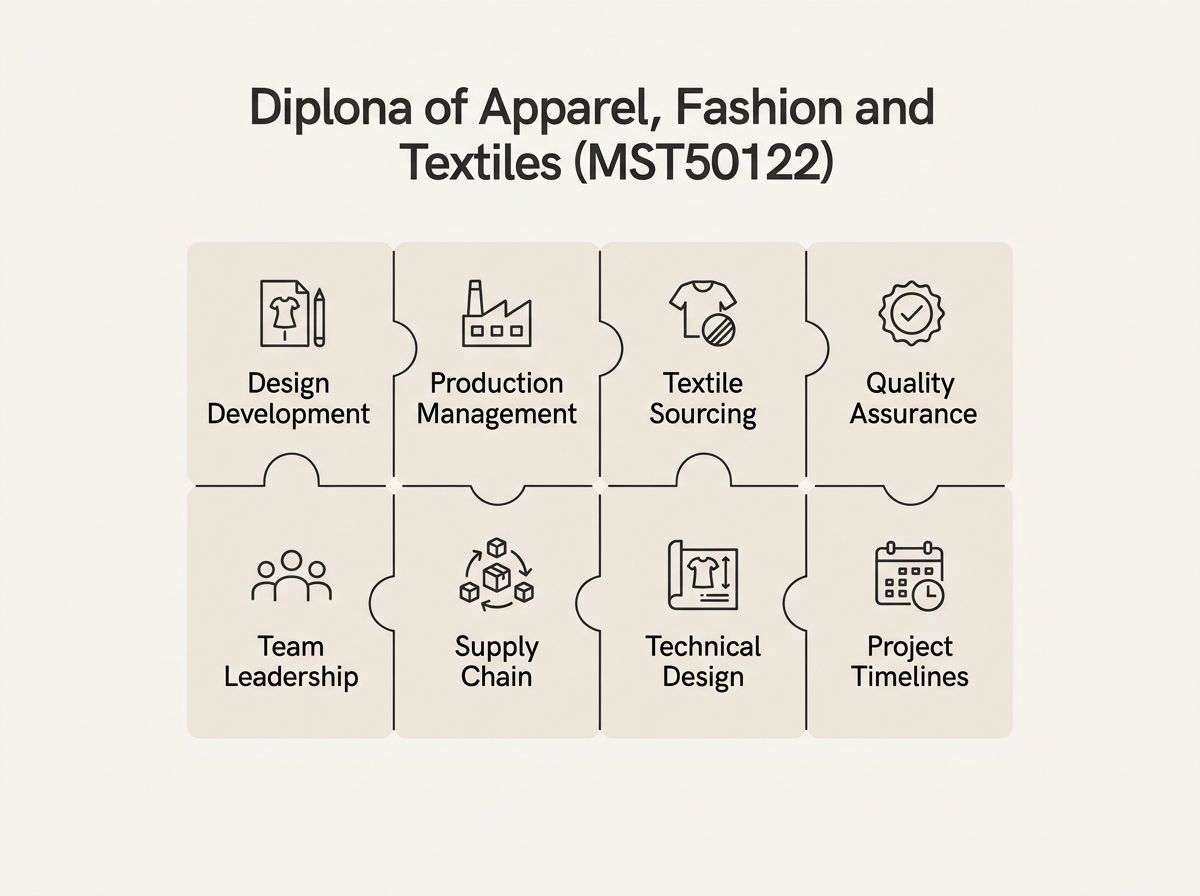
In plain terms, the qualification addresses work like this:
- Developing and managing design concepts and seasonal collections
- Managing apparel production processes, timelines, and quality standards
- Specifying and sourcing fabrics for commercial production
- Overseeing pattern-making, sample development, and technical design
- Supervising production teams and supplier relationships
- Applying quality assurance processes across the production cycle
- Applying textile properties and performance requirements
- Managing projects and resources within a fashion or apparel business context
If you recognize your own work history in that list, your experience may already align with what this qualification formally assesses.
The qualification is delivered by registered training organisations (RTOs) across Australia. The specific units of competency, including core and elective units, are published on training.gov.au, the national register of vocational qualifications. We recommend reviewing the current unit list directly to confirm how it matches your specific background.
If you want to know how evidence from overseas apparel work is assessed, our article on what counts as evidence for apparel and textiles RPL when you trained overseas covers this in detail.
How RPL turns your work history into formal evidence
Recognition of Prior Learning (RPL) is a formal assessment pathway available under the Australian Qualifications Framework. It allows a registered training organisation to evaluate your existing skills, knowledge, and experience against the competency standards of a qualification. If your evidence demonstrates that you meet those standards, you receive the qualification without repeating study you have already completed during your career.
RPL is not a shortcut. It is a rigorous assessment process conducted by a qualified assessor from a registered training organisation. The assessor's role is to determine whether your experience genuinely meets the competency standards of the qualification, rather than awarding a certificate as a formality. Gap training may be required if your experience does not fully cover certain competencies, which is a standard part of the process.
For fashion and apparel professionals, the evidence that typically supports an RPL application includes items like a portfolio of design work or technical specifications you have created. It can also include production records, quality reports, or project documentation from roles you have held, along with references or statutory declarations from employers or clients who can speak to your responsibilities. Samples of work, such as technical flats, range plans, or fabric specifications, and records of professional development, industry training, or relevant certifications are also highly useful.
The specific evidence requirements vary by RTO and assessor. What matters is that the evidence is authentic, sufficient, and directly relevant to the competencies being assessed. RPL it guides you through this evidence-gathering process, helping you understand what to collect and how to present it so your professional expertise can be formally assessed.
Your experience is your evidence. A guided pathway is how it becomes formally recognised.
Who this pathway is and isn't for
Honest guidance matters here. RPL for the Diploma of Apparel, Fashion and Textiles is likely to be a suitable pathway if you have substantial, senior-level experience in the fashion or apparel industry, typically several years working in roles such as fashion designer, production manager, technical designer, apparel development manager, or quality assurance manager.
It is likely to be suitable if your work has involved direct responsibility, such as managing collections or production runs rather than assisting with them, making decisions about fabric, construction, and quality rather than just executing instructions, and leading teams or supplier relationships.
It is less likely to be suitable if you are early in your career, if your experience has been primarily in entry-level or support roles, or if your background is in adjacent areas that do not directly map to the qualification's competency standards.
We would rather guide you toward the right pathway than enrol you in the wrong one. If RPL is not the right fit for your situation, we will tell you that honestly and help you understand what alternatives might be available.
The Free Skills Review is designed for this exact purpose, providing an honest, no-obligation assessment of whether your experience aligns with MST50122 before you make any commitment.
Your experience has already done the work, the next step is demonstrating it
The recognition gap is not permanent. It is a structural problem with a structured solution.
Your overseas career in fashion design or apparel production management is real. The expertise you built in developing collections, managing production runs, leading teams, and upholding standards exists. The Australian qualification system has yet to see it in the required form. RPL is the process that translates your experience into evidence the system can formally assess.
The Diploma of Apparel, Fashion and Textiles (MST50122) is the qualification that maps to your level of expertise. Whether it is the right pathway for your specific background is a question worth answering honestly before you commit to anything.
You may also find it useful to read about how overseas garment and apparel experience is recognised through RPL, which covers the evidence and process in more detail for those with production backgrounds.
Learn more about the Diploma of Apparel, Fashion and Textiles (MST50122) and the RPL pathway on the qualification page.
Your skills speak for themselves. We help them be heard.
The decision to take the next step is yours.
General information only, current at the date shown. Licensing rules change, so check the current requirements with the relevant regulator before you rely on them. RPL it Australia is a student support service, not a Registered Training Organisation; qualifications are assessed and issued by our partner RTOs.