Stop Treating Your Cert IV Plumbing Like Homework — It's Just Paperwork for What You Did Yesterday
Experienced plumbers put off the cert IV plumbing thinking it means going back to school. It doesn't. Here's what the RPL process actually looks like.
By RPL it Australia7 min read

The mental block keeping experienced plumbers unlicenced
You have the experience. You have done the work. You have supervised apprentices, pulled complex jobs together, and solved problems that a first-year couldn't touch. And yet the cert IV plumbing upgrade sits on the to-do list — month after month — because somewhere in the back of your mind, you picture a classroom. Textbooks. Sitting next to a 19-year-old learning how to solder a joint.
That image is the problem. Not the qualification. Not the process. The image.
This pattern comes up repeatedly among experienced tradespeople who have delayed their licence upgrade. The assumption is that getting a cert 4 plumbing means going back to study — that it means being tested on things you already know, in a format designed for people who don't know them yet. That assumption is wrong. And it is costing experienced plumbers real work.
If you've already read about how a Cert III limits what work you can legally take on, you'll understand why the upgrade matters. The question this article answers is different: what does getting there actually involve?
What the cert IV plumbing RPL process actually involves
Recognition of Prior Learning — RPL — is not a course. It is an assessment process. The difference matters.
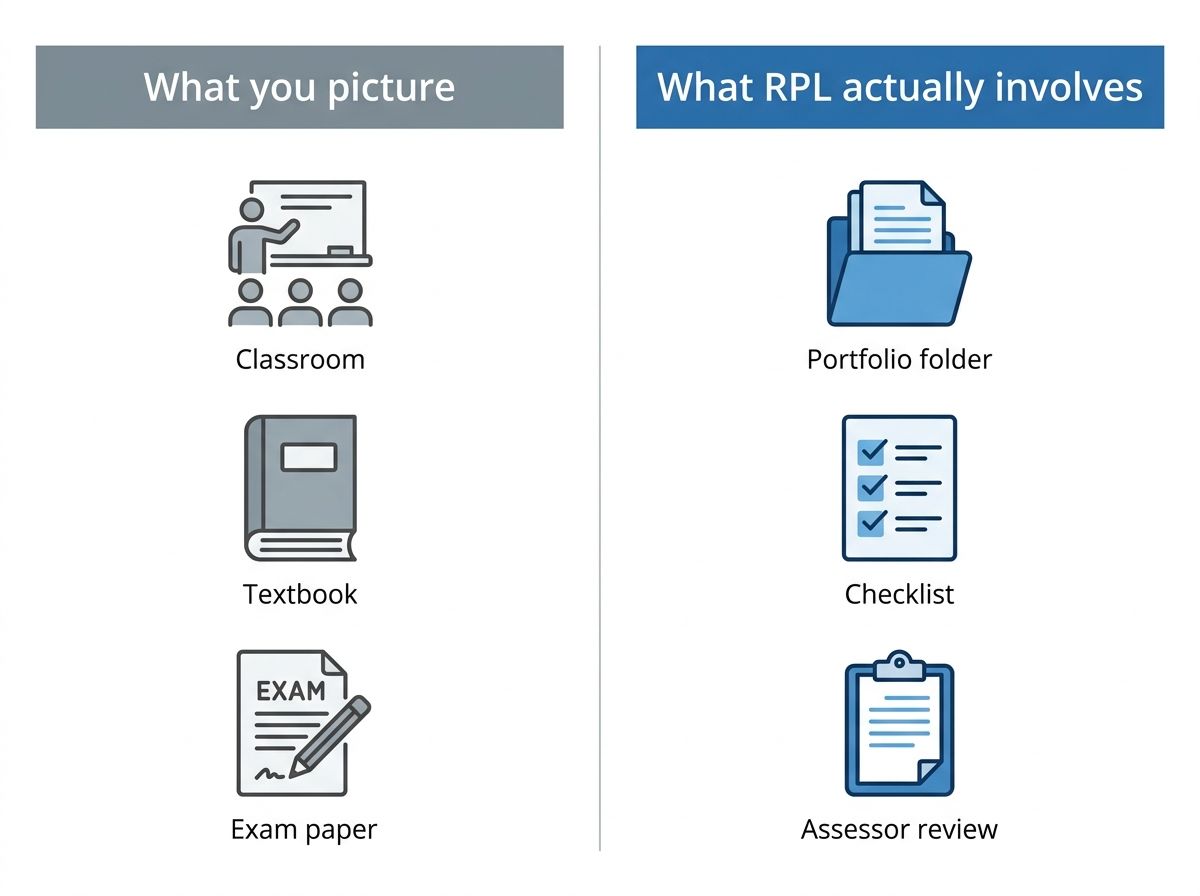
According to the Australian Skills Quality Authority, RPL is defined as 'a process that assesses an individual's formal, non-formal and informal learning to determine the extent to which the individual meets the requirements specified in the training package.' And assessment in the VET system is defined as 'the process of collecting evidence and making judgements on whether competency has been achieved.'
Read that again. The assessor is not testing whether you can learn. They are determining whether you already know. The work is in demonstrating what you have already done — not acquiring something new.
The Certificate IV in Plumbing and Services (CPC40920) is a nationally recognised qualification requiring 15 units of competency — 10 core and 5 elective — structured around the knowledge and skills a plumbing contractor needs to operate independently.
The core units cover areas like designing and sizing stormwater drainage, roof drainage, sanitary plumbing, and hot and cold water services. They also include estimating and costing work and interpreting plans — the kind of tasks a working plumbing contractor handles on every significant job.
If you have been doing this work for years, you have already been demonstrating these competencies. The RPL process exists to formally recognise that.
One important note: the CPC40920 qualification has entry requirements. For the operations stream, a candidate must hold a Certificate III in Plumbing or be authorised to undertake plumbing work by an Australian regulator or licensing body. This is not a pathway for someone starting out — it is designed for experienced practitioners who are ready to formalise what they already know.
The full qualification details for CPC40920, including packaging rules and entry requirements, are available on the national training register.
The portfolio mindset: your last job was already your assessment
Here is the shift that changes everything. Stop thinking about what you need to learn. Start thinking about what you need to document.
The photos on your phone from last month's job. The compliance certificates you signed off. The apprentice you corrected on the correct fall for a drain last Tuesday. The quote you put together for a commercial fit-out. The supervisor's report you wrote. These are not just memories. They are assessment materials — waiting to be organised.
RPL assessors for the cert 4 plumbing use a combination of methods to evaluate competency. According to one RPL provider offering CPC40920 assessment, these typically include portfolio reviews, interviews, practical demonstrations, and written assessments. The evidence you bring to that process can include referee testimonials from employers or supervisors, photos of completed work, records of compliance activities, and documentation of your work history.
The specific evidence requirements vary between registered training organisations (RTOs) and will depend on which units of competency are being assessed. What is consistent is the underlying principle: the assessor is looking for evidence that you can already do the work, not evidence that you have sat through a course about it.
Think about the last complex job you managed. Did you design or specify any drainage or water services? Did you supervise others? Did you estimate costs or interpret plans? Did you ensure the work met regulatory requirements? If you answered yes to any of those, you have evidence. It just needs to be assembled.
This is what RPL advisers mean when they describe the process as a documentation exercise. The competency already exists. The task is presenting it in a form that a qualified assessor can evaluate against the national standard.
Why the homework framing is costing you more than you think
Every month the cert IV plumbing upgrade stays on the to-do list, there are real consequences. Not abstract ones.
In New South Wales, for example, anyone doing plumbing, draining or gasfitting work must hold a licence or certificate — regardless of the cost or type of work. Tradesperson certificate holders must work under the general supervision of a contractor licence holder or qualified supervisor certificate holder. Without the contractor licence, you cannot operate independently. You cannot pull permits in your own name. You cannot legally supervise others as the responsible party on a job.
Licensing requirements vary between states and territories across Australia, and the specific qualifications required for a contractor licence differ by jurisdiction. What is consistent is that the Certificate IV in Plumbing and Services (CPC40920) is the qualification level associated with contractor and supervisory roles in the plumbing trade. The gap between what a Certificate III holder can legally do and what a licensed contractor can do is significant — and it grows more consequential as your career advances.
The NSW Government's licensing page for plumbing, draining and gasfitting work sets out the licence types, supervision requirements, and the consequences of working without the appropriate credentials.
The mental block — the image of a classroom — is not just an inconvenience. It is why experienced plumbers are working under someone else's licence, turning down jobs they are fully capable of doing, and watching less-credentialled people operate with more legal authority. The cost is real. The cause is a framing problem, not a capability problem.
What happens when you shift the frame
When an experienced plumber stops thinking 'I need to study for my cert 4 plumbing' and starts thinking 'I need to document what I already do,' the process becomes navigable.
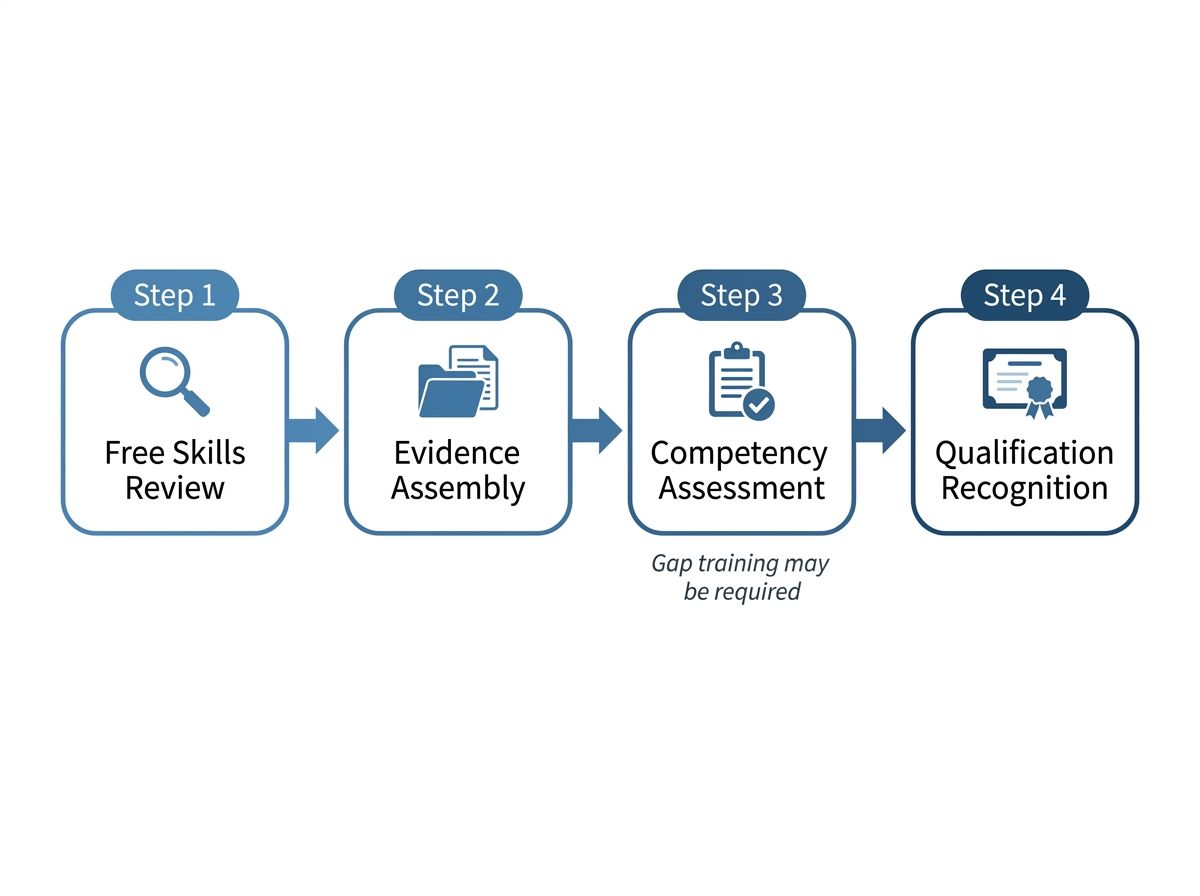
The guided RPL pathway typically works in stages. First, a skills review — an honest assessment of whether your existing experience is likely to support an RPL pathway for the CPC40920. This is not a commitment to enrol; it is a suitability check. Second, evidence assembly — working with a guide to identify, organise, and present the documentation that maps your experience to the qualification's units of competency. Third, formal assessment by a qualified assessor from a registered training organisation. The assessor reviews your portfolio, may conduct an interview or practical demonstration, and determines whether competency has been demonstrated.
If gaps are identified during assessment, gap training may be required. Some RTOs include gap training within their overall RPL fee; others charge separately. This is something to clarify with your chosen RTO before you begin. Gap training is not a full course — it targets only the specific areas where additional evidence or demonstration is needed.
According to Career Skills Australia, an RTO offering CPC40920 RPL, the process typically takes around three months from start to qualification — though this is an indicative estimate from one provider, and actual timeframes will vary based on your evidence readiness, the RTO's assessment schedule, and individual circumstances.
The process is not simple. It is rigorous — because the qualification is nationally recognised and the assessment is genuine. But rigour applied to what you already know is a very different thing from starting from zero.
The free skills review: find out where you actually stand
Before committing to anything, you can find out whether your existing experience is likely to support an RPL pathway for the CPC40920. The Free Skills Review is a no-obligation starting point — honest guidance on suitability before any enrolment decision is made.
It is not a sales call. It is not a commitment. It is an honest answer to the question every experienced plumber eventually asks: does what I have actually done count?
You have the experience. The question is whether it is presented in a form that formal systems can recognise. That is what the skills review is for.
If you are still weighing up whether the RPL pathway is right for your situation, it is worth reading about the truth about the plumbing cert IV — specifically what the process involves for experienced tradespeople who have been putting it off.
General information only, current at the date shown. Licensing rules change, so check the current requirements with the relevant regulator before you rely on them. RPL it Australia is a student support service, not a Registered Training Organisation; qualifications are assessed and issued by our partner RTOs.