Why Getting Licensed Isn't About Relearning Your Trade
Regulators don't doubt your skills — they just need them documented differently. How RPL Australia translates your experience into the language licensing bodies understand.
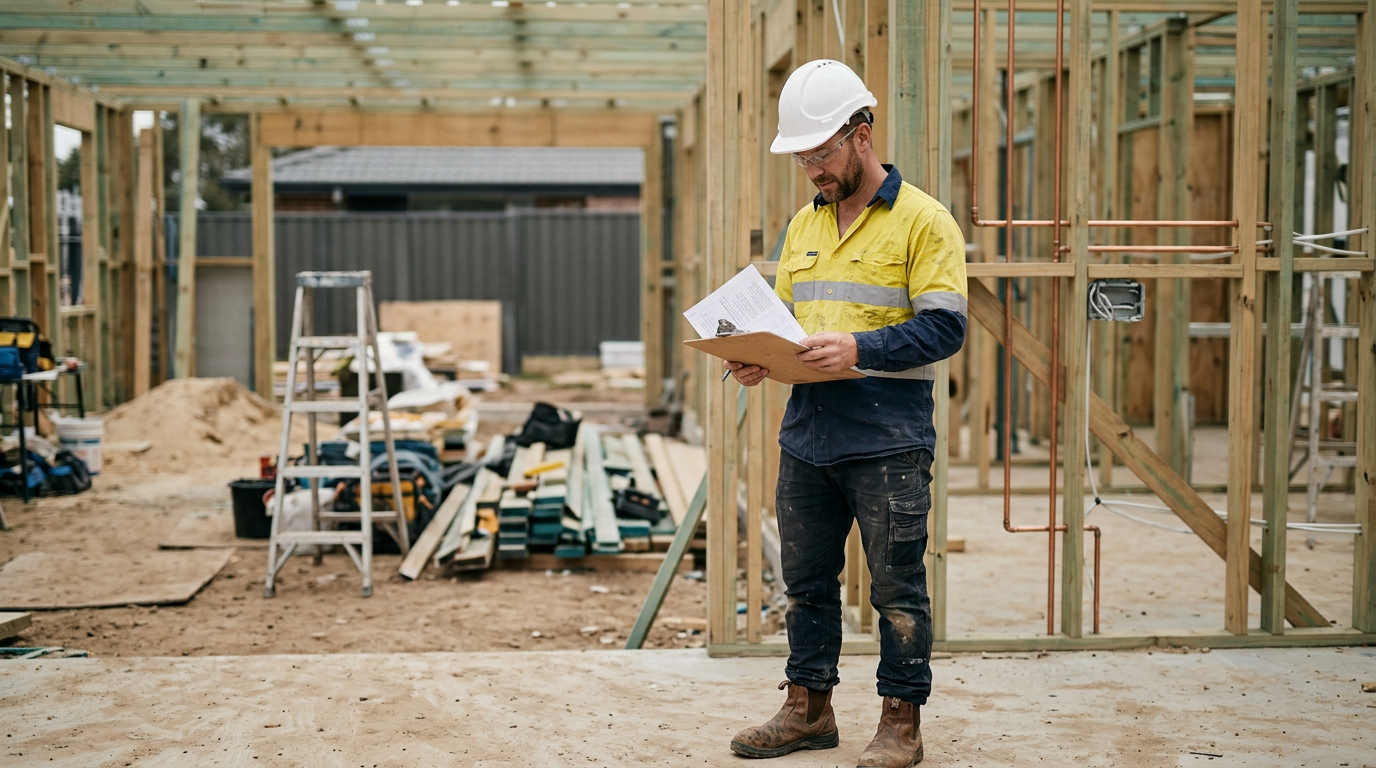
The licensing system isn't questioning your skills
You have the skills. You've had them for years. The regulator knows that too — or at least, the system isn't designed to doubt it. So why does getting licensed feel like being told you don't know your own trade?
Here's the counterintuitive truth: licensing bodies aren't assessing whether you can do the work. They're checking whether your competence has been documented in a specific, nationally standardised format. The system exists for accountability and public safety — not to block skilled workers who already know what they're doing.
The frustration is real. Being told you need a qualification to keep doing work you've been doing for a decade is genuinely maddening. But the source of that frustration isn't incompetence — it's a format mismatch. Your skills exist. They just haven't been recorded in the language the regulator requires.
That distinction matters. Because if the problem is a language barrier — not a skills gap — then the solution isn't retraining. It's translation.
Two languages, one industry
Think about how you describe your work. You talk in years on the tools, in jobs completed, in problems solved under pressure. You know what it takes to run a crew, manage a complex install, or troubleshoot a system that's behaving badly. That knowledge is real. It's deep. It's hard-won.
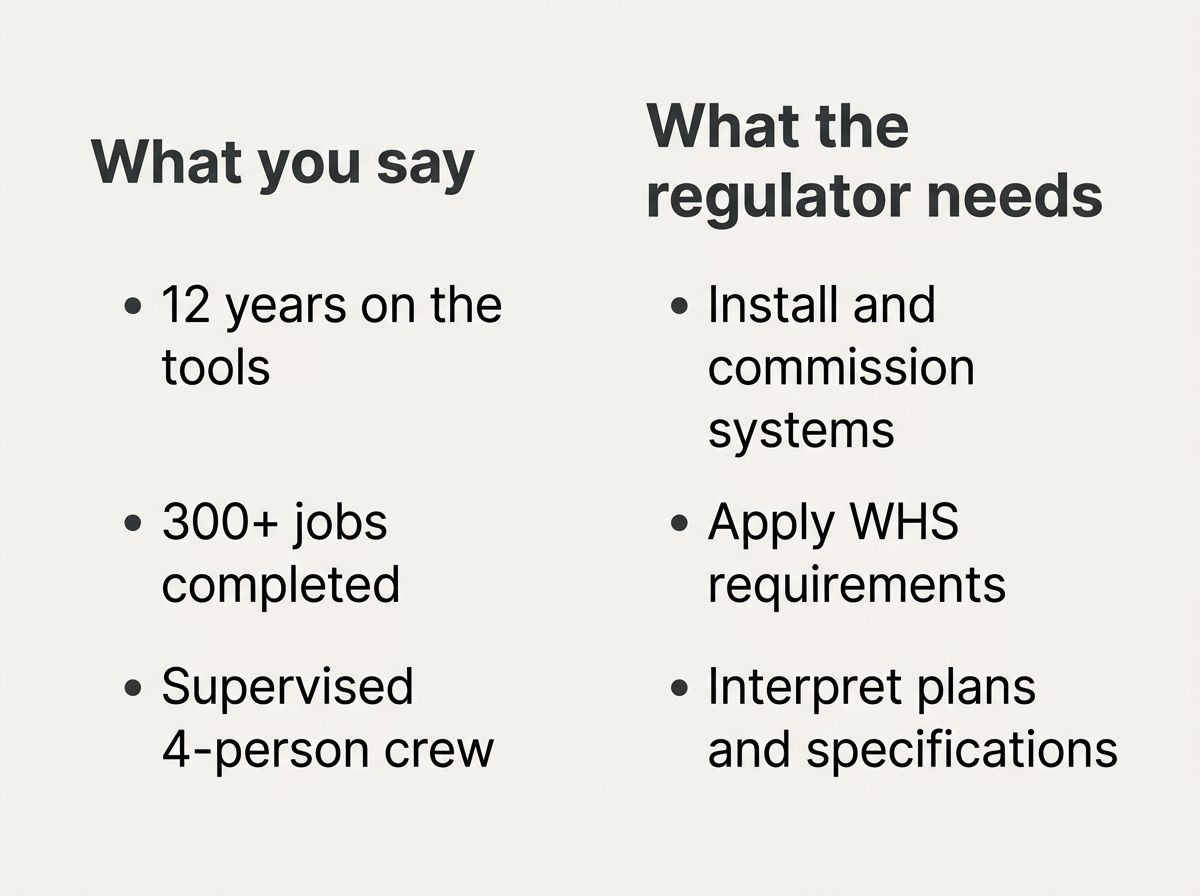
Now think about how a licensing body describes the same work. They don't talk in years or jobs. They talk in competency units — formal statements that describe what a qualified person must be able to do, under what conditions, and to what standard. These units are part of nationally recognised training packages, and they're the language that qualifications — and by extension, licences — are built on.
Neither language is wrong. They're just describing the same thing from completely different angles. The tradesperson speaks from lived experience. The regulator speaks from a documented standard. The gap between them isn't a gap in competence — it's a gap in translation.
That's the language barrier. And it's the real reason experienced practitioners end up stuck behind a licensing wall they feel they shouldn't be anywhere near.
What the regulatory language actually looks like
The competency units that underpin trade qualifications in Australia are publicly available. They describe, in formal language, the skills and knowledge a qualified person must demonstrate. For a plumber, an electrician, or a carpenter, these units cover everything from technical installation procedures to workplace health and safety requirements to reading and interpreting plans.
The titles of these units can sound unfamiliar — formal, bureaucratic, nothing like the way you'd describe your own work. But when you read what they're actually asking for, you'll recognise it immediately. They're describing things you do every day. The language is different. The competence being described is yours.
This is the demystifying moment for most experienced practitioners. The regulatory standard isn't some abstract academic test. It's a structured description of professional competence — the same competence you've been building on the job for years. The gap isn't what you know. It's that nobody has formally matched what you know to what the standard says.
That matching is exactly what recognition of prior learning — RPL — is designed to do.
How RPL matches your work to the regulatory standard
RPL assessment is a matching exercise. Your documented work history is compared against the competency units required for the qualification. If your evidence demonstrates the competency, it counts. You don't repeat what you've already done. You prove what you've already done.
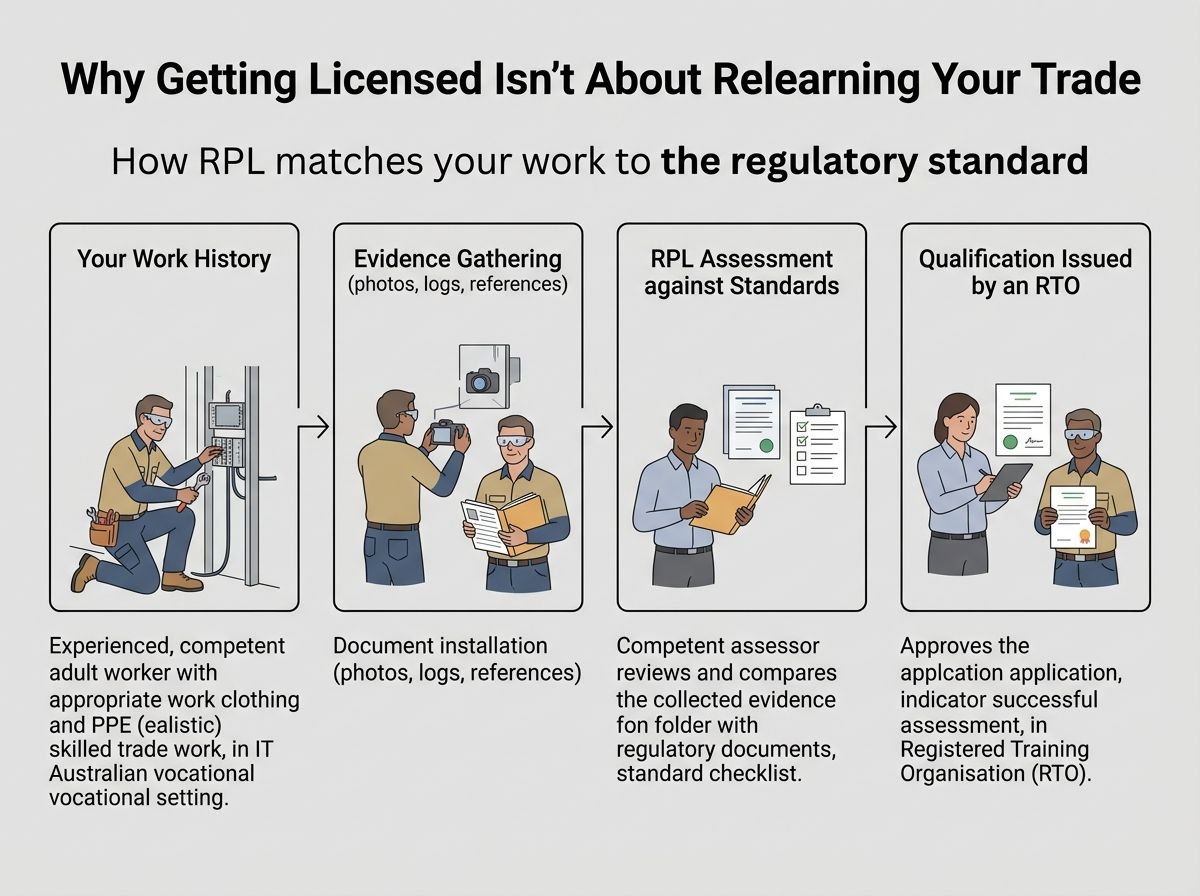
The evidence that supports an RPL assessment is practical and grounded in real work. It typically includes records of jobs completed, photographs of work in progress or finished installations, logbooks or site diaries, references from supervisors or employers, and statements from colleagues who can verify your work. The point is to build a documented picture of your competence — one that an assessor can map to the relevant units.
The assessment itself is conducted by a qualified assessor from a registered training organisation — an RTO. RPL it doesn't issue qualifications. What RPL it does is guide you through the evidence-gathering process: helping you understand what's needed, organise your documentation, and present your case to the RTO in a way that's clear and complete. The RTO's assessor then makes the professional judgement about whether your evidence meets the standard.
This is a genuine assessment process. It involves real work and real documentation. But for someone who has been doing this work for years, the documentation is the hard part — not the competence. The skills are already there. The task is making them visible in the format the system requires.
The regulator doesn't care how you learned it
Here's the part that surprises most people: the pathway you took to acquire your skills is irrelevant to the assessment. A tradesperson who learned on the job for fifteen years and one who completed a formal apprenticeship are assessed against the same competency units. The question isn't how you learned — it's whether you can demonstrate the competency.
This is a foundational principle of the Australian vocational education and training system. Recognition of prior learning exists precisely because the system acknowledges that competence can be acquired in many ways — through formal study, through on-the-job experience, through self-directed learning, or through a combination of all three. What matters is the competence itself, not the classroom it came from.
For experienced tradespeople, this is the principle that makes RPL Australia a legitimate pathway — not a workaround. The qualification obtained through RPL is the same qualification. It meets the same licensing prerequisites. It carries the same weight. Because it was assessed against the same standard.
The system isn't rigged against you. It just needs the evidence in the right format. That's a solvable problem.
The deeper question — why on-the-job learning counts as much as classroom study — is worth understanding before you start the process.
What this means for you
If you've been doing this work — on sites, in the field, solving real problems — the competence is already there. The question is whether it has been documented in the format the regulator needs.
RPL Australia is the guided process that helps you gather that documentation, match it to the relevant competency units, and present it to a registered training organisation for formal assessment. The result, when your evidence meets the standard, is a qualification that satisfies the licensing prerequisite — without repeating work you've already done.
That's not a shortcut. It's a recognition that your years of experience have value — and that the formal system has a legitimate mechanism for acknowledging it.
The decision is yours. But if the competence is already there, the documentation is the next step — not the classroom.
See which qualifications can be obtained through RPL and whether your trade is covered.
Ready to Get Recognised?
Start with a free skills review to find out if RPL is right for you.