The mobile plant technology RPL pathway most technicians don't know exists
Most mobile plant technicians do not know RPL exists for AUR31220. If you have field experience, this pathway lets your work speak without a full course.
By RPL it Australia6 min read
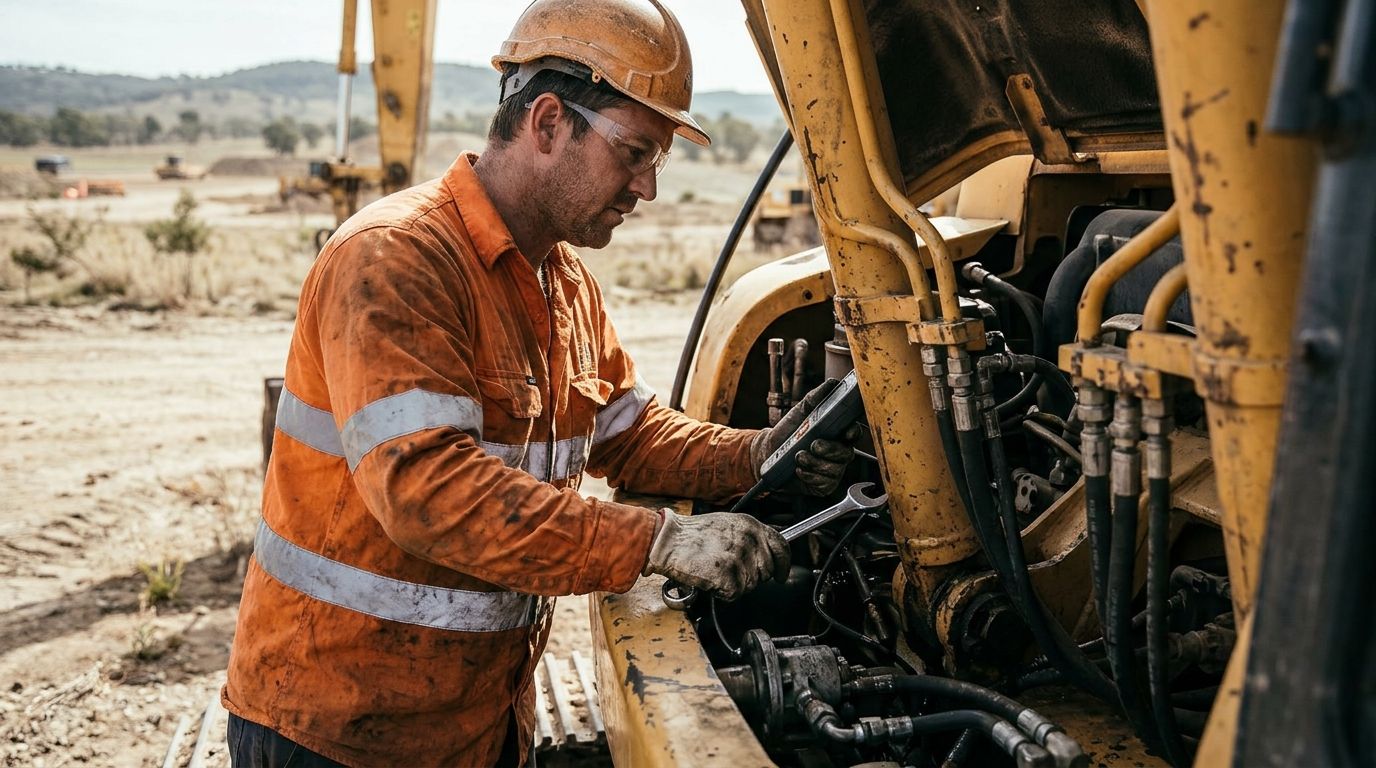
You have been keeping heavy machinery running for years. Excavators, graders, loaders; equipment that costs more than most people earn in a decade. Employers trust you with it. Supervisors rely on you. Yet when the question of formal qualification comes up, the assumption is almost always the same: you would have to go back to the beginning.
That assumption is the problem. It costs experienced mobile plant technicians time they do not need to spend.
The assumption that costs experienced technicians months
When most mobile plant technicians think about getting the Certificate III in Mobile Plant Technology (AUR31220), they picture a full training course with enrolment, structured units, and assessments built for someone learning the trade from scratch. They assume the process is designed for beginners, not for people who have already spent years in the field.
That picture is accurate for one pathway. It is not the only option.
Recognition of Prior Learning, or RPL, is a nationally recognised assessment pathway available for AUR31220. It does not require you to repeat training you have already completed through years of hands-on work. Instead, it assesses the skills you already have, using evidence drawn from your existing experience.
Most experienced technicians do not know this option exists. The ones who do have a significant advantage.
If you want to understand how experienced mobile plant technicians have used this pathway, the article on the RPL pathway for mobile plant technicians covers the validation side of that story.
What AUR31220 actually covers and why experienced technicians already know it
The Certificate III in Mobile Plant Technology (AUR31220) is a nationally recognised qualification covering the skills required to service, maintain, and repair mobile plant equipment. The scope includes preventive maintenance, fault diagnosis, component repair and replacement, and the safe operation and inspection of plant machinery across several equipment types.
For a technician who has spent years working on excavators, graders, loaders, or similar machinery in mining, construction, civil, or agricultural settings, these are not new concepts. They are the daily work. The qualification is not designed to teach you what you already know; it is designed to formally assess and recognise it.
That distinction matters. RPL works because the qualification's competency framework maps directly to real field tasks. If your work history covers the scope of AUR31220, your experience can be presented as evidence, acting as the basis for formal recognition rather than a starting point for new learning.
Why most technicians do not know RPL is an option for this qualification
RPL is available for the Certificate III in Mobile Plant Technology. This is not a niche arrangement or a special exception. Under the Australian Qualifications Framework, Recognition of Prior Learning is available for all nationally recognised qualifications, including AUR31220.
Why do most technicians not know about it?
The training market is built around course enrolment. That is how most RTOs present their offerings, how most employers think about qualification pathways, and how most industry conversations frame the question of getting qualified. RPL is not prominently advertised. It tends to travel by word of mouth, if it travels at all.
The result is an information gap. Technicians who know RPL exists for AUR31220 can pursue a pathway that uses their existing work as evidence. Technicians who do not know it exists assume the only option is to start a course. That gap is the hidden advantage.
What the RPL pathway for AUR31220 actually involves
RPL is a genuine assessment. It is not a shortcut, and it does not bypass the rigour that makes a nationally recognised qualification meaningful. The core difference is that the evidence comes from your existing work, rather than from completing new training.
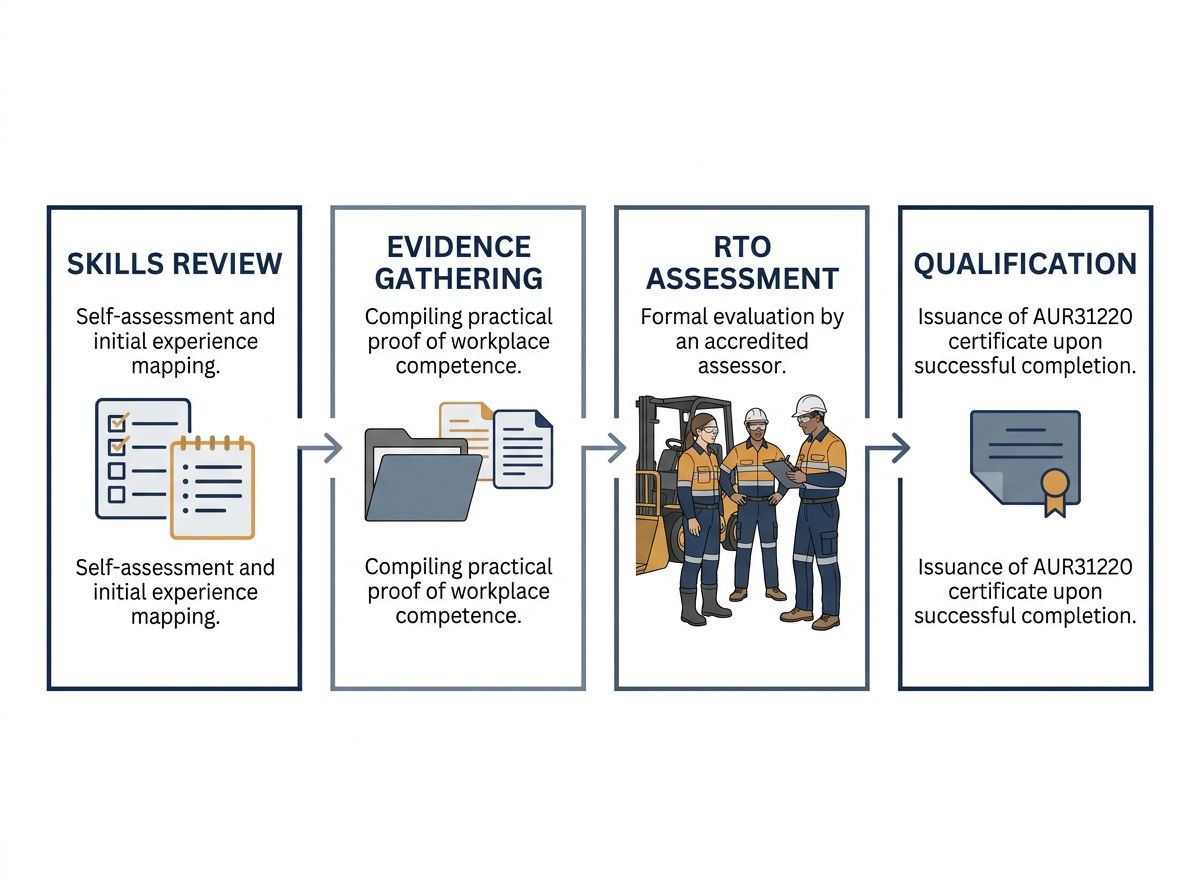
The process typically involves four stages:
- Skills Review: An initial assessment of your experience against the qualification's competency requirements. This is where suitability is established before any commitment is made.
- Evidence Gathering: Compiling documentation that demonstrates your competency. This generally includes work history records, employment references, logbooks or maintenance records, and can include photographs of completed work or practical observation by an assessor.
- Assessment: A qualified assessor from the delivering Registered Training Organisation (RTO) reviews your evidence and determines competency against the AUR31220 units. The RTO conducts the assessment and issues the qualification, not RPL it.
- Outcome: If competency is demonstrated across all required units, the qualification is issued. If gaps are identified, gap training is provided to address them. This gap training is typically provided at no additional cost.
The timeline for RPL assessment varies depending on the complexity of your experience, the completeness of your evidence, and the RTO's assessment schedule. It is not possible to guarantee a specific timeframe. Any provider who does so is making a promise that is not theirs to keep.
Who this pathway is and is not suitable for
RPL works when the experience is there. It does not work when it is not, and honest guidance about that distinction is part of the process.
The pathway is most likely to be suitable for technicians who have worked across a range of mobile plant equipment types, have a documented work history that can be verified by employers or supervisors, and whose experience covers the breadth of competencies within AUR31220, rather than just one narrow area of the trade.
The pathway is less likely to be suitable for technicians who are early in their careers, who have worked in a very narrow equipment specialisation, or who lack the documentation needed to support an evidence-based assessment. In those cases, a full course or a blended pathway may be a better fit. A reliable RPL provider will tell you that before you commit to anything.
The difference between demonstrated skill and formal recognition is not always about competency. Sometimes it is about evidence. A technician can be highly capable and still not have the documentation to support an RPL application. Knowing that before you start saves time.
The first step: A Free Skills Review
The most direct way to find out whether the RPL pathway applies to your situation is a Free Skills Review. This is an initial assessment of your experience against the AUR31220 competency requirements, conducted before any enrolment, before any commitment, and at no cost.
It answers the question most technicians are actually asking: does my experience qualify?
If it does, you will understand what evidence you need to gather and what the assessment process looks like. If it does not, or if there are gaps, you will know that too. You can then make an informed decision about the right pathway.
The decision is yours. The Free Skills Review is where it starts: free, and with no obligation to proceed.
General information only, current at the date shown. Licensing rules change, so check the current requirements with the relevant regulator before you rely on them. RPL it Australia is a student support service, not a Registered Training Organisation; qualifications are assessed and issued by our partner RTOs.