You've Kept Heavy Machinery Running for Years: RPL Can Turn Experience Into a Qualification
Have years of experience with excavators, graders or cranes but no qualification? Learn how RPL turns your hands-on work into an AUR31220 certificate.
By RPL it Australia7 min read
The challenge most mobile plant technicians face
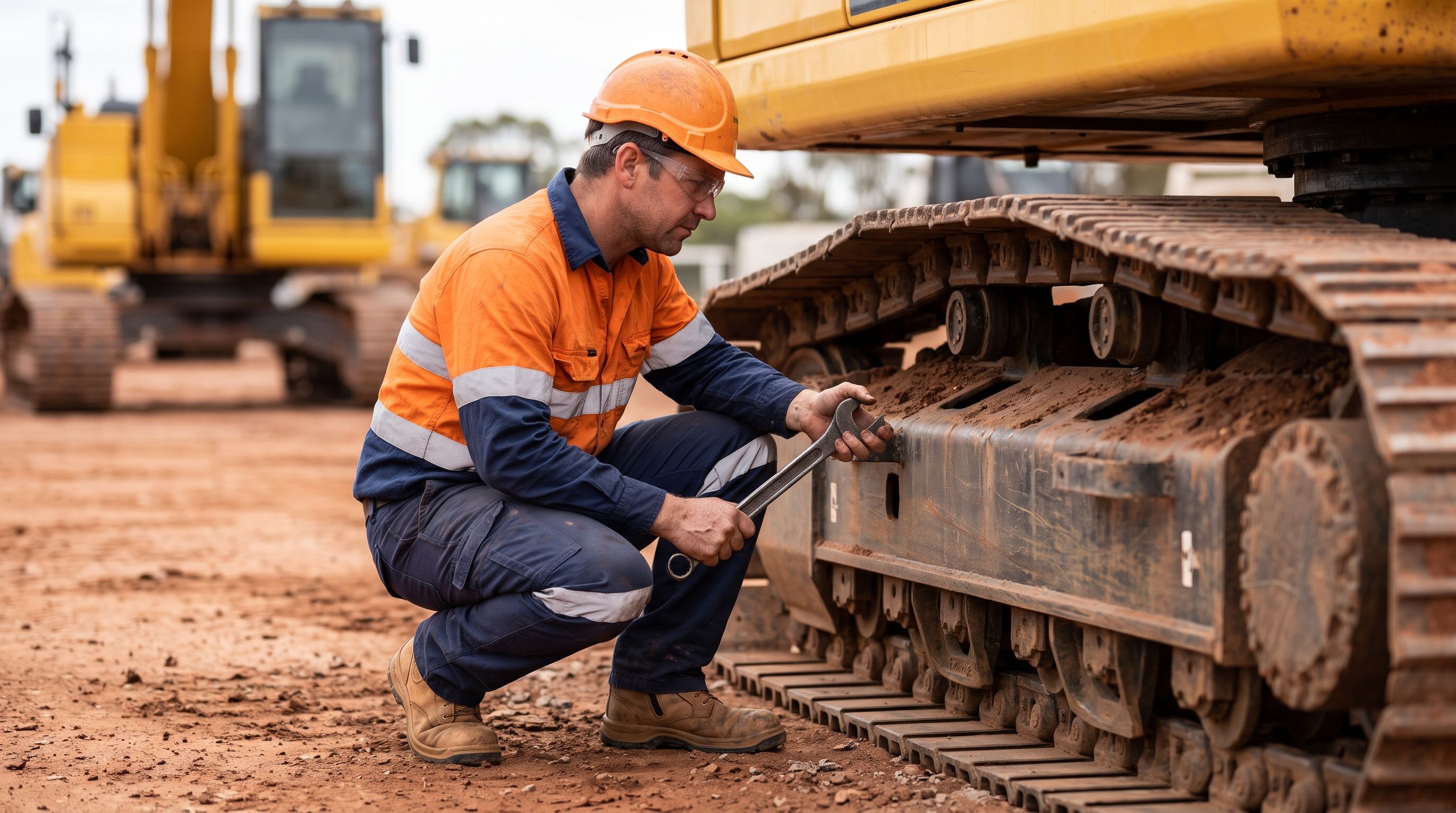
You know the machinery. You know it the way you know your own hands: the sound a hydraulic system makes before a failure, the feel of an undercarriage needing service, and the difference between a simple fault code and a serious mechanical breakdown. You have kept heavy excavators running on civil construction sites, serviced graders in remote locations, and diagnosed complex issues on mobile cranes that operators could not explain clearly.
Then a new job application, a strict tender requirement, or a conversation with a new manager brings up a challenging question: do you hold the formal Certificate III in Mobile Plant Technology?
This scenario is common across the Australian mobile plant industry. Experienced technicians who are trusted daily with heavy machinery worth hundreds of thousands of dollars find themselves held back by the lack of a formal certificate. It is not because their actual trade skills are in doubt, but because the formal industry system requires a recognized piece of paper to verify those skills.
The barrier is not about your actual daily performance. It is about having the official qualification that grants you access to opportunities. Recognizing this distinction is the starting point for understanding how the RPL process works.
Stage one: learning on the job
Most mobile plant technicians did not start their trade careers in a traditional classroom. They began directly on site as an operator's assistant, a general labourer who asked the right questions, or a workshop hand who showed up early and stayed late. They built their skills by watching, practicing, making mistakes, and learning how to correct them.
Over the years, the maintenance tasks became more complex, including engine rebuilds, hydraulic system troubleshooting, detailed fault diagnosis, undercarriage rebuilds, and electrical work. This level of maintenance requires actual problem-solving ability, not just following a basic maintenance checklist.
By the time a technician has worked for five or ten years on the tools, they have built a depth of practical knowledge that is difficult to replicate in a training course. They have serviced excavators, graders, dozers, scrapers, and cranes across different makes, models, and site conditions, solving problems that manuals do not cover.
None of this valuable learning was formally documented in a logbook. It happened on site, under tight time pressure, and with real machinery. That hands-on background is exactly what makes your experience valuable, and it is precisely why standard training programs do not fit your situation.
Stage two: increasing responsibility on site
The second stage of this process involves growing responsibility. Your site reputation spreads. You become the go-to person when heavy machinery breaks down at dawn. You train new apprentices, take charge of the most complex mechanical repairs, and manage high-pressure deadlines.
Supervisors and project managers trust you with high-value equipment daily. Machine operators rely on your work to stay safe on the job, and the company relies on your speed and accuracy to keep projects on schedule.
This informal recognition is valuable and is reflected in your pay rate and the respect you receive. However, it exists completely outside the formal qualification system. Your years of proven workplace competence are not recorded in a format that a new employer, a client tender panel, or an industry auditor can easily verify.
Your trade skills are proven on the job, but the official system has not documented them yet.
Stage three: the qualification barrier
The third stage is when formal compliance requirements impact your career. This could be a job listing that specifies the AUR31220 qualification, a major civil tender requiring certified technicians, an enterprise agreement linking pay rates to qualifications, or a new employer needing to prove their workshop team's credentials to clients.
Suddenly, an experienced technician who has worked on multi-million dollar machinery for years discovers that the formal licensing system does not recognize what they can do. It only recognizes what they can prove with an official certificate.
This is the barrier, and it is common across many trades. The same issue affects steelfixers, joiners, heavy diesel mechanics, and other trade professionals who developed their expertise on site rather than in a classroom. If you have experienced this, you are not alone, and you have practical options to resolve it.
This same barrier occurs across multiple trades, and the pathway to bypass it uses the same process.
Why classroom study is often unnecessary
The standard response to a missing credential is to enrol in an intensive training course, attend classes, and get the qualification. For an apprentice starting out, this is the correct path. For an experienced technician with a decade of mobile plant experience, it is an inefficient use of time and resources.
Full training courses are designed for beginners who need to learn basic concepts, safety rules, and simple practical tasks. For a senior technician, sitting in those classes is not learning; it is a repetitive exercise of skills you perform every day, costing you valuable time and money.
The difference between practical skill and a qualification is administrative. You do not need to prove you can do the work because you already do it daily. You simply need to document your work in a format that the vocational training framework recognizes.
Recognizing this difference changes your entire approach to securing your trade qualification.
This is the core principle of RPL: assessing existing competence rather than repeating training. It is an official pathway designed specifically within the Australian vocational education and training system.
How RPL works for mobile plant technicians
Recognition of Prior Learning (RPL) is the official assessment process where a qualified assessor from a Registered Training Organisation (RTO) evaluates whether your current skills and experience meet the competency standards of the Certificate III in Mobile Plant Technology (AUR31220).
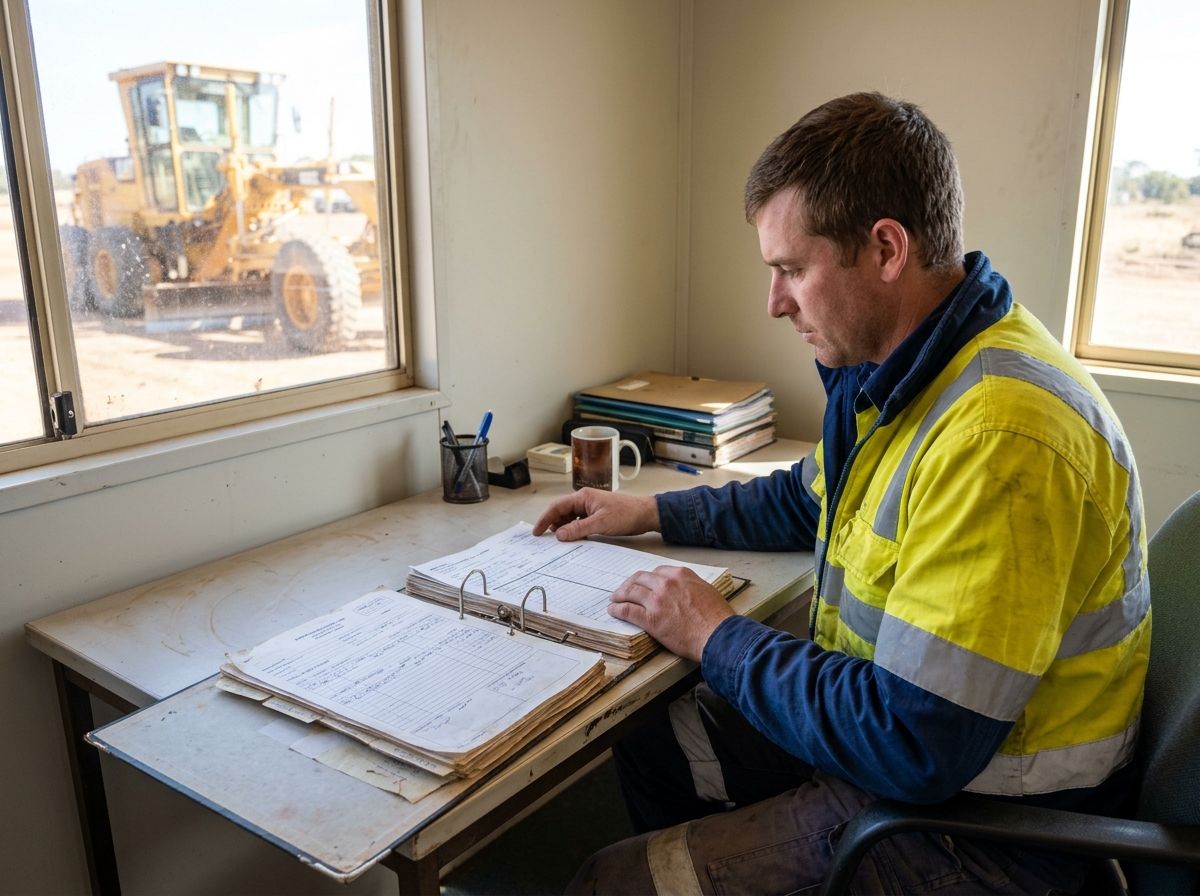
This is not a shortcut; it is a formal assessment of real-world evidence. Instead of sitting exams or doing coursework, you prove your competence through your employment history, references, service records, logbooks, site photographs, and a practical assessment process with an RTO assessor.
The qualification you receive at the end of a successful RPL assessment is exactly the same as one earned through a traditional apprenticeship. It is nationally recognized, has the same standing with employers and compliance auditors, and carries identical weight because the assessment process is equally rigorous.
To be clear on how this process works: RPL it assists and guides candidates through gathering and organizing their workplace evidence. The formal assessment is conducted by a qualified assessor from a partner Registered Training Organisation, which ultimately issues the qualification. The role of RPL it is to help you prepare your application, not to assess or issue the certificate.
Your practical experience acts as your primary evidence, and RPL is the pathway that allows the formal system to recognize it.
The evidence you can use for your application
Many experienced technicians assume they do not have the right paperwork to support an RPL application. In reality, the evidence is usually available; it simply needs to be gathered, sorted, and mapped against the official units of competency required for the qualification.
The types of evidence commonly used in a Certificate III RPL assessment within the mobile plant and automotive service sectors include:
- Employment records and payslips demonstrating your industry work history
- Employer or supervisor references verifying the specific tasks you perform daily
- Maintenance logs, service sheets, or job cards you have completed
- Photographs or videos showing your repair work on relevant machinery
- Safety records, incident reports, or toolbox meeting logs showing safe work habits
- Prior training certificates, manufacturer training records, or machinery tickets
- Written statements from colleagues or clients confirming your trade competence
You do not need to provide every item on this list. The exact evidence required depends on the specific units of competency and the assessor's evaluation. Having a detailed discussion about your trade history before starting is the most practical first step.
If any skills gaps are identified during your assessment, you can complete gap training for those specific units. This is a standard part of the RPL pathway, not a failure, and is delivered at no extra cost through the RTO.
Is RPL the right path for your situation?
RPL is not the right choice for everyone. Your eligibility depends on the depth and variety of your experience across the core units of the Certificate III in Mobile Plant Technology, the types of machinery you maintain, and whether your background covers the complete training requirements.
An experienced technician who has spent years repairing excavators, graders, and mobile cranes in different workshop and site environments will have a strong foundation for an RPL application. A worker with limited experience or a narrower role may find that a traditional training program is a better option.
The answer to whether you can secure RPL for AUR31220 depends entirely on your specific work history. The most reliable way to find out is to have a direct conversation about your experience.
You can access the Certificate III in Mobile Plant Technology (AUR31220) RPL pathway through RPL it.
You have the trade skills, and we assist you in proving them. The choice to take the next step is yours.
General information only, current at the date shown. Licensing rules change, so check the current requirements with the relevant regulator before you rely on them. RPL it Australia is a student support service, not a Registered Training Organisation; qualifications are assessed and issued by our partner RTOs.