Plumbers licence in Tasmania: What changes when you get licensed (and what doesn't)
For experienced Tasmanian plumbers: here is what a plumbing licence actually changes regarding job access, rates, and insurance.
By RPL it Australia8 min read
The question every experienced Tasmanian plumber eventually asks
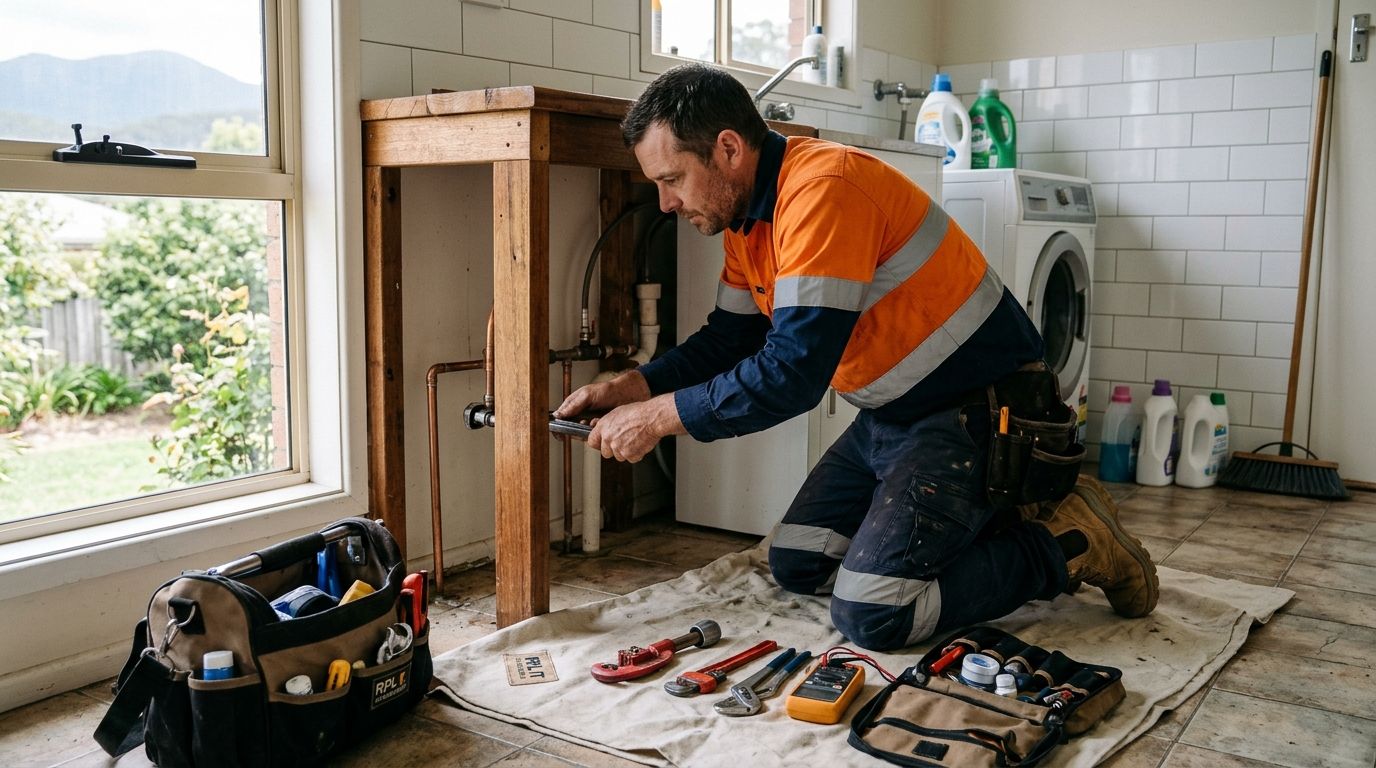
You know the work. You have been doing it for years, diagnosing problems, running pipe, and fixing what others could not. The trade is not a mystery to you. When someone tells you that you need a plumbing licence to keep working legally, the question that follows is a fair one: what does that licence actually change for you?
This is a practical question, and the answer is more detailed than most people expect. Some things change immediately and significantly the moment you hold a licence, while others do not change at all. Knowing the difference is what helps you make an informed decision rather than putting the process off indefinitely.
This article provides a direct, straight answer rather than a bureaucratic overview. It is a concrete breakdown of what changes and what stays the same when a Tasmanian plumber gets licensed.
What a plumbing licence in Tasmania actually is (and is not)
A plumbing licence in Tasmania is formal legal permission to perform plumbing work. That is all it is. It does not measure your skill, nor is it a test of whether you know how to do your job. It is simply the regulatory system's way of verifying that you have demonstrated your competency through an approved pathway and are legally authorised to perform this work.
This distinction is important. The licence does not make you a better plumber, but it does make you a legal one. Your skill exists independently of the credential. However, the regulatory system requires this credential before it will recognize your skills as legitimate.
Tasmania, like all Australian states and territories, requires plumbers performing licensed plumbing work to hold a current licence issued by the relevant state authority. If you are unsure which licence category applies to your situation, whether you need a tradesperson licence, a contractor licence, or both, the relevant Tasmanian licensing authority can clarify the current requirements. You should verify this directly before you begin any application process, as licence categories and requirements can change.
What changes when you get licensed
This is the section most experienced plumbers actually want to see. Here is what changes immediately when you hold a current plumbing licence in Tasmania.
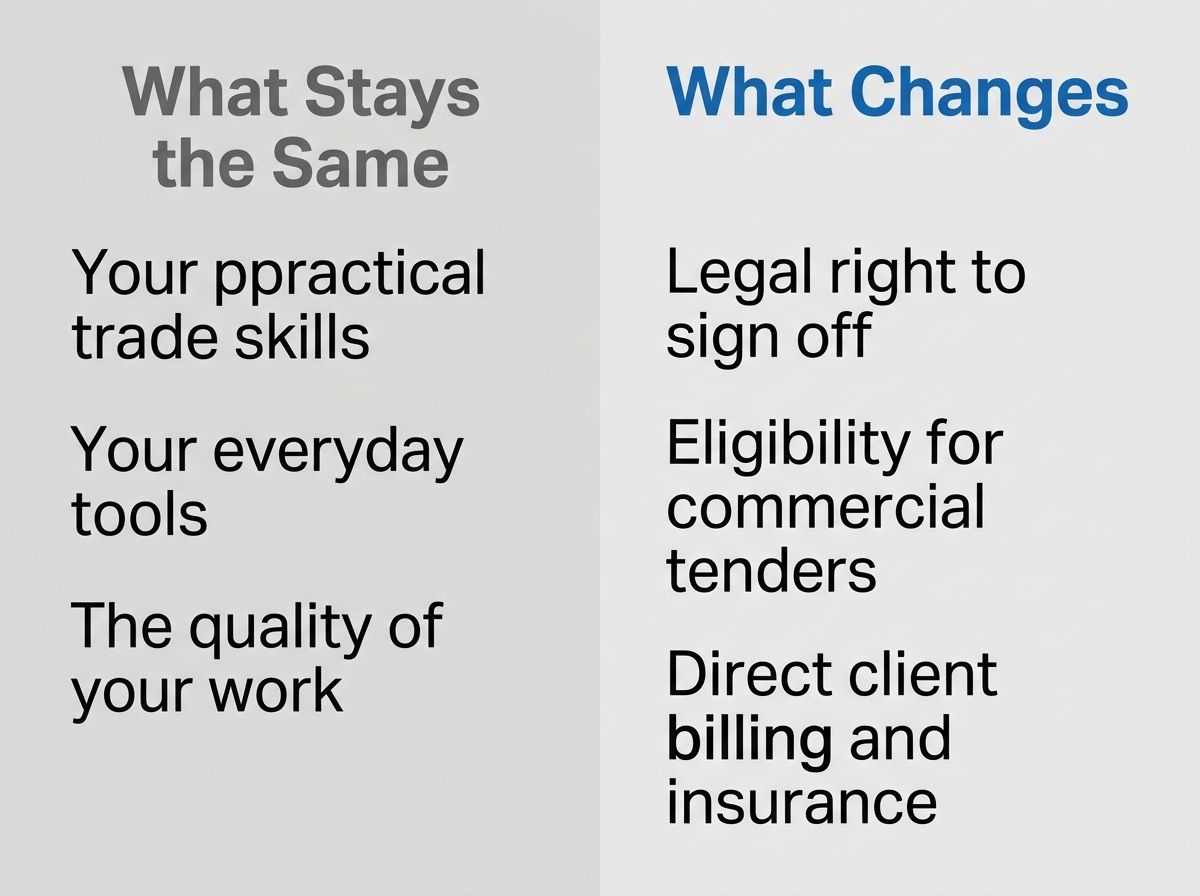
- Your legal right to perform and certify plumbing work. Without a licence, performing work that requires one is unlicensed. In Tasmania, as in other states, performing unlicensed plumbing work carries penalties under the relevant legislation. The specific penalty amounts are set by Tasmanian law, so you should check with the relevant licensing authority for current figures. The risk is real and ongoing for every day you work without the credential required by law.
- Your eligibility for appropriate insurance coverage. Many insurers require a current plumbing licence as a condition of public liability coverage for licensed plumbing work. Without it, your coverage may be unavailable, limited, or voided if you make a claim. You should verify your specific situation with your insurer, but licensing and insurance eligibility are closely linked in the trades.
- Your ability to tender for work that requires a licensed plumber. Government contracts, commercial projects, and many residential builders specify that licensed tradespeople must perform or supervise licensed plumbing work. Without a licence, those opportunities are simply not available to you, regardless of your skill.
- Your ability to charge rates commensurate with licensed status. Licensed plumbers can charge for licensed plumbing work at licensed rates. Unlicensed operators are often constrained to lower-value work or forced to work under another person's licence, which brings clear commercial limitations.
- Your protection from regulatory action. Operating without a licence when one is required puts you at ongoing regulatory risk. The licence removes that exposure, meaning you no longer have to worry about compliance penalties.
These changes are significant. They affect your legal standing, your commercial access, your insurance position, and your risk exposure. They happen the moment the licence is issued, rather than gradually over time.
What does not change
Your skill does not change. Your knowledge does not change. Your tools do not change. The quality of your work remains exactly the same.
The licence is a legal threshold, not a technical one. You still fix the same pipes, solve the same problems, and work with the same clients. The work itself is identical. What changes is your legal standing in relation to that work, not your capability to perform it.
This is worth considering. The licensing system does not imply your unlicensed work was incompetent. It simply means the formal system needs a recognised credential before it can acknowledge your competency. Experience is not less valuable than formal education; it is a different form of evidence. The licence is how the regulatory system processes that evidence.
The factor that makes the difference bigger than it looks
When deciding whether to get licensed, many plumbers do not realise that the gap between being licensed and unlicensed does not stay the same. It widens over time.
In the short term, the difference might feel manageable. You are working, you are earning, and you know your trade. But over five years, a licensed plumber builds a client base that trusts their credentials, tenders for work you cannot access, operates under insurance that protects their business, and potentially supervises apprentices to build a team. An unlicensed plumber performs the exact same daily work, but without the legal standing to grow a business in those same directions.
The licence is a threshold. Once you cross it, doors open that were not available before. What you do with those opportunities is up to you, but the doors themselves only open from the licensed side.
Experienced tradespeople often notice a clear pattern: two plumbers with identical skills, experience, and work ethic can end up in very different commercial positions five years later. The difference is not talent, but legal standing.
How do you obtain your licence without starting from scratch?
How experienced Tasmanian plumbers get licensed without starting over
If you have performed plumbing work for years, you likely already have the competency the licensing system is looking for. The challenge is demonstrating those skills in a way the regulatory system recognizes.
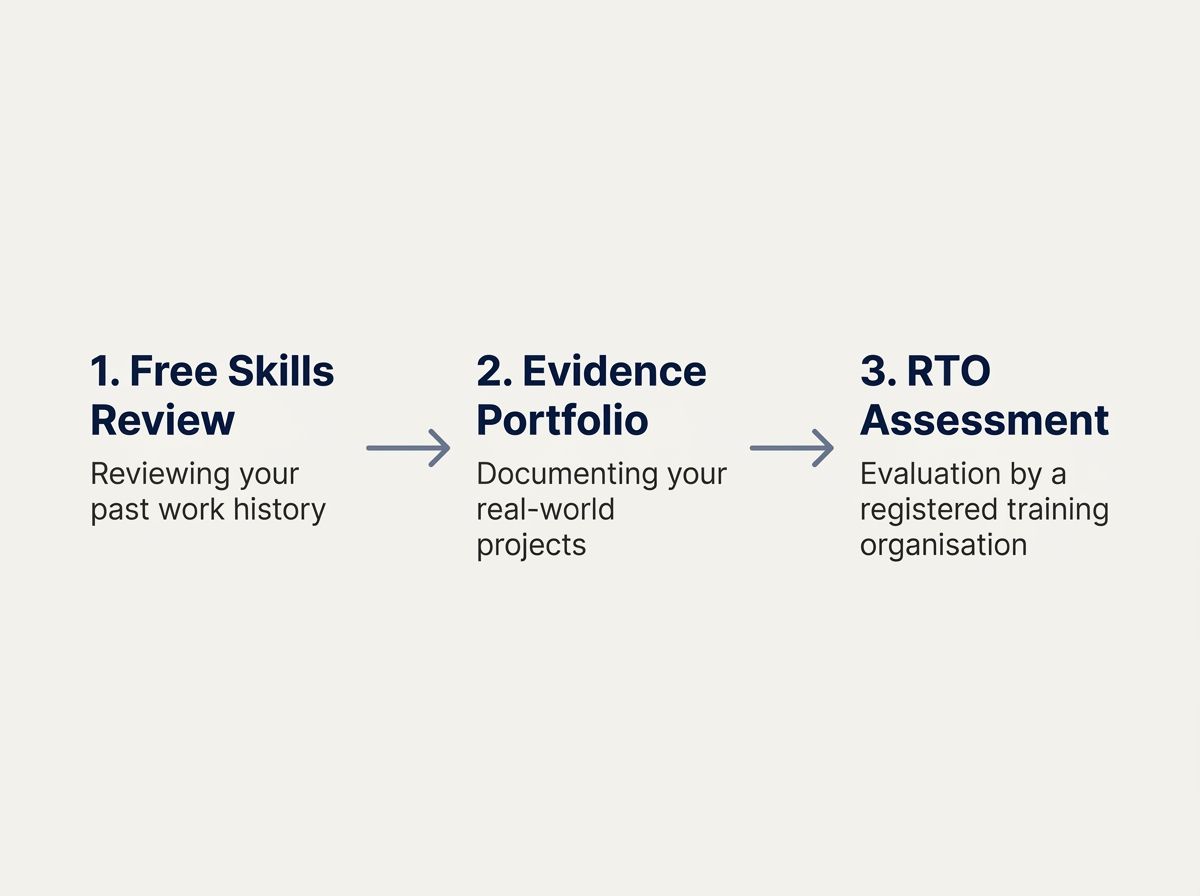
This is where Recognition of Prior Learning (RPL) is useful. RPL is not a shortcut, but rather the appropriate pathway for someone who already has the required competency but has not completed a formal training program. Instead of studying subjects you already know, you present your existing work experience as evidence to meet the requirements of the relevant qualification.
For a plumbing licence in Tasmania, the relevant qualification is typically a Certificate III in Plumbing. You should verify the specific qualification requirements with the Tasmanian licensing authority before starting any application, as these rules can change. Once you hold the nationally recognised qualification, you can apply for your licence through the state authority.
The RPL process involves a qualified assessor from a registered training organisation (RTO) reviewing your work history, experience, and evidence against the competency requirements of the qualification. If your experience demonstrates the required competencies, the qualification is awarded. If any gaps are identified, gap training is provided at no additional cost to address them before the qualification is issued.
The duration of the RPL process depends on your individual circumstances and the assessing RTO. We cannot promise a specific timeframe, as it depends on your experience, the evidence you can provide, and the RTO's assessment process. What we can say is that the process is designed to work with your existing experience, not around it.
Before committing to an RPL pathway, you should verify with the relevant Tasmanian licensing authority that an RPL-awarded qualification is accepted for your licence application. In most cases, a nationally recognised qualification awarded through RPL carries the same standing as one completed through traditional training, but it is best to confirm this for your specific situation.
Is RPL right for you? An honest answer
RPL suits experienced plumbers who have performed plumbing work for a significant period and can document that experience. If you have been on the tools for years, working across a range of plumbing tasks, and you have evidence of that work, such as employer references, job records, photos of completed work, and client testimonials, RPL is worth exploring.
It is not the right pathway for everyone. If you are early in your career, or if your experience is limited in scope, the assessment may identify significant gaps that require substantial additional training. In those cases, a traditional training pathway is more appropriate. Suitability depends entirely on your individual circumstances, and the only way to know for certain is to have your experience assessed.
RPL is a rigorous assessment pathway, not a simple rubber stamp. The assessor's job is to determine whether your experience genuinely demonstrates the required competencies, not to find a way to award the qualification regardless of skill. This rigorous standard is what makes the resulting qualification respected and nationally recognised.
We aim to guide you to the right pathway rather than enrolling you in the wrong program. If RPL is not the right fit for your situation, a skills review will clarify that and point you toward the correct options.
The next step: Find out where you stand
You have the experience. The main question is whether that work history, once documented and assessed, meets the requirements for the qualification you need. You cannot answer this from the outside; it requires a detailed look at your past work and what the qualification demands.
A Free Skills Review is a straightforward way to get that answer. It is free and carries no obligation. It provides a practical assessment of whether RPL is the right pathway for you before you commit to any program.
You can find further details about the Tasmanian plumbing licence pathway on our dedicated product page.
General information only, current at the date shown. Licensing rules change, so check the current requirements with the relevant regulator before you rely on them. RPL it Australia is a student support service, not a Registered Training Organisation; qualifications are assessed and issued by our partner RTOs.