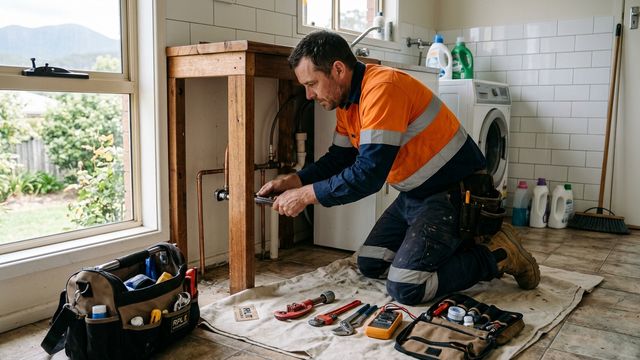
Auto electrician RPL: Get qualified for the wiring work you already do
Learned auto electrics on the job? Convert your hands-on fault-finding and wiring experience into a formal AUR30320 trade qualification through RPL.
By RPL it Australia8 min read
The pattern that keeps repeating in auto electrical workshops
You have the experience. You know that.
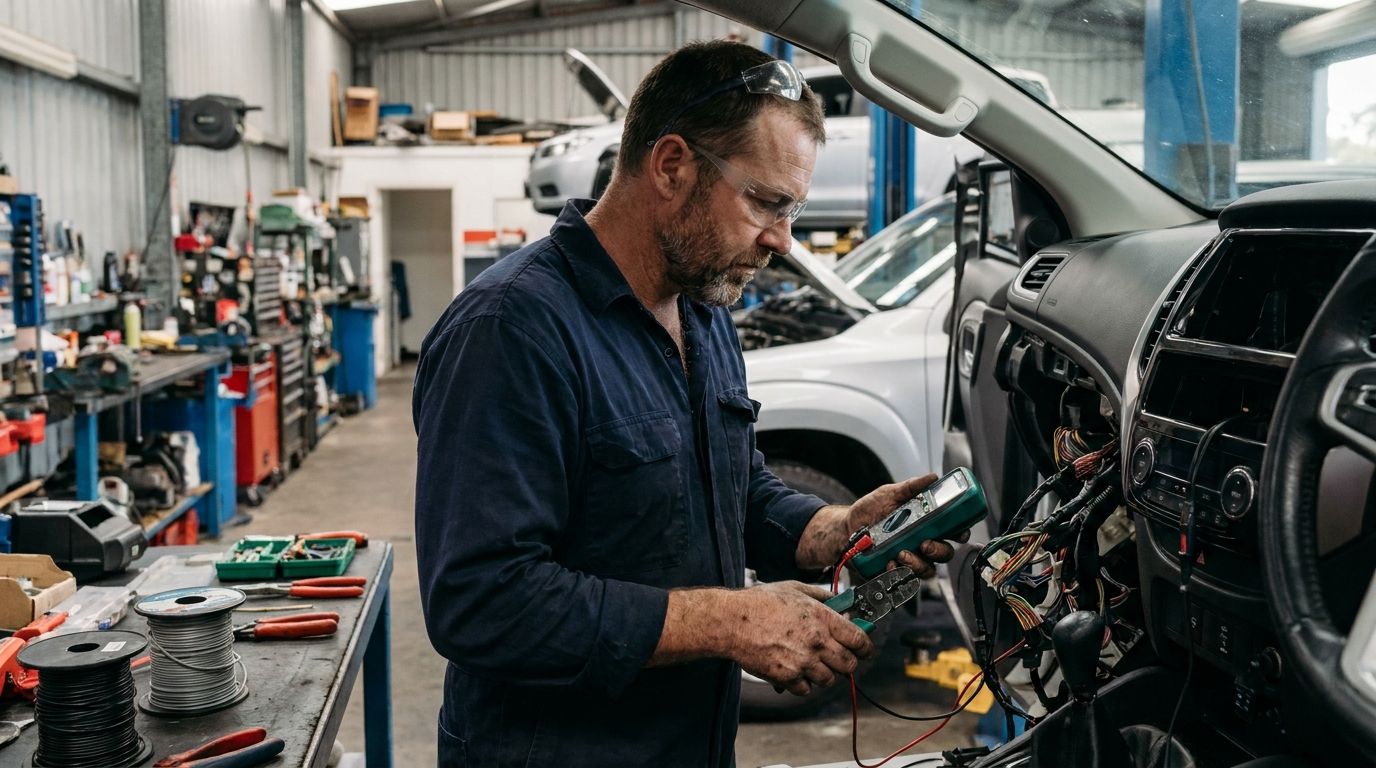
You started somewhere. Maybe it was as a mechanic's assistant, in a fleet workshop, or on a mine site where someone handed you a multimeter and told you to figure it out. You worked it out, you got better, and eventually, you became the person they called first when an electrical fault had everyone else stumped.
This is a common career path in Australian auto electrical workshops: the technician who learned by doing. You built real skills in wiring harnesses, fault diagnosis, and vehicle communication systems because you were trusted with the work and you got the job done, not because you sat in a classroom.
For years, that was enough. Your work spoke for itself. Employers knew what you could do, and clients kept coming back.
Then things changed. A job listing required a Certificate III, a dealership asked for your trade certificate, or an insurer wanted proof of formal qualifications. Suddenly, the experience that built your career became invisible to a system that only looks for paperwork.
This guide is for auto electricians in that exact position. It explains the AUR30320 qualification and details how the RPL process converts your practical experience into a nationally recognised trade certificate.
What AUR30320 covers and why experienced auto electricians already know it
The Certificate III in Automotive Electrical Technology (AUR30320) is Australia's standard qualification for auto electricians. It is the trade certificate that employers, licensing boards, and industry bodies require when they ask for proof of your skills.
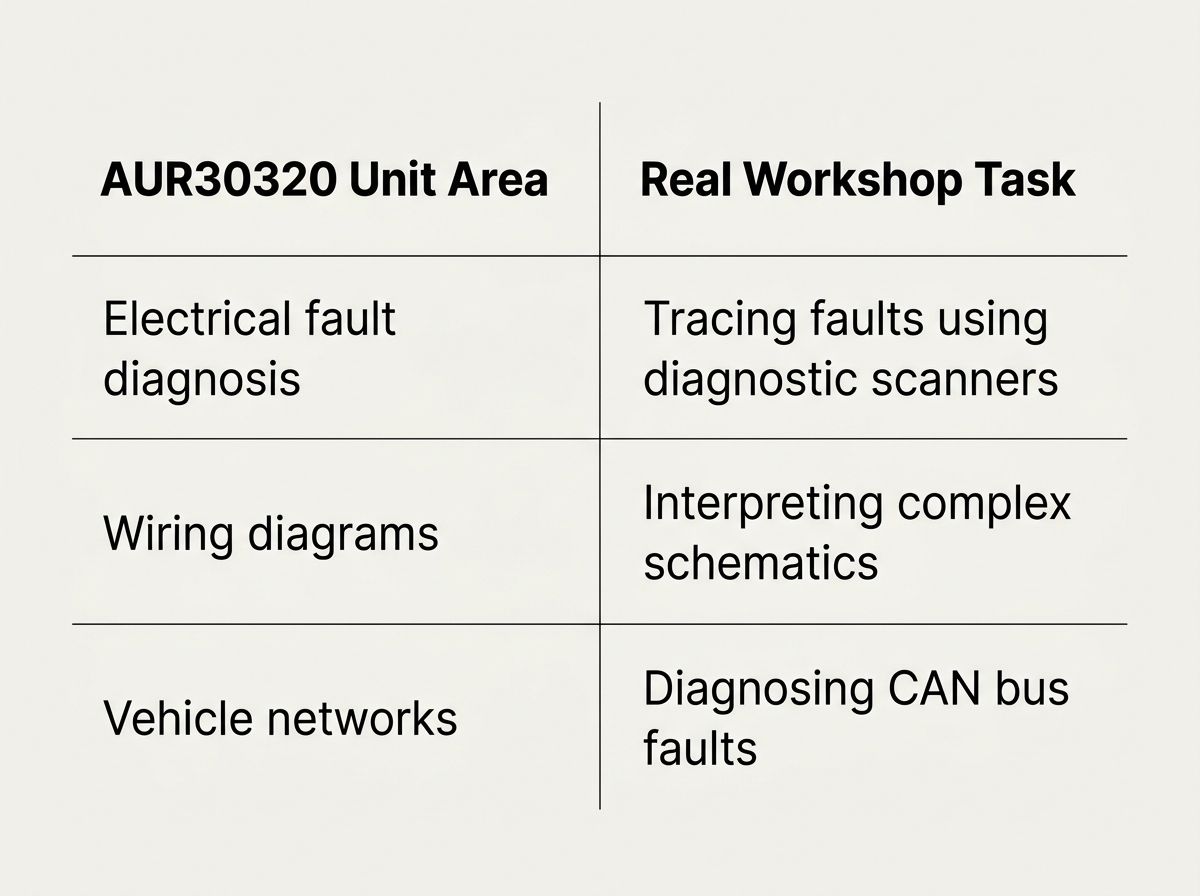
The qualification covers the tasks you handle daily. This includes diagnosing faults across vehicle systems, reading wiring diagrams, and testing, repairing, or replacing electrical components. It also covers working with vehicle communication networks like CAN bus and body control modules, maintaining charging and starting systems, and fitting automotive accessories.
If you have worked in the trade for years, these units do not represent new skills you need to learn. They represent work you already do. Your gap is not competence; it is simply documentation. You need the formal record that translates your experience into an official qualification.
RPL is designed to bridge this exact gap.
Why skill alone does not open every door
Lacking an AUR30320 qualification eventually stops being a minor inconvenience and becomes a real barrier to your career.
It might happen when you apply for a dealership role. Franchised dealerships in Australia usually require a Certificate III as a condition of employment. This is not because they doubt your capability, but because their manufacturer agreements and insurance policies demand it. Your skills are fine; your paperwork is not.
It might happen when you try to win a fleet contract. Fleet operators and transport companies increasingly require formal qualifications from contractors to meet their own compliance standards.
Or it could be a senior workshop role with a better salary. You might already do the work of a qualified auto electrician, but if the official requirement is the certificate and you do not have it, the application stops there.
For sole traders or business owners, it often comes down to insurance. Professional indemnity and public liability insurers frequently ask for formal qualifications, and operating without an AUR30320 can complicate your coverage.
In all these cases, the issue is not your competence. You can diagnose faults that leave other technicians guessing and read wiring diagrams easily. However, because the formal system requires a credential, lacking it keeps those opportunities out of reach.
This is the licensing barrier, and it is exactly what auto electrician RPL is designed to resolve.
What RPL means for an auto electrician
Recognition of Prior Learning (RPL) is the formal process where a Registered Training Organisation (RTO) evaluates your practical skills and industry knowledge against the units of a qualification.
For auto electricians, this means you prove your competency through evidence of your actual work, rather than sitting through a classroom course. An RTO assessor reviews what you can do against the AUR30320 units. If you demonstrate competency across the required units, the RTO issues the Certificate III in Automotive Electrical Technology. It is the exact same trade qualification received by someone completing a standard apprenticeship.
The evidence for an RPL assessment generally includes employment records, references from supervisors, job logs, photographs of your work, and a practical skills assessment. Specific evidence requirements vary by RTO, and your assessor will guide you through the exact items needed for your application.
RPL is a rigorous, structured assessment conducted by qualified professionals. It is not a shortcut or a way to bypass evaluation. The qualification is only issued when you demonstrate real competency. If the assessment identifies any skill gaps, you may need to complete gap training, which is provided at no extra cost.
RPL it assists you through the preparation process by helping you collect your evidence, document your experience, and prepare for the assessment. The RTO handles the formal evaluation and issues the qualification, with the final assessment decision resting entirely with their assessor.
The career stages that auto electrician RPL recognises
Many self-taught auto electricians share a similar career progression that moves through distinct stages.
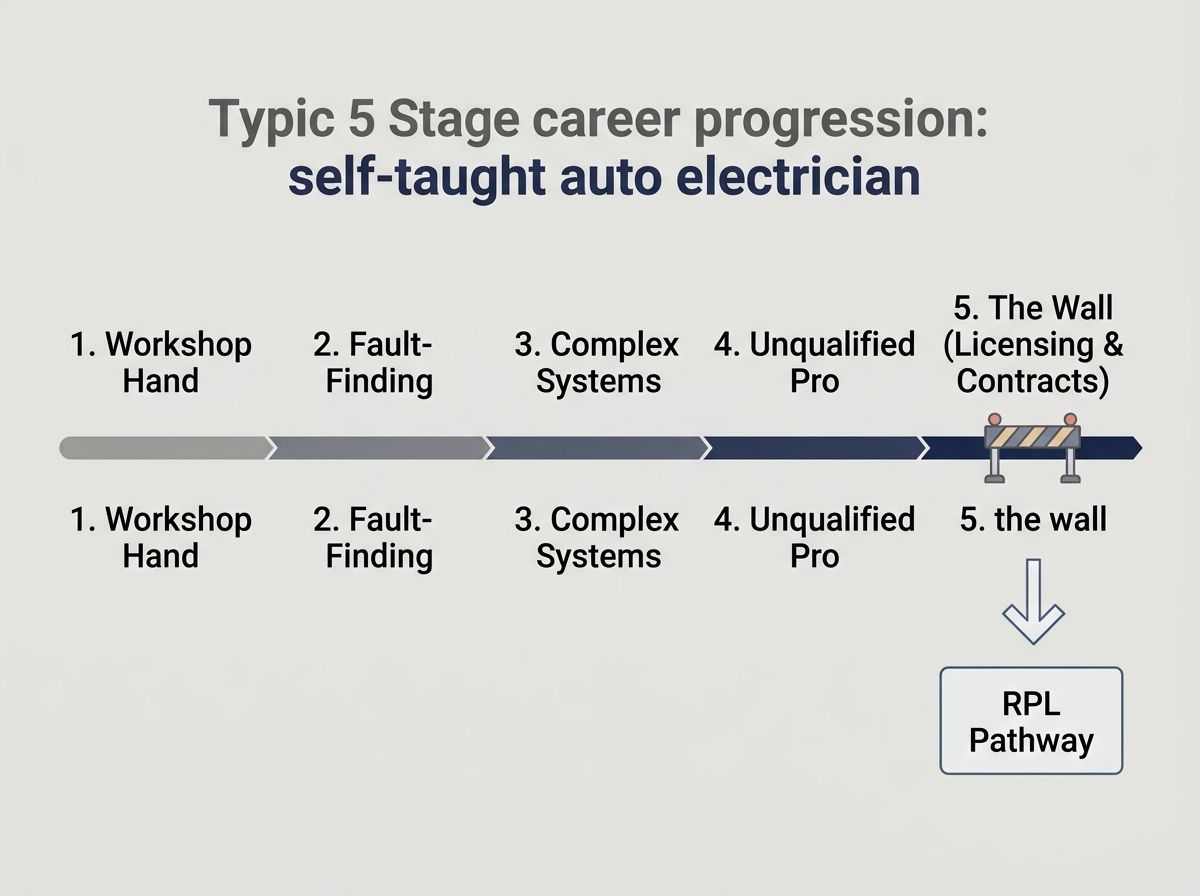
Stage one is the workshop hand. You began in a general role, such as a mechanic's assistant, service technician, or fleet maintenance worker. Electrical work was only a minor part of the job, but you picked up the basics out of necessity.
Stage two is being trusted with fault-finding. Once others noticed your aptitude for diagnostics, you became the go-to technician for tough electrical problems. You began focusing heavily on electrical tasks, developing your own systematic approach to finding faults through sheer experience.
Stage three involves complex systems. Your daily work expanded to include vehicle communication networks, body control modules, and advanced diagnostics. You learned to interpret complex wiring diagrams and worked on late-model vehicles with advanced electrical setups because the jobs demanded it.
Stage four is doing the work of a qualified trade professional. You were operating as an auto electrician in everything but name. Employers trusted you with the most difficult diagnostics, clients asked for you by name, and you trained apprentice staff. Only the official certificate was missing.
Stage five is hitting the wall. This is when a job application, a commercial contract, an insurance policy, or a licensing query highlights your lack of formal qualification. The hands-on experience that carried your career for years is suddenly not accepted by a system that requires physical paperwork.
RPL is built for technicians at stage five. It does not ask you to relearn your trade; it simply asks you to document your experience.
This pattern of practical expertise outgrowing formal qualifications occurs in many industries. Auto electricians are not the only ones facing this challenge.
Who is and is not a good candidate for AUR30320 RPL
We believe in honest suitability guidance. Not every auto electrician is ready for RPL, and it helps to understand the requirements before starting.
RPL for AUR30320 is generally suitable for those with several years of hands-on experience across various vehicle types and electrical systems. You must be able to document this work through supervisor references, employment records, or other verifiable evidence, covering core tasks like fault diagnostics, wiring systems, component installation, and communication networks.
If your background is mostly general mechanical work with minimal electrical exposure, or if you are early in your career and have not worked on the full scope of systems covered by AUR30320, RPL might not be suitable yet. This is not a permanent barrier; it is simply a matter of timing and gathering the necessary evidence.
For overseas-trained auto electricians, RPL remains an option, though evidence requirements and assessment processes can vary. A Free Skills Review is the best way to clarify what is required for your situation.
The Free Skills Review is designed to answer these exact questions. It is a completely free, no-obligation discussion that gives you an honest assessment of whether your experience supports an RPL application before you make any commitment.
What happens after you start the RPL process
The process starts with a Free Skills Review. This is a cost-free, no-obligation conversation about your work history to help you decide if RPL is the right path for your AUR30320 certificate. It gives you clear direction before you proceed.
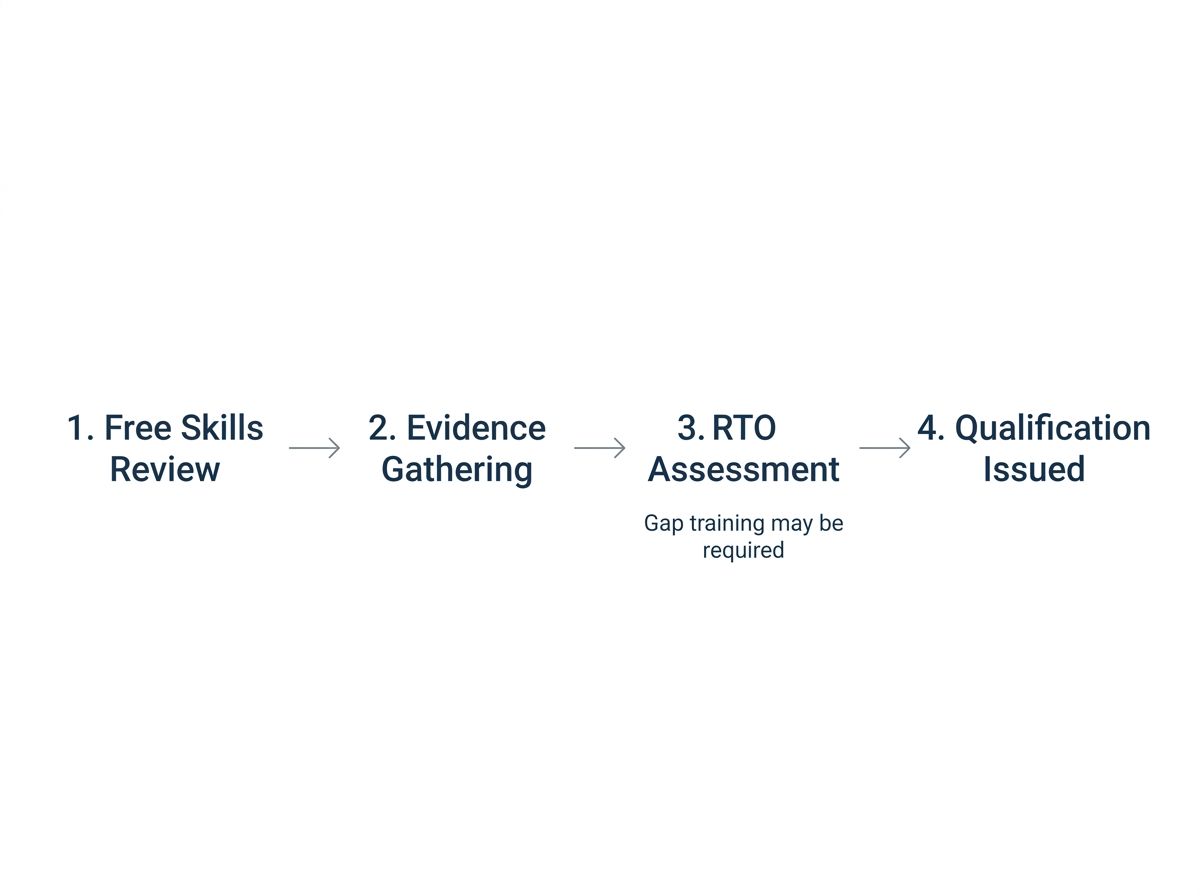
If the initial review shows you are suitable, RPL it assists you in gathering and organizing your evidence. This means compiling employment records, references, job logs, and other materials showing your competence across the AUR30320 units. This is a fully guided process, so you will not have to figure it out alone.
An RTO assessor then conducts the formal evaluation of your evidence against the qualification standards. Their decision is independent. While RPL it assists you throughout the preparation phase, the final assessment outcome rests entirely with the RTO.
If you demonstrate competency across all required units, the RTO awards you the Certificate III in Automotive Electrical Technology (AUR30320), which is a nationally recognised trade qualification. If the assessor identifies any missing areas, they will arrange gap training to address them before issuing your certificate.
Your trade skills are real. The next logical step is getting them formally recognised, and that choice is up to you.
Learn more about the Certificate III in Automotive Electrical Technology (AUR30320) and the specific units covered.
General information only, current at the date shown. Licensing rules change, so check the current requirements with the relevant regulator before you rely on them. RPL it Australia is a student support service, not a Registered Training Organisation; qualifications are assessed and issued by our partner RTOs.