Who Says Learning Only Happens in a Classroom? Rethinking the RPL Certificate in Australia
Your daily work is learning. Discover why the classroom assumption is wrong — and how an RPL certificate in Australia formally recognises what you already know.
By RPL it Australia7 min read

The assumption nobody questions
You have the experience. Fifteen years of it, in some cases. You have solved problems that no textbook anticipated. You have trained people who now outrank you. You have made decisions under pressure that shaped outcomes for real people in real situations.
And yet, somewhere along the way, you absorbed a quiet message from the systems around you: that none of it quite counts. Not officially. Not on paper. Because you did not learn it in a classroom.
This assumption — that legitimate learning happens at a desk, under supervision, assessed by an exam — is so deeply embedded in Australian working life that most experienced workers have stopped questioning it. They apologise for their experience rather than presenting it as evidence. They say 'I don't have the formal qualification' as though that settles the matter.
It does not settle the matter. The assumption is wrong. And understanding why it is wrong is the first step toward formal recognition of what you already know.
Where the classroom assumption came from
The idea that a certificate or degree is the primary proof of competence did not come from a careful study of how adults actually develop expertise. It came from a practical problem: how do you standardise and scale education across a population?
Formal credentialing systems were built to move large numbers of people through a consistent curriculum and produce a comparable, auditable outcome. The certificate became a proxy for competence because it was measurable, transferable, and readable to employers who could not individually assess every candidate.
That system works reasonably well for people at the beginning of their careers. It works poorly — sometimes not at all — for people who have already spent a decade or more building genuine expertise through applied practice.
The system was not designed for them. It was designed for people who had not yet done the work.
Understanding this distinction matters. The credential hierarchy is not a measure of your worth. It is a legacy of a system built for a different purpose — and that system has a correction mechanism built into it.
What actually happens when you learn on the job
On-the-job learning is not passive. It is not informal in any meaningful sense of that word. It is active, high-stakes, iterative problem-solving — the kind of learning that formal education attempts to simulate, often at significant remove from the real conditions it is trying to prepare people for.
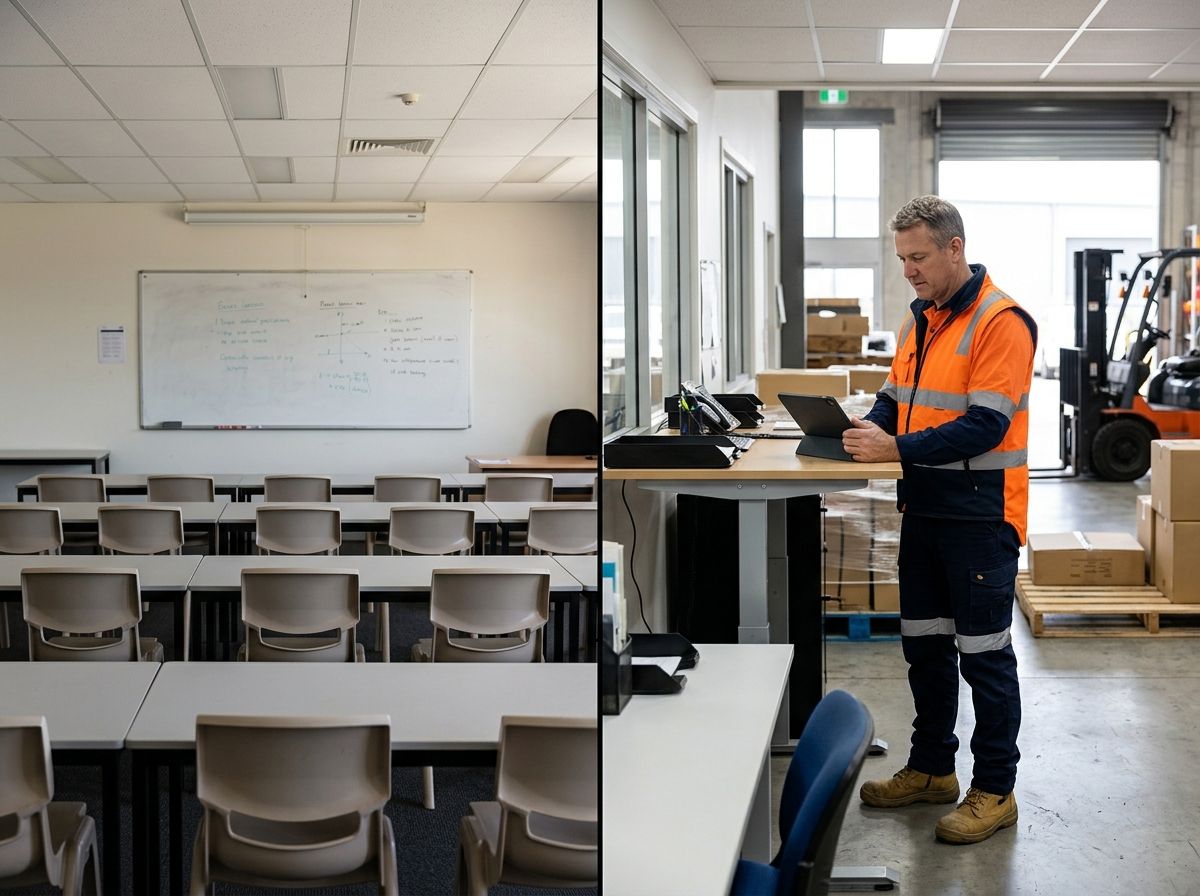
Consider what you actually do when you learn through work. You encounter a problem you have not seen before. You draw on what you know, adapt it, test it, and evaluate the result. You adjust. You do it again. Over time, you develop a depth of pattern recognition and situational judgement that cannot be replicated in a controlled assessment environment.
You solved the problem. You adapted the process. You trained the next person.
That is not informal learning. That is expertise in formation. The difference between on-the-job learning and classroom learning is not quality — it is format. One produces a certificate. The other produces capability. The assumption that only one of these is legitimate is the flaw worth examining.
The Australian VET system's competency-based assessment framework was specifically designed to address this. Competency-based assessment does not ask how you learned a skill. It asks whether you can demonstrate it to a defined standard. That design choice was deliberate — and it is the foundation on which Recognition of Prior Learning is built.
The specific flaw in the classroom-first model
The classroom model assumes a particular sequence: you learn, then you do. For most experienced workers, that sequence is reversed. They have already done — extensively, consequentially, and often at a level of complexity that exceeds what any training programme would require.
Asking a fifteen-year veteran to return to the classroom to learn what they already practise daily is not education. It is repetition. It is also, for many workers, simply not possible — financially, logistically, or professionally.
The system was not designed with them in mind. It was designed for people at the beginning of a career, not for people who have already built one. That is not a gap in the worker. It is a gap in the system.
Recognition should not require starting over.
The good news is that the Australian qualifications system does have a correction mechanism. It is called Recognition of Prior Learning. And it was built precisely for this situation.
What an RPL certificate in Australia actually is
An RPL certificate in Australia is a nationally recognised qualification issued by a registered training organisation (RTO) after a qualified assessor evaluates evidence of existing skills against national competency standards.
Recognition of Prior Learning — RPL — is a formal assessment pathway within the Australian Qualifications Framework (AQF). It is not a workaround. It is not a shortcut. It is a defined, compliance-approved mechanism that exists specifically to assess competency regardless of how it was acquired — whether through formal study, on-the-job experience, self-directed learning, or any combination of these.
The assessment is conducted by a qualified assessor employed by or contracted to a registered training organisation. RPL it guides candidates through the process of gathering and presenting evidence — but the assessment itself, and the issuing of any qualification, is the responsibility of the RTO. The qualification is nationally recognised because the assessment is genuine.
What does the evidence look like? It varies by qualification and industry, but typically includes documentation of work history, examples of tasks performed, references from supervisors or colleagues, records of projects completed, and in some cases a practical demonstration or structured interview with the assessor. The candidate is not asked to recall theory. They are asked to demonstrate that they have applied the relevant competencies in real conditions.
Why the RPL certificate is the real proof of real-world capability
A qualification earned through RPL is not a lesser qualification. In important respects, it is a more demanding one.
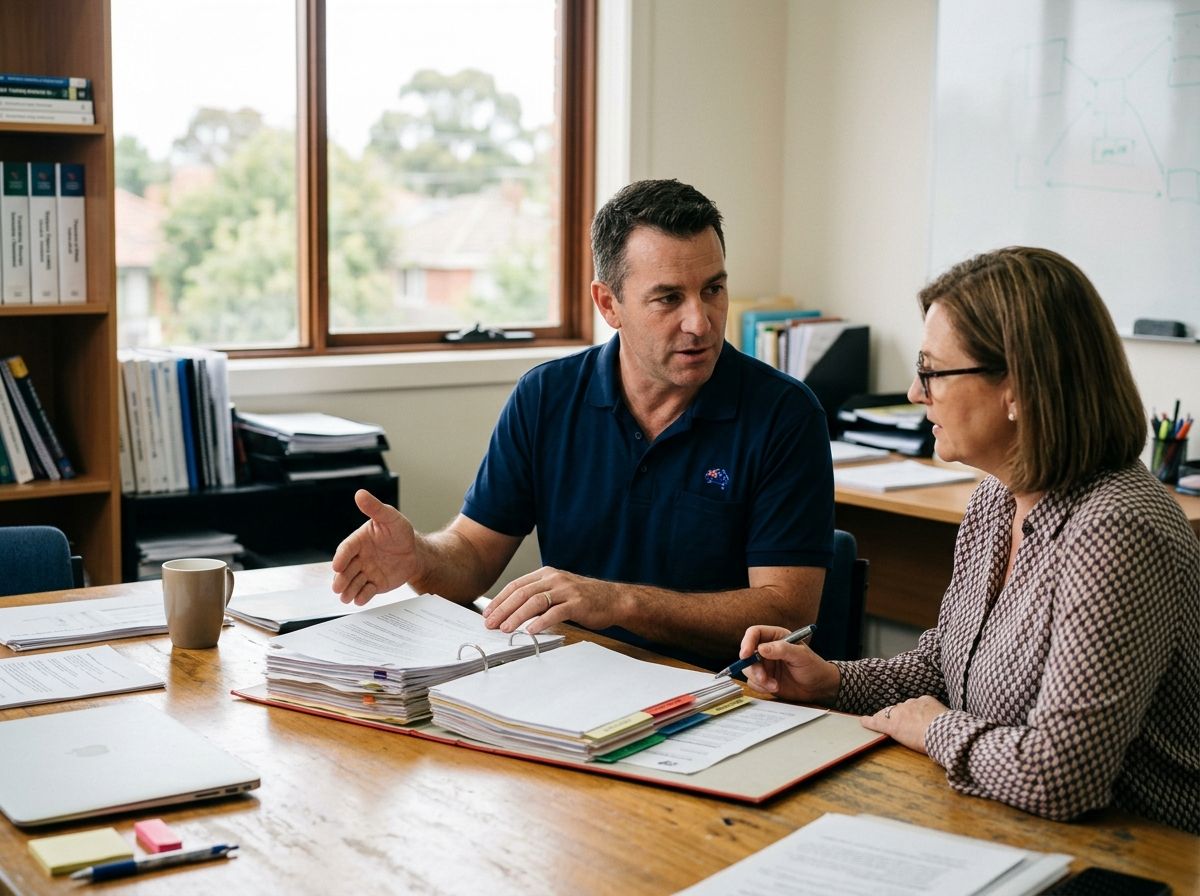
A classroom student demonstrates they can recall and apply theory in a controlled environment. An RPL candidate demonstrates they have already applied that competency in real conditions, under real pressure, with real consequences.
The RPL assessment does not ask whether you understand the concept. It asks whether you have done it — repeatedly, competently, and to a defined standard. That is a higher evidentiary bar, not a lower one.
This is why an RPL certificate in Australia carries the same national recognition as a qualification earned through traditional study. The AQF does not distinguish between pathways — it recognises outcomes. If the competency has been demonstrated to the required standard, the qualification is the same. The pathway is different. The result is not.
Experience is not less than education. It is a different form of evidence. The RPL certificate is the formal mechanism that says so.
What this means for you right now
Here is the shift: your daily work is not preparation for learning. It is the learning.

Every problem you solved, every process you improved, every person you mentored, every decision you made under pressure — that is evidence. It exists. It is real. The question is not whether you have the skills. The question is whether that evidence has been gathered, structured, and presented in a format a formal assessor can evaluate.
That is exactly what RPL it does. We guide experienced workers through the process of presenting what they already know as formal evidence — helping you translate the expertise that exists in your daily practice into a qualification that the systems around you can finally read.
We would rather guide someone to the right pathway than enrol them in the wrong one. That means being honest about suitability before anything else. If RPL is the right pathway for you, we will tell you. If it is not, we will tell you that too.
Your skills speak. We help them be heard.
The decision is yours.
General information only, current at the date shown. Licensing rules change, so check the current requirements with the relevant regulator before you rely on them. RPL it Australia is a student support service, not a Registered Training Organisation; qualifications are assessed and issued by our partner RTOs.