Why your boss forcing you to get qualified might be the best thing for your pay packet
Your boss wants you to get an RPL certificate. That qualification actually belongs to you, and it can help secure a higher pay rate.

Nobody likes being told to get qualified
You didn't ask for this. Your employer did. Maybe HR sent an email. Maybe the site manager pulled you aside. Maybe a new contract came through and suddenly everyone needs a piece of paper to keep doing the job they've been doing for years. Whatever the trigger, the message was the same: get qualified or face the consequences.
The frustration is legitimate. You know how to do this work. You've been doing it, probably well, for longer than some of your colleagues have been in the industry. Being told you need a certificate to prove it can feel like an insult dressed up as a compliance requirement.
That feeling is entirely worth acknowledging. But before you write this off as bureaucratic noise, there is something worth understanding about what is actually happening here, and it is not what most workers assume.
What most workers miss about the mandate
When your employer tells you to get an RPL certificate, they are thinking about compliance. They need the workforce to meet a contractual requirement, a regulatory standard, or a licensing condition. That is their problem to solve.
Here is the part that changes the picture: the qualification is issued to you. It does not go to your employer. It does not go to the job site. It does not belong to the contract. It belongs entirely to you as an individual. Under Australia's national qualifications framework, that credential is recognised across the country, and it stays with you regardless of who you work for, where you work, or whether the employer who mandated it even exists next year.
Your employer is trying to solve a compliance problem. In doing so, they are funding a permanent upgrade to your professional standing. Those are two very different things, and most workers only focus on the first one.
It is worth taking a few minutes to understand what nationally recognised RPL qualifications actually mean for your career.
The certificate belongs to you, not your job
Think about what this means in practice. Once the RPL process is complete and a registered training organisation assesses your competency and issues the qualification, that credential is yours. Your employer cannot revoke it. They cannot take it back if you resign, if they restructure, or if the contract ends. It is a permanent record of formally assessed competency that you carry into every future role.
In many Australian industries, holding a formal qualification directly affects how you are classified under modern awards and enterprise agreements. Classification levels tied directly to qualifications can influence your base rate of pay because the formal system now has a way to recognise the capability you already had, rather than assuming you have suddenly become more capable.
Your skills are real, your experience counts, and your recognition is earned. The certificate is simply the formal proof of what was already true.
What RPL actually involves for someone already doing the work
Recognition of Prior Learning (RPL) is an assessment pathway, not a course. It does not require you to sit in a classroom and learn things you already know. What it requires is proof that you already meet the standard.
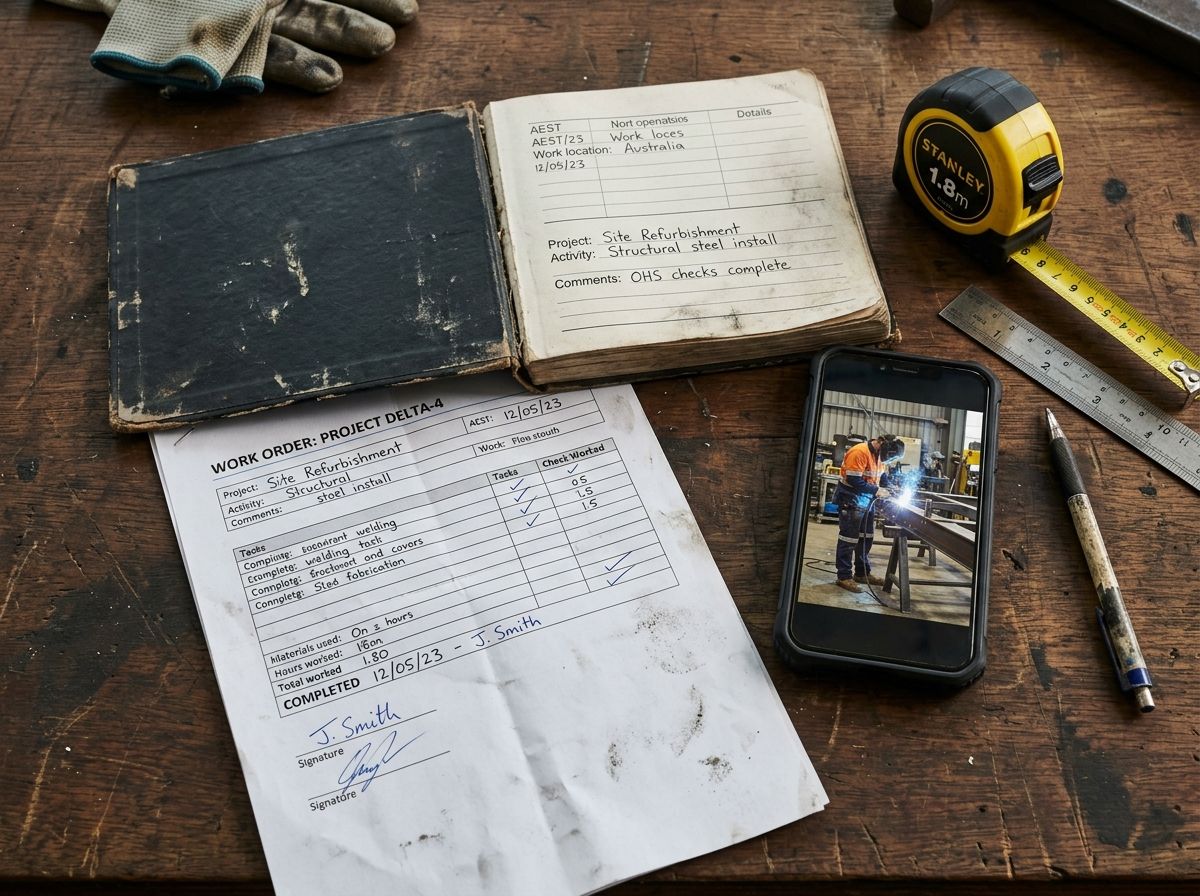
For someone who has been doing the work, that evidence already exists. It exists in the jobs you have completed, the projects you have managed, and the daily problems you have solved on site. The RPL process is about gathering and presenting that evidence in a structured way so a qualified assessor from a registered training organisation can evaluate it against the units of competency in the qualification.
The types of evidence that typically support an RPL assessment include records of work completed, documentation such as logbooks or work orders, statements from supervisors or employers who can verify your experience, and in some cases a practical demonstration or trade test. The specifics depend on the qualification and the RTO conducting the assessment.
- Records of work completed, such as job sheets, work orders, and project documentation
- Logbooks or site diaries that demonstrate ongoing practical work
- Supervisor or employer statements confirming your experience and competency
- Photographs or other documentation of your completed work
- A practical demonstration or trade test, if required by the qualification standards
It is worth being honest about one thing: RPL is a genuine assessment, not a rubber stamp. If gaps are identified between your experience and the qualification requirements, gap training may be required. A reliable guide will tell you this upfront, before you commit to anything.
The process is structured. The evidence already exists in your work history. The only change is how that evidence is compiled and assessed.
The pay packet argument: why this certificate is worth more than you think
The employer mandate is annoying. That is fair. But it is worth looking at what you are actually walking away with.
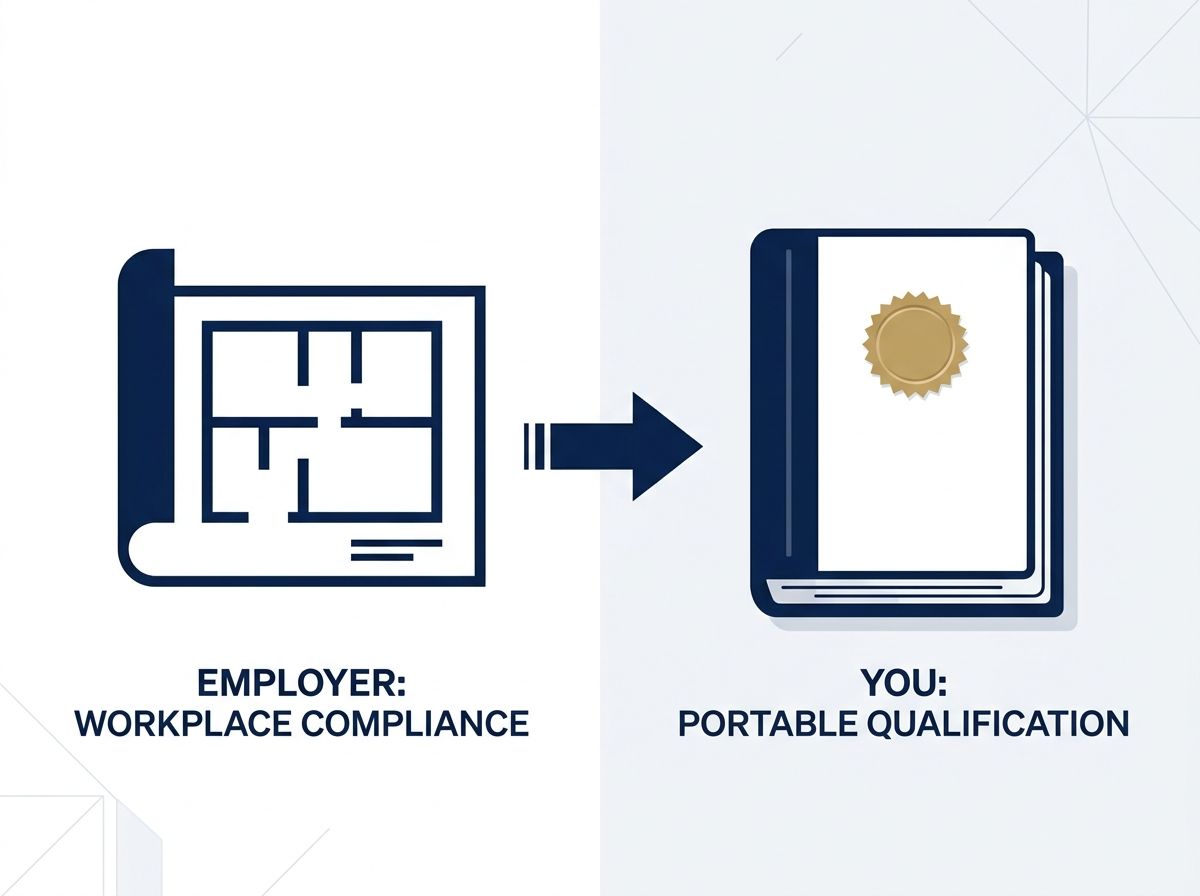
In many Australian trade and industrial sectors, formal qualifications are referenced in modern awards and enterprise agreements as the basis for pay classification. The difference between a classification level that requires a formal qualification and one that does not can be meaningful because the credential makes your competency visible to the system that determines pay rates, even when your daily tasks do not change.
Beyond award classifications, a formal qualification strengthens your negotiating position in every future role. When you apply for a position, negotiate a pay rise, or move to a new employer, the qualification acts as clear evidence of your capability before you have said a word. It positions you for roles and classifications that might otherwise remain out of reach.
Your employer is, in effect, funding a permanent upgrade to your market value. They needed the compliance, but you got the credential. Those are very different things, and you get the lasting benefit.
What happens if you change jobs or your employer changes their mind
Consider a practical scenario. Your employer mandates the qualification today. In two years, the contract ends, the company restructures, or the site closes. Whatever happens, that certificate stays with you.
If you change jobs, the qualification goes with you. If you move to a different employer in the industry, it is recognised. If you move interstate, it is nationally recognised. If you decide to move into a different sector where the qualification is relevant, it travels with you there too.
The employer who mandated this qualification has no claim on it once it is issued. It is yours. That is not a technicality; it is the fundamental design of Australia's national qualifications system. Qualifications are issued to individuals, not to organisations.
If your employer's circumstances change, your credential does not. That is a form of job security that no redundancy package can replicate.
How to find out if your experience qualifies without committing to anything
The most common question at this stage is a practical one: does my experience actually qualify for RPL? It is a fair question, and it deserves an honest answer before you commit to anything.
That is what the Free Skills Review is for. It is a no-obligation check, not a sales call or an enrolment form. It is an honest assessment of whether your experience is likely to support an RPL pathway for the qualification your employer requires. If it does, we will explain the process. If it does not, we will tell you that too.
Our approach is straightforward: we would rather guide you to the right pathway than enrol you in the wrong one. That means being completely honest about your suitability before anything else.
Your experience is real. The question is whether it can be formally recognised, and the only way to find out is to check.
Ready to Get Recognised?
Start with a free skills review to find out if RPL is right for you.