Running Corporate Investigations but Can't Get Your Own PI Licence? Here is the Qualification Path
Corporate investigators without a PI licence often face a career ceiling. Learn how to get the Certificate III in Investigative Services via RPL.

Your casework is real, but you lack the formal credential
You conduct interviews, gather evidence, and write reports. You have done this work inside a corporate legal team, an insurance claims unit, or under an agency's umbrella for many years. Your casework is complex and the outcomes are real. Yet, when an opportunity for independent practice arises, or a senior role requires a PI licence, you are held back because you do not hold the formal qualification.
This is not a skills problem; it is a documentation problem. The solution is the Certificate III in Investigative Services (CPP30619), which is the nationally recognised qualification that connects your daily experience with the formal recognition your practical work already deserves. This article explains how to bridge that gap.
The pattern that repeats for corporate investigators
A specific cycle occurs repeatedly across the corporate investigation and insurance fraud sectors in Australia. It typically follows this path.
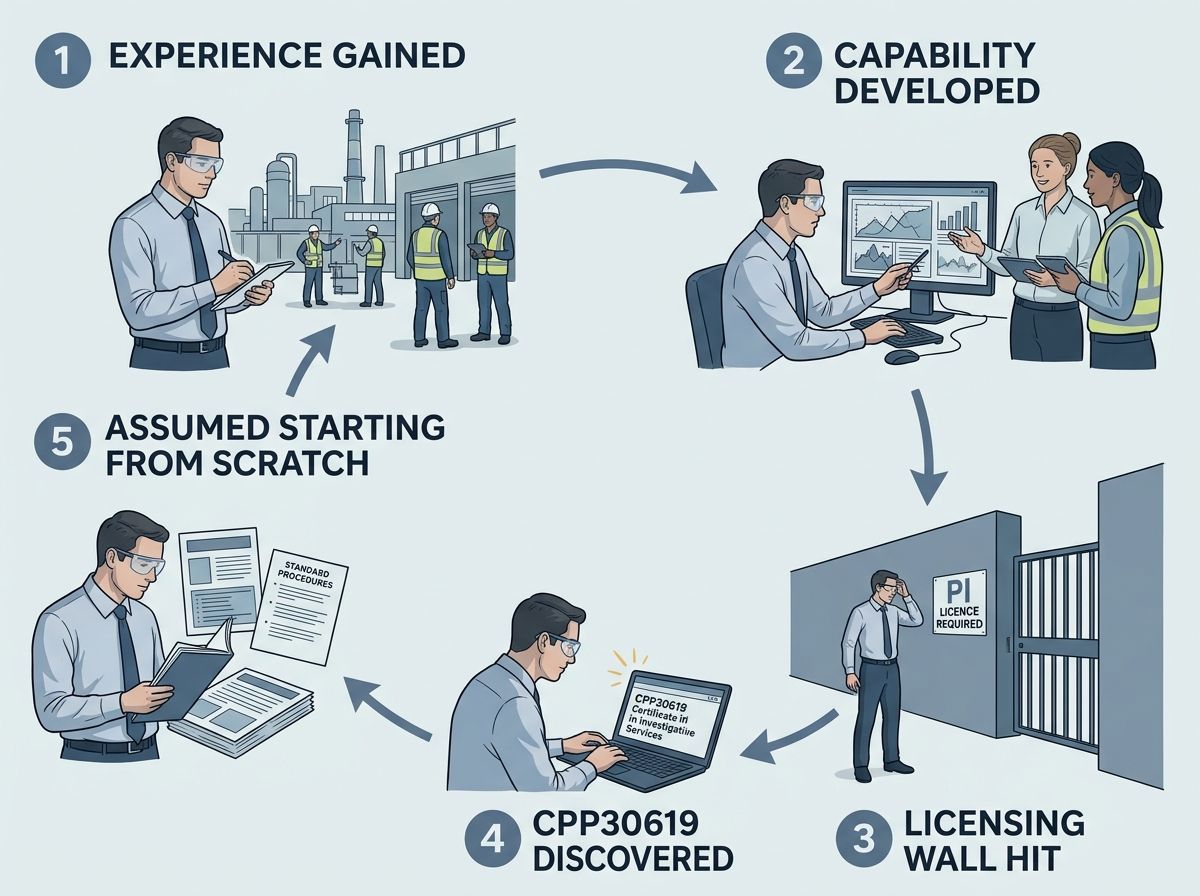
- An investigator gains substantial experience in corporate roles, insurance firms, or agencies by interviewing witnesses, collecting evidence, conducting surveillance, and writing legal reports.
- They build genuine expertise, learn how to manage complex fraud reviews, and understand what evidence will stand up in court.
- They hit a licensing barrier when a senior role, an independent contract, or a client requires a formal PI licence.
- They find out about the CPP30619 qualification requirement, the Certificate III in Investigative Services, and assume they must complete a long course from the beginning.
- They either abandon their ambition, continue working under another person's licence, or enrol in a course to study tasks they perform daily.
This cycle continues because the assumption in step four is incorrect. The CPP30619 process is not a training course for experienced operators; it is an assessment of existing evidence. Recognition of Prior Learning (RPL) exists to match your practical experience with this formal standard.
What the CPP30619 covers and why you may already do the work
The Certificate III in Investigative Services (CPP30619) is Australia's national standard for investigative work. Registered training organisations (RTOs) deliver this qualification, which covers the core skills needed to run investigations in a professional and lawful manner.
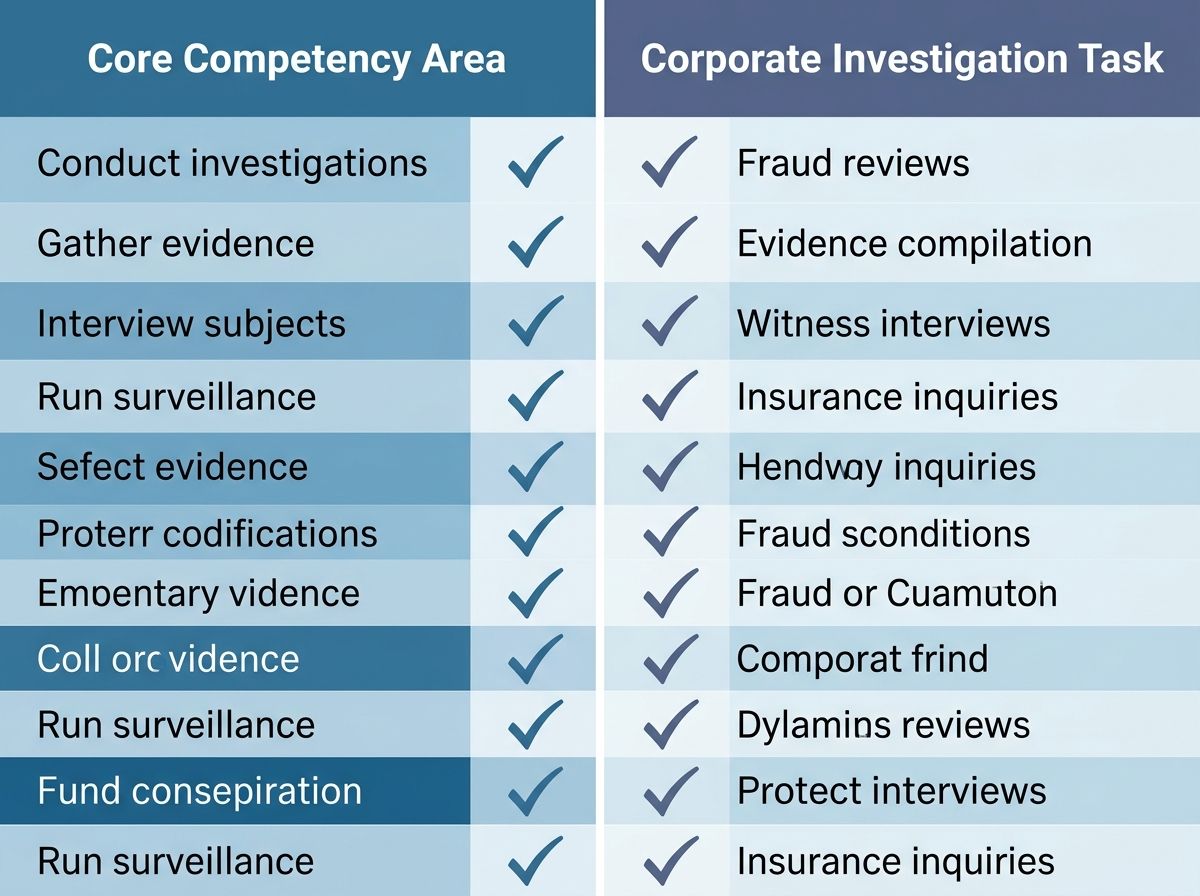
The qualification covers practical competency areas. These include conducting investigations, gathering evidence, interviewing subjects and witnesses, and running surveillance operations. It also covers preparing formal reports, understanding legal and ethical frameworks, and maintaining professional confidentiality.
If you have spent years conducting corporate fraud reviews, insurance claims investigations, workplace misconduct inquiries, or other similar casework, you have likely demonstrated most of these core competencies in your daily work every week. The primary question is not whether you can perform the tasks. The question is whether your existing experience can be mapped to the official standards of the qualification through a formal assessment process.
RPL is designed specifically for this mapping process. The official unit list for CPP30619 is available on training.gov.au, the Australian government's training database. You can review this list directly to see how your casework aligns, and we can discuss any questions during your Free Skills Review.
Why enrolling in a full course is often the wrong choice for experienced investigators
The default assumption for many experienced investigators is that getting the CPP30619 requires enrolling in a standard course and sitting through training on content they already understand. For some individuals, that is the correct pathway. However, for investigators with substantial, documented casework experience, there is a more practical starting point available: Recognition of Prior Learning.
RPL is a formal assessment pathway within the Australian Qualifications Framework (AQF). It allows experienced workers to have their existing skills and knowledge assessed against qualification standards without repeating training they have already completed in practice. Under RPL, your existing casework, investigation reports, employer references, and documented professional files serve as the direct evidence of your competence.
This is a rigorous assessment process, not a shortcut that bypasses standards. An assessor from an RTO reviews your evidence against the qualification requirements. If they identify any gaps, they provide gap training. Reputable providers include this service at no extra cost. Once your competency is confirmed, you receive the same national qualification as any classroom graduate.
If you are an experienced corporate investigator, you already have the evidence. The next step is organizing and presenting it to an assessor against the formal standards.
The licensing ceiling: limitations of working without the CPP30619
Operating without the CPP30619 has clear professional consequences. Most Australian states and territories require the Certificate III in Investigative Services before you can apply for a private investigator licence. Without this qualification, you cannot legally operate as an independent private investigator, regardless of your years of experience or the high quality of your casework.
Without the CPP30619, experienced corporate investigators are restricted. They cannot apply for their own PI licence in most states, operate independently, or bid for contracts that require a licensed investigator. They also cannot step into senior roles that mandate the credential or transition from agency employment to running their own business.
Licensing rules vary by state and territory. The regulatory bodies include NSW Fair Trading, Consumer Affairs Victoria, the Queensland Office of Fair Trading, WA Consumer Protection, Consumer and Business Services South Australia, the Tasmanian CBOS, NT Licensing, and ACT Access Canberra. You should check the requirements in your jurisdiction directly with these authorities before making any decisions. Rules can change, and operating without the correct licence carries serious legal consequences.
If you currently work under an employer's or agency's licence, you might not be required to hold your own credential in your current role. However, you will hit this ceiling when you try to advance, work independently, or apply for roles where the qualification is mandatory. The CPP30619 is the tool that allows you to break through that barrier.
The RPL process for a corporate investigator
The RPL process for the CPP30619 follows a structured sequence. Understanding these steps helps you decide if this is the correct path for your career.
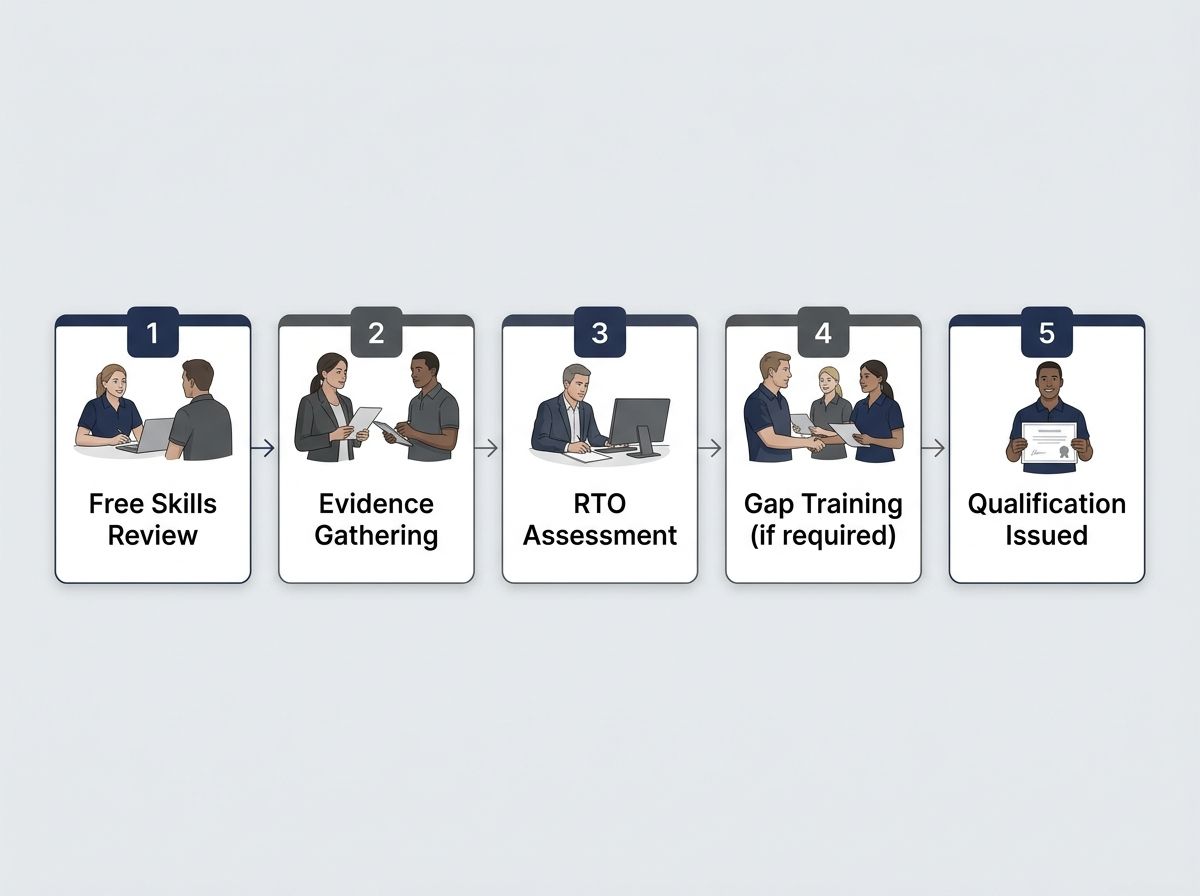
- Free Skills Review: An initial evaluation to check if your practical experience aligns with the CPP30619 and if RPL is suitable. This is a practical, honest assessment rather than a sales conversation.
- Evidence Gathering: You collect documents showing your experience. This typically includes reports you have written, employer references or statements, records of casework, professional development records, and other proof of your investigative practice. Specific requirements depend on the RTO.
- RTO Assessment: A qualified assessor from a registered training organisation evaluates your documents against the CPP30619 standards. This is a thorough review of your actual work, not a rubber stamp.
- Gap Training (if required): If the assessor finds any areas where your evidence is incomplete, they provide targeted gap training. Reputable providers offer this at no extra cost, ensuring you do not have to repeat the entire course.
- Qualification Issued: Once you demonstrate competency in all required areas, the RTO awards the Certificate III in Investigative Services (CPP30619). This is a nationally recognised AQF qualification with the same standing as any classroom course.
Process times vary depending on the RTO, how quickly you compile your evidence, and whether you need gap training. Any timeline estimates are indicative only, as your specific circumstances will determine the actual duration. The process is thorough rather than rushed.
Corporate investigators often ask if experience gained while working under an employer's or agency's licence counts as evidence. You should discuss this during your Free Skills Review. The answer depends on your specific duties, your documentation, and the RTO's assessment policy. We evaluate each situation individually to give you an accurate answer.
Is your corporate investigation experience enough for RPL?
RPL is not suitable for everyone. We prefer to tell you this upfront rather than guide you toward an unsuitable pathway. The Free Skills Review is designed to evaluate your eligibility honestly before you make any commitment.
The following types of experience are highly relevant to the CPP30619 assessment. If your background includes several of these responsibilities, the RPL pathway is worth exploring:
- Running corporate fraud investigations, including gathering financial or business evidence and writing findings reports
- Managing insurance claims investigations, including field inquiries, witness interviews, and surveillance
- Investigating workplace harassment or misconduct, interviewing staff, and preparing formal reports
- Collecting and preserving evidence according to legal and evidentiary standards
- Drafting detailed investigation reports for legal counsel, insurance firms, or corporate management
- Conducting stationary or mobile surveillance operations and keeping precise logs of your observations
- Working within the laws and ethical standards that govern investigative practices in Australia
- Handling sensitive investigations while maintaining strict confidentiality and professional ethics
Your documentation is as important as your hands-on experience. Employment records, written reports, employer reference letters, case logs, and training records are all useful. Clear documentation makes the assessment process much more straightforward.
If your investigative work was part-time, casual, or through an agency, we can evaluate its suitability during the Free Skills Review. The assessment depends on the volume, recency, and nature of your tasks, which we review on an individual basis.
Breaking the cycle: from corporate casework to licensed investigator
The cycle of having experience without a credential, or capability without a licence, can be broken. The CPP30619 via RPL provides that solution. This is not because the assessment is easy, but because your past work serves as the necessary evidence.
Your casework is practical evidence. The main step is checking how it maps to the CPP30619 standards. The Free Skills Review is designed for this purpose. It is free, carries no obligation, and provides an honest starting point for investigators who want to match their qualification to their actual skill level.
The path to independent practice often does not require more training. For most experienced corporate investigators, it is a matter of documenting, assessing, and recognizing your current achievements. The decision to pursue this recognition is yours.
Ready to Get Recognised?
Start with a free skills review to find out if RPL is right for you.