The teacher's aide qualification: Why your years in the classroom count
Without a Certificate III in Education Support, school HR systems might miss your experience. Here is how RPL recognises your classroom skills.

The job ad that ignores everything you know
You read the job description and you know, without any doubt, that you are fully capable of doing this work. After all, you have been doing it for years. You support students with learning difficulties, sit alongside kids who need a patient assistant, and communicate with classroom teachers, parents, and school leadership. You manage classroom behaviour with the kind of calm that only comes from real, hands-on experience.
Then you reach the requirements section: Certificate III in Education Support is listed as mandatory.
The application system does not evaluate what you actually know. It looks strictly for what you can prove on paper.
This is not a skills gap. You have the skills. This is a recognition gap, and it is one of the most frustrating situations an experienced education support worker can face. You are highly capable, yet the system makes you feel invisible and stuck.
What HR systems see (and what they miss)
Most education support roles advertised by schools—whether government, Catholic, or independent—list a Certificate III in Education Support as a minimum or preferred requirement. Some specify CHC30221 by code. Others look for a 'relevant qualification' or 'Certificate III or equivalent.' A few mention 'demonstrated experience,' but that option is often missed by automated screening tools that filter applications before a human recruiter ever reads them.
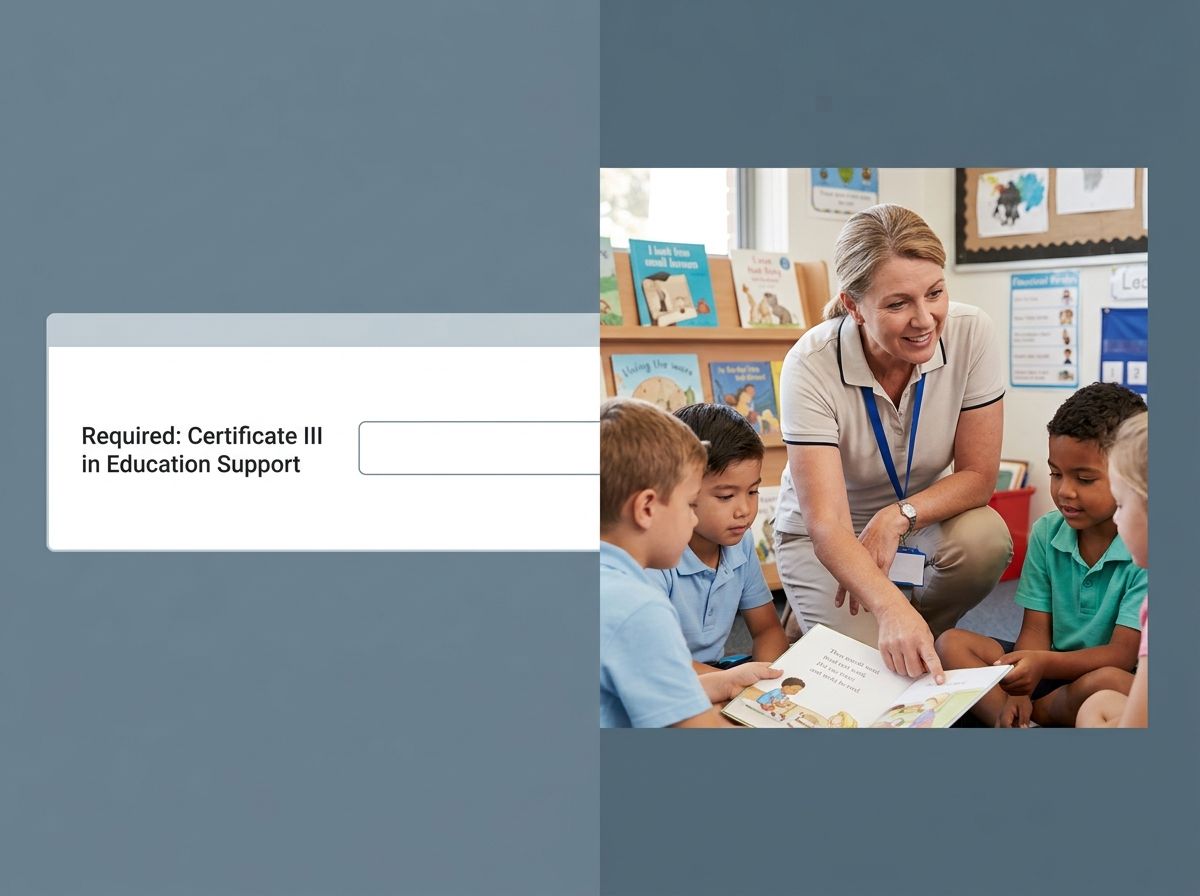
Applicant tracking systems are designed to sort applications rather than assess practical capability. They scan for keywords, qualification codes, and specific credential fields. They cannot read between the lines of a resume to recognise that an educator who has spent eight years supporting students with autism spectrum disorder in a mainstream classroom already has the exact skills the qualification is designed to assess.
The recruitment system is not broken. It does exactly what it was designed to do, which is process credentials rather than recognise practical competence. That distinction is important when your expertise has been built through years of daily classroom practice rather than study.
Your skills are real and your experience counts. The screening software simply cannot see it yet.
What the Certificate III in Education Support covers
The Certificate III in Education Support, known by the code CHC30221, is a nationally recognised qualification under the Australian Qualifications Framework. It is designed to prepare workers to support teachers and students in school settings. The competencies it covers include supporting student learning, assisting with literacy and numeracy development, working with students who have additional needs, communicating with teachers and families, and contributing to safe and inclusive learning environments.
If you have worked as a teacher's aide for several years, that list does not describe a course you need to take. It describes the job you already perform every day.
The qualification also covers supporting the social and emotional wellbeing of students, working within school policies and procedures, and contributing to the planning and delivery of learning programs under a teacher's direction. For experienced education support workers, these are not classroom theories; they represent the daily reality of the role.
The gap is not between your actual skills and the course requirements. The gap is between your skills and the certificate that proves you have them.
Why starting over is not the only option
Many experienced teacher's aides assume that getting a Certificate III in Education Support requires enrolling in a course, attending classes, and sitting through lessons on things they already know. While that assumption is common, it is not the only pathway available.
Recognition of Prior Learning, commonly known as RPL, is a formal assessment pathway under the Australian Qualifications Framework. It allows experienced workers to have their existing knowledge and skills assessed against the units of competency in a qualification. If the assessment confirms you demonstrate the required competencies, you can receive credit for those units, or even the full qualification, without repeating study you have already completed through years of practice.
This is not a shortcut. RPL is a genuine evaluation conducted by a qualified assessor from a registered training organisation (RTO). The RTO is the body that issues the qualification, while RPL it guides you through the process of gathering and presenting your experience as evidence for that assessment. The qualification you receive is fully nationally recognised because the assessment standards are identical.
What RPL does is remove the requirement to repeat study on topics you already know. If the assessment process identifies any specific knowledge gaps, targeted gap training can address them. For experienced education support workers whose daily tasks closely match the competencies in CHC30221, the evidence of your capability already exists. It simply needs to be documented and presented in a format the assessor can evaluate.
Gaining recognition should not require starting your education from scratch. For many experienced teacher's aides, it does not.
This situation, where years of genuine expertise are missed by formal recruitment systems, is not unique to education support. It is the same challenge faced by workers across care, trades, and community services. If you want to see how experienced professionals in other fields use RPL to translate hands-on experience into formal credentials, this article on how experienced workers use RPL to translate floor experience into formal recognition provides useful context.
What makes a strong RPL case for education support
RPL assessment is entirely evidence-based. The assessor determines whether you meet the standards required by the qualification by reviewing proof of your daily work. For experienced teacher's aides, this evidence is often more accessible than they expect.
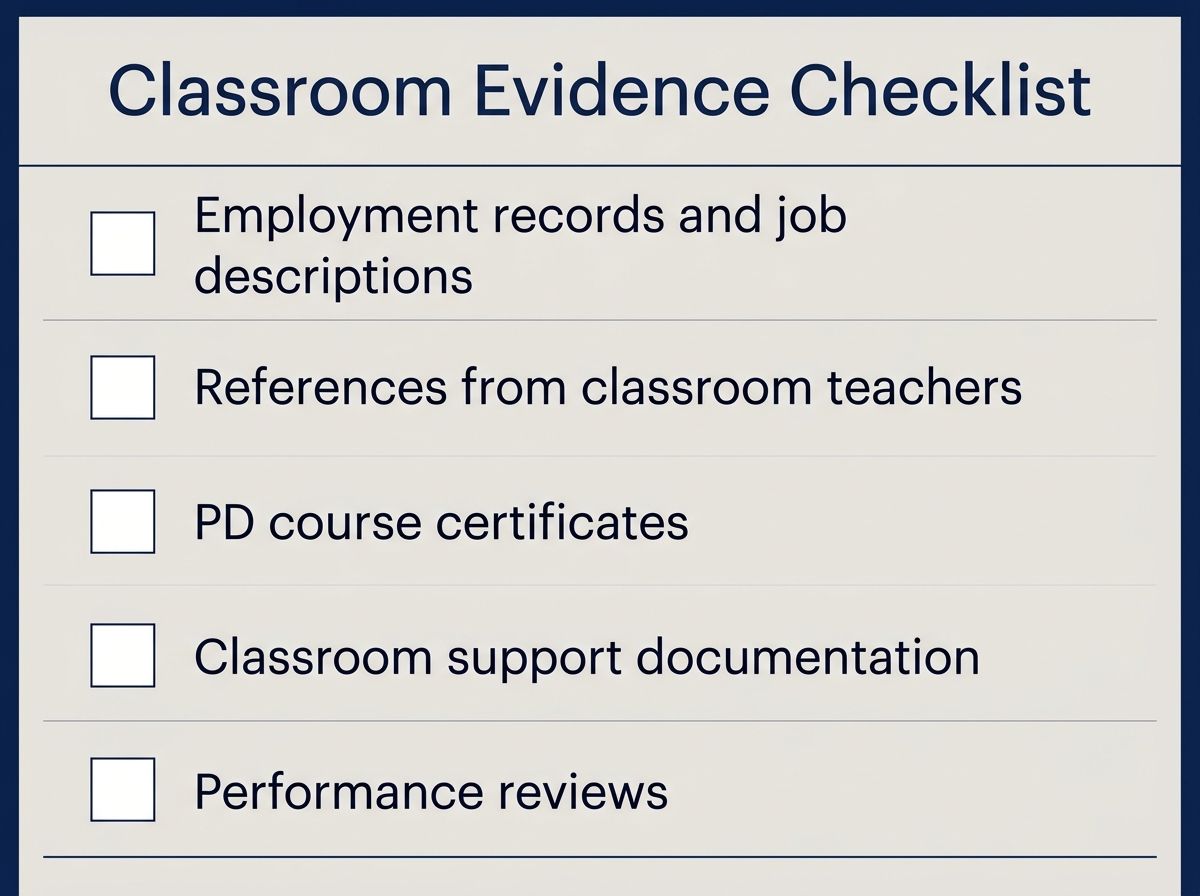
Common types of evidence used in RPL assessments for education support qualifications include:
- Employment records and official job descriptions that detail your classroom roles and responsibilities
- References or third-party reports from supervising classroom teachers, school principals, or leadership teams
- Records of professional development, including workshops, training days, or short courses you have completed
- Documentation of specific student support activities, such as individual learning plans you have helped develop
- Performance reviews or annual workplace appraisals from your school employer
- Your own written descriptions detailing how you manage and carry out specific tasks in your role
Most schools maintain detailed records of professional development and staff performance. If you have worked in the same school or school system for several years, much of the documentation needed to prove your skills likely already exists. It simply needs to be compiled into an organized portfolio.
The challenge for most teacher's aides is not a lack of evidence, but knowing how to select and map it to the qualification requirements. Professional guidance makes this process much simpler.
Is RPL right for your situation?
RPL is not the right pathway for everyone, and it is important to be realistic about who it serves.
RPL assessors look for substantial, recent, and relevant experience, which generally means several years of consistent work in a role that matches the units in the qualification. For the Certificate III in Education Support, this requires hands-on, ongoing work supporting students in a classroom. The closer your daily tasks align with the qualification's units, the stronger your RPL case is likely to be.
If you are at the beginning of your education support career, or if your role is mostly administrative rather than classroom-focused, RPL may not be the right path. In those cases, regular study or a combination of study and partial RPL is often a better option. A straightforward suitability check is the best place to start.
For experienced teacher's aides who have spent years in the classroom supporting student learning, managing behaviour, working with students who have additional needs, and collaborating with teachers, there is no question about your capability. The only real question is whether your experience can be documented and presented as evidence for a formal assessment.
A Free Skills Review is designed to answer that question. It offers a clear, honest appraisal of your eligibility with no obligation.
Ready to Get Recognised?
Start with a free skills review to find out if RPL is right for you.