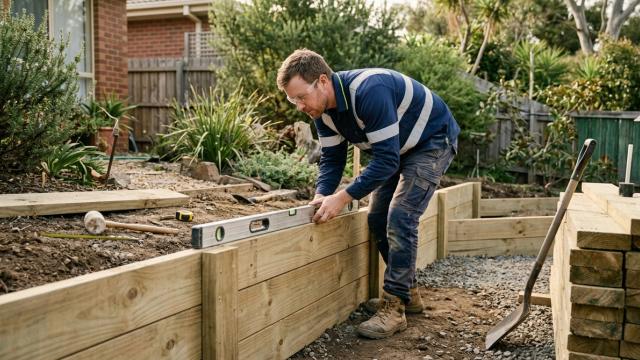
Thirty years of cabinets, not one certificate to show for it
Built cabinets for decades but never got your Cert III? Your workshop experience may be exactly what RPL assessors look for.
By RPL it Australia7 min read
The moment you realise the paperwork doesn't exist
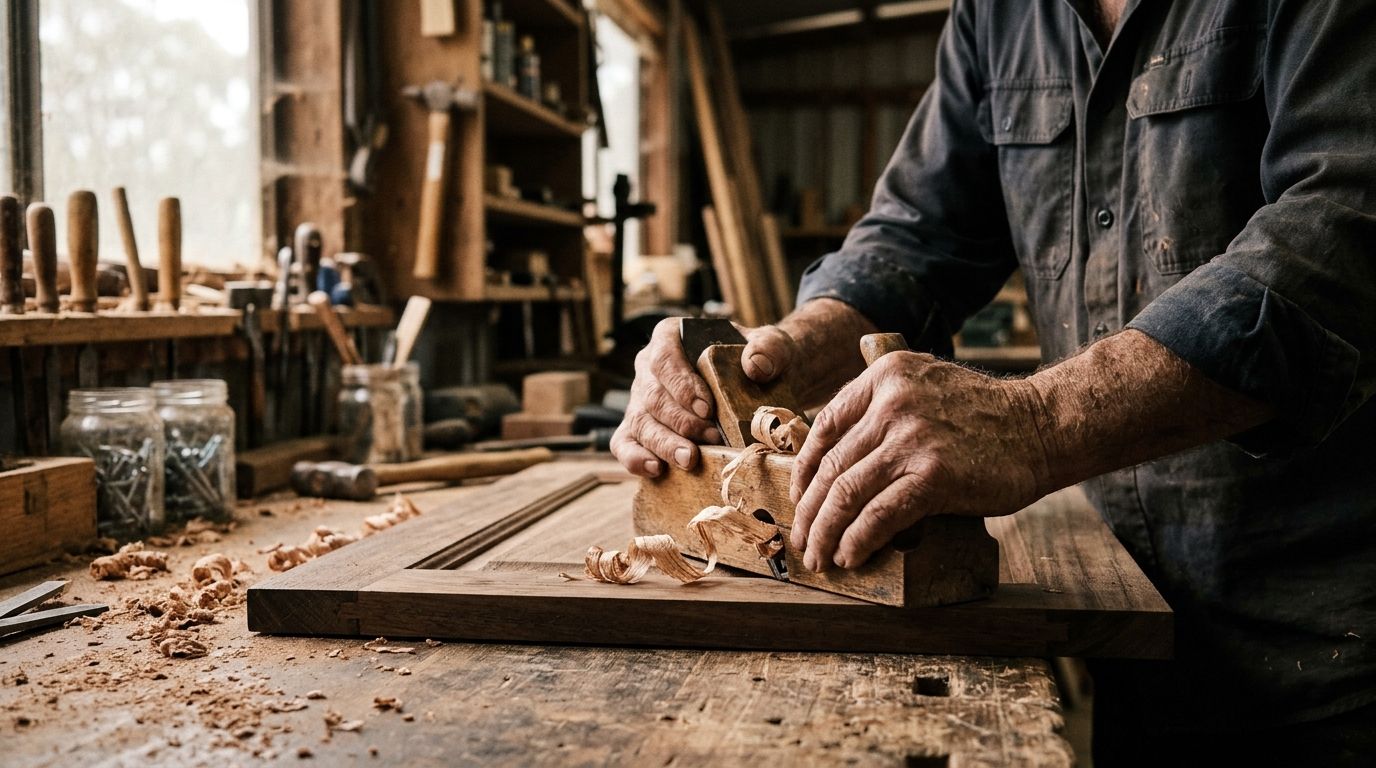
You have been building cabinets since before some of your apprentices were born. You know exactly how timber moves with the seasons. You know which joints hold under load and which ones look good in a showroom but will not survive a decade of real-world use. You have built commercial kitchens, custom joinery for heritage buildings, and bespoke pieces that clients still talk about years later.
Then someone asks to see your Cert III in Cabinet Making, and you have nothing to hand them.
It might be a tender process requiring formal trade qualifications for all subcontractors. It might be a builder who needs documented credentials before bringing you onto a commercial site. Or it might be a client who asks, politely, whether you are formally qualified. The question lands the same way regardless of who asks it. After thirty years of trade experience, the system still demands a piece of paper you do not currently have.
This is about that gap: the divide between the hands-on knowledge you use every day in the workshop and what the formal training system is able to recognise.
How an entire generation of cabinet makers learned without a certificate
For many cabinet makers who entered the trade before formal VET qualifications became standard in the 1990s and 2000s, the pathway into the craft had nothing to do with TAFE. You learned your trade in a family workshop or from an older tradesperson who showed you how to read timber grain, how to set a hand plane, and how to cut a dovetail joint that would remain tight fifty years later.
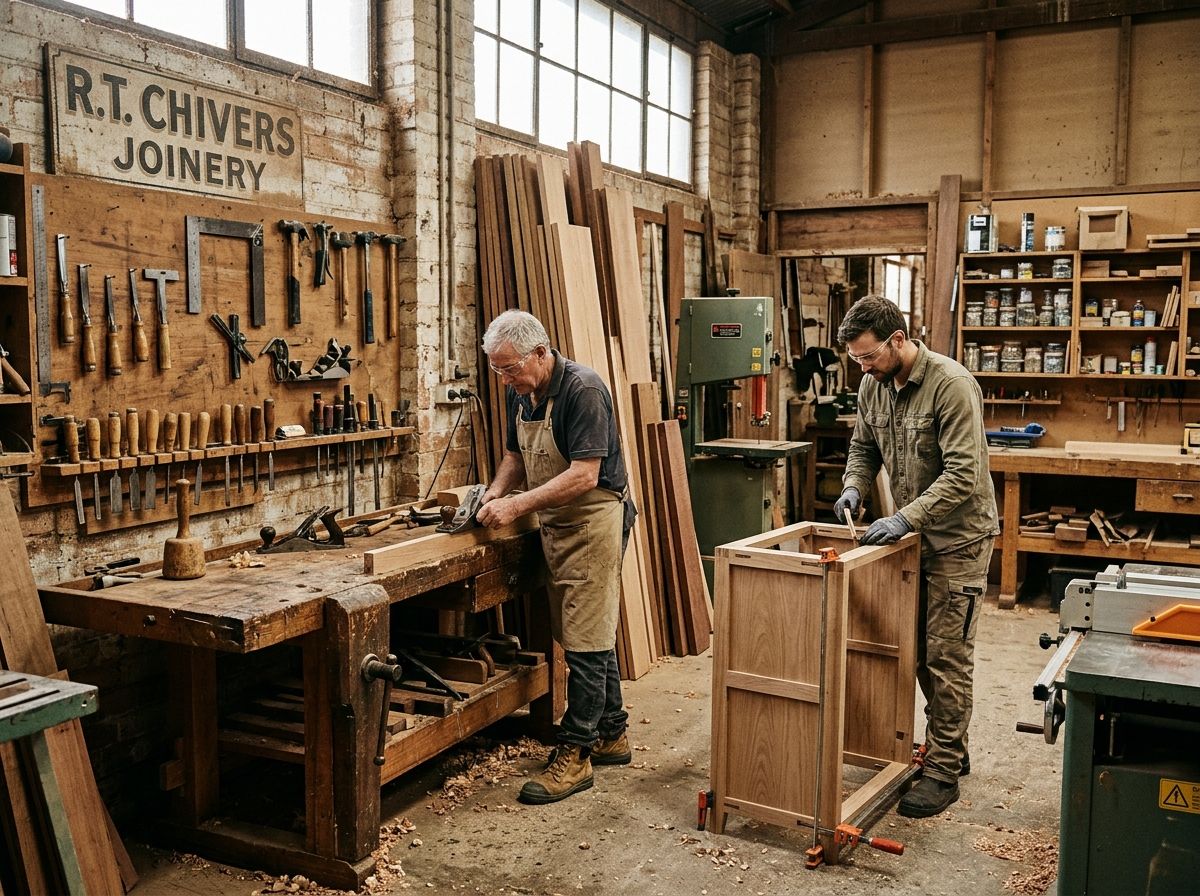
That training was hands-on, practical, and highly demanding. In many cases, it was tougher than any formal modern course because the standard was set by someone who had spent their entire life in the trade, rather than by a training package. Operating without a certificate at the end was not a failure; it was just how the industry worked.
The formal qualification system caught up later, establishing the Certificate III in Cabinet Making and Timber Technology as the national standard. However, tradespeople who had already spent decades mastering the craft through practical work were left in an awkward position. Their skills were real and their experience was deep, but in the eyes of regulatory bodies, their expertise did not exist in the required format.
This is not a personal failing. It is a common reality for a significant number of experienced tradespeople across the furnishing and joinery industries. This is exactly the gap that the Recognition of Prior Learning pathway was established to address.
What the Cert III in Cabinet Making covers, and why you likely already know it
The Certificate III in Cabinet Making and Timber Technology (MSF30322) is the national qualification for cabinet makers and furniture manufacturers in Australia. If you have been building cabinets professionally for a long time, you have likely been practicing the core competencies of this qualification throughout your working life without realizing it.
The qualification covers the practical and technical skills that define the trade. This includes selecting and preparing timber and sheet materials, understanding how different species and engineered products behave under various conditions, and constructing components like carcasses, doors, drawers, and shelving to precise specifications. It also covers applying structural joinery techniques, finishing surfaces to a professional standard, installing completed cabinetry on-site, and managing workshop safety and materials responsibly.
These are not theoretical modules; they represent your daily work in the shop. The qualification does not teach experienced tradespeople new skills, but instead provides a formal framework to recognise the capabilities you already use.
The specific units of competency in MSF30322, including the balance of core and elective units, are listed on the national training register at training.gov.au. If you want to compare your own workshop experience against the formal standard before taking any further steps, that register is a useful place to start.
What RPL means for a cabinet maker with decades of experience
Recognition of Prior Learning (RPL) is a formal assessment process that evaluates whether your existing skills and knowledge meet the competency standards of a qualification, without requiring you to study what you already know. Conducted by a qualified assessor from a Registered Training Organisation (RTO), it results in the same nationally recognised qualification as the traditional study pathway.
RPL is not a shortcut or a loophole. It is a rigorous, evidence-based assessment that asks a straightforward question: does this person already demonstrate the competencies required by this qualification? For experienced cabinet makers, the answer is usually yes, but proving that to an assessor requires clear evidence.
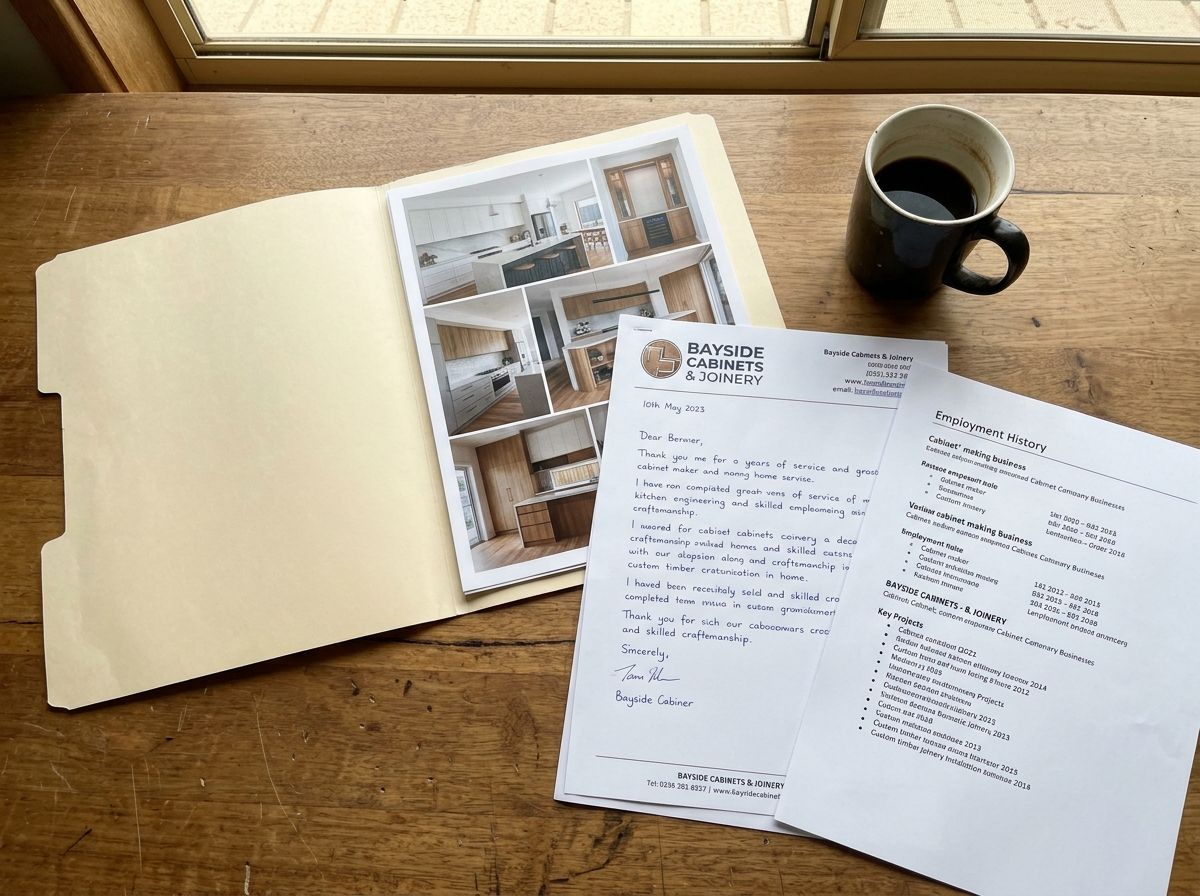
The evidence used in an RPL assessment typically includes items you already have access to, such as employment records documenting your trade history, photographs of completed projects, and references from builders, employers, or clients who can verify the standard of your work. In some cases, a practical demonstration of specific skills may be required. Assessors do not look for classroom transcripts; they look for proof that you can do the job, which is visible in your finished work.
We should also be upfront about one point: an RPL assessment might identify areas where your experience does not fully cover a specific competency unit. If that happens, targeted gap training is provided to address those specific areas. This does not mean starting your trade training over; it simply means filling a defined gap, which is a standard part of the process.
The frustration of being asked to prove what you already know
There is a distinct frustration in being told to 'just do the course.' It is more than an inconvenience; it is the feeling that decades of genuine expertise are being dismissed, and that the system only sees missing paperwork where you see a lifetime career.
Recognition should not require starting from scratch. That is the core principle behind RPL as a formal pathway within the Australian Qualifications Framework. The system acknowledges that expertise is acquired through hands-on experience, not just classroom study, and RPL is the mechanism that makes this acknowledgment official.
This issue is not unique to cabinet making. Veteran tradespeople in other fields face the same recognition gap, and this frustration is shared across many skilled trades.
What matters is what you can do about it. For experienced cabinet makers, RPL is the practical pathway the system provides.
Why a free skills review is the right first step
Before making any decisions, find out where you stand. The most practical first step is a straightforward conversation about your trade experience to see if it aligns with the RPL standards, without any upfront commitment or pressure.
The Free Skills Review provides exactly that. It costs nothing and carries no obligation. You are not signing up for a course, and you are not being tested. You are simply reviewing your work history with someone who understands the process and can give you an honest assessment of whether RPL is a viable option for you.
That clarity is important. Not everyone who has worked in the trade for years will be a suitable candidate for RPL. Finding this out early, before spending time or money, is highly valuable. The review is designed to give you clear information rather than pushing you into a pathway that does not fit.
Your craft deserves to be counted
Thirty years of building cabinets represents genuine, practical expertise. The lack of a certificate does not change what you can construct, what you understand, or the value of your work. However, formal recognition can open important doors to commercial projects, tender eligibility, and the professional standing that reflects the skill you have demonstrated over decades of work.
Your experience is your evidence. That is the core principle of RPL. Your work history, photos of completed projects, and references from clients are not just records; they are the active foundation of your formal assessment.
If you completed any formal training in the past, including short courses or individual units from years ago, your USI transcript might reveal records you can use as evidence.
The decision is entirely yours. If you want to make your decades of trade experience official, taking the first step costs nothing.
General information only, current at the date shown. Licensing rules change, so check the current requirements with the relevant regulator before you rely on them. RPL it Australia is a student support service, not a Registered Training Organisation; qualifications are assessed and issued by our partner RTOs.