Why stonemasonry is one of the highest-value RPL pathways in the trades
Experienced stonemasons miss tenders and licensing due to a missing certificate. See how the CPC32320 trade qualification changes that through RPL.
By RPL it Australia7 min read
The trade that earns respect on site but gets filtered out on paper
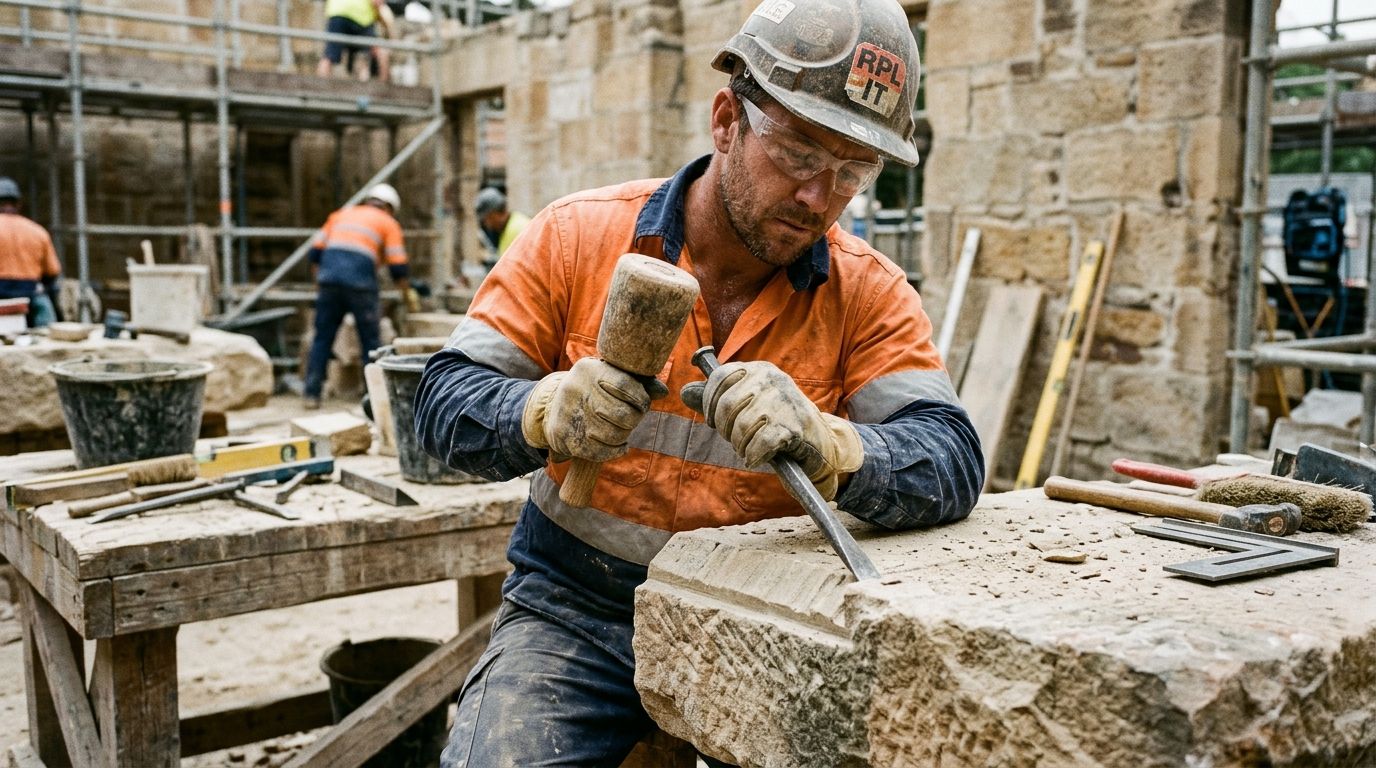
You know the work. You select stone, read the grain, cut to tolerance, and lay courses built to last. The craft is in your hands, your eye, and your judgement. None of that is in question.
What is in question, at least to the systems deciding who gets contracts, licences, and projects, is whether you hold the Certificate III in Stonemasonry (CPC32320). This is the nationally recognised qualification for the trade in Australia, listed on the National Training Register within the Construction, Plumbing and Services Training Package.
For many experienced stonemasons, the gap between practical skill and formal recognition is real and commercially costly. This article addresses that gap, explaining why stonemasonry is a trade where formal credentials carry significant commercial weight.
Why stonemasonry qualifications carry significant commercial weight
In many trades, a formal qualification primarily affects employment eligibility, meaning whether an employer will hire you. In stonemasonry, the CPC32320 affects access to specific categories of work that are structurally difficult to enter without it.

Licensing is the clearest example. In New South Wales, a contractor licence is required to carry out or contract for residential building or trade work, including stonemasonry, valued above a specific threshold. The qualification satisfies part of that licensing requirement. In Queensland, a stonemasonry licence is required for work associated with stone above a specified value. These are strict regulatory requirements administered by state authorities.
The national qualification register notes that additional licensing, legislative, regulatory, or certification requirements may apply in some states and territories, advising candidates to check with the relevant regulatory authority. Requirements vary by jurisdiction. You should verify the specific requirements for your state directly with NSW Fair Trading, the Queensland Building and Construction Commission, or their interstate equivalents.
Heritage and conservation work adds another dimension. The CPC32320 includes a dedicated specialist elective stream, Group A, 'Architectural heritage, conservation and restoration stonemasonry', which consists of eight units. Heritage stonemason is a listed occupational title within the qualification. Heritage conservation work involves specialised knowledge of conservation principles, heritage legislation, and the specific requirements of working with existing stone in protected structures.
The Australian Government has invested more than $30 million through the Australian Heritage Grants program since 2018, funding conservation and restoration work at National Heritage-listed sites. A single recent round, Round 8, allocated $5.3 million across 20 projects, including building restoration and conservation works. This represents a sustained pipeline of restoration activity. While qualification requirements vary by funding body, project type, and jurisdiction, the volume of funded work remains significant.
Public liability insurance is another practical factor. Some councils and project owners specify minimum cover requirements for masonry and monument work. Insurance and client requirements vary, and formal qualifications are not universally mandated, but the commercial environment for stonemasonry, especially in heritage and monumental contexts, involves regulatory compliance that a formal credential helps satisfy.
What the data says about stonemasonry as a trade
Stonemasonry is one of the smallest trade occupations in Australia by workforce size. Jobs and Skills Australia records around 4,900 employed stonemasons nationally, which is a fraction of the workforce seen in larger trades.
This small workforce is concentrated in two industries: manufacturing, which includes bench-top fabrication and monumental masonry, accounts for 58.8% of the occupation, while construction accounts for 32.0%. The work covers stone monuments, heritage buildings, new-build architectural stonework, and bench-top installation, representing a broader scope than many associate with the trade.
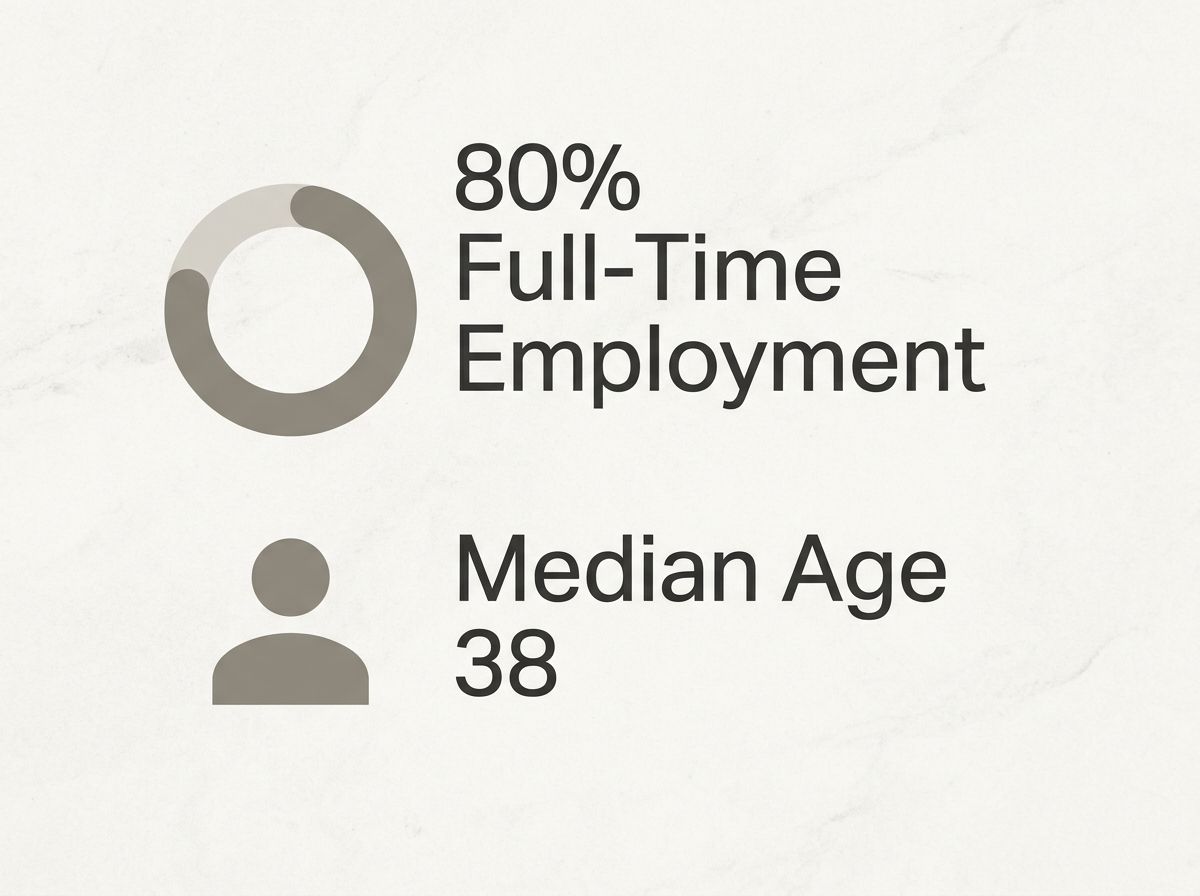
Stonemasons work predominantly full time. Around 80% of the occupation works full-time hours, compared with approximately 64% across all occupations. The median age is 38 years, making it a relatively young workforce for a trade with deep craft traditions.
For the broader Bricklayers and Stonemasons unit group, median full-time weekly earnings are recorded at $2,317, compared with $1,852 across all occupations. These figures reflect the combined unit group rather than stonemasons alone, and serve as an indication rather than a specific earnings guarantee.
The occupation is classified at Skill Level 3, which is equivalent to a Certificate III or IV, or a Certificate III with at least two years of on-the-job training. This classification acknowledges that professionals reach this skill level through experience rather than formal study alone. It also means that experienced stonemasons who have built their skills on the job are generally well-positioned for a recognition pathway.
Jobs and Skills Australia publishes occupation profiles for stonemasons, containing employment figures, industry distribution, and skill level classifications.
The specific opportunities that open when you hold the CPC32320
The Certificate III in Stonemasonry (CPC32320) is the current national qualification for this trade. Released in November 2020, it supersedes the older CPC32313 Certificate III in Stonemasonry (Monumental/Installation). It is listed as current on the National Training Register within the Construction, Plumbing and Services Training Package.
Holding this qualification opens several distinct commercial options. For state licensing, the CPC32320 or its equivalent is typically part of the qualification pathway to obtain a contractor licence where one is required. These specific requirements vary by state, so you must verify them with your local authority. For heritage and conservation work, the qualification features a dedicated heritage stream, and 'Heritage stonemason' is a recognised occupational title within it. For tender and contract eligibility, certain government and commercial projects specify qualification requirements for contractors. Holding the CPC32320 allows you to meet these standards when they apply.
The heritage conservation units within the qualification address applying conservation principles and practices to heritage stonework, identifying conservation legislation, and adhering to requirements from regulations, guidelines, standards, and codes. Rather than generic trade skills, these units cover the specialized knowledge that heritage project owners and conservation planners require when hiring contractors for protected structures.
The National Training Register entry for CPC32320 provides full qualification details, occupational titles, and regulatory caveats.
Why experienced stonemasons are well-positioned for RPL
Recognition of Prior Learning (RPL) is a nationally recognised assessment pathway under the Australian Qualifications Framework. It is a formal, rigorous assessment of your existing competency, conducted by a qualified assessor from a registered training organisation (RTO). The RTO issues the qualification, while RPL it helps you compile and present the necessary evidence.
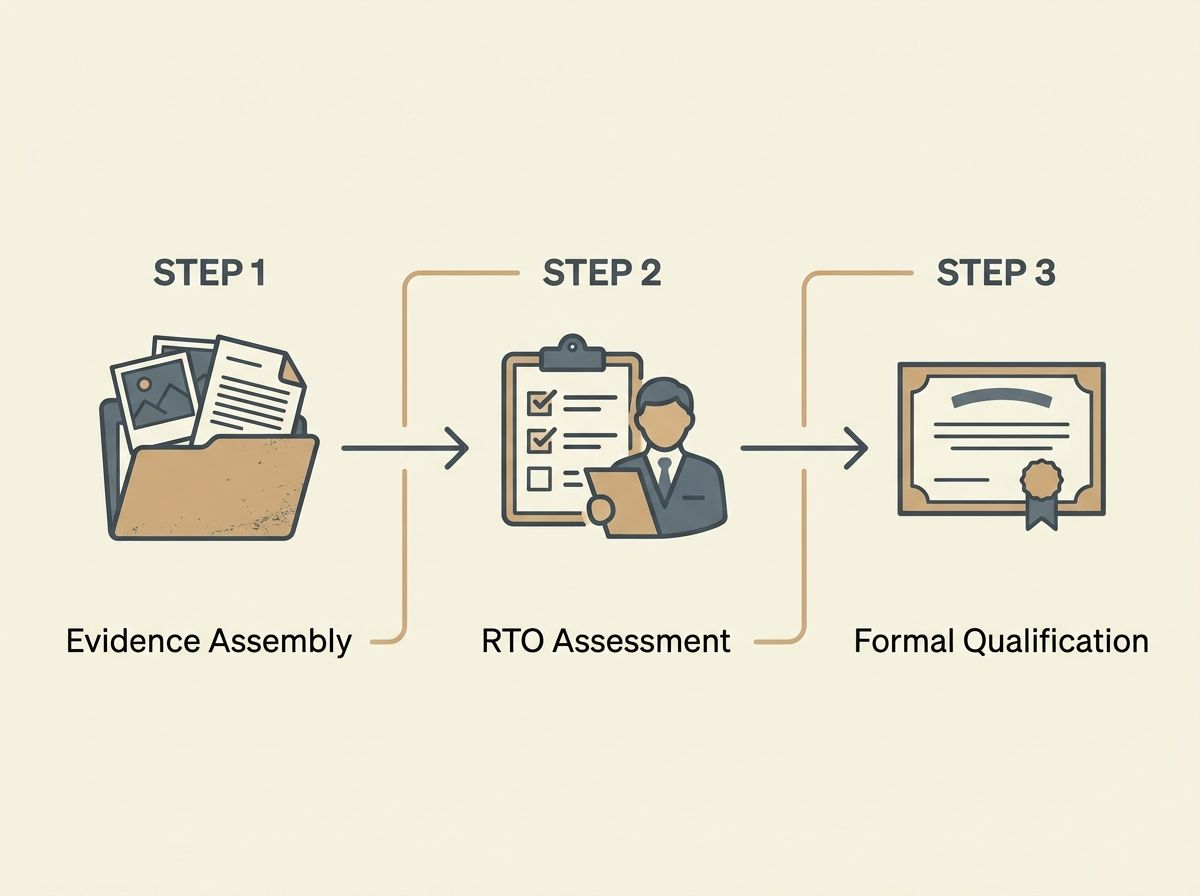
The CPC32320 requires competency across 30 units, consisting of 21 core units and 9 elective units. For experienced stonemasons, the assessment maps existing skills and knowledge directly against these units. Evidence typically includes work photographs, project records, employment history, references from supervisors or clients, and past training documentation. The assessing RTO determines the specific evidence required.
The qualification is structured around four specialist streams: architectural heritage, conservation and restoration; new and contemporary building; monumental stonemasonry; and bench-tops. An experienced mason's background usually aligns with one or more of these areas, and the RPL assessment focuses on demonstrating competency in those specific units.
Where gaps are identified during assessment because the evidence does not fully demonstrate competency, targeted gap training is typically provided. This training is specific and focused, avoiding a return to full-time study. The goal is to recognise what you already know while supporting any areas that require development.
As a practical first step, locate your past training records. Your USI transcript is an official government record of your completed VET qualifications and can highlight prior training you may have forgotten or overlooked during evidence collection.
See how your USI transcript can reveal past training to support your RPL evidence.
Is RPL the right pathway for every experienced mason?
Not necessarily. RPL suitability depends on the breadth and depth of your experience relative to the qualification units, rather than just years on the tools. A mason who has worked solely in one narrow area of the trade may find their evidence covers some units well and others less completely. This outcome is simply useful feedback rather than a disqualification.
The initial step is a skills review, which is a conversation about your work history, what you can demonstrate, and how the qualification matches your experience. This review should take place before any commitment to enrolment. The approach at RPL it is to guide candidates toward the correct pathway, rather than focusing solely on enrolment. If RPL is not the right fit, it is best to know early.
The CPC32320 is also available through traditional training pathways, typically as an apprenticeship. Your Career lists on-site delivery in NSW, NT, QLD, SA, VIC, and WA, with estimated course fees and durations varying by provider and state. For those earlier in their career, or with significant gaps in experience, a traditional pathway may be more appropriate. The correct choice depends on your specific situation.
Your experience has commercial value. A qualification makes it visible.
The CPC32320 does not create your skills; it recognises them. For experienced stonemasons, this recognition is what unlocks higher-tier opportunities, including state licensing, heritage projects, and contracts that require a formal trade credential.
Your skills are real, and your experience counts. The key question is whether the formal licensing and procurement systems recognise those skills, and whether RPL is the most efficient pathway to make them visible.
The choice is yours, and the first step costs nothing.
Learn more about the Certificate III in Stonemasonry RPL process.
General information only, current at the date shown. Licensing rules change, so check the current requirements with the relevant regulator before you rely on them. RPL it Australia is a student support service, not a Registered Training Organisation; qualifications are assessed and issued by our partner RTOs.