From property management to a formal real estate qualification without starting over
Experienced in leasing, inspections, and client management but lack a qualification? Learn how to access the Certificate IV in Real Estate Practice.
By RPL it Australia5 min read

The qualification hurdle property managers keep running into
You handle leasing negotiations, conduct routine and exit inspections, and manage tenancy disputes. You coordinate maintenance, keep landlords informed, and work within the legislation daily. You know the process because you do the work.
Yet, when you look at progressing into a licensed real estate agent role, the requirement is clear: you need the Certificate IV in Real Estate Practice (CPP41419) before you can step up.
For many property managers, this requirement feels like starting from scratch. The qualification itself is reasonable—it is the national standard for real estate practice in Australia—but the assumption behind it is frustrating. It assumes you need to be taught what you already do.
The issue is a gap in documentation, not a gap in your actual skills. These are two very different challenges.
The Certificate IV in Real Estate Practice (CPP41419) formally recognises competency in real estate practice, covering the exact tasks experienced property managers perform every single day.
What property managers already know that the qualification covers
The CPP41419 curriculum is straightforward. It covers areas experienced property managers handle daily: leasing residential and commercial properties, conducting property appraisals, managing tenancy agreements, maintaining legislative compliance, communicating with landlords and tenants, and coordinating inspections.
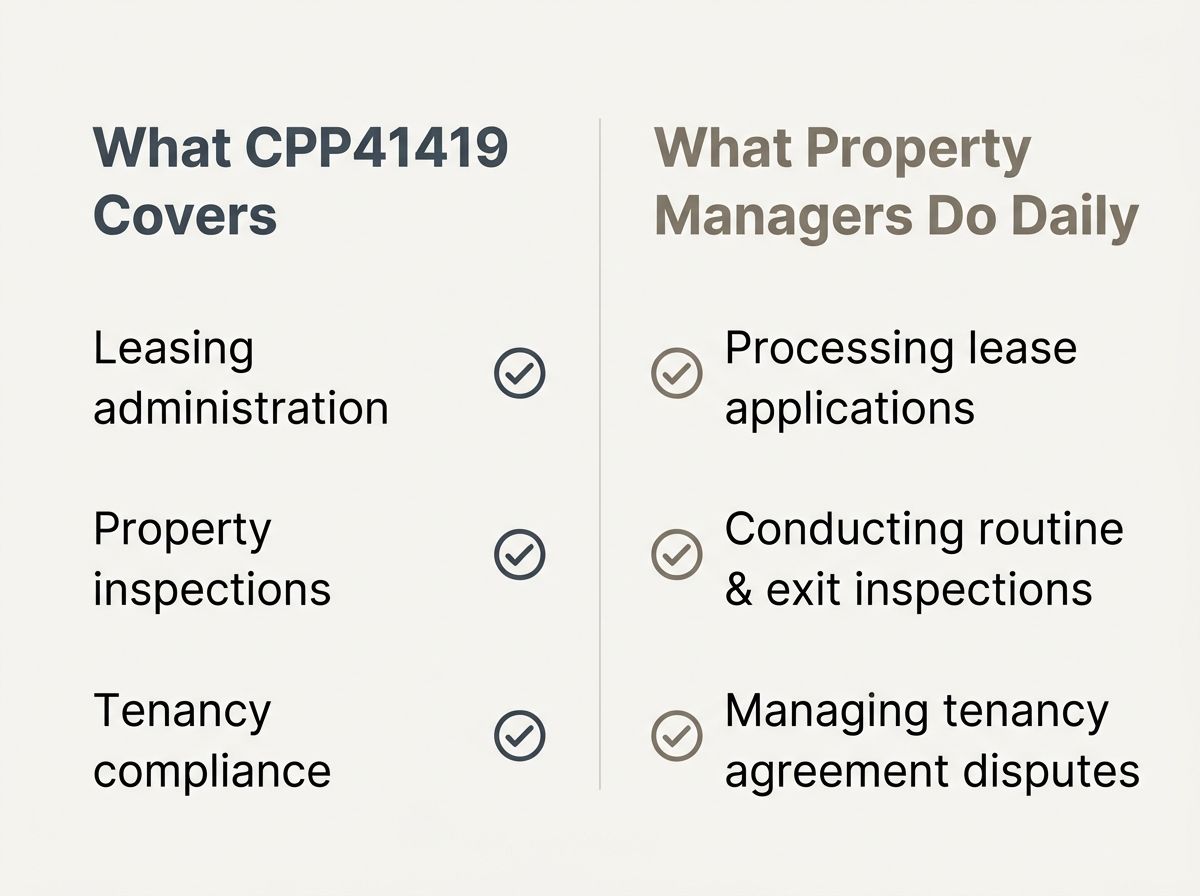
These are practical competencies rather than theoretical concepts. They represent the daily responsibilities of an active property manager.
The qualification is not designed to teach these skills to people who are already competent. Instead, it formally assesses whether you can demonstrate these skills to the required standard. This distinction changes your focus: the question is no longer how long a course takes, but how you demonstrate your existing knowledge.
For property managers with years of documented experience in leasing, tenancy management, client communication, and compliance, you likely meet this standard already. The challenge lies in how you package and present this existing knowledge to a formal assessor.
Why years of experience do not automatically become a qualification
Your practical skills are genuine and built over years on the job. However, the formal education system requires structured evidence that can be assessed directly against national training standards.
The division between knowing how to do the job and proving it to an assessor is where many professionals get stuck. This is a documentation challenge, not a reflection of your professional capability.
Practical experience holds the same weight as classroom education, but it is a different form of evidence. The task is translating your years of daily competency into a format that an assessor can evaluate against the CPP41419 standard.
Recognition of Prior Learning (RPL) is the formal mechanism designed to bridge this gap. Under the Australian Qualifications Framework, RPL is a legitimate, nationally recognised assessment pathway. It is a rigorous process that evaluates your existing competency against qualification standards using evidence from your actual work history instead of classroom hours.
If you already possess the required competency, it makes sense to ask why you should have to start from zero to prove it.
The pathway that recognises your existing skills
Recognition of Prior Learning (RPL) is an assessment pathway designed specifically for experienced professionals. Instead of enrolling in a full course and repeating material you master daily on the job, RPL measures your current competency directly against the specific units within CPP41419.
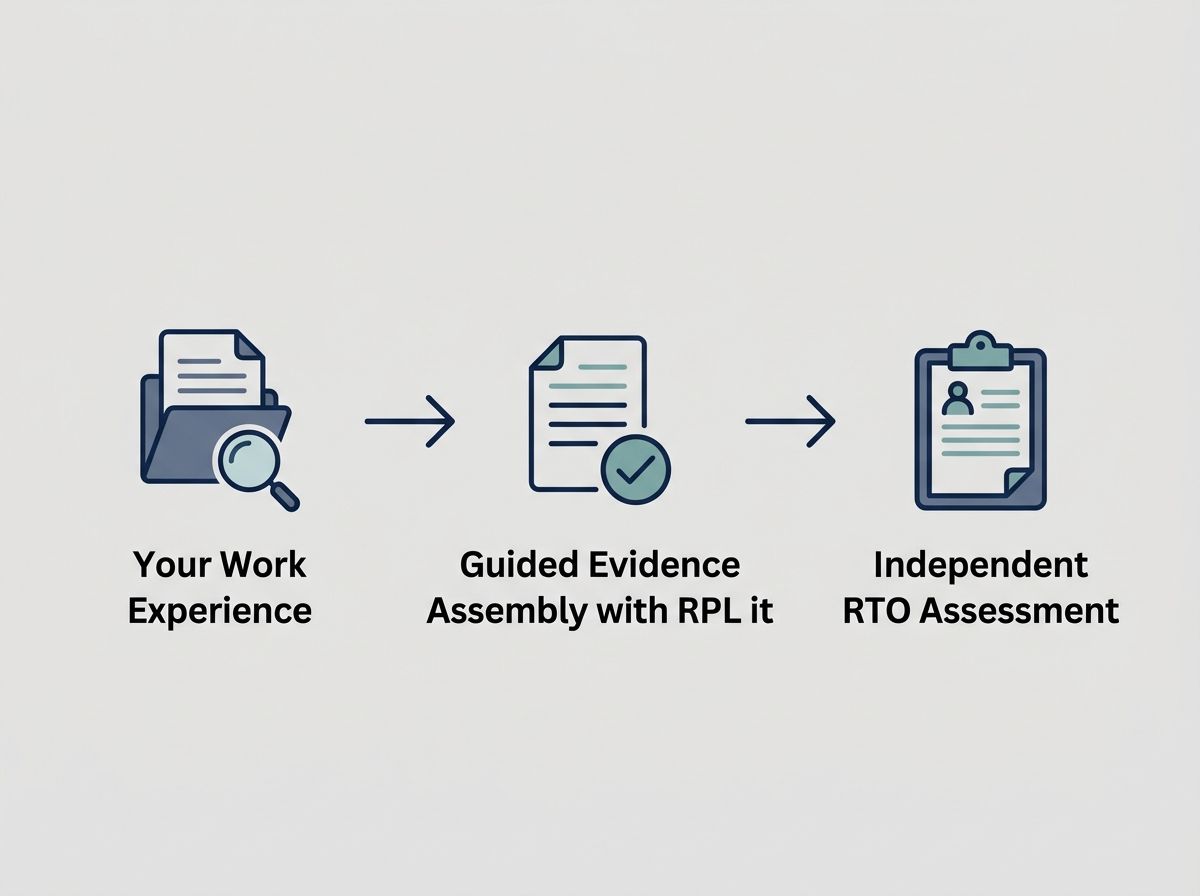
This process is guided rather than self-directed. Collecting and structuring evidence of competency is highly systematic. Working with expert guidance helps ensure you gather, organise, and present the right materials in a clear format that an assessor can easily evaluate.
For eligible candidates, RPL is available for CPP41419 through registered training organisations. A Free Skills Review will confirm whether your specific experience and background make you a suitable candidate for this pathway.
To be clear on the process: RPL it helps you compile and structure your evidence. The assessment is conducted independently by a qualified assessor from a registered training organisation (RTO). If you successfully demonstrate competency, that partner RTO issues the qualification. Our role is to assist you in formatting your experience for the assessor, not to guarantee a specific outcome.
Your daily experience is valuable evidence. This pathway helps you compile that evidence to prove your skills.
Learn more about the Certificate IV in Real Estate Practice RPL pathway and its requirements.
What experienced property managers bring to an RPL assessment
If you have worked in property management for several years, you have already built a substantial pool of professional evidence, even if you do not think of your daily paperwork in those terms.
This includes employment records detailing your responsibilities and reference letters from principals, landlords, or agency directors. You can use managed tenancy agreements, inspection reports, compliance files, performance reviews, and typical client correspondence as direct proof of your day-to-day work.
You do not need to create these documents from scratch because they already exist in your work files. A guided RPL process helps you select the relevant documents, organise them clearly, and map them directly to the CPP41419 competency standards.
It is important to be realistic: few candidates possess perfect documentation across every single unit. Some areas might require a brief supplementary assessment, known as gap training. If gap training is required, it is provided at no extra cost. This is a normal part of the process that ensures your competency is fully documented while identifying any specific areas that require a small amount of extra attention.
The structured assessment shows you exactly where you stand before you make any final commitment.
Recognition should not require starting over
The Certificate IV in Real Estate Practice is designed to formally validate competency rather than act as an obstacle for working professionals. For property managers with years of documented experience in leasing, compliance, and client management, the pathway to obtaining this qualification is often much closer than they think.
The real question is not how long a full course takes, but whether your existing professional experience is eligible for assessment.
You can find the answer to that question easily without cost or obligation. The next step is entirely up to you.
Explore the Certificate IV in Real Estate Practice curriculum and its requirements.
General information only, current at the date shown. Licensing rules change, so check the current requirements with the relevant regulator before you rely on them. RPL it Australia is a student support service, not a Registered Training Organisation; qualifications are assessed and issued by our partner RTOs.