The Advanced Diploma gap: What RPL assessment looks like for senior IT professionals
Understand what RPL assessment involves for senior IT professionals at the Advanced Diploma level, including evidence, competencies, and the process.
By RPL it Australia8 min read

The gap that does not show up on a CV
Your senior IT staff are making architecture decisions. They manage infrastructure that the business depends on. They are the people others call when something breaks at 2am. Their capability is not in question.
But their file says something different. The compliance register, the tender document, and the contract requirements do not measure what they can actually do. They only check what credential is attached to the name.
This is the gap. It is not a skills gap, but a recognition gap. The experience exists. It is real, it is deep, and it is already applied every day. What is missing is the formal acknowledgement that it meets a defined standard.
Recognition of Prior Learning (RPL) is the assessment pathway designed for this situation. It does not require your senior IT professionals to go back to study. Instead, it asks them to demonstrate that their existing skills and daily work meet the competency requirements of a nationally recognised qualification.
What 'Advanced Diploma level' means in practice
The Advanced Diploma of Information Technology sits at a senior level within Australia's national qualifications framework. It is not an entry-level credential. The competencies cover areas such as network design, cybersecurity principles, systems integration, project leadership, and technical problem-solving at an enterprise scale.
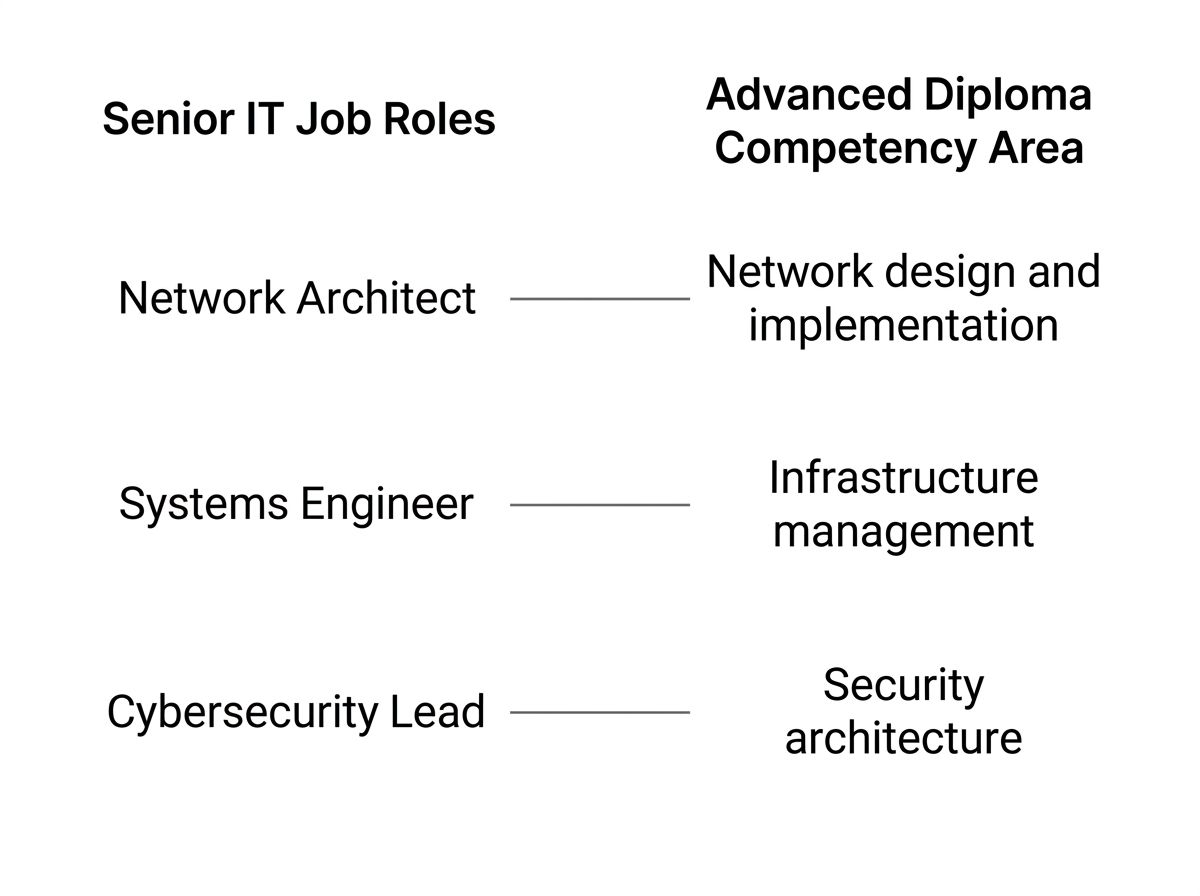
Most senior IT professionals, including network architects, systems engineers, infrastructure leads, and senior developers, are already performing work that maps to these competency areas. The qualification is not asking them to learn something new. It asks them to demonstrate that what they already do meets a defined standard.
For team leads, this distinction matters. When you are considering whether to recommend RPL to a senior staff member, the question is not whether they can do the work. You already know they can. The question is whether they can demonstrate it through evidence. That is a different question, and it is the one RPL assessment is designed to answer.
The Advanced Diploma of Information Technology (ICT60220) is the formal qualification pathway for senior IT professionals seeking recognition through RPL.
It is worth being clear about what this qualification is not. It is not a stepping stone for early-career IT workers, and it is not a general technology literacy credential. It is a senior-level qualification reflecting the complex, autonomous technical work that experienced IT professionals do as a matter of course.
How RPL assessment works for senior IT professionals
RPL is an evidence-based assessment process. The assessor, a qualified professional from the Registered Training Organisation (RTO) delivering the qualification, evaluates whether the candidate's existing experience meets the competency requirements. The qualification is issued by the RTO, not by RPL it. RPL it guides candidates through the process.
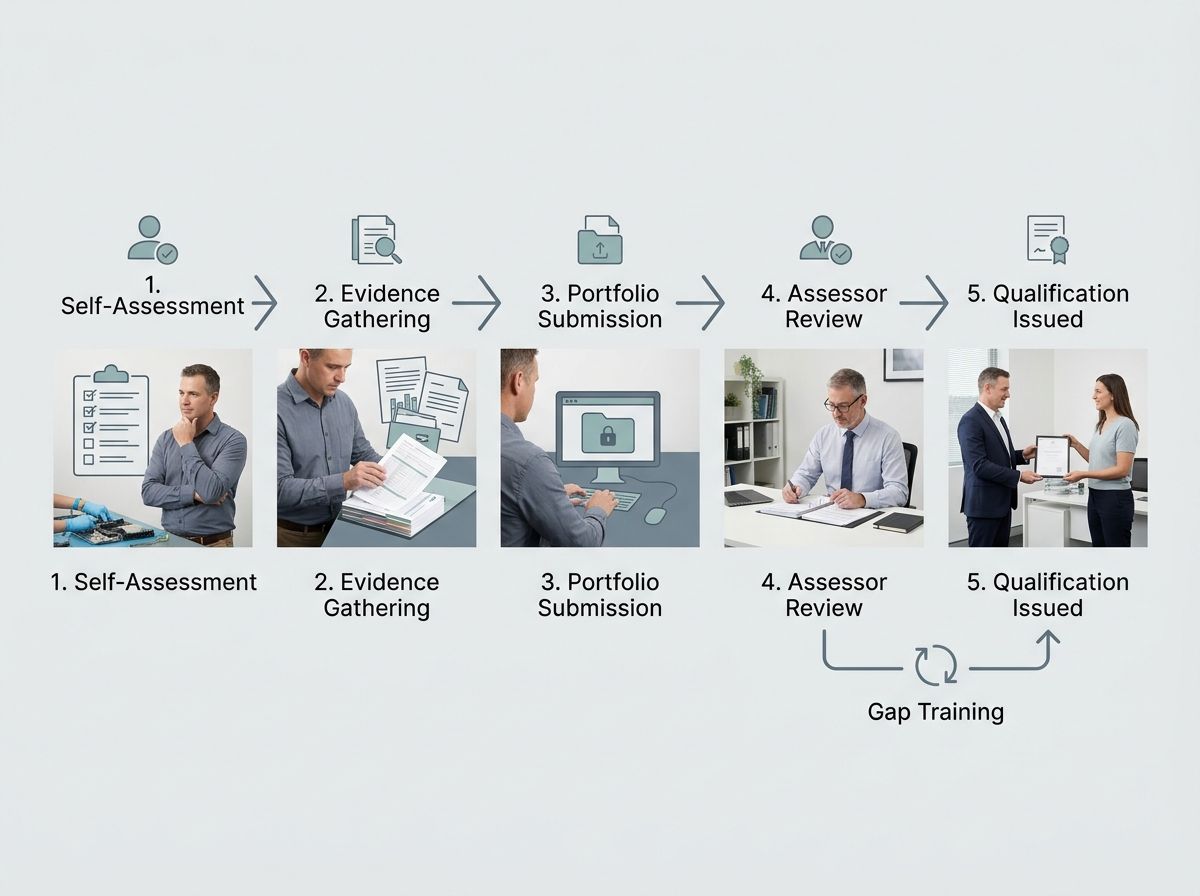
The process typically moves through several stages. Understanding each stage helps team leads set realistic expectations with their staff before starting.
- Self-assessment: The candidate reviews the qualification's competency requirements and identifies where their existing experience aligns. This is a structured reflection rather than a test. It helps both the candidate and the assessor understand where the evidence is strong and where it may need more support.
- Evidence gathering: The candidate collects documentation that demonstrates their experience against the competency requirements. For senior IT professionals, this evidence already exists because it is embedded in the work they have already completed. The task is identifying and organising it, not creating it from scratch.
- Portfolio submission: The collected evidence is compiled into a portfolio and submitted to the assessor, who reviews the files against the qualification's competency standards.
- Assessor review and professional conversation: The assessor evaluates the evidence and typically conducts a structured professional conversation with the candidate. This is not an exam, but rather a guided discussion that allows the assessor to clarify the candidate's experience and confirm competency where the documentary evidence alone may not be sufficient.
- Outcome and gap training (if required): The assessor determines which competencies are demonstrated and whether any gaps exist. When gaps are identified, targeted gap training is provided. When competency is demonstrated across all requirements, the qualification is issued by the RTO.
This is a rigorous process. It is not automatic, and it is not a mere formality. The assessor's professional judgement determines the outcome. What RPL does is ensure that genuine experience is given a fair opportunity to be recognised, rather than remaining invisible because it was not acquired through formal study.
What evidence is assessed
The most practical question team leads ask is what their staff members actually need to provide.
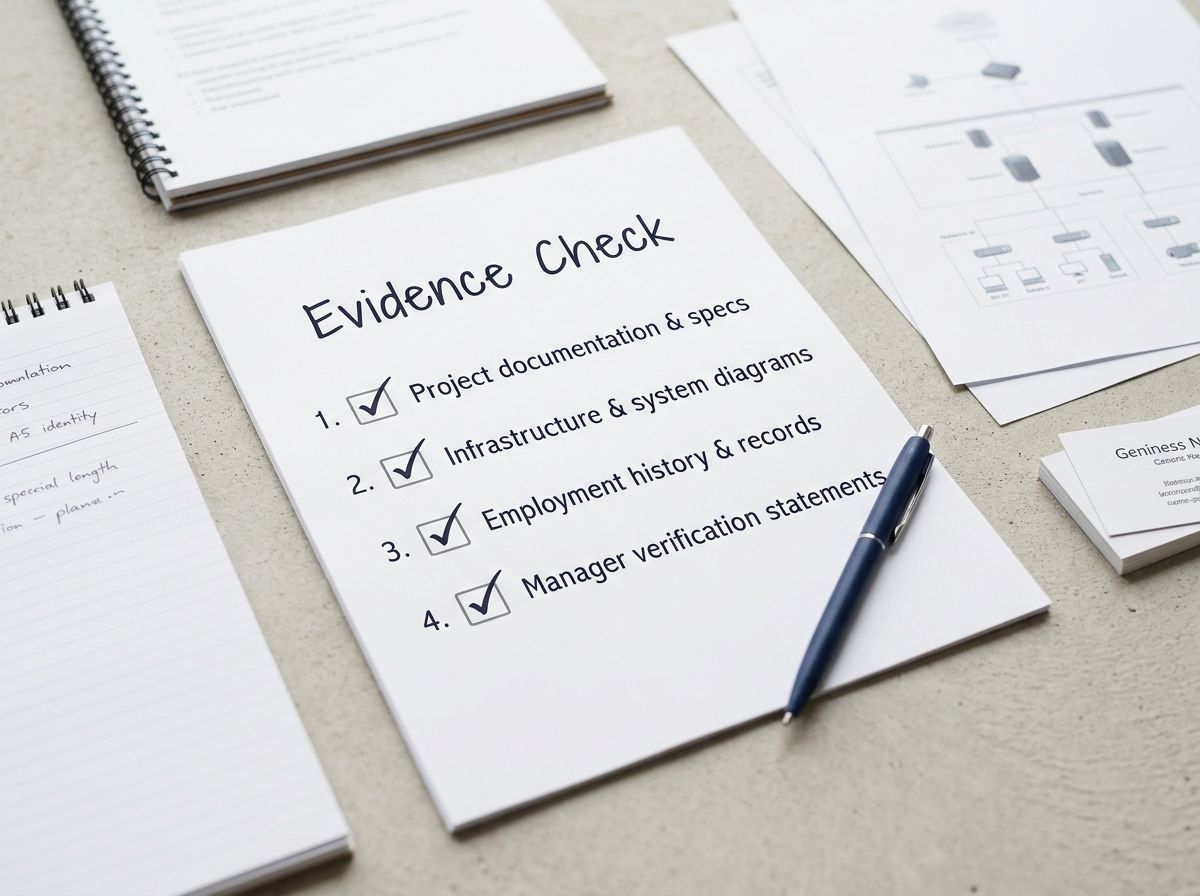
For senior IT professionals, the evidence that supports an RPL assessment is typically already embedded in their working life. The challenge is not creating evidence, but rather identifying, organising, and presenting what already exists in a form the assessor can evaluate.
Evidence for an IT Advanced Diploma RPL assessment commonly includes:
- Project documentation: Technical specifications, architecture diagrams, project plans, implementation reports, and post-implementation reviews from projects the candidate has led or contributed to significantly.
- Employment records: Position descriptions, performance reviews, and employment history that establish the candidate's role, responsibilities, and seniority over time.
- System and infrastructure artefacts: Network diagrams, system documentation, configuration records, and technical reports that demonstrate the candidate's practical technical work.
- Third-party verification: Written statements from managers, clients, or colleagues who can attest to the candidate's competency in specific areas. These referee statements carry substantial weight in the assessment process.
- Professional conversation: A structured discussion with the assessor that allows the candidate to explain their experience in their own words, answer technical questions, and clarify details in their evidence portfolio.
The evidence does not need to be perfect or comprehensive from day one. The RPL guidance process helps candidates identify what they have, what is most relevant, and how to present it effectively. The goal is to give the assessor a clear, accurate picture of what the candidate knows and can do.
Experience is evidence. The work your senior IT staff have already completed forms the foundation of the assessment, and the RPL process provides the structure to present it.
What happens if there are gaps
Not every candidate will have demonstrable evidence across every competency area. When gaps are identified during the assessment process, targeted, specific gap training is provided, focusing only on the areas where evidence is insufficient.
Gap training is not a sign that the RPL process has failed. It is simply the process working as designed. The assessment identifies precisely where additional demonstration of competency is needed, and the gap training addresses exactly those areas, rather than requiring the full qualification, a general course, or unnecessary modules.
For team leads, this is important to communicate clearly to staff before they begin. The possibility of gap training is not a risk to be feared. It is a safeguard that ensures the qualification, when issued, genuinely reflects demonstrated competency. A qualification earned through a rigorous process is worth more than one that was not.
Gap training may be required. When it is, it is targeted and provided at no additional cost. The overall process is designed to recognise existing skills and address only what is missing.
What team leads need to know before recommending RPL
You are not the candidate. You are the person who needs to understand the process well enough to recommend it credibly, explain it to HR, and set realistic expectations with your staff member before they begin.
A strong RPL candidate for the Advanced Diploma of Information Technology typically has several years of experience in a senior IT role. They have worked across multiple complex projects or systems, their work involves autonomous decision-making at a technical level, and they have documentation, even if informal, of what they have done.
A weaker candidate is someone whose experience is narrow, recent, or primarily supervised. RPL is not suitable for everyone, and recommending it to someone unlikely to have sufficient evidence does not serve them well. Honest suitability guidance before enrolment is critical to a process that works.
The time commitment involved in an RPL assessment varies depending on the candidate's experience, the quality of their existing documentation, and how much guidance they need in organising their evidence. It is not a one-day process. It requires genuine engagement from the candidate, who must gather documentation, reflect on their experience, and participate in the assessor conversation. Team leads should factor this into workload planning.
The decision to pursue RPL belongs to your staff member. Your role as a team lead is to give them accurate information about the process, honest feedback on whether their experience supports it, and the space to make an informed choice.
The next step: A Free Skills Review
Before recommending RPL to a senior IT staff member, the most practical step is to find out whether their experience supports the pathway. That is the purpose of the Free Skills Review.
It is a free, no-obligation conversation that provides an honest assessment of suitability before anyone commits to anything. It is not a sales call. It is the starting point for understanding whether RPL is the right fit for your staff member's specific experience and circumstances.
General information only, current at the date shown. Licensing rules change, so check the current requirements with the relevant regulator before you rely on them. RPL it Australia is a student support service, not a Registered Training Organisation; qualifications are assessed and issued by our partner RTOs.